RELATED: Five breakout candidates in 2018

Though the 2017 Monster Energy NASCAR Cup Series season didn’t offer these drivers much to celebrate, the season on the horizon provides an opportunity to start anew. Fortunately, there is enough data to support their candidacy for bouncing back in a big way:

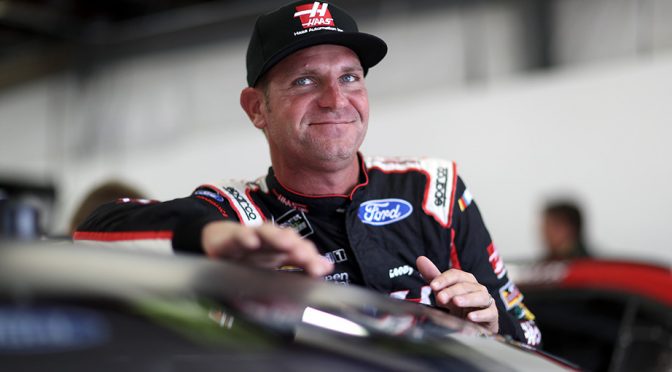
Clint Bowyer

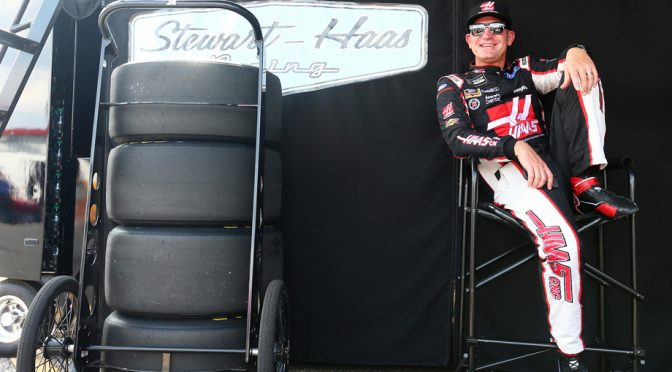
Bowyer hasn’t parked his car in Victory Lane since 2012. His leap to Stewart-Haas Racing in 2017 was supposed to end his dry spell, but he tacked on another winless campaign.

He returns to Stewart-Haas with his team intact and a young crew chief in Mike Bugarewicz, who protected his running position on 70.73 percent of green-flag pit cycles. That was the fourth-highest rate among returning driver-crew chief pairings and gained him 20 positions. Bowyer’s No. 14 Ford ranked as the third-fastest car on 2-mile, non-drafting tracks, signaling the most likely track type on which to end the five-year win drought.

Improvement could come in Bowyer’s closing habits. He averaged a 0.4-position loss in the final one-tenth of races in 2017, though he crashed during that time frame on four separate occasions, the fourth-highest, late-race crash total in the series.
Jimmie Johnson
Jonathan Ferrey | Getty Images

Jimmie Johnson

Hendrick Motorsports armed its seven-time champion with the ninth-fastest car overall, per timing and scoring data supplied to NASCAR.com, and the 10th fastest during the playoffs. He won three times, more than the teams of Chase Elliott, Matt Kenseth and Erik Jones combined, all of whom ranked directly above him in the green-flag speed category. No driver with a slower car than Johnson’s won more often.

Still, there isn’t anything appealing about a 16.8-place finish, which Johnson, Chad Knaus and the legendary No. 48 team tallied in 2017, the worst full-season average in the team’s existence.

Johnson was partially responsible for the downturn. His Production in Equal Equipment Rating of 0.736 was the worst single-season mark of his illustrious career and, at age 41, it came on the downside of the average driver’s career arch. There is good news, though; despite his lackluster results, Johnson was still the best passer.

He ranked first in surplus passing value, which was good for 272 additional positions on the track beyond what was expected from a driver with his average running position. For comparison, the second biggest surplus pass differential was plus-184, belonging to Kyle Larson. Johnson, it seems, still has game but is in need of speed capable enough to turn a season into a serious championship bid.
Jared C. Tilton | Getty Images

Joey Logano

Logano’s green-flag speed ranking across the first nine races of 2017, which culminated with his win at Richmond, was 7.1. His speed ranking for the remainder of the season — following NASCAR’s decision to encumber that win, a penalty for altering the rear suspension — was 14.2.

In the three years prior to 2017, Logano ranked first, first and third in Production in Equal Equipment Rating among all Monster Energy Series drivers. His 9.2-place average finish in 2015 would’ve topped the series in 2016 and ’17. He was a minus passer overall this past year and an average restarter who performed mindbogglingly well in clutch situations, retaining his position 13 times on 13 late-race restart attempts from within the first seven rows.

Logano can make a fast car faster, but struggles to eek out results from a mediocre machine. Factor in the 96-position loss he and crew chief Todd Gordon amassed during green-flag pit cycles and it’s easy to find all the track position that eluded them in an aberration of a season.
Jared C. Tilton | Getty Images

Kurt Busch

Busch won the Daytona 500, but underachieved from that point forward, earning 18 top-15 finishes when his 62.8 percent of completed laps spent inside the top 15 suggested 23 such results. His 0.44-per-race crash frequency was the third highest among playoff qualifiers and his team’s 2.2 positions-per-race drop in the final one-tenth of races made him the second-worst closer among full-time Monster Energy Series drivers.

Positive regression is likely to occur as Busch, 38, is smack in the middle of his prime production years, remains a stone wall on restarts — his seven positions lost on 73 restarts from the non-preferred groove was the smallest positional drop among drivers with at least 10 attempts — and receives a new crew chief in Billy Scott, who was dutiful in his green-flag pitting habits on behalf of Danica Patrick in 2017, providing her 51 additional positions on non-restrictor plate ovals. That’d represent a 74-position increase over what Tony Gibson provided him.
Sarah Crabill | Getty Images

Kasey Kahne

Kahne’s 19.4-place average finish was his personal worst of the last 10 seasons, partly why his value as a driving commodity depreciated enough for Leavine Family Racing to swoop in and sign the fan-favorite driver.

Turning 38 in April, Kahne is in his prime, and as a passer he matters on 1.5-mile intermediates, NASCAR’s most prevalent track type. In 2017, his plus-2.99 percent surplus passing value on intermediates yielded 32 positions beyond the expectation of a driver with his average running position. While Leavine is in the process of growing its infrastructure, it isn’t quite the fluid machine Hendrick Motorsports is; Kahne will be asked — and in at least 11 races, be able — to supply his own track position and neutralize some of the team’s speed disadvantage.

Kahne is a long shot to make the 2018 playoffs, but it is possible he bests this past year’s average finish. For Leavine, Michael McDowell scored a 22.2-place result on average. Is Kahne three positions better than McDowell? The Leavine family must think so, which is why they invested in him.

David Smith is the Founder of MotorsportsAnalytics.com. Follow him on Twitter at @DavidSmithMA.
RELATED: Dale Jr. retirement gift from @nascarcasm a success

Dale Earnhardt Jr. is a Chevrolet driver for life, through and through.

Except for that one time he wasn’t.

On the anniversary of Bobby Hamilton’s death, the former driver of the No. 88 Hendrick Motorsports Chevrolet told a story Sunday morning about how the 2004 NASCAR Camping World Truck Series champion helped him out in a dire situation at the race track one time. It was, as Earnhardt put it, “the only time I ever drove anything besides a Chevrolet in a race.”

The year was 1996, and Earnhardt was entered in a late model race at Fairgrounds Speedway (Nashville). He had the dominant car in practice and was having so much fun driving it, he wanted to make one last run around the 0.596-mile oval despite his crew chief telling him to bring it in.

Lo and behold, a wreck in front of him forced him down the backstretch where he was rear-ended by another car at full speed. Both cars burned to the ground.

While lamenting the loss of the stout entry with his crew chief at the hauler, a voice echoed from behind.

“Do you want to race?”

It was Hamilton.

“Of course I want to race,” said Earnhardt.

“Well, I’ve got a car you can drive.”

Hamilton, a four-time Monster Energy NASCAR Cup Series winner, started to tell Earnhardt about the car … a Ford.

He’d been trying to sell it because his driver at the time, Casey Atwood, wasn’t a fan of it and it needed some adjustments. Thus, it was just sitting on a trailer, ready to be raced.

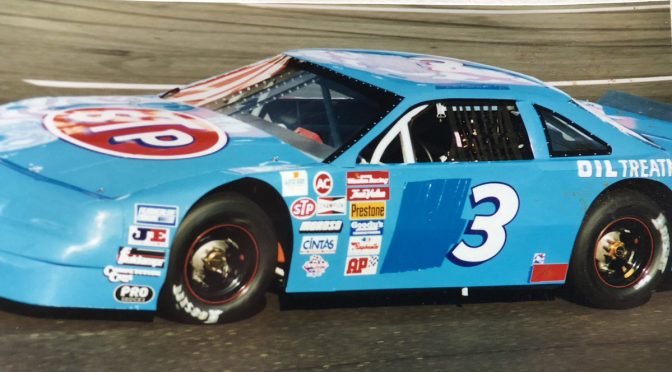
“I’m thinking, ‘I can’t drive it, because it’s a Ford.’ But I want to race real bad. So I’m calling my dad trying to see if I can get a hold of him and try to ask him if I can drive this Ford. It’s a Petty blue, because Bobby at the time I think must have been driving for Richard in the Cup Series and it had No. 43 on it.

“I couldn’t get a hold of dad, but I got a hold of dad’s general manager. … He said, ‘Yeah, go ahead and drive it. Just don’t talk about it and try not to make too big of a deal about it.’ ”

Earnhardt said he and his team then took duct tape and covered up the ‘4’, leaving just the ‘3’ uncovered.

Around 150 laps into the race, Junior was stomping the field and had every driver but one a lap down. He appeared set to cruise to a win, until the transmission blew with 30 laps to go.

Still, given how fast it was — and perhaps the fact that the son of a seven-time champion wheeled a Ford for the first and only time — Hamilton sold the car on pit road after the race for “quite a bit of money.”

Hear Junior tell the whole story below in his Periscope.


What channel is NASCAR programming on this week? We answer that and provide all the weekly NASCAR television listings here in the NASCAR TV schedule.

Note: All times are ET.

RELATED: Watch on the NBC Sports App |  How to find FS1, FS2How to find NBCSN

Friday, January 19
7:30 p.m., Racing Roots, NBCSN
8 p.m., NASCAR Hall of Fame Induction Ceremony, NBCSN

RELATED: Alonso takes first Daytona laps | Pruett to retire following Rolex 24

Last month, Ford Performance announced a unique plan for four of its rising stars in the NASCAR ranks to enhance their road racing skills through participation in the IMSA Continental Tire SportsCar Challenge in 2018.

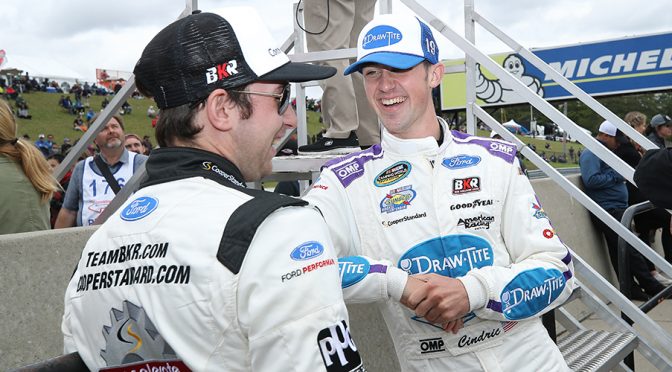
The same trio of drivers — Chase Briscoe, Austin Cindric and Ty Majeski — who will share the No. 60 Roush Fenway Ford Mustang in the 2018 NASCAR Xfinity Series, will be part of a rotating driver lineup in a Multimatic Motorsports-prepared Ford Mustang GT4 in the Continental Tire Challenge. Joining them will be Cole Custer, who will drive the Stewart-Haas Racing No. 14 Mustang in the 2018 Xfinity Series, and all will race under the watchful eye of Canadian road racing Hall of Famer and longtime Ford/Multimatic driver Scott Maxwell.

MORE: Rising NASCAR stars to share No. 60 ride at Roush Fenway

Cindric is no stranger to Mustangs in the Continental Tire Challenge, as he raced in the series in 2015 and earned his first series victory at Canadian Tire Motorsport Park. Custer also has a reasonable amount of road racing experience in the NASCAR Camping World Truck Series. It’s a different story entirely, though, for Briscoe and especially Majeski.

“This is only my second time ever on a road course,” Majeski said. “The multi-class thing is a lot different, everything is just a lot different. It’s just a new experience for me. I’m leaning a lot on Scott Maxwell, my teammate, who’s had a ton of experience with this stuff. It’s been a big learning experience, but I think it’s gone pretty well so far. I’m looking forward to the next day and a half and sinking my teeth into it even more.”

With that in mind, what has been the biggest adjustment so far for Majeski?

“Turning right,” he laughs. “It’s something I’ve literally done none of in my entire life. It’s just a whole different set of instincts to get speed out of these cars. I’m just trying to learn as much as I can.”

Also learning as much as he can is Briscoe, although he does have somewhat more road course seat time. He and Majeski are expected to compete in several Continental Tire Challenge rounds this season — certainly more than Cindric and Custer – which is somewhat of a “pinch me” moment for Briscoe.

“I never thought in a million years that I would get to do what I’m doing on the NASCAR side, let alone get an opportunity to come to Daytona for a road course race,” Briscoe said. “Growing up being a sprint car guy, that’s probably the last thing you’d ever think would be a possibility.

“For Ford to decide that they would give me a chance to do it and not only run here, but I think I’m going to run six or seven other races, so it’s going to be really fun. I’m thankful to be in that position with Ford, where I get to do so many different things. As a driver, that’s all you can ask for is to get seat time in different cars and whatnot.”

RELATED: Pruett to retire following Rolex 24 | Allmendinger to run Rolex 24

DAYTONA BEACH, Fla. — Two-time Formula 1 World Champion Fernando Alonso turned his first laps at Daytona International Speedway on Friday during the opening day of the three-day Roar Before the Rolex 24 At Daytona test.

And while the Spaniard has driven on a variety of road racing circuits throughout his storied career, it’s safe to say he hadn’t previously experienced anything like the unique, 3.56-mile Daytona course.

“I did, unfortunately, only three laps this morning, but enough to have a feeling in the car and on the Speedway as well,” said Alonso regarding his maiden DIS laps aboard the No. 23 United Autosports Ligier LM P2 car. “The coolness and the high banking were special. You feel the compression in the body and you feel the visibility change, because when you are in, let’s say, the normal part of the circuit, you have a view in the car that is a little bit longer ahead.

“When you are in the corner with the banking, you see the next 200 meters of the track and only that. I was trying to look where the track was going. It was good fun and a fast feeling.”

While already an established worldwide racing superstar with his F1 titles, Alonso’s popularity among many U.S. race fans soared last May when he contended for the win in his first Indianapolis 500 before a mechanical issue removed him from contention. He was competitive throughout the month of May at Indy and was focused on the singular goal of winning the race, even as he learned a new racing format. He’s taking the same approach at Daytona.

“It’s more or less the same goal as Indianapolis, first of all, to try to learn different driving techniques,” Alonso said. “I’m trying to learn from the specialists of endurance races and try to be a better driver when the 24 hours finish. That’s the first aim. It’s the first time for me in an endurance race, first time in a Prototype car, first time driving at night, the first time driving with GT around, so many new things will come step-by-step.”

RELATED: Pruett’s NASCAR stats | Allmendinger to run Rolex 24

DAYTONA BEACH, Florida — Scott Pruett walked into the Daytona International Speedway media center and smiled widely as he looked at the Lexus banner hanging behind the podium displaying three cars he had driven in the Rolex 24 and honoring him for a “storied career in racing” that spanned five decades.

Moments later, the 57-year old Pruett smiled again and calmly, thoughtfully, announced his retirement from the sport, revealing he will hang his helmet up after the upcoming Jan. 27-28 Rolex 24 At Daytona – the great sports car endurance race that Pruett has hoisted the overall victory trophy five times in an amazing career that’s spanned five decades.

“As an athlete if you’re fortunate enough to have a long and successful career and lucky enough to come to the end on your terms then you are truly blessed, and I truly am,” Pruett said. “Today, after 50 years of racing, the 2018 Rolex 24 Hours of Daytona will be my last race.

“It’s a magical place and I love it and what better way to say goodbye to a sport I love than at this revered place surrounded by my respected peers and diehard fans. So here we go. I’m so excited about the next chapter of my life and getting on with the Rolex 24 here in the next few weeks.”

Early in Pruett’s diverse and celebrated career, it became clear the question wasn’t what this driver might accomplish, but what wouldn’t he achieve.

His is a five-time champion in the IMSA WeatherTech SportsCar Championship with an amazing 60 sports car series wins in addition to claiming victories in the prestigious International Race of Champions (IROC) circuit. He competed in both NASCAR’s premier Monster Energy NASCAR Cup Series ranks and the IndyCar Series, where he won twice. He even made a pair of starts in the famed Australia SuperCars Series.

When it comes to sports car racing, Pruett is considered a legend already.

And how fitting that his final green flag – teaming with Dominik Farnbacher, Jack Hawksworth and David Heinemeier Hansson in the No. 15 GT Daytona (GTD) class Lexus — will come in the Rolex 24 At Daytona where he is among the great race’s absolute best. His five overall victories ties him for the most all-time with the legendary Hurley Haywood.

Since 2004, Pruett has led an astonishing 5,262 laps in fulltime sportscar competition and in the last 10 years, he’s led 2,010 laps in the Rolex 24 alone.

“Scott Pruett is a legend of sports car racing,” said IMSA President Scott Atherton. “It is a word and a description that is often over-used, but in this instance it is a statement of fact. It has truly been an honor and a privilege to have him represent IMSA for decades.

“His on-track accomplishments and larger than life personality made him the face of American road racing. He became a household name among race fans through his versatility, and while he also enjoyed success in IndyCar and NASCAR, his sports car racing résumé is what made him a hall of famer.

“As we embark upon what many expect to be the biggest season yet for IMSA and the IMSA WeatherTech SportsCar Championship, we will miss having Scott out there battling for race victories. And we will also miss his ‘Hi to the family back home,’ gesture that was his signature element of every TV interview… On behalf of Jim France, Ed Bennett and everybody at IMSA, I offer heartfelt congratulations to Scott on a truly amazing career, and most importantly, thank you, Scott, for all that you’ve done for our sport.”

He is truly one of the most well-rounded competitors in the sport’s history.

Pruett’s first victory in the renowned IROC (International Race of Champions) circuit came as a 28-year old in 1988 on the Riverside, Calif. road course. He bested a healthy version of the sport’s all-time all-stars including sports car’s Chip Robinson, two-time Indy 500 winner Al Unser Jr., and legends such as Al Holbert, Bobby Rahal, four-time Indy 500 winner Al Unser and NASCAR Hall of Famers Terry Labonte, Bill Elliott and the late Dale Earnhardt.

He won a second IROC event on the Daytona International Speedway high banks during the 1991 Speedweeks – less than a year after he recovered from massive injuries – broken feet, ankles and back — he suffered while testing an IndyCar the previous March. That victory remains one of the brightest moments of his highlight-reel career, Pruett insisted Friday.

“Coming off my bad accident and coming here and beating Bill Elliott in the IROC race, that was huge after breaking my ankles and shattering my knees and breaking my back,” he said. “There was never a moment I didn’t want to get back in a race car, in fact it drove me harder.”

Pruett earned three top-five finishes in 40 starts in the Monster Energy Series, including 28 starts in the 2000 season. His best finish was runner-up, fittingly at the Watkins Glen, New York road course in 2003. He also made a combined 11 NASCAR Xfinity Series starts in six different seasons, winning three pole positions and earning top-five finishes in two Mexico City starts.

Pruett’s two IndyCar victories came in 1995 (Michigan) and 1997 (Queensland, Australia).

When it’s all said and done, having competed in such a wide array of race cars and racing series, Pruett reiterated his truest love remains sports car competition. And therefore it is most fitting that he officially retire after the country’s most celebrated sports car race, the Rolex 24.

“Sports cars,” Pruett replied, when asked to reflect on his favorite form of racing competition. “Overall, people long past when I’m gone, I think will remember me for sports cars. Even though I have achievements in other forms, by far, sports cars are my love.

“More so than anything else I’d like to go out and just have an incredible race in my final 24.

“My wife and I were looking. … My first race was when I was 24 and I believe this is my 24th time doing the 24. … maybe all those wonderful 24s will come together in the coming weeks here at Daytona.”

“I have so many incredible memories here, it just seemed appropriate this was the time and place.”


RELATED: Joey Logano reveals he and wife Brittany are expecting a boy

So far no epic burnout to celebrate the birth of his son, akin to the announcement that Joey and Brittany Logano were expecting a boy, but the joy over his arrival is magnificent.

Congratulations to the couple on their first child.

Editor’s note: This is the third of three stories on 2018 breakout candidates. Camping World Truck Series breakout candidates can be read here; Xfinity Series breakout candidates can be found here.

Utilizing statistics accrued during the 2017 Monster Energy NASCAR Cup Series season, we can project future performance and identify five drivers likely to enjoy breakout campaigns in 2018:

Chase Elliott

Though he missed out on chances to win late in the year at Dover, Martinsville and Phoenix, Elliott’s popularity soared. In 2018, his on-track accolades might finally catch up to his burgeoning fan base.

Jonathan Ferrey | Getty Images

Elliott was a top-5 position defender from both the preferred and non-preferred grooves on restarts. He ranked as the second most efficient passer across all track types, with a plus-3.11 percent surplus passing value trailing only that of Jimmie Johnson (plus-3.78 percent). This netted Elliott’s Hendrick Motorsports team 172 positions beyond what was expected from his average running position, which improved along with his speed during the playoffs.

Hendrick teams across the board operated with a speed deficit during the first 26 races, but Elliott’s car ranked as the third fastest in the playoffs, per timing and scoring data supplied to NASCAR.com, up from sixth across all regular season races. Unclear is how teams under the Chevrolet banner will perform with the new Camaro body making its debut in 2018, but Elliott’s team, led by crew chief Alan Gustafson, can hedge with effective pit strategy. Gustafson’s crew retained Elliott’s running position on 67.39 percent of green-flag pit cycles and on 61.11 percent of green-flag stops when running inside the top 5. Both are rates above the series average.

Erik Jones

Erik Jones
Daniel Shirey | Getty Images

No, Jones didn’t win a race or qualify into the playoffs despite driving for Furniture Row Racing, but his passing ability on intermediate tracks suggests an immediate future rich in victories. In the 11 races on intermediates, Jones scored an additional 140 positions more than expected from his average running position, an average of 11.2 spots per 400 miles. That was the second highest rate in the Cup Series this season and over 13 positions per race better than the most effective 1.5-mile passer in the Joe Gibbs Racing stable, for which he is now a part.

Crew chief Chris Gayle moves with Jones from Furniture Row to JGR and is a year wiser following a rookie foray of his own. His pit strategy output from Year 1 as a Cup Series race-caller needs improving. Gayle defended Jones’s running position on 48.78 percent of green-flag pit cycles (the series average was 63.58) and 16.67 percent of green-flag pit cycles from a top-5 running positions (series average was 40.41) for a 44-position loss despite Jones never earning a single pit road penalty under green all year.

A little natural improvement in 2018 would go a long way for Jones and Gayle.

Clint Bowyer

The perception of Bowyer’s first year at Stewart-Haas Racing was it proved to be underwhelming. He didn’t win and he missed the playoffs. There were, however, things to like about his 2017 campaign and a forthcoming career mile marker that should excite.

Sarah Crabill | Getty Images

Bowyer ranked ninth in Production in Equal Equipment Rating, a measure of a driver’s results independent of his team and car, and eighth in surplus passing value for a Stewart-Haas team that ranked just 15th in average green-flag speed for the entire season. Bowyer and crew chief Mike Bugarewicz created a niche for themselves during the summer; they produced the third-fastest car on 2-mile, non-drafting tracks. Considering most playoff teams deemphasize R&D for races at facilities like Michigan and Pocono, this track type marks an opportunity for Bowyer to win in 2018, locking down an elusive playoff spot.

Additionally, Bowyer soon hits upon a magic moment in a driver’s life. He turns 39 in May, which is the peak age for an average Cup Series driver according to a 2014 Motorsports Analytics study.

Ryan Blaney

Jerry Markland | Getty Images

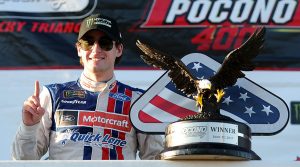
Despite Blaney’s win at Pocono and respectable playoff showing, he underachieved as a whole in 2017 considering the gap in his average running whereabouts and tangible race results. He completed 64 percent of his laps inside the top 15—creating an expectation of 23 top-15 finishes—but fell six short of the projection. A chief reason for the disparity is his 2.4-position average loss during the final tenth of each race, the biggest positional drop in the series during that time frame. If he eradicates the late-race drops, he’s poised for some robust stat line improvement.

Blaney established himself as an elite restarter during his final year with Wood Brothers Racing. He ranked as the third best preferred groove restarter, based on his 86.05 percent position rate, and the third best non-preferred groove restarter, protecting his position at a 63.54 percent clip. He netted 47 total positions in restarts from inside the first seven rows.

Aric Almirola

Jeff Zelevansky | Getty Images

One could argue that regression is on the horizon for Almirola after he overachieved in a season truncated by injury. Based on his 13.8 percent of completed laps inside the top 15, he was expected to score four top-15 results; he actually corralled 10 such finishes. That’d be a difficult trick for any driver to replicate.

Almirola moves from Richard Petty Motorsports to Stewart-Haas Racing in 2017, where drivers like Bowyer and Kurt Busch had no problem finishing inside the top 15, doing so 23 and 18 times, respectively. Almirola might not overachieve to the same extent, but it is not necessary. His stat line will swell based on the simple change of scenery.

David Smith is the Founder of MotorsportsAnalytics.com. Follow him on Twitter at @DavidSmithMA.
RELATED: Jones moves to JGR for 2018 | New looks for 2018

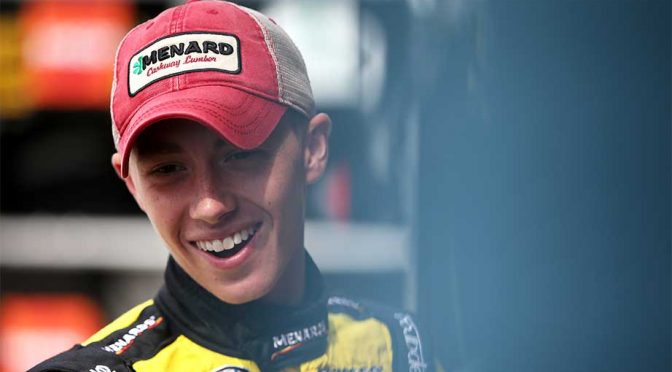
HUNTERSVILLE, N.C – Joe Gibbs Racing (JGR) announces today that Menards home improvement stores along with several of their best vendor partners will be the primary sponsor for Brandon Jones for 10 races in the NASCAR Xfinity Series in 2018. The No. 19 Menards Toyota Camry will display one partner-specific brand on the hood of the racecar for each of the Menards races.

The Menards partnership with Joe Gibbs Racing (JGR) follows the recent announcement that Jones will run full-time for JGR in 2018.  Menards joins other JGR sponsors of the No. 19 Toyota Camry and Jones who will be unveiled in the coming weeks. 
 

“We are excited to once again sponsor Brandon Jones in the NASCAR Xfinity Series,” stated Jeff Abbott, Menards, Promotions Manager/Spokesperson.  “Brandon is a nice young man who has been a great ambassador for Menards, plus he has a really bright future as a race car driver.”

Menards has been involved with NASCAR since 2001 and has supported a wide variety of racing ventures for several years. Currently, Menards is the title sponsor of the ARCA Racing Series as well as sponsoring entries in NASCAR’s Camping World Truck, Xfinity, and Monster Energy Cup Series and in the Verizon Indy Car Series. Menards is a family-owned company that started in 1958 in Eau Claire, Wisconsin, which remains Menards headquarters today.   Menards has grown to be a highly innovative home improvement industry leader totally dedicated to delivering superior customer service in sparkling, modern, well-stocked stores. 

“We’re thrilled to have Menards partner with us and Brandon Jones,” said Joe Gibbs, owner of Joe Gibbs Racing. “They’ve been involved in the racing industry for a long time and are a great American success story having grown a small family run business to become a leader in their industry.”

“I am very excited and proud to be a partner with a great sponsor like Menards,” states Brandon Jones.  “Having Menards on my No. 19 Toyota Camry and racing for Joe Gibbs Racing is huge for our team and our run for a championship in 2018.”

MORE: @nascarcasm and @steveluvender come up with retirement gift for Dale

The holiday season concluded several days ago, but the greatest gift had yet to be given.

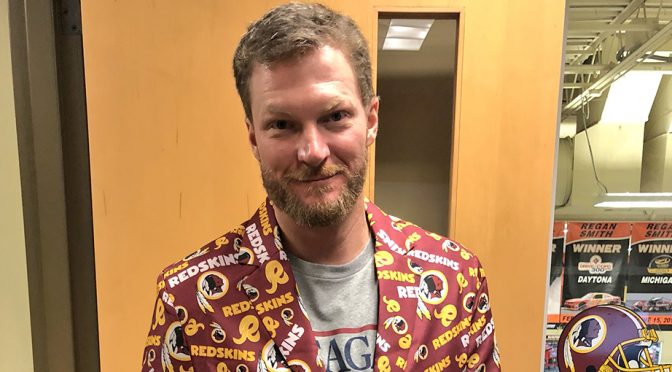
We are pleased to announce that our reader-selected retirement gift for Dale Earnhardt Jr. — a dapper Washington Redskins blazer, initially suggested by Twitter user @_F1yer_ — has reached our best friend Dale, just in time for the playoffs! OK, that was mean, sorry.

You may notice that the blazer fits impeccably, hugging Dale’s frame perfectly, just like his bicycle shorts. You’d be hard pressed to put on more ritz that this. We figured that this jacket can be the start of his broadcast wardrobe, as he prepares to make the move to NASCAR on NBC in 2018. Finally, something on a NASCAR broadcast that is louder than the roar of the engines.


We are especially pleased that Amy Earnhardt seems to LOVE the blazer. We can only assume that in the near future, after the birth of their first child, in every family photo, Christmas card picture, etc. Dale will be wearing this versatile blazer. Amy, should you wish for a matching one, please to not hesitate to DM us.

RELATED: Track gifts for Earnhardt Jr.

The opening of said gift was even recorded and posted to the Twitter. WARNING: do not watch without a box of tissues nearby. The waterworks will inevitably turn on. We challenge any lame-ass unboxing video on YouTube to TOP THIS:


Our only suggestion — keep this magnificent piece of apparel somewhere safe. First off, Gus could attempt to rip it to shreds. Secondly, Amy may or may not attempt to bury it somewhere on your property, possibly back behind the Old West town, and by the time you realize it’s gone, it will be too late.

So once again, happy retirement. Welcome to the realm of high fashion.

Regards,

@SteveLuvender & @NASCARCASM