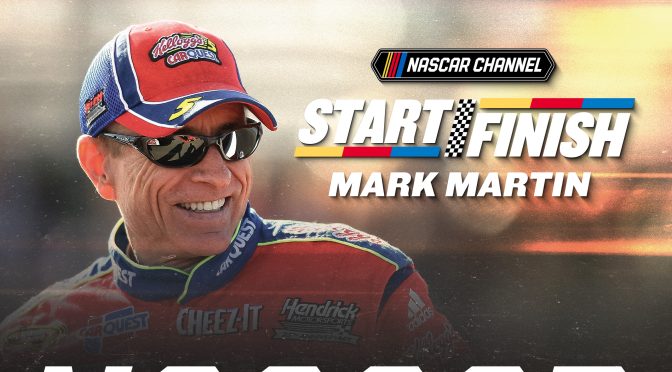
NASCAR Hall of Famer Mark Martin will take center stage throughout August on the NASCAR Channel, with a collection of “Memory Lane” episodes leading into the premiere of a new full-length documentary celebrating his legendary career.
“Start/Finish: Mark Martin” premieres Aug. 16 at 3:30 p.m. ET on the NASCAR Channel. The film launches the new “Start/Finish” documentary series, which goes inside the lives and careers of the legends who helped shape stock-car racing.
Featuring archival footage and new commentary from Martin, the documentary traces his journey from dominating short tracks across the Midwest to becoming one of NASCAR’s most accomplished drivers throughout the 1990s and 2000s.
“Mark Martin’s story embodies everything this series is meant to capture,” said John Dahl, senior vice president, original content, NASCAR. “Start/Finish combines intimate access, extensive archives and revealing conversations with the people who lived these moments to create a defining portrait. And what better way to launch the series than with one of the sport’s greatest drivers.”
“I’m honored to share my story with NASCAR fans in a way that goes beyond the races and the statistics,” Martin said. “Looking back on the highs, the challenges and the people who made the journey special gave me a new appreciation for the career I was fortunate enough to have. I hope fans come away with a deeper understanding of what the sport has meant to me.”
The Mark Martin documentary serves as the centerpiece of a month-long celebration that also includes a new season of “Memory Lane,” a NASCAR Original Series featuring short-form introductions to classic race replays.
In each episode, Martin revisits a defining race from his career, sharing personal memories, behind-the-scenes stories and insight into the victories, rivalries and milestones fans are about to watch.
“Memory Lane” episodes in the schedule below air at 10 a.m. and 7 p.m. ET on the NASCAR Channel. Each episode will also be available the following day on the NASCAR Classics YouTube channel.
Martin reflects on his ASA career and partnership with longtime crew chief Jimmy Fennig.
Aug. 5 — 1989 AC Delco 500 at Rockingham
Martin looks back at his first NASCAR Cup Series victory.
Aug. 6 — 1990 Tyson Holly Farms 400 at North Wilkesboro
Martin revisits his door-to-door battle with Dale Earnhardt and explains why defeating the seven-time champion meant so much to him.
Aug. 10 — 1993 Southern 500 at Darlington
Martin reflects on his 1993 Darlington Southern 500 win, sharing the key moments and what the hard-fought win meant to him in one of the most memorable races of his career.
Aug. 11 — 1997 Winston 500 at Talladega
Martin reflects on his 1997 Winston 500 win at Talladega, sharing the unconventional strategy his team took in an effort to capture victory.
Aug. 12 — 2000 Alltel 200 at Rockingham
Martin reflects on his successful career in what is now the NASCAR O’Reilly Auto Parts Series, highlighting his 2000 victory at Rockingham. He discusses the race, the competition, and why that win remains a standout moment.
Aug. 13 — 2009 Subway Fresh Fit 500 at Phoenix
Martin reflects on his 2009 Subway Fresh Fit 500 win at Phoenix, explaining why the victory meant so much to him at that time in his long career.
Aug. 14 — 2005, “The Rocking Chair”
Martin reflects on his original plan to retire in 2005 and why he decided to keep racing.
Aug. 16 — “Start/Finish: Mark Martin”
The premiere of the “Start/Finish” documentary series celebrates Martin’s legendary career, tracing his journey from Midwest short tracks to NASCAR stardom through archival footage and new commentary.
GRANBY, Quebec — I sat in the back seat of a race car as it motored down the frontstretch. We had one car snug to our left, another hugging our right, and four more in front of us. There was no path forward, no escape route high or low, no way to not put even more dents on our red 2007 Dodge Charger that was already full of them.
We were going to wreck; the only question was how bad. And yet my driver, Kevin Breton, pushed our Charger steadily, if not particularly quickly, forward. He maneuvered based on help from his lifelong friend and co-pilot, Jonathan Alarie, who was riding shotgun. “Left,” Alarie said (in their native French, as this was in Quebec). “Left. Right. Right.”
Alarie’s patient instruction and Breton’s precise following of it meant we hadn’t hit anything on this particular lap … yet. Alarie’s tone became more urgent as the cars in front of us merged into an impassable dam of white and yellow and black.
There was nowhere to go. Breton kept inching ahead, anyway, because Alarie had not told him otherwise. Suddenly, the white car moved forward, passing the yellow one. Then one black car stopped perpendicular to the track. Another black one t-boned it, and their collision created an opening big enough for the Charger to squeeze through. … That’s what Alarie hoped, at least, as he shouted, “RIGHT! RIGHT! RIGHT!”
Breton’s left hand spun all the way down to 6 o’clock, the Charger’s nose turned hard right, and a second later, we emerged without so much as a scratch. I couldn’t believe my eyes as clear track yawned ahead of us.
In our stunned surprise, Alarie and I burst out laughing. Breton joined in the celebration, though he knew the events on the track were calamitous only by our guffawing. He hadn’t seen any of the cars in front of us or beside us, had no idea how close he had come to hitting five different cars, was clueless as to the wizardry he had just performed.
That’s because Breton is blind.
Autodrome Granby, a NASCAR Local Racing Series track in Quebec, hosts the Défi-Vision race each year. (Photo: Vitor Munhoz/NASCAR)
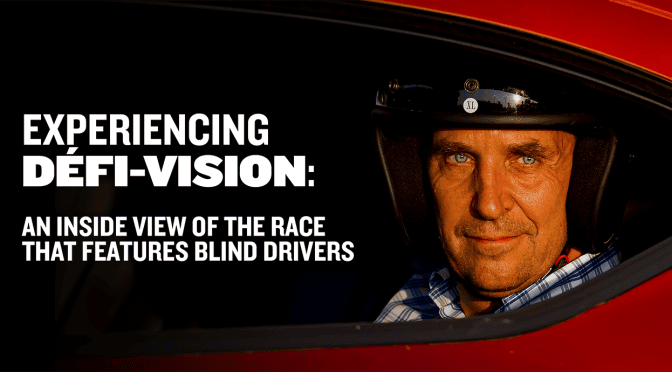
The race is called Défi-Vision, and this was its 37th running at Autodrome Granby, a half-mile dirt track about an hour east of Montreal. Thirty-one blind drivers and eight blindfolded sighted drivers entered the event, a fundraiser for the Mira Foundation, which provides guide dogs and service dogs to people with visual impairments, physical disabilities and autism.
Mira gives away dogs; each one costs $25,000 to train. Through the history of the event, Défi-Vision has raised $1.27 million for Mira, and this year’s version raised $57,000.
Before the race, all the drivers, their co-pilots and guide dogs (some in training) escaped the blistering July heat by gathering under a giant white tent. I found a seat across from Breton and next to Alarie.
“I’m putting a lot of trust in you,” I told Alarie.
“Don’t trust me. Trust him,” he said, nodding at Breton. “I’m just here to laugh.”
Breton described his vision impairment as like looking through a straw. I waved my right hand. “Can you see this?” I asked.
“See what?” he said.
“I can’t see him,” he said, pointing at Alarie to my left. “I can’t see this,” he said, patting the helmet on the table in front of him. He could see my face, and that was it.
In addition to driving a race car, Breton, who has two teenage children and a long-term girlfriend, has dabbled in kickboxing, running, coaching soccer and more, all of which combine into his raison d’être: “To prove to people that when you want to do something, you can do it,” he said. “That’s my main goal — teaching my kids that if you want to go, go for it. Work hard. You can do it.”
Breton, Alarie and their families drove seven hours southeast from Val-d’Or to Granby for the race. Breton entered so he could raise funds for Mira; he expects he’ll need a guide dog as his vision diminishes. He solicited donations, and earlier in the year, he walked 15 hours in one 24-hour stretch as a fundraiser.
This is his second time running the race, and his third will be next year. He wants to win, of course, but he’d rather laugh a lot. To do both would be parfait. “I love life,” he says. “I love inspiring people. I only have one speed: full speed ahead.”
We talked about whether he had ever driven before (not counting last year’s race.) He got a look on his face I recognized from knowing many teenagers, by which I mean he debated how much of the truth to tell me. “Yes,” he said. “But I can’t tell that story.”
The story is better because he won’t tell it. His smile as he said it, gosh, I was (and still am) dying to hear it. It seems like a safe guess that Alarie was involved, and probably/hopefully a parking lot and definitely a lot of laughter.
Breton said he is “25 with 15 years of experience.” He joked that he wanted to drive with one of those helmets with beer cans on each side and straws to his mouth. I’m guessing that was against the rules, but they were read in French, so I can’t be positive.
The drivers meeting seemed mostly to be a discussion of the fact it will hurt if you hit the wall, you should keep your arms inside the car, and wisecracks about what’s the point of waving a green or yellow or checkered flag if the driver can’t see it. “It’s the only race you can run next to the car and be faster,” someone said.
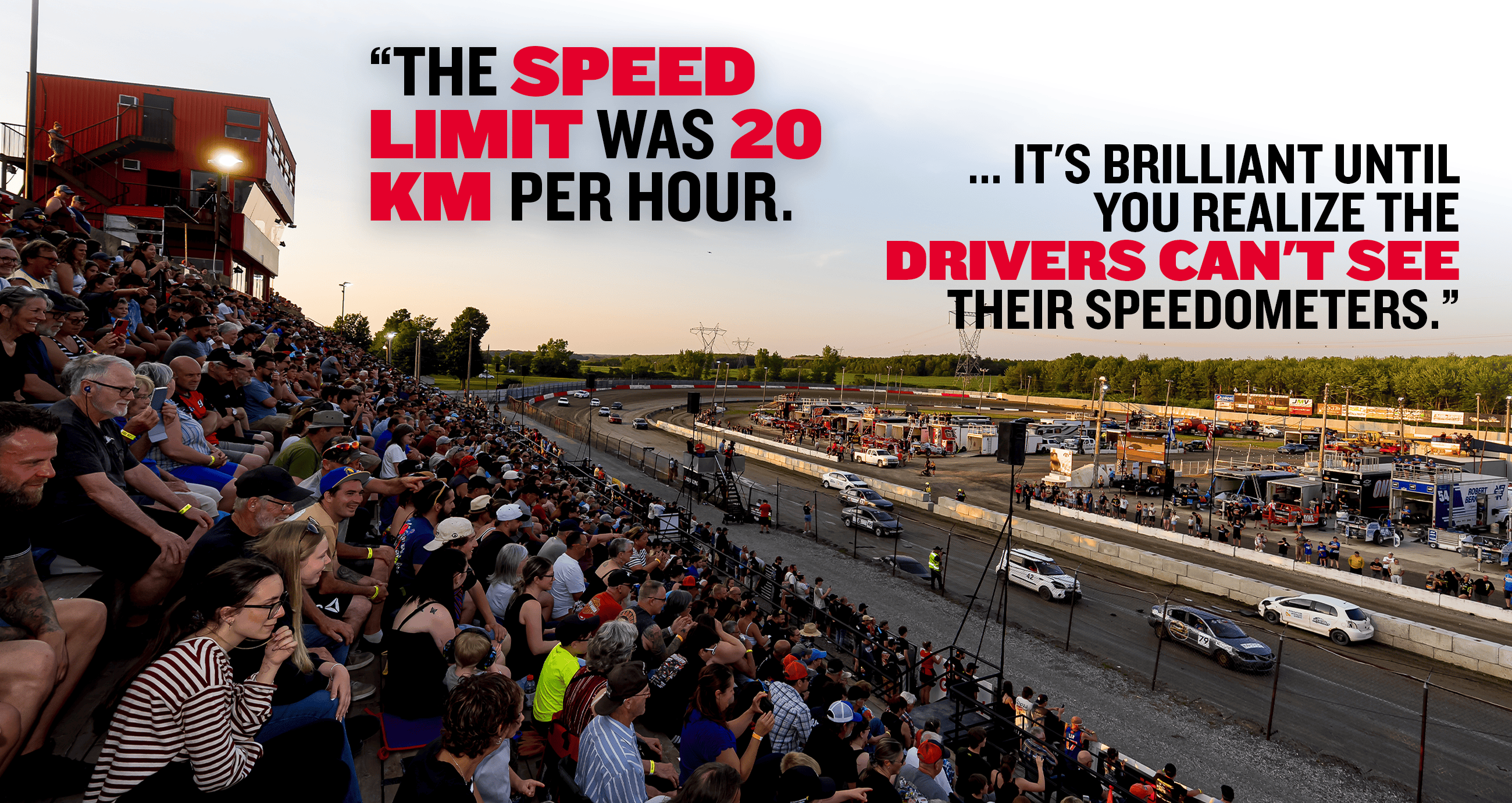
Race officials also spelled out perhaps the most unfollowable racing rule ever: The speed limit was 20 kilometers per hour. It sounds like a great safety precaution, right? This race is supposed to be funny and inspiring, not dangerous and painful. Nobody will get hurt if nobody goes faster than 20 km.
It’s brilliant … until you realize the drivers can’t see their speedometers.
Kevin Briton and Jonathan Alarie (Photo: Vitor Munhoz / NASCAR)
After the drivers meeting, Breton left the table to get a drink. As he walked back, Alarie “guided” him to his seat: “Here, Kevin, Kevin, Kevin.”
Me: “Are you teasing the blind guy?”
Alarie: “Yes.”
That goes both ways. “Last year, I felt safe,” Breton said. “This year, I don’t know — because of my co-pilot.”
Alarie and Breton have been friends since they were five. When they were boys, they fought like brothers, hating each other one minute and hugging the next. Now it’s all hugs … and teasing.
“Do you know the difference,” Alarie asked me, “between a friend and a best friend?”
“No,” I said.
“If a friend sees you fall, he helps you up. If your best friend sees you fall, he laughs. Then he helps you up.”
Alarie is godfather to Breton’s son. When Breton needed help navigating through the crowded tent, Alarie jumped up to help. “He’s the kind of guy who is scared of nothing,” Alarie says. “He likes to prove to himself that he can do anything.”
We walked from the tent to the track, and Alarie led Breton by the arm. After we got buckled into our Charger, I looked at the car to our right. It had No. 911 on the side. I hoped I didn’t have to call it.
The blind drivers honked their horns as they waited to start. Forgive their impatience. Most of them had never driven before, so they were eager to get going. Breton pulled on a blindfold. Because the 31 blind drivers had varying degrees of visual impairment, everyone wore one to level the playing field.
Our Dodge Charger was, I’m 99.9 percent sure, the stoutest car in the field. I walked among the vehicles the day before, and they were mostly, if not entirely, minivans, sedans and crossovers. They were all donated for the race and retired to the junkyard afterward. Breton would have rather driven any one of those. He worried the Charger’s 250 horsepower would be too much, and he’d be unable to control his speed. He need not have worried; the ride was surprisingly smooth … or perhaps it was surprisingly smooth because he worried.
Before and after the race, Breton, Alarie and I spoke English. During, they spoke French, of which I know little more than croissant, croque monsieur and crepe. I learned quickly that gohsh (actual spelling: gauche) means left and dwat (droit) means right. I didn’t learn until later that dwat also means straight. The same word means straight and right. That’s dumber than a speed limit for someone who can’t see the speedometer.
Anyway, I also learned that advance said with a French accent means go. I didn’t need anybody to translate “oh, shit!” not least because I was the one saying it.
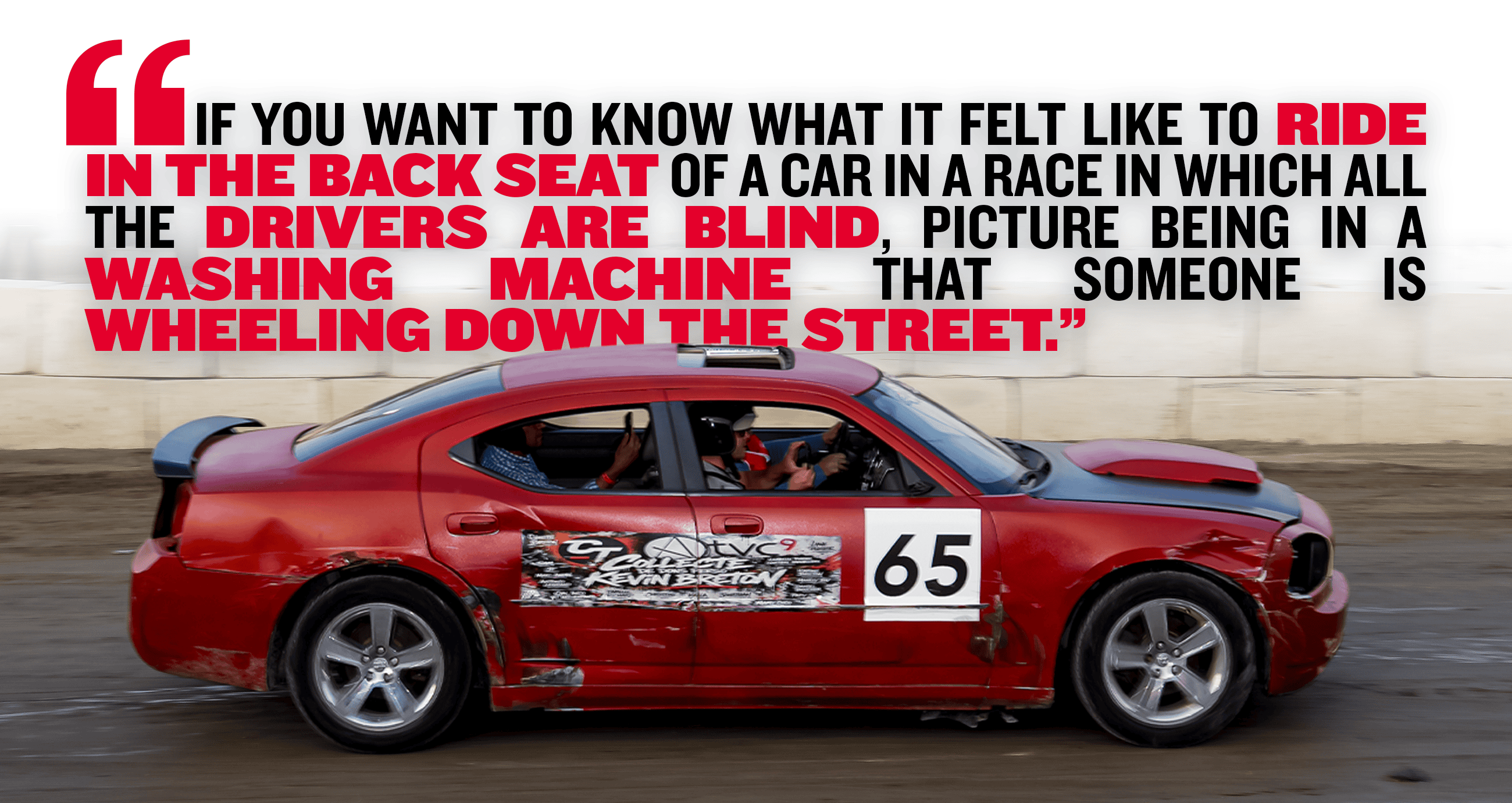
If you want to know what it felt like to ride in the back seat of a car in a race in which all the drivers are blind, picture being in a washing machine that someone is wheeling down the street. We got sideswiped on the left. We got sideswiped on the right. We got rear-ended. We got doored.
Once, early on, a car cut us off, we clipped its rear end, and the collision lifted both of our driver’s side tires off the ground. Someone sent me video of it taken from the grandstands, and it sounded like everyone in the place howled in laughter.
Only one hit felt hard enough to be worth mentioning, and that was when we got smacked from behind, which propelled us into the car in front of us. All of which brings up a fair question: Was it safe?
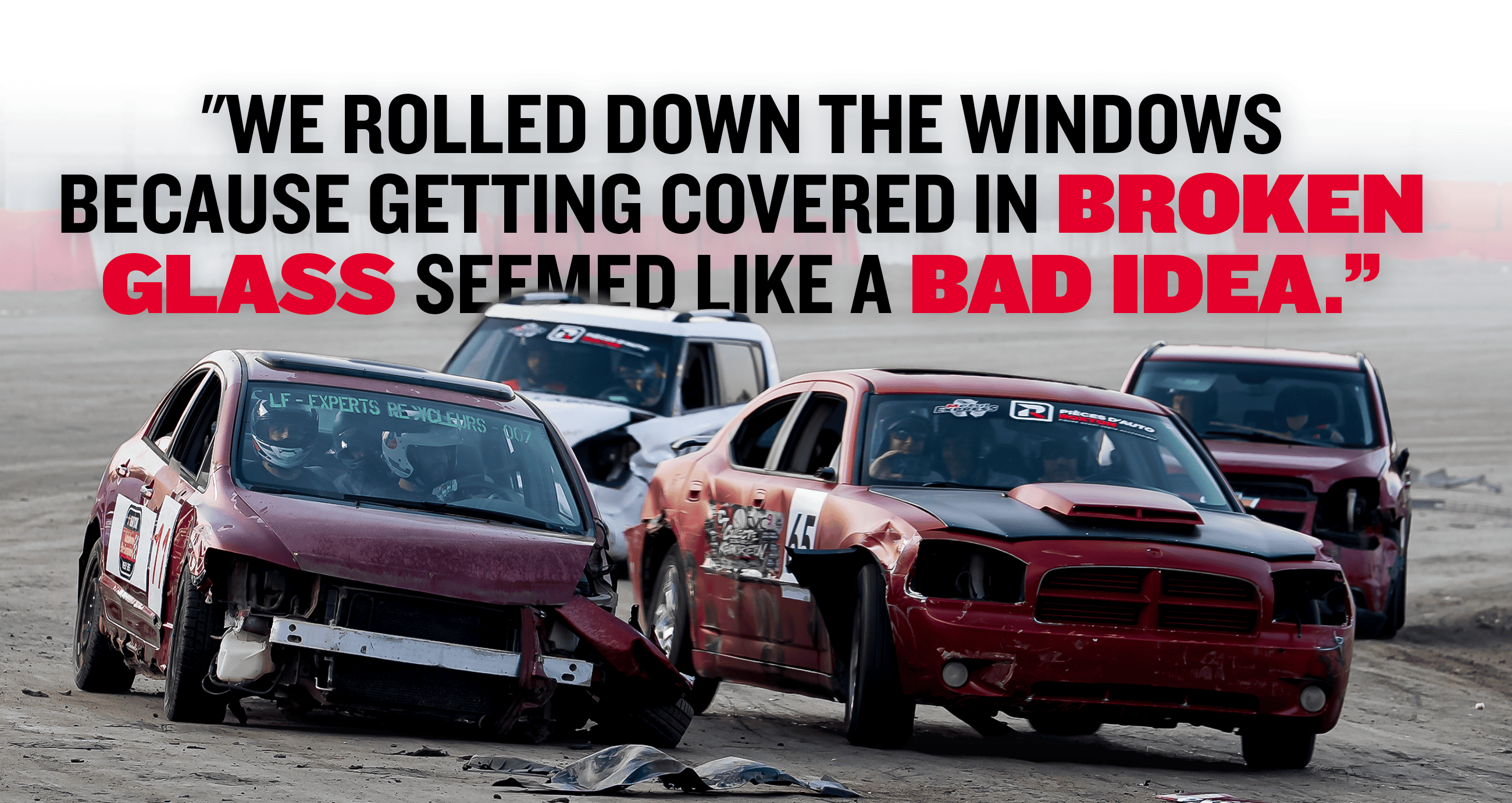
Mira has been running Défi-Vision for 37 years, and nobody has ever gotten hurt. We wore helmets and seatbelts. The cars were inspected (steering, brakes, throttle, seat belts). Mechanics removed headlights, taillights, airbags and Ford Pintos. We rolled down the windows because getting covered in broken glass seemed like a bad idea.
After a few laps, bumpers and various other car parts spread across the track like dirty laundry strewn across my daughter’s bedroom. Nobody picked any of it up. Alarie didn’t tell Breton to avoid that detritus, because that would have caused more problems than it solved.
(Photo: Vitor Munhoz/NASCAR)
Before the race, a mentalist named Edward Gebrael walked around the tent entertaining drivers, co-pilots and their families and friends with magic tricks. He told me to pick a card, look at the letter on it, put it back in the deck without showing him, and think of a name that started with the letter. He asked me how many letters my chosen name had then told me to close my eyes as he wrote down his guess.
“Now say the name and open your eyes,” he said, and when I did, I saw he had written the name I just said.
I thought of that encounter after Breton threaded the Charger through that barely-big-enough opening: I had seen magic twice in an hour.
I figured out the magic in the tent, only it wasn’t magic at all. It was a trick. I’m not 100 percent sure how he did it, but somehow Gebrael knew my letter. By knowing that and the number, he figuratively led me by the hand to an answer. It was a fait accompli; I just didn’t know it.
I figured out the magic in the car, too, only that wasn’t a trick.
Now, for sure, part of the reason we didn’t crash was luck. But Breton performed three other escapes nearly as astounding as that one. One escape might be luck. Four are not.
While Gebrael figuratively led me by the hand as part of the trick, Alarie has literally led Breton by the hand as part of their friendship many, many times, including several times that day. The instructions in the car were an extension of that. The tone with which Alarie said gohsh and dwat contained multitudes that Breton — and only Breton — could hear. When the hole between the cars opened and Breton had a split second to slice our Charger through it, Alarie — and perhaps Alarie alone — was prepared to help him.
But was that magic? Yes, indeed: magic produced by 35 years of friendship, compressed into one unforgettable night that showed the way to survive life’s biggest challenges is to have someone you love guide you through them.
(Photo: Vitor Munhoz/NASCAR)
As the race went on, I thought for sure we were among the best cars. When we weren’t getting run into from behind, doored, cut off or sideswiped, Breton drove almost straight almost the entire time. He had a sense for the angle of the corners, and he traveled through them nicely. For real: My man held a pretty wheel. I bet if the race had qualifying, he would have won the pole.
We only randomly ran into something for no reason once (the inside wall). Meanwhile, it looked to me like every other car spent half the time driving at 45-degree angles because their drivers got confused about dwat (right) and dwat (straight) and split the difference.
I peeked at the scoreboard a couple times, didn’t see us in the top five, and assumed the scoreboard wasn’t on for our race. It was on all right. Alas, we were five laps down.
Allegedly.
If you trust the official race report.
The race ended when a driver in a gray minivan reached the prescribed distance of 12 laps. A race official standing near the inside wall signaled for us to stop, Alarie relayed that to Breton, and he parked the Charger between Turns 3 and 4.
We waited to make sure everybody else stopped, too, then we got out and walked a lap around the car. The final 3.5 miles of the Charger’s life were filled with excitement. The trunk was open, surely the result of that hard hit. It looked like someone had put the car in a vice: all four doors were scraped and dented. All four corners were damaged, too, though the nose looked surprisingly good.
The back right quarter panel was half torn off. A quarter panel, I think, or some other part from another car was dangling out of the right front wheel well. I have no idea how it got there, how long it was there or how we drove with it there.
Still, even with all that damage, all the parts were still connected to the car (if in some cases barely), making us unusual if not an N of 1. I looked around the track and … OH MY GOSH. I thought it was bad during the race.
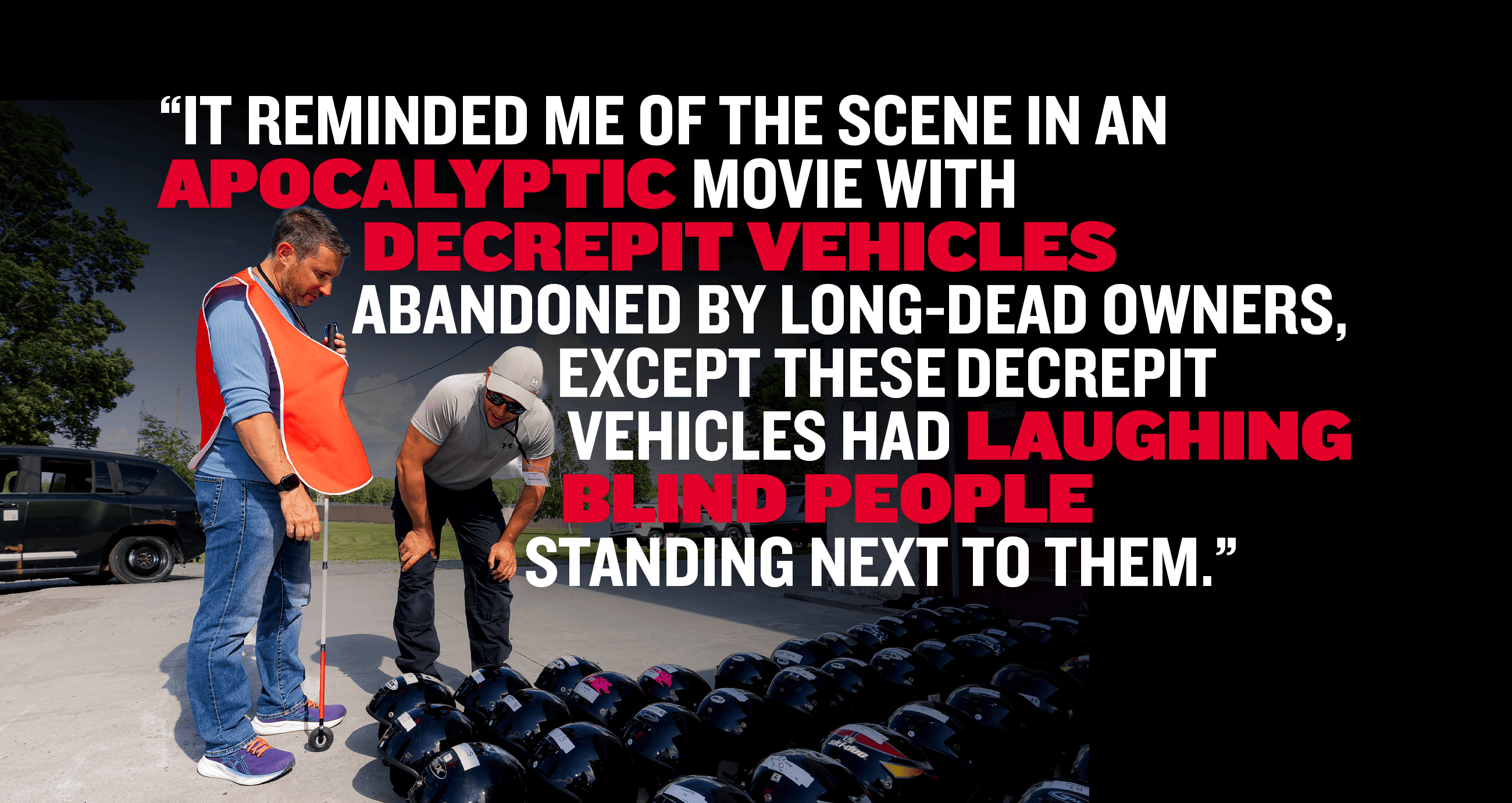
Now that it was over … imagine a junkyard sneezed, and you’ll start to know what it looked like. It reminded me of the scene in an apocalyptic movie with decrepit vehicles abandoned by long-dead owners, except these decrepit vehicles had laughing blind people standing next to them.
We all piled into a school bus to drive back to the giant white tent. That short trip overflowed with joie de vivre. Chatter bounced from one row to the next, with participants gleefully recounting their races. I heard plenty of gohsh and dwat … but not much oh, shit!
I had not picked up enough French to discern exactly happened in their races. But I know they had fun. Anyone could see that.
Hendrick Motorsports isn’t used to being anywhere except the top of the NASCAR pyramid. After Rick Hendrick first entered the NASCAR Cup Series in 1984, his team has ascended to the most wins (322), top-five finishes (1,342) and top-10 finishes (2,293) of anybody at the sport’s highest level, and it’s not really all that close in any of those categories. Hendrick is far and away the most dominant organization in recent NASCAR history.
And that’s precisely what makes this year’s results so jarring to see. So far in 2026, Hendrick has just two total wins — both by Chase Elliott (at Martinsville in March and Texas in May) — which is their fewest through the first 23 races of a season since winning only once to start the 2018 campaign (also with Chase Elliott). They’re tied with Spire Motorsports and Trackhouse Racing (two wins apiece) in that regard this year, well behind Joe Gibbs Racing and 23XI Racing (seven apiece) and trailing Team Penske (three) as well. They also have fewer than half as many top fives (20) as JGR (42), despite beating Gibbs 90-87 in 2024 and 2025 combined.
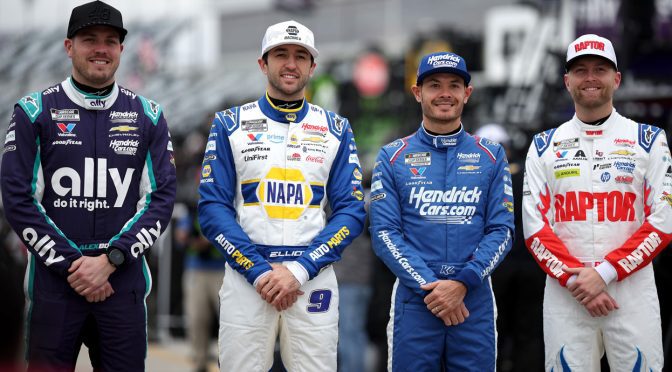
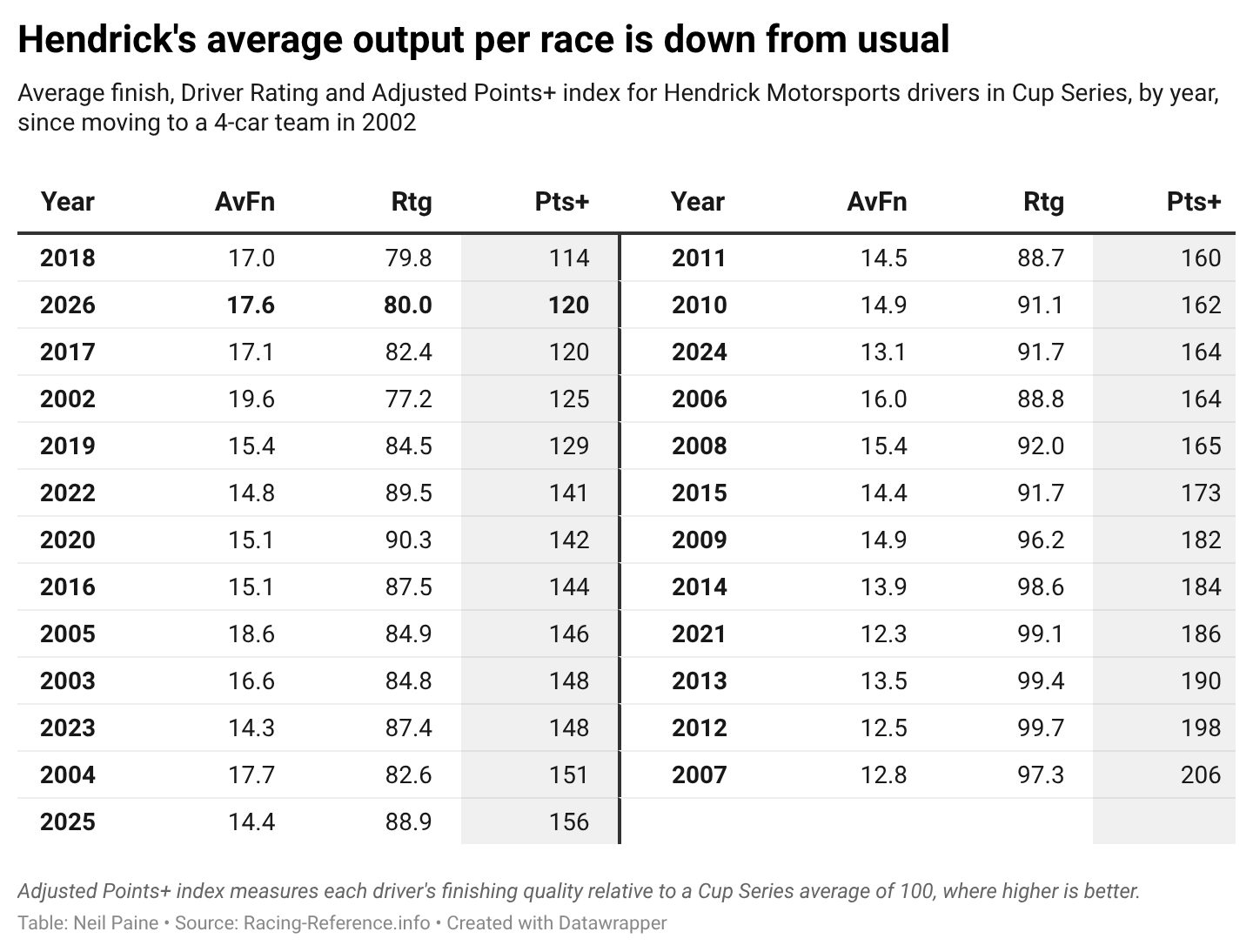
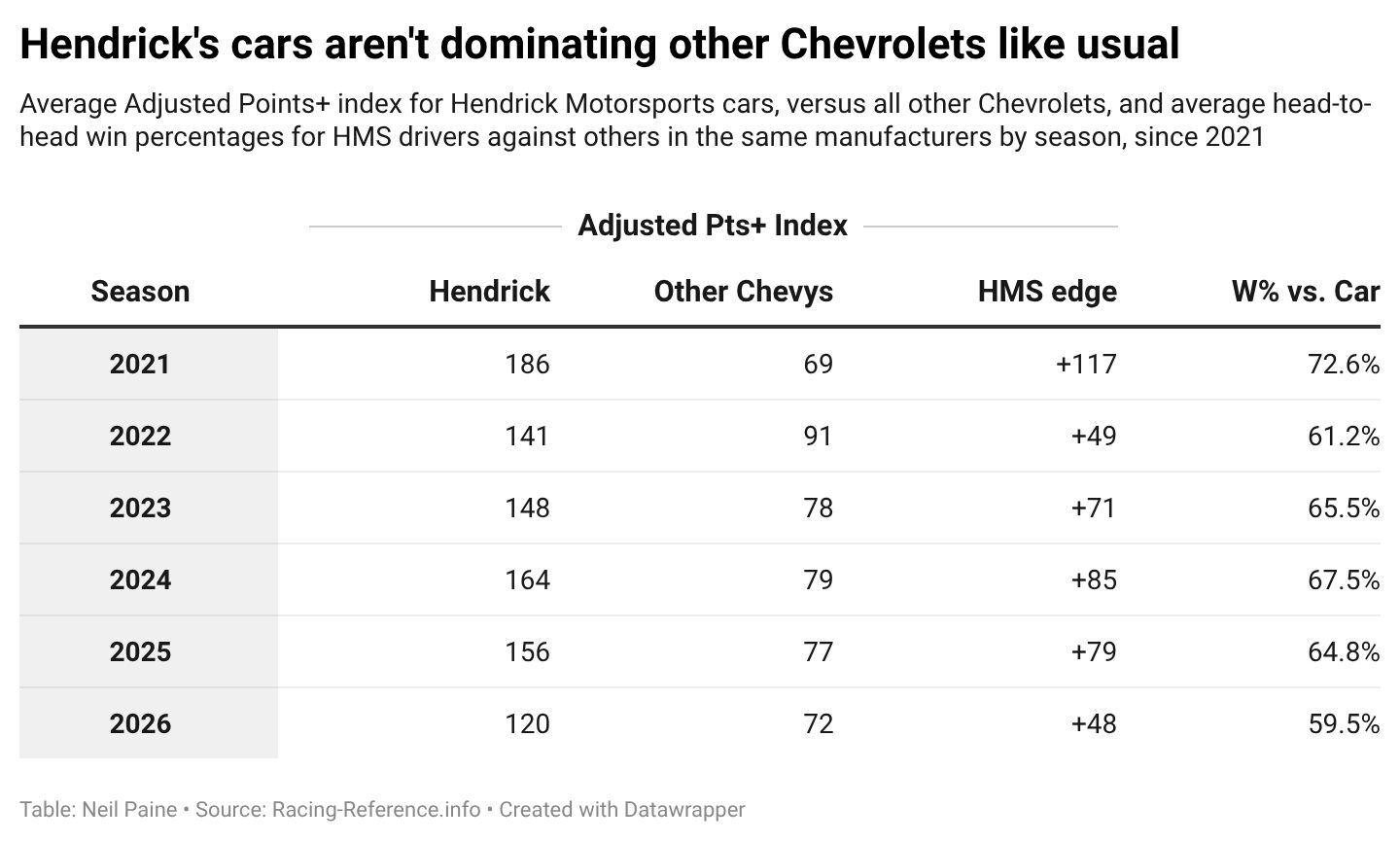
Statistically, this is on pace to be one of the most mediocre Hendrick seasons since switching to a full-time four-car lineup in 2002. Across all four Chevrolets — Kyle Larson in the No. 5, Elliott in the No. 9, William Byron in the No. 24 and Alex Bowman, Anthony Alfredo and Justin Allgaier in the No. 48 — Hendrick’s 17.6 average finish is tracking for the team’s fourth-worst showing, ahead of only 2002 (19.6), 2005 (18.6) and 2004 (17.7). Meanwhile, their 80.0 Driver Rating currently ranks third-worst — only 2002 (77.2) and 2018 (79.8) were poorer — and their Adjusted Points+ index of 120 is ahead of only 2018 (114).
No matter how you slice it, we’re not used to seeing a diminished Hendrick Motorsports, even if a “down year” for HMS would be a good year for most other teams.
Some of Hendrick’s problems in 2026 can be attributed to the Chevrolet program still figuring out how best to extract speed from this year’s cars. While Toyota has won 14 of 23 races this season, and Ford — which had been struggling out of the gate as well, aside from Ryan Blaney’s No. 12 Team Penske machine — has produced much better results in recent weeks, no Chevy besides Elliott has won outside of Shane van Gisbergen in late June (Sonoma) and Daniel Suárez in late May (Charlotte).
And most concerning, Hendrick’s statistical edge within Chevy is down significantly as compared with recent seasons — indicating more than just a manufacturer problem overall, even granting that Hendrick is the flagship team for their OEM:
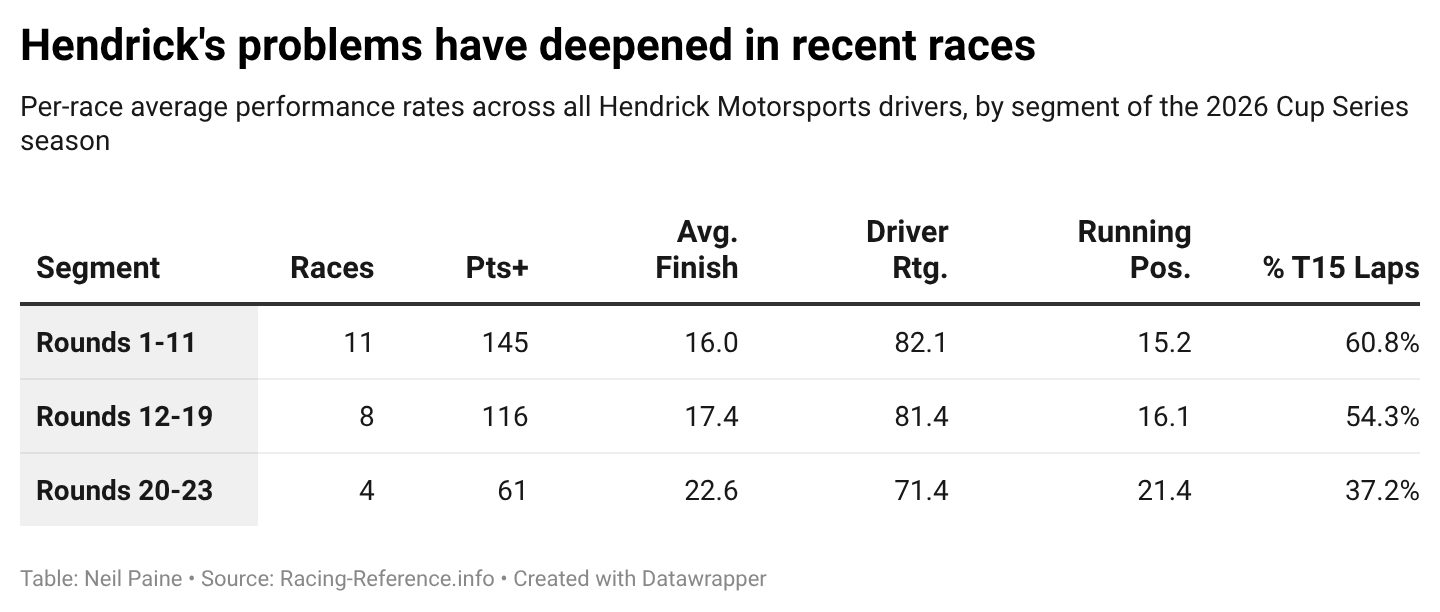
What’s more, the Hendrick funk is getting worse over time, culminating in a miserable summer stretch.
We were already talking about a possible Hendrick slump during the opening handful of races in the 2026 season, speculating about the effects of the new Chevy Camaro body design and lamenting the early absence of Bowman from the No. 48 car due to vertigo. But it also seemed fair to expect Hendrick’s fortunes to turn around from there, with more time to adjust to the new car, Bowman returning to the lineup and a larger sample size in which drivers like Larson and Byron could see their luck even out.
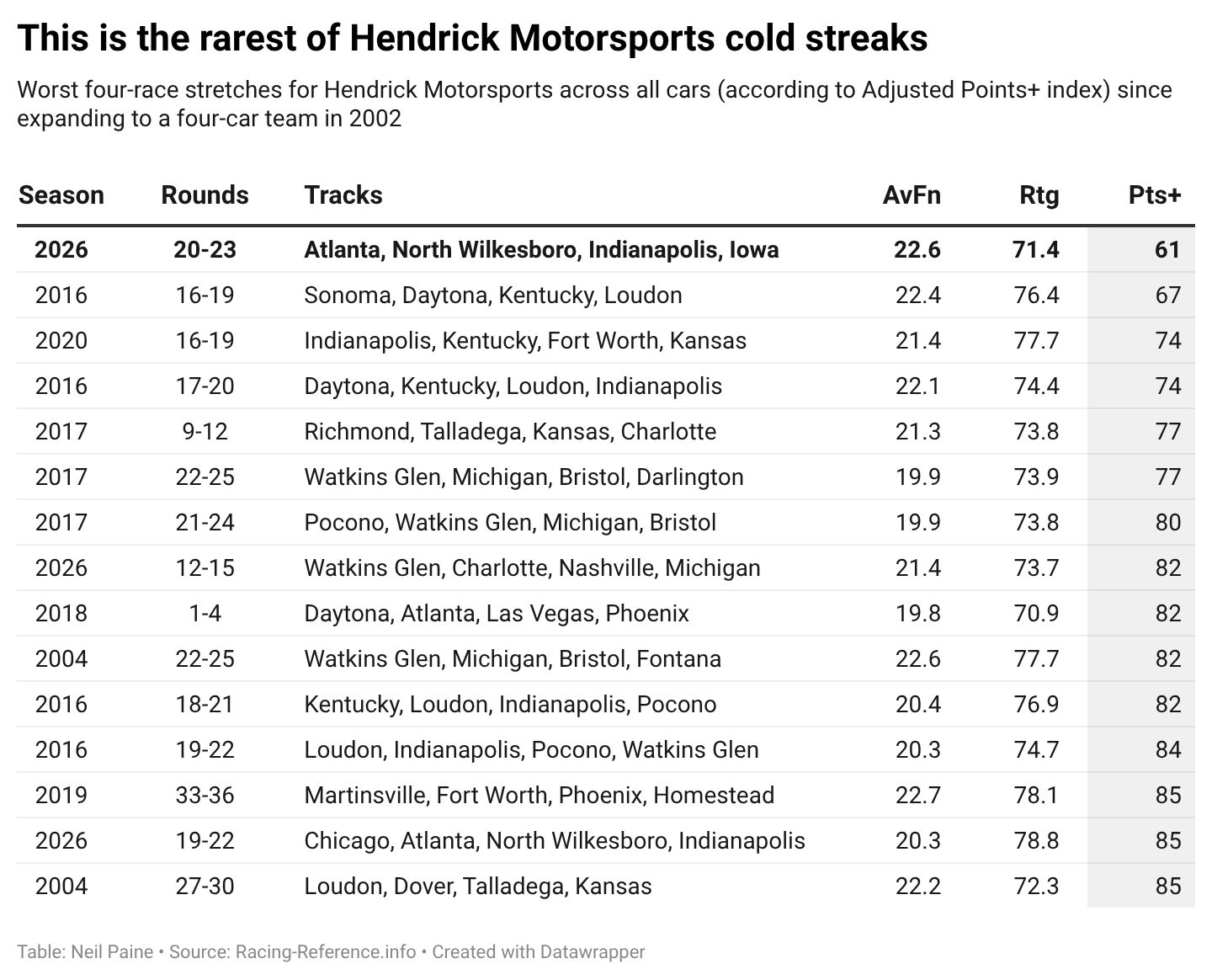
Aside from Elliott’s high points, though, that turnaround hasn’t really happened. Instead, the second half of the Cup calendar to date has seen meaningful performance declines across the four Hendrick cars. And in the past four races specifically, the average Hendrick car has finished outside the top 22, with a Driver Rating in the low 70s and an Adjusted Points+ index nearly 40% worse (!) than the Cup norm.
In the 25 years of Hendrick’s four-car era, that most recent four-race stretch is the team’s 13th-worst by average Driver Rating, 11th-worst by average finish and their absolute worst by Adjusted Points+ index, meaning this is the roughest stretch of finishing quality the team has seen in at least a quarter-century.
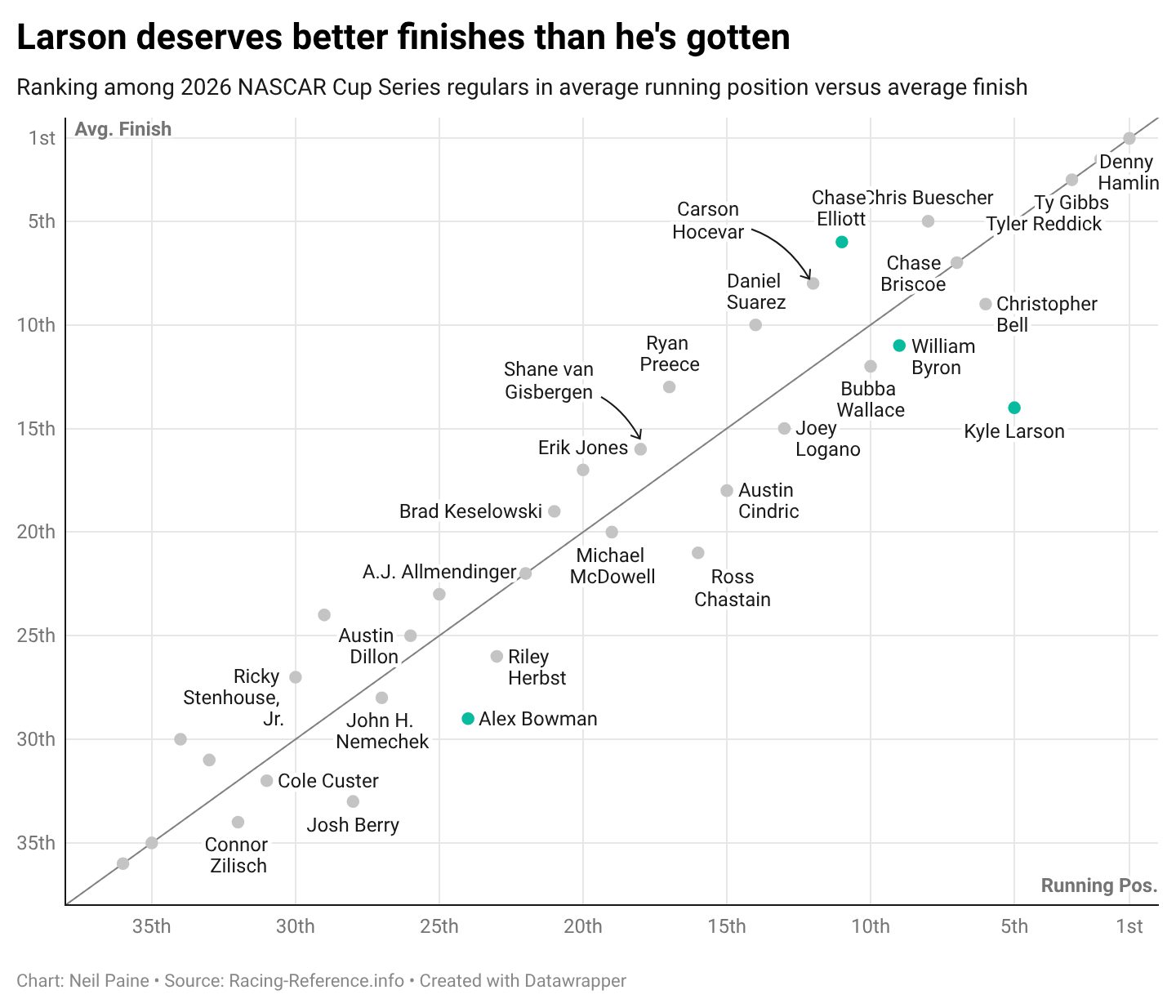
If there’s a saving grace for the HMS group — beyond the fact that there’s basically nowhere to go but up from here — it’s that Larson continues to deserve better finishes than the ones he’s gotten, based on his Driver Ratings and average running positions in races this season. No driver has a bigger negative gap between his Cup Series-wide ranking in average running position and average finish than Larson in 2026.
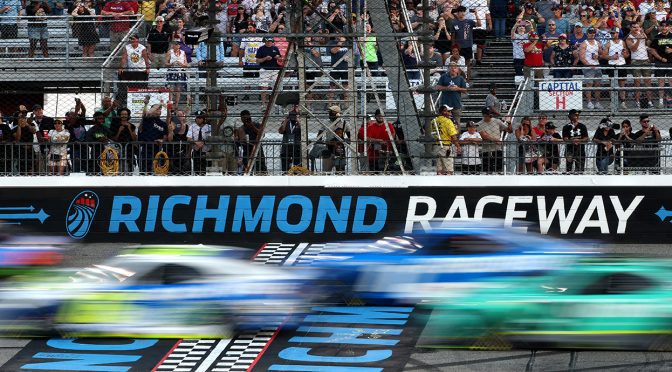
So this team probably won’t continue to see its drivers finish quite as poorly as they have in recent weeks, like when multiple HMS cars ended up outside the top 30 — and none finished any better than ninth — at Iowa Speedway this past Sunday. But that doesn’t necessarily mean there’s huge room for improvement in the underlying process, which has produced less speed from the Hendrick rides this season even beyond their bad finishing luck. And with fairly mixed projections for the quartet of Byron, Larson, Elliott and Bowman at Richmond Raceway (Sat., 7 p.m. ET, USA Network, HBO Max, MRN Radio, SiriusXM NASCAR Radio), that may not change too much this weekend, either.
A big week for Tristan McKee started on a perfect note Wednesday evening at Berlin Raceway.
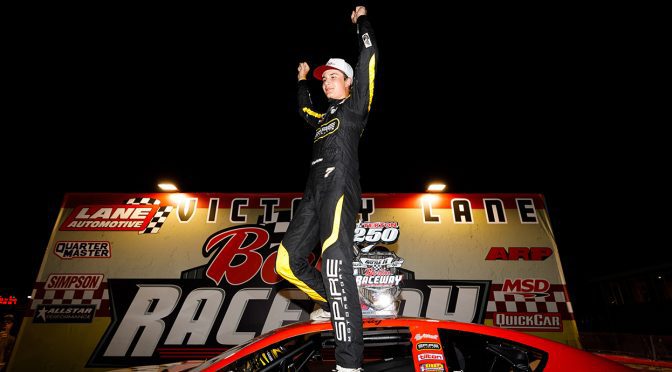
Set to make his NASCAR Craftsman Truck Series debut with Spire Motorsports on Friday at Richmond Raceway, McKee will now go into that start with a Tekton 250 Battle at Berlin victory on his resumé. McKee prevailed in Berlin’s crown-jewel race after outdueling Super Late Model veteran Bubba Pollard during a nine-lap sprint to the finish.
With McKee in second on the bottom line for the final restart, perfection would be needed if he wished to usurp one of the best in the Super Late Model discipline. It took diligence on McKee’s behalf, but he managed to hold steady against Pollard and pull away for one of the biggest victories of his career to date.
“I knew I just had to get a good restart, kind of get control and at least get a fender or a nose ahead,” McKee said. “We fought for a couple of laps, and [Pollard] was kind of getting me on the entry of [turn] three, but I was able to get good drive off the corners and get ahead of him.
Prior to Wednesday, the only competitive laps McKee had turned around Berlin occurred in the complex’s other crown jewel in June, the Money in the Bank 150.
With McKee driving the same No. 5 Chevrolet for Wauters Motorsports, the 150-lap race served as a vital test session for the 16-year-old prospect. After qualifying 16th in the 29-car field, McKee methodically worked his way toward the front before settling for a respectable sixth-place finish.
With a baseline understanding of Berlin for him to utilize, McKee was ready to return to the track for a 250-lap marathon. McKee immediately showed speed on Wednesday afternoon, as he set the fastest time in qualifying against the likes of Pollard, Carson Hocevar and 2026 Money in the Bank 150 winner Ty Majeski.
Staying in contention throughout the evening required McKee to exert patience. Four guaranteed cautions every 50 green flag laps brought about diverse pit strategies, so McKee elected not to be overly aggressive and took advantage of the chances to make his car better under caution.
Everything played into McKee’s favor, as he cycled up to third in the closing stages while Pollard and 2022 Tekton 250 Battle at Berlin winner Evan Shotko separated themselves from the pack. Once Shotko’s night ended due to a crash, all that separated McKee from his own Tekton 250 Battle at Berlin victory was Pollard.
Defeating a renowned competitor like Pollard would be intimidating for any driver, let alone a teenager like McKee. Pollard’s record in Super Late Model features victories in nearly every crown jewel of the discipline, including the Tekton 250 Battle at Berlin in 2023.
Despite this, Pollard expressed concern about being able to fend off McKee for the lead once he lined up alongside him for the final sprint. Although he ran up front nearly the entire night, Pollard was never completely comfortable in the car, which he felt was a key difference in deciding who took home Wednesday’s Tekton 250 Battle at Berlin.
“I was terrible the whole race,” Pollard said. “I was tight. I thought the tire would give up more than what it did. The car really stayed consistent the whole race. I needed more motor there. I had it restricted down too far, too much there at the end. Not a bad night, we’ll take it. We needed a good run.”
Pollard’s chance to join Erik Jones and the late Kyle Busch as a multi-time Tekton 250 Battle at Berlin winner will have to wait another year. For McKee, his triumph on Wednesday served as his first major victory in a Super Late Model.
McKee has won in nearly every type of car, from the Pro Late Models in the southeast all the way to road courses with the Trans Am TA2 Series. He also currently leads the ARCA Menards Series East standings by just one point heading into the season finale at Bristol Motor Speedway.
The composure McKee has displayed in full-bodied cars since his mid-teens is a big reason why he is making his first Truck Series start in a couple days. With the faith Spire Motorsports possesses in him, McKee wants to grab as many victories as he can on short tracks before he one day fully progresses into NASCAR’s top ranks.
Wednesday was another successful chapter in McKee’s ongoing journey. The night itself was not perfect from McKee’s perspective, but the confidence in himself and the chassis put together by Wauters Motorsports guided him to victory in Berlin’s most cherished event.
“We knew we had really good race pace,” McKee said. “The car was phenomenal all weekend. We kind of put ourselves behind there after the first stop and was running around ninth or 10th. We got stuck there for a little while, but we really started getting through the field. That caution with 20 to go helped a little bit. It was a ton of fun.”
With a Tekton 250 Battle at Berlin victory checked off, McKee now turns his attention to Richmond. The field in Friday’s race will be tough just like Wednesday, but McKee is eager to carry over the momentum from Berlin into the first of what will likely be many Truck Series starts to come.
The NASCAR Cup Series and Craftsman Truck Series head to Richmond Raceway this weekend for a River City doubleheader. For the Cup Series, three regular-season races remain, while Chase contenders in the Truck Series have just two races to solidify postseason positioning. See qualifying orders for both series this weekend.
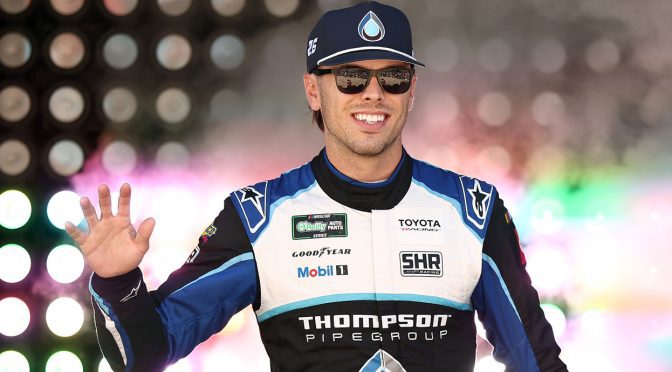
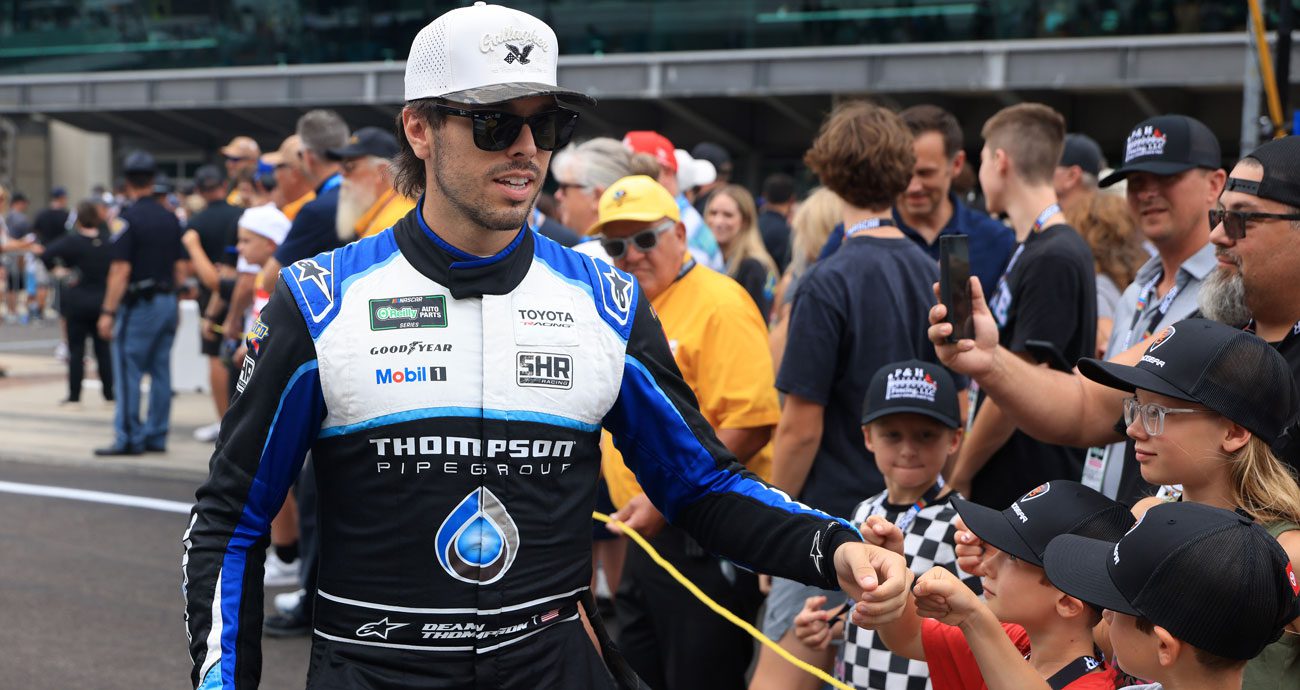
After two seasons with Sam Hunt Racing, he knew it was time to take a chance on himself — and raise the stakes with a move to Haas Factory Team in 2027 in a multiyear deal.
The Southern California racing scene tied Thompson with Joe Custer, president of Haas Factory Team, together from an early age. While Thompson was getting his career started, he competed against Cole Custer in quarter midgets behind Orange Show Speedway in Riverside. Thompson knew he wanted to eventually compete for Custer, who has had direct ties with Haas for two-plus decades.
“He has been a huge help for us being a mentor for finding different teams and giving us a direction,” Thompson told NASCAR.com of his relationship with Custer, minutes after announcing the move to Haas. “My dad and I were so green to all of this. When we first got onto the NASCAR scene, we didn’t know anything. Joe was our mentor through all of it and guiding us through all of it. There was always a want to race for his team, but I don’t know if it was always in the cards. It finally happening is a pretty cool full-circle deal.”
After Thompson dabbled his feet into the NASCAR O’Reilly Auto Parts Series with Sam Hunt Racing, one of the top independent teams, the 24-year-old knew this was his chance to connect with a larger organization and compete for wins more frequently.
A call from Custer made the answer easier.
“I knew going into this year that if I were to move, it was going to be to one of the winning race teams or not at all,” Thompson said. “That’s an opportunity you can’t really pass up. Not many times do you get your dream team calling you to race for them. That’s an opportunity I had to take.”
Thompson recalled a meeting with team owner Sam Hunt before joining the organization, where he said he would eventually need to bet on himself. Thompson took that conversation to heart but believed that he pushed the No. 26 Toyota to the limit.
“When I first got here, the car was always faster than me,” Thompson said. “I was always behind the car, learning the car, and now we’re getting to a point where I feel as if I’m maxing out what the car is capable of and I’m out-driving what the car is capable of. That’s not to knock Sam; they are doing everything they can. When we hit it, we hit, and we’re fast.
“It was always coming to a point where I had to take a chance on my career to go win races. That’s how it’s playing out now. Eventually, this was always coming. We just didn’t know how far away it was.”
Justin Casterline | Getty Images
Hunt has credited Thompson for his discipline, knowing he needs to optimize each week. Thompson has a deal with his father where if he ever plateaus or sees regression, that financial support is over.
That is a motivating factor for Thompson.
“Some guys can do whatever during the week and shop up and drive a badass car during the race weekend,” Thompson said. “I feel like I need to work my ass off during the week to keep up. I’ve got no problem with that.”
Custer believes Haas is getting a hungry race car driver. From afar, he’s seen Thompson’s work ethic carry him to success on and off the race track.
“We think we can take Dean to the next level, and we think he earned that from our point of view,” Custer said. “Dean made those two years — critical years — in his career, and hopefully we can take him to the next level where he’s running up front, leading laps, sitting on poles and winning some races.”
Thompson leaving SHR is a blow for the two-car operation, but his success elsewhere could still boost the No. 26 bunch.
“It’s tough, but it isn’t something that’s surprising for me or our team,” Hunt said on Corey LaJoie’s “Stacking Pennies” podcast on Monday. “I told Dean at Iowa this weekend that the best thing he can do for us is go win races in the best equipment.”
In 58 O’Reilly starts, Thompson has 11 top-10 finishes, including an eighth-place effort at Iowa. His lone top five came at Charlotte Motor Speedway in 2025.
But he knows expectations will be heightened in 2027, moving to a team that won the 2023 championship with Custer.
“It’s a different expectation as a team,” Thompson said. “All I can do is work my butt off to try to meet those expectations. I feel like I met them here. I’m just going to try to do what I always do, and that’s work harder than everyone else around me. I think the results will come with that.”
Thompson will enjoy his final 10 races with Sam Hunt Racing before departing, knowing the team took a chance on him when few others would after a stint in the NASCAR Craftsman Truck Series.
“It’s bittersweet to leave these guys because they took me at a time that was not favorable to me,” Thompson said. “I wasn’t a driver that anybody would want to drive for them. We found each other at a hard time for both of us, and we helped each other grow. I’m eternally grateful for Sam and his team and what they’ve done for my career. Like Joe said, those two years could have been detrimental to whether I make it or I don’t. Really happy to be there, but sad to leave here – wish I could have both.”
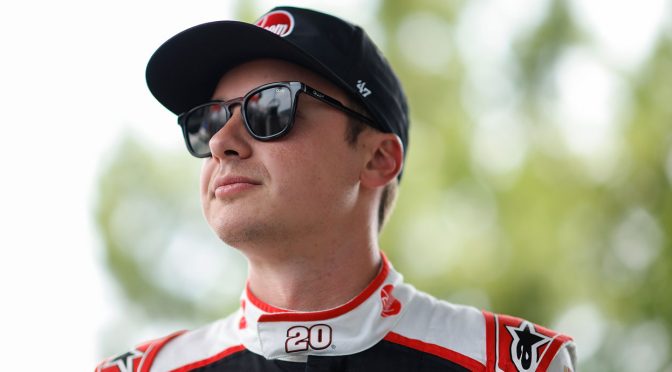
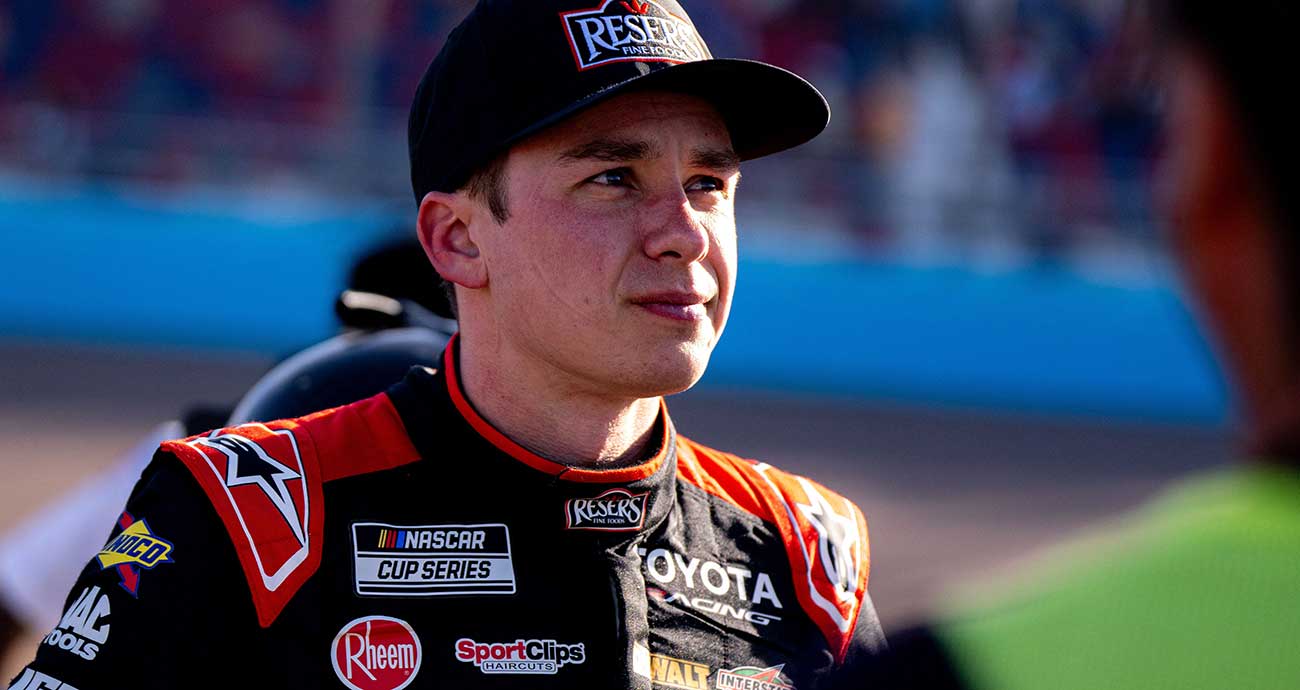
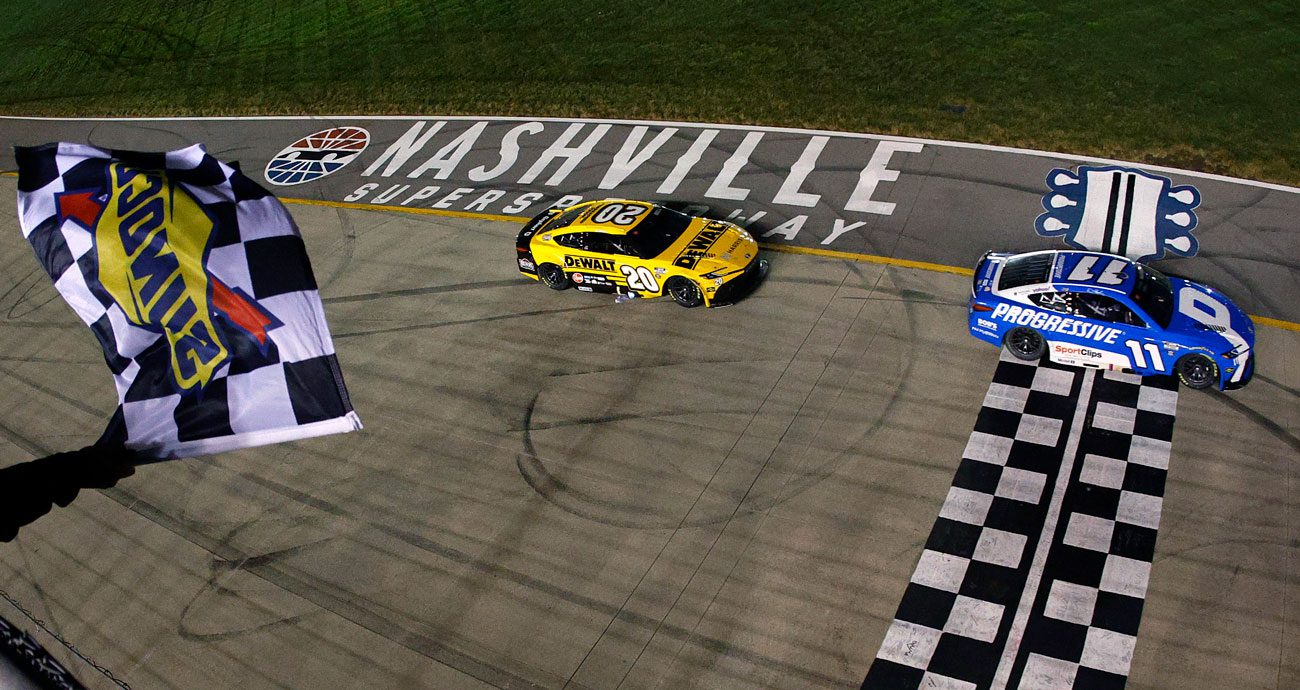
Christopher Bell has been one spot short of Victory Lane this season. A bunch of times, actually.
In fact, no one has finished second more often in a season without winning a race than Bell, who tied Harry Gant’s 1981 record with a seventh runner-up finish Sunday at Iowa Speedway.
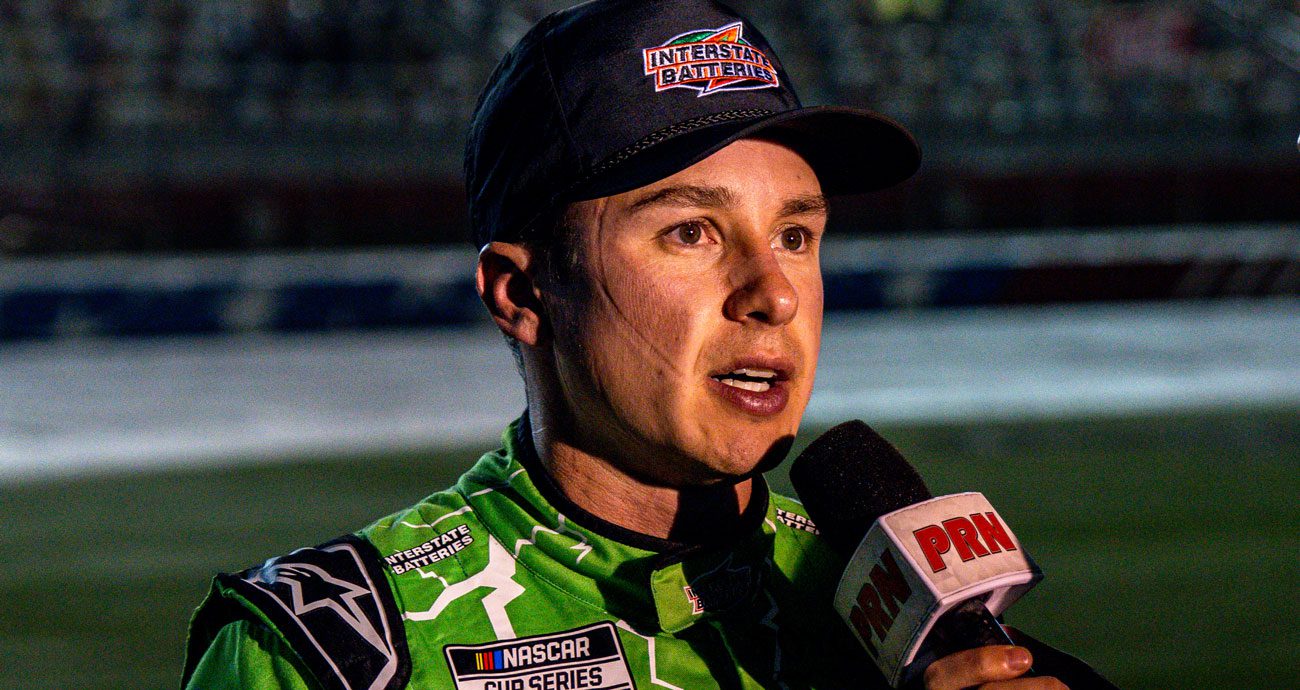
“This is what you call a bad second-place finish,” Bell told USA Sports after climbing from his No. 20 Joe Gibbs Racing Toyota.
Seven runner-up efforts just leave a driver with different emotions than others. Here’s a look at each time Bell finished second this year and how he felt after the race.
What happened: The fourth race of the season produced an incredible performance by Bell and the No. 20 team. Bell led 176 laps, finished second in Stage 1 and won Stage 2 in what appeared to be a day built for his first trip to Victory Lane this year.
Instead, a double whammy of late cautions upended Bell’s hopes of winning his third consecutive Phoenix spring race. A Lap 288 caution for Austin Dillon brought the field to pit road for their final service of the day, with Ryan Blaney, Ty Gibbs and others electing to take two tires while Bell’s crew opted for four Goodyears.
Bell restarted eighth with 19 laps to go, but the ensuing restart resulted in another quick caution after a multicar crash on the backstretch. That yellow took more time away from Bell to catch Blaney, who escaped to win while Bell was only able to climb back to second place.
Quote: “Ultimately, if we had more green-flag laps, I think we could have made a run at him, but I don’t know. You win some and lose some, and this one stings.”
What happened: After leading 44 laps and collecting stage points in two of the three stages — including a Stage 3 victory — Bell was fighting for the win late in the Coca-Cola 600 with rain looming on the radar. After a caution flag waved for lightning inside the final 50 laps, Daniel Suárez’s No. 7 team opted to take two tires while the rest of the field took four. Suárez leaped to the lead alongside Bell for the restart.
Another brief spat of rain washed over the speedway to trigger another yellow flag, but Bell maintained in second spot. When the green flag waved for the final time, Bell held serve and drew to Suárez’s back bumper, but Bell’s teammate Denny Hamlin wasn’t letting either get away. Hamlin and Bell slammed doors battling for second, allowing Suárez to gap the JGR duo and win the Coke 600 after a final dose of rain ended the race 27 laps early.
Quote: “Just a bummer. Wasn’t meant to be today. It’s 2026 for us. … After the first restart, I knew that (Suárez) couldn’t get clear and I was going to have to stay beside him. And I just couldn’t stay beside him. He cleared me, and once he cleared me, I knew it was going to be a really tough pass with it being a short run.”
What happened: Bell led the field to the restart zone with four laps to go, with JGR teammate Chase Briscoe to his right on the front row and Denny Hamlin in tow. Bell got the clear launch and looked to be setting sail toward win No. 1 of the season.
Instead, Hamlin caught Bell by the exit of Turn 2 and jumped to Bell’s left and ran side-by-side with the No. 20 for each of the next two laps. That allowed Briscoe to draft up to the duo and jump to the high side in a three-wide JGR sandwich at the white flag.
Bell shot through the middle on entry to Turn 1 on the final lap but washed high, allowing Hamlin to power through to the lead and the victory, leaving Bell to settle in second after leading 29 laps.
Quote: “There is nobody to blame, no circumstances. It was all completely in my hands, and I dropped the ball. There is literally nobody that had anything to do with losing the race but me, and it sucks.”
What happened: Bell only led one lap in the Fourth of July weekend special, but his charge up the leaderboard had him hounding the back bumper of Briscoe’s Toyota for the final handful of laps.
Rallying to third before the final round of green-flag pit stops, Bell eventually charged past William Byron for second and set his sights on Briscoe. Bell surged to Briscoe’s bumper multiple times in the closing two laps, but Briscoe eventually hung on to score his first win of the year and leave Bell winless again.
Quote: “It was a great day. … Toyotas are fast. It seems like a monkey can drive them, so it’s just disappointing when you get beat by another monkey. … Just a second-place driver, man.”
What happened: Bell didn’t have the dominant car at the 1.5-mile drafting track outside of Atlanta, but he did have a car capable of contending for the win.
The bad news is that the main driver he had to battle was Ryan Blaney, who led an incredible 171 of 263 laps to score his second win of 2026. Bell took the checkered flag third but advanced to second after Bubba Wallace was penalized for passing beneath the double-painted line — out of bounds — on the back straightaway on the final lap in a move to advance his position.
Bell led five laps in this race and nabbed four stage points in the process after starting 32nd.
Quote: “I found myself in the right lane, that’s for sure, to be on the outside. (P2) is really good. … It was about as good as I was gonna get. Ryan was super fast. His car was super fast. He could pass and lead lanes and do really good. Really happy with that. Our Rheem Camry was driving really good. Just had a fun day. It was a really fun race.”
What happened: Bell’s Brickyard 400 bid began in the middle of the field with a 23rd-place qualifying effort, but a methodical effort through the field and from the pit box helped Bell climb the leaderboard at Indianapolis.
A caution at Lap 114 brought the field to pit road one final time, and Stevens opted for a two-tire stop, rocketing Bell from 14th to fourth for the impending restart. Another quick caution set Bell second on the inside lane — behind Hamlin and in front of Briscoe — but ill-timed shoves allowed rookie and part-timer Corey Heim to surge ahead and take command of the race for the final 35 circuits.
With Hamlin sinking, Bell struck for second on Hamlin’s outside down the backstretch before beginning his hunt of Heim. Bell waited for Heim to make a mistake, but that mistake never came, leading Heim to score his second career win and first crown-jewel victory.
Quote: “This is a good second place. We’ve had a lot of bad second-place finishes, but this one’s a good one. We were buried after qualifying, and Adam (Stevens, crew chief) did a great job with strategy to get us up there. And whenever we had the restart on the second row, I was really happy with our position. Proud of Adam, proud of this team. We pulled together a really good day. We’ve run second a lot. There’s been bad seconds. But this one’s a pretty good second.”
What happened: Another middling qualifying effort in 22nd didn’t stop Bell from charging forward to score massive stage points — including a Stage 2 victory — and become the race’s dominant car in the second half of the event.
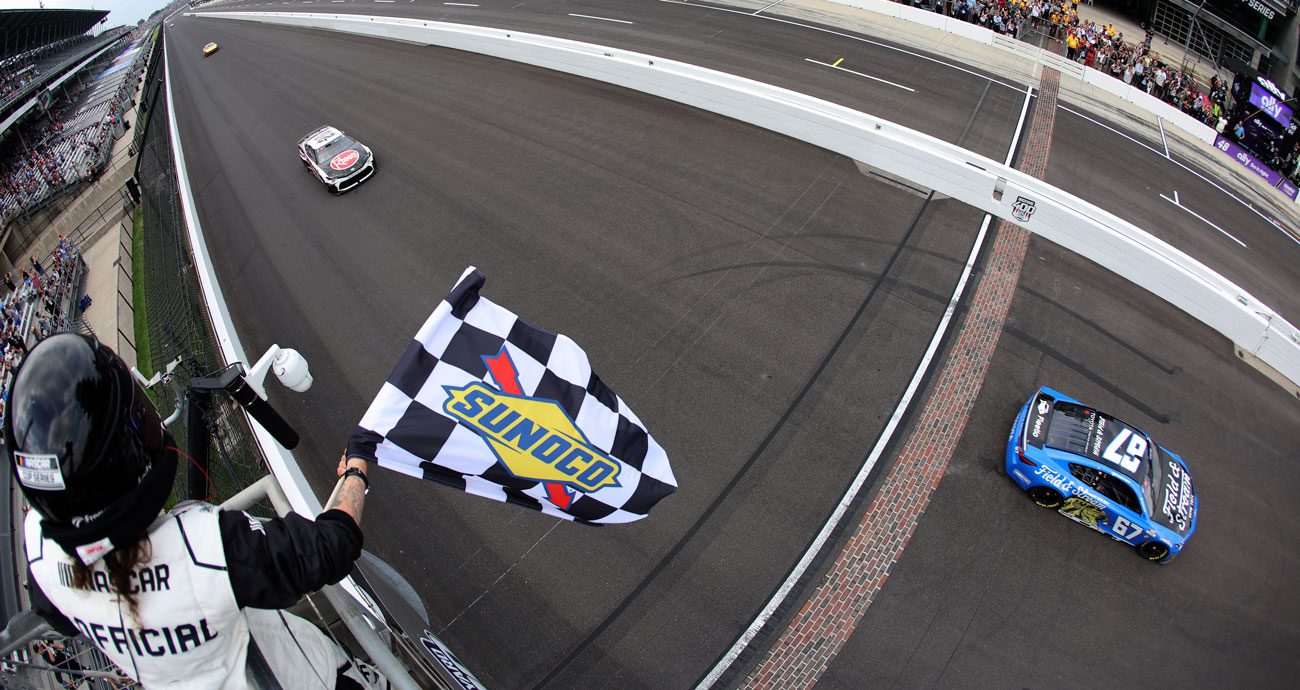
Bell led 108 laps Sunday — the second-most, fittingly — and appeared on his way to finally breaking the drought that has kept him winless since the Bristol Night Race in September 2025.
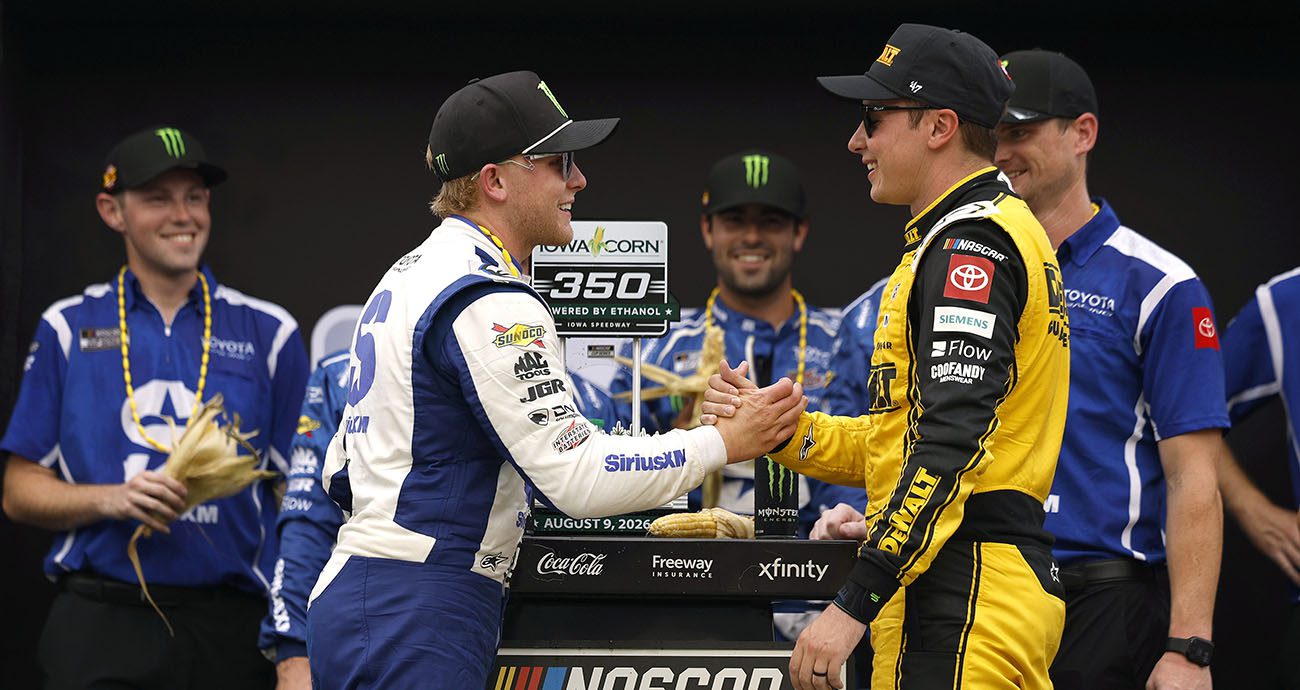
Instead, a four-tire call by Adam Stevens allowed second-place Ty Gibbs and his crew chief Tyler Allen to leapfrog Bell during green-flag pit stops. Gibbs’ No. 54 Toyota set sail despite Bell’s best efforts — including multiple dives on yet another JGR teammate in the closing laps — leading to Gibbs’ second win of the year and of his career.
Quote: “This is what you call a bad second-place finish for sure. I don’t know what else to say. Ty did a really good job. He did a great job managing the race. I could tell that he was slipping and sliding around. Similar to two weeks ago with Corey Heim, he just didn’t make a mistake. So … P2.”
“They’re talking about it because that’s right,” Racing Insights managing director Russell Wenrich said. “It’s 85% of the time (in simulations) that the top six is where the champion came from, so obviously these teams have done some of their own research, too.”
On the latest episode of the “Hauler Talk” podcast, Wenrich explained how the Racing Insights staff ran more than 25,000 simulations of the 10-race championship format.
Instead of looking at how The Chase would have unfolded in past seasons (given that those results were based on the prior playoff structures), Wenrich said predictive modeling (based on drivers’ historical performances at each track) was used to determine Chase outcomes.
“You just run that data through all these different types of data for predicting where they’re going to finish,” Wenrich said. “You could run that over and over again, and 25,000 times is what we did for this one.”
In more than 35% of the Racing Insights models, the champion was the top seed, and the top three seeds accounted for 69% of the simulated titles. In 70% of the simulations, the champion also scored the most points in the final 10 races.
The modeling also helped with validating an extra 15 points for a race win and creating the margins in the reset Chase standings.
Wenrich described it as “exciting and terrifying” to play a major role in The Chase.
“It was a fun project to be part of,” Wenrich said. “Trying to see it out, though, is terrifying, especially when (Tyler) Reddick is leading by 100 points after 10 races, and you think, ‘Maybe that extra 15-point swing for the winner is too many.’ So I think it’s played out very well. We want people that win races to be really high up in the points.
“It’s really cool to see how it played out. I think it’s been well-received by everybody. … This has the best chance of determining who the best driver is and the most deserving champion. And that was the No. 1 goal when we started.”
Other topics covered by NASCAR vice president of racing communications Mike Forde and senior director of racing communications Amanda Ellis during the 66th episode of “Hauler Talk,” which explores competition issues in NASCAR:
— What the penalty might have been if Denny Hamlin’s team had changed brake pads before the race at Iowa Speedway.
— Why Ryan Blaney had a close call with a camera exiting the pits.
— How Corey Heim’s two victories are classified for rookie status.
Click on the embed below to listen or search for “Hauler Talk” wherever you download podcasts to hear it on your phone, tablet or mobile device.
Nate Ryan has written about NASCAR since 1996 while working at the San Bernardino Sun, Richmond Times-Dispatch, USA Today Co. and, for the past 10 years, at NBC Sports Digital. He is a contributor to the “Hauler Talk” show on the NASCAR Podcast Network. He has also covered various other motorsports, including the IndyCar and IMSA series.
Goodyear is set to bring a familiar short-track tire setup for Saturday’s NASCAR Cup Series race at Richmond Raceway (7 p.m. ET, USA Network, HBO Max, MRN Radio, SiriusXM NASCAR Radio).
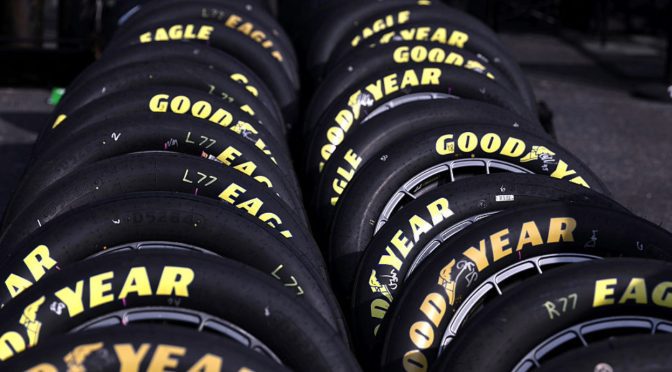
Cup Series teams will utilize the same left- and right-side tire compounds previously used in the spring at nearby Martinsville Speedway and last month in the North Carolina foothills at North Wilkesboro Speedway.
This short-track tire setup debuted in the 2025 Martinsville fall race, with the right-side tire getting some additional track time in early 2026 at Bowman Gray Stadium and Phoenix Raceway. The goal of this tire compound is to increase grip and lap time fall-off over the course of a green-flag run.
“Cup Series teams are familiar with this setup and already have some data to help plan their strategies this weekend,” said Rick Heinrich, Goodyear NASCAR product manager. “While this is the first time we’ve brought this left-side tire to Richmond, it’s a proven tire that has performed well on similar short tracks. The track surface at Richmond is known for producing high tire wear and lap-time fall-off, so tire management will be critical.”
In addition, NASCAR Craftsman Truck Series teams will have the same left- and right-side tire compounds from two short-track races last month at North Wilkesboro and Lucas Oil Indianapolis Raceway Park. The Truck Series will race at Richmond on Friday (7:30 p.m. ET, FS1, FOX One, NASCAR Racing Network Radio, SiriusXM NASCAR Radio).
Tire allotment for each team competing this weekend:
Cup Series: 11 total sets — 9 new for the race, 1 for qualifying, which transfers to the race, and 1 for practice. Teams will also have 4 wet-weather sets available, if needed. Craftsman Truck Series: 6 total sets — 4 new for the race, 1 for qualifying, which transfers to the race, and 1 for practice. Teams will also have 3 wet-weather sets available, if needed.
After racing for more than two decades, it seems like the only accomplishment eluding Brad Warthan is a championship.
This year, he has a shot at two.
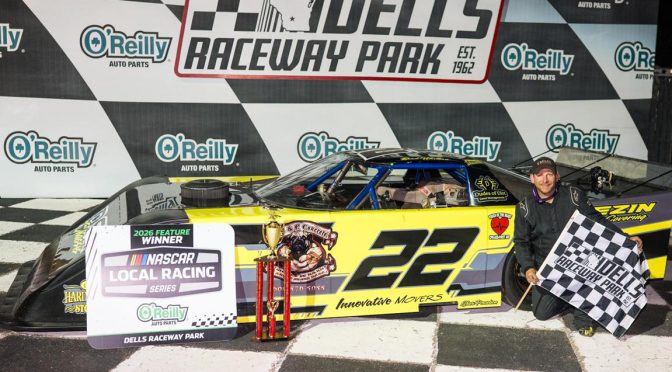
Warthan is competing in both the Blystone Towing Modified and the Lefthander Performance 602 Outlaw divisions at Wisconsin’s Dells Raceway Park. He currently leads the Modified standings by one point with two wins and five top fives in seven races.
He’s also third in 602 Outlaw points with a win and three top fives in six races.
This is Warthan’s first year racing in both series. He’s been a regular in the 602 Outlaw class at Dells, a NASCAR Local Racing Series Powered by O’Reilly Auto Parts track in Juneau County, Wisconsin, for the last six years, and has several top three finishes in the final points standings.
Last year, car owner Austin Powers let Warthan drive his Modified in one race. After that night, “He enjoyed how I drove it and asked me to drive it this year,” Warthan said.
He had never driven a Modified before that race, but he’s taken to the new car well.
“It’s absolutely been fun,” he said. “It’s more of an elbows up kind of thing. You’ve really got to be up on top of it because there’s no downforce on the front end of it. Along with that, the one that I’m driving, we don’t have to have a windshield in it, which is definitely a different feeling for me considering the fact I’ve never really had any of that wind in my face like that.
“It’s definitely a learning curve.”
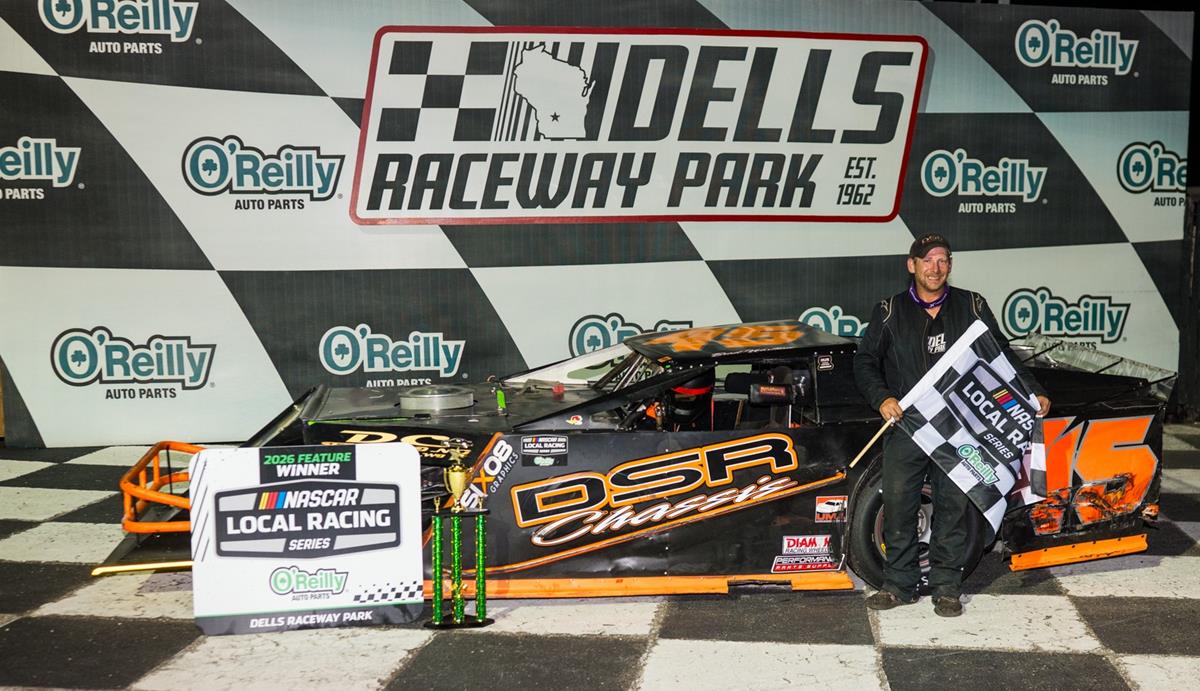
Warthan said the first night he didn’t like the way the car was reacting, so he took it to his good friend, Derik Squires at DSR Chassis, to completely work it over.
The next week, Warthan put the Modified in victory lane.
“I think it took more weight off of Austin’s shoulders than anything,” Warthan said. “He’s had that car three years now, maybe four, and he hasn’t been able to put a feature win underneath it. I made sure to give him the trophy and let him take it home.”
Warthan picked up his first 602 Outlaw win on May 2.
“Being able to knock a win out of both cars right out of the gate at the beginning of the year really takes a lot off my shoulders,” he said. “We’ve already got a win so now all we’ve got to focus on is continuing to be as good as we are.”
In his first year racing a Modified at Dells Raceway Park, Brad Warthan has already found Victory Lane twice. (Photo: Dells Raceway Park)
When asked if he had any goals coming into this season, Warthan didn’t hesitate.
“Oh yeah, absolutely,” he said. “We wanted a championship in both of them. I mean, that’s hands down, no doubt about it.”
Warthan has always raced for small, underfunded teams. Even this year, for both cars they’ve ran the same tires every race. Thankfully, he has sponsors like Bob Sauer with SS&E Concrete, Steve VanEtten with Touch of Heart CPR, and Jeff Myer from Innovation Movers, as well as friends who will show up sometimes with a few extra dollars so he can buy whatever needs.
Until then, he said they simply make due.
“We do what we do with what we can, and when we can afford tires, we buy tires,” he said. “When we can’t afford tires, well, we just race because that’s what we do. We’re out there to have a lot of fun and we sure do have a lot of fun doing it.”
Warthan has spent his entire life around race cars.
“I was born and two months later we were at the race track,” he said.
His dad raced at Tomah-Sparta Speedway in Wisconsin, so when Warthan was young he would ride around in the back of the truck after the races and even clean up whatever he could find in the pits.
“Most nights we’d find tools and sockets and a bunch of stuff, and then eventually, as it got to where I was 14 years old, I bought a go-kart and started racing for two years,” he said.
He’s been competing ever since. When he’s not behind the wheel himself, he’s the race director at Tomah-Sparta.
“Once you get it in, you just can’t get out,” he said. “I’ve tried to quit. I’ve tried to sell everything. I’ve tried to walk away, and no matter what, every time I just, I’m too deep into it and I love the sport way too much to walk away.”
Before moving to Dells in 2019, Warthan raced for several seaons at Wisconsin’s LaCrosse Fairgrounds Speedway, another NASCAR Local Racing Series track. Some bad luck cost him a championship there in 2017, so he took the 2018 season off to regroup.
Once he got to what is now his new home, “I won the second night out at Dells in my Sportsman car, and I’ve kind of been hooked to that place ever since,” he said.
While he said winning a championship was definitely his No. 1 goal for 2026, if it doesn’t happen Warthan said he’s happy to simply continue chasing wins. In his 26th season, he’s less than 20 away from 100 for his career.
Whether he gets to 100 or wins a championship, Warthan looks back on his career with pride in everything he’s accomplished.
And he’s not done yet.
“To be able to stand down there with a sign that says 100 will be pretty much icing on the cake,” he said.
“Winning a championship is something I’d really like to do before I end up quitting racing, but if it doesn’t come I can always look back and say I’ve won a lot of races and I’ve won a lot of big races up here. It’s not a loss if I don’t ever win one, that’s for sure. Will it break my heart? I’m sure. But in the end when I really sit back and think about it, I’ve got a lot of trophies to look at, and one championship isn’t going to matter about how my racing career actually was.”
Racing will return to Dells Raceway Park on Saturday for the Ron Meister Memorial 50 beginning at 6 p.m. CT.