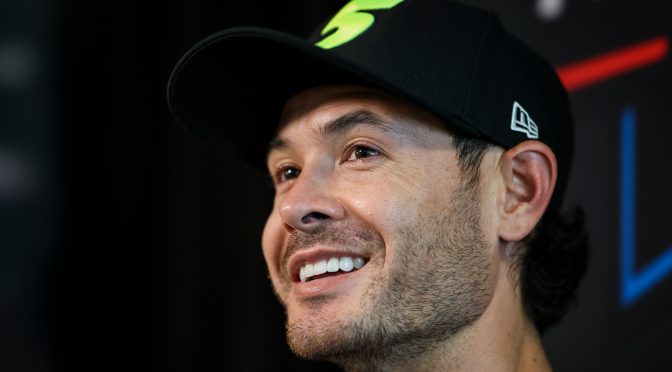
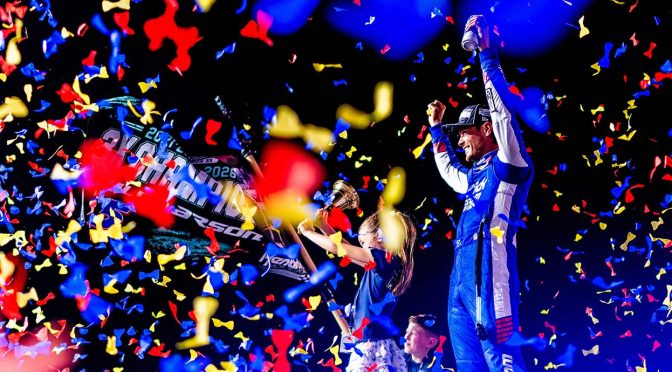
MIAMI — It took Kyle Larson 3 hours, 7 minutes, 54 seconds to win a 500-mile race at Talladega Superspeedway during the 2026 NASCAR Cup Series Chase presented by Mobil 1.
That race proved pivotal in his run for a third championship.
The driver of the No. 5 Hendrick Motorsports Chevrolet likely will spend more time than that covering 26 miles, 385 yards when he runs his first marathon on Dec. 6.
“What brought it about … I’ve never been into running, and running frustrated me, but I had a couple of friends getting into it and just tried to commit myself to it,” said Larson, who will compete in the California International Marathon from Folsom to Sacramento.
“Once your body stops hurting all the time, and you learn to enjoy it and enjoy the process when you’re training, you want to go compete in a race. For me, getting to compete in Sacramento, where I was born and raised, is special, and to get to do it with my friends is going to be fun.”
The longest training run Larson has done so far measures 16 miles.
“On that training day, it was 12 miles of an easy pace for me in good weather,” Larson said on the morning of the end-of-season NASCAR Awards at the Adrienne Arsht Center in Miami. “It was about a nine-minute (per mile) pace, so your heart rate’s low. And then the final four miles, you crank it up to marathon pace.
So, for me, that’s probably — like I said, in good weather — around like a 7:30 to 7:40 pace. So, yeah, it wasn’t too bad, but doing that pace for three-and-a-half hours is going to be challenging.”
Larson, whose previous offseasons have featured a plentiful dose of dirt racing in sprint cars and midgets, said he hopes to complete the marathon under 3 hours, 30 minutes.
And, of course, he’ll continue to race cars during the winter months, with plans to drive in both the Tulsa Shootout in late December and Chili Bowl Midget Nationals in January.
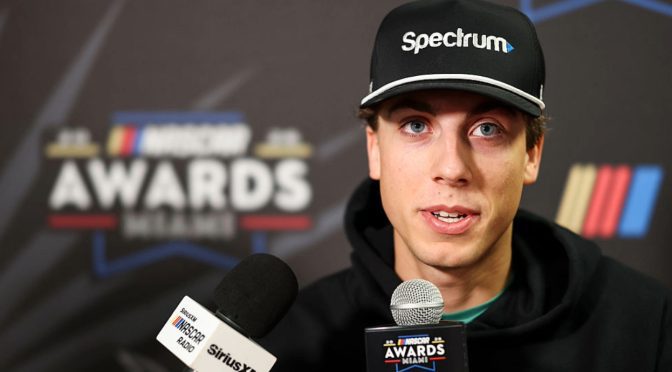
MIAMI — Repeatedly brake-checking Austin Cindric during the NASCAR Cup Series season’s penultimate race at Martinsville Speedway earned Carson Hocevar a team-imposed one-race suspension and a $100,000 fine and points penalty from NASCAR.
When the green flag waved to start the Cup Series Championship Race at Homestead-Miami Speedway, Hocevar was watching from the sidelines while Justin Haley drove his No. 77 Spire Motorsports Chevrolet.
Don’t think, though, that the punishment will have a profound effect on Hocevar’s aggressive driving style in 2027.
“Sometimes you can’t get too creative,” Hocevar said. “There’ s a line to be drawn on creativity and aggression. We’re working through that…
“I didn’t die. I didn’t lose my ride. I lost my car keys. My team still loves me. I think I’m in a good spot. I’m excited that we get to get working for Daytona and next year… It’s just one week. Obviously, it sucks, but it’s not bigger than it is.”
The suspension gave Hocevar plenty of time to interact with his fan base, which is legion. In 2026, Hocevar arguably provided more autographs than any other driver.
To Hocevar, the most unusual item he signed was a car.
“Somebody bought a brand-new car and wanted me to sign it,” he said. “I thought that was weird. So, I signed their dash in their brand-new car a couple of weeks ago. I thought that was really funny.
“It was his wife’s car, too, and he’s like, ‘My wife really wants this.’ And I was like, ‘Is she here?’ And he was like, ‘No.’ I was like, ‘OK, are you sure?’ and I asked three times, and then ‘All right. Whatever. You’ve got to go home to her — not me.’”
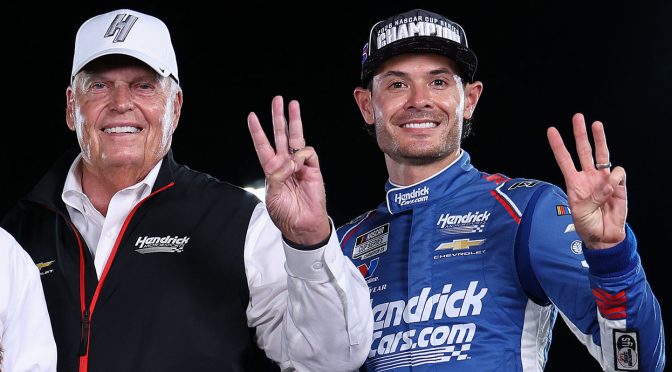
MIAMI — No car owner in NASCAR Cup Series history has won more races or championships than Rick Hendrick. But even one of the sport’s most successful businessmen of all time needs a break from reality.
At age 77, Mr. H, as it turns out, still enjoys a good TikTok video now and then. And who else would he share his humor with than his newly minted three-time Cup Series champion, Kyle Larson?
A driver for Hendrick Motorsports since 2021, Larson has been on the receiving end of many TikTok videos that Hendrick has fired his way, Larson shared Tuesday morning at the Adrienne Arsht Center for the Performing Arts of Miami-Dade County ahead of the 2026 NASCAR Awards.
“I had no clue that he was a big TikTok guy before I got there,” Larson said. “He’s the only reason why I have TikTok, so when he sends me texts with links to TikTok, I can actually open it. That’s the only time I open that app. He’s a fun individual for sure.”
Hendrick even sent Larson a TikTok on Saturday night, which may be a sign of how relaxed Hendrick and Larson’s No. 5 team were entering Sunday’s finale at Homestead-Miami Speedway, where Larson clinched his third championship in six years.
“It was like the Hendrick Motorsports drivers showing up to the race, and we’re like vibing and dancing to some music,” Larson said of the TikTok. “So yeah, he sends me more funny stuff, I feel like, these days.”
That opens a window into the personality of Hendrick, who is typically seen as professional and serious rather than someone with a boisterous sense of humor.
“Obviously I didn’t get to spend much time around Rick before I got to Hendrick Motorsports,” Larson said. “You just look at everybody at Hendrick Motorsports, and you think that everyone’s super buttoned up — which they are — but don’t have any fun. And when I got there, it was a lot of the opposite of that. Everybody has a great time there. Very, very fun atmosphere. And then Rick is just a straight-up comedian. I feel like especially when we have luncheons or anything where he gets up and talks, it’s like a roast session, and you’re just hoping you’re not the target that day.”
Chances of Hendrick actually making a TikTok would appear slim. But the sport’s winningest owner sure enjoys a good scroll through his feed.
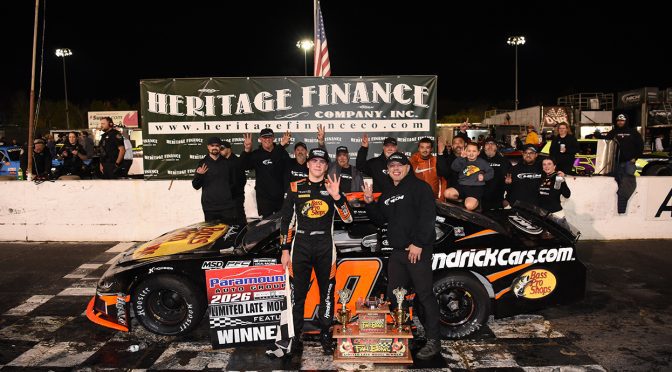
HICKORY, N.C. – The November evening air may have been cold during the closing laps of Saturday’s Limited Late Model feature as part of the Fall Brawl at Hickory Motor Speedway, but 15-year-old Carter McMurray knew the heat was about to get turned up.
Four laps were going to decide which driver would end his season with a victory in one of the North Carolina track’s crown-jewel races. McMurray had the outside of the front row for the final restart; not an auspicious position, but one on which he could capitalize if he kept his composure.
McMurray held his line until Dexter Canipe III surged ahead of him coming to the white flag. Seeing an opportunity, McMurray pulled a crossover on Canipe in Turn 2, which gave him the preferred bottom lane.
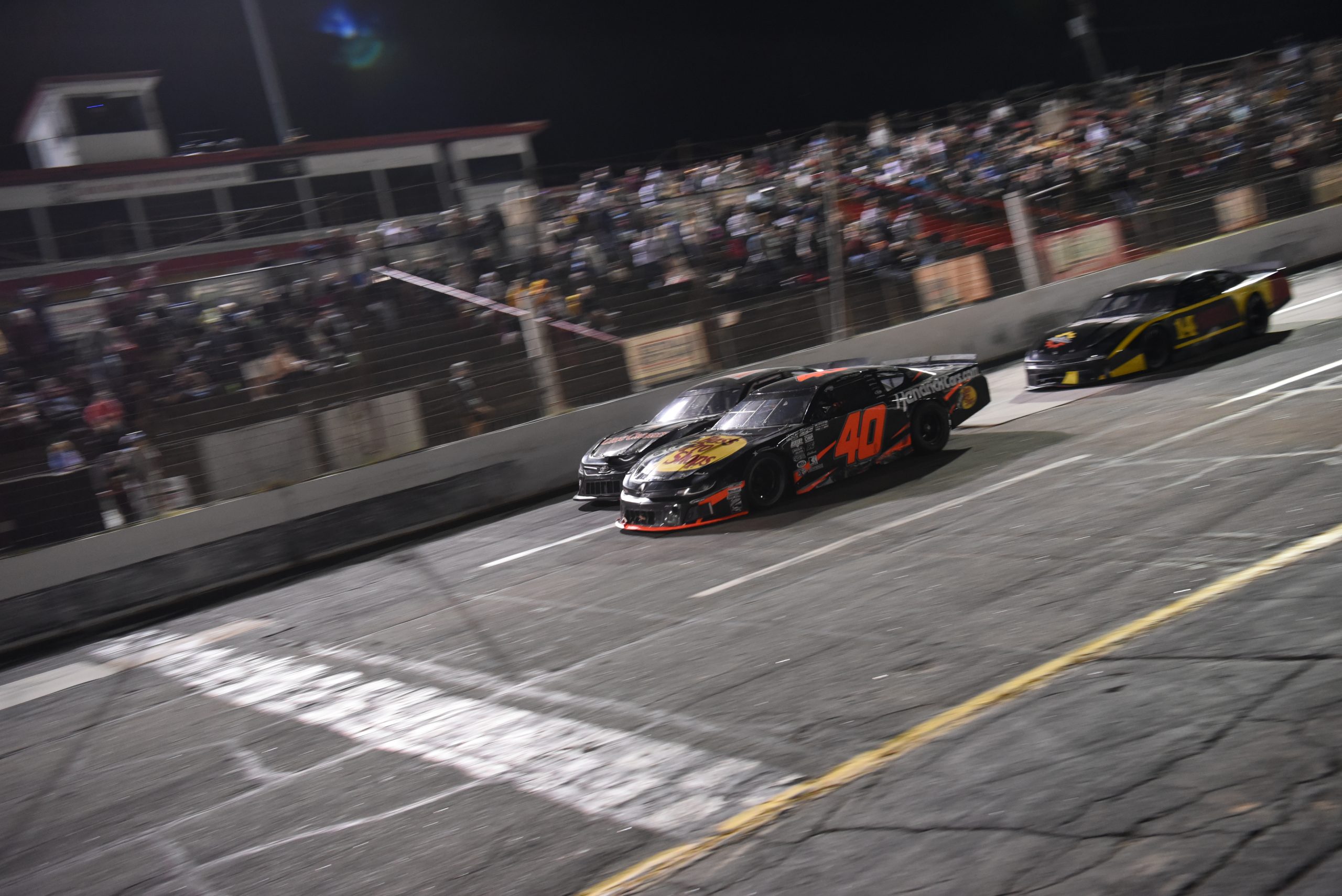
The two young competitors pushed their cars to the limit with the checkered flag in sight. McMurray prevailed over Canipe in a photo finish for his third consecutive Limited Late Model victory at Hickory to close 2026 — arguably his most prestigious win in a full-bodied stock car to date.
“Originally it was about timing the restart and making sure I could stay side-by-side [with leader Spencer Bradshaw] and try to roll the top on him,” McMurray said. “[Canipe] moved him, and we were three-wide top off of [turn] two. I just knew that I had to drive it in there. Four laps to go, it’s all or nothing.
“Me and [Canipe] dueled it out the last three or so laps, side-by-side, crossover. It was super fun, super fun.”
What a win! 🏆
@CarterMcMurray1 wins the Limited Late Model feature at the Fall Brawl. https://t.co/zdfcZFgOst
The four-lap sprint to the finish was only a part of McMurray’s adventurous first outing in the Fall Brawl. He qualified on the outside pole but faded to fourth so he could conserve his tires while simultaneously managing a car that was not to his liking.
Long runs favored McMurray as the 100-lap Limited Late Model feature progressed. After climbing back to second, he began chipping away at his deficit but saw his momentum get derailed twice by ill-timed cautions.
Every yellow meant fewer laps for McMurray to utilize. The odds may not have been in his favor with the Fall Brawl being decided on a short run, but he did not let the circumstances deter him.
Through resilience and determination, McMurray found his way to Hickory’s Victory Lane.
“I was definitely doubting myself with how tight we were,” he said. “I made some brake-bias adjustments, and it started to help; it started to cut. I just believed we were on the right side of it starting tight and that we would be there at the end. We were.
“It’s been surreal. With the way the race went, I’m so happy for my team and my guys. What a way to go into the offseason.”
Carter McMurray (40) won the Limited Late Model portion of the Fall Brawl at Hickory Motor Speedway by fending off Dexter Canipe III in a photo finish. (Photo: Gardner Street Photography)
As Carter parked his No. 40 Bass Pro Shops Chevrolet on the frontstretch, he was met with an exuberant reaction from his MKM Racing Development crew. The victory was another high note on a successful 2026 for MKM at Hickory that saw the team clinch the Limited Late Model title with Paityn Mary Jane, the first female champion in the track’s long history.
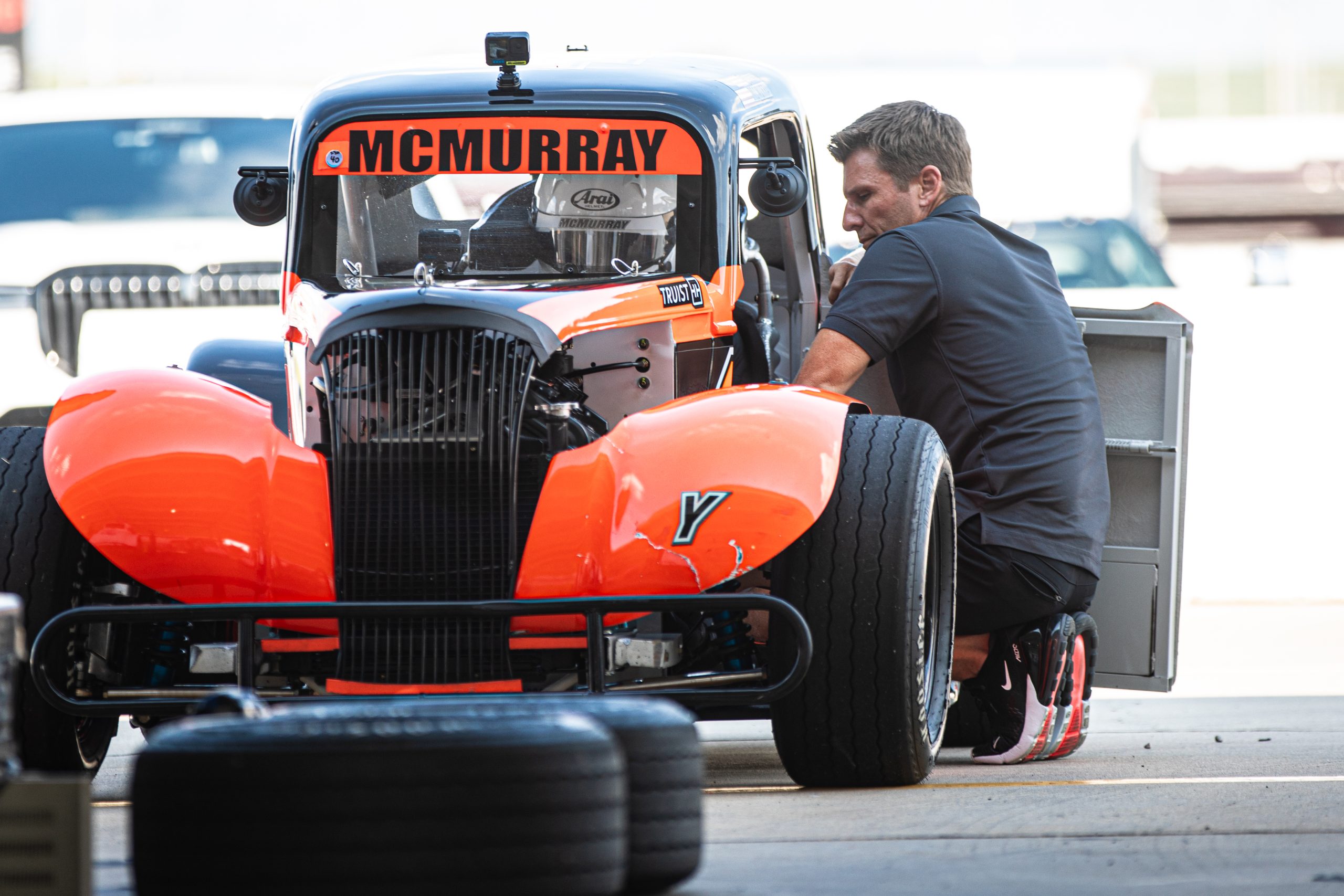
One person missing from the post-race festivities was McMurray’s father in 2010 Daytona 500 winner Jamie McMurray — though that’s not to say he was not keeping an eye on what his son was doing Saturday.
While Jamie was calling the NASCAR O’Reilly Auto Parts Series championship race at Homestead-Miami Speedway for The CW, he had the FloRacing broadcast of the Fall Brawl playing on his phone. Jamie was able to pay close attention only during commercial breaks, but he saw Carter had worked his way into contention.
Jamie was elated to see Carter pull off such a monumental victory. With an assist from fellow commentator Parker Kligerman, Jamie found a way to work the occasion into the broadcast while staying focused on the task at hand.
“During the broadcast, we were on Carson Kvapil’s car and went to his in-car camera, which was a Bass Pro Shops in-car camera,” Jamie said. “Parker [Kligerman] made a joke saying, ‘I think it’s a great night for Bass Pro Shops because Carter McMurray just won at Hickory in the Fall Brawl.’ We had a pretty good laugh after Carter had won on-air, so that was pretty fun.”
Seeing Carter win the Fall Brawl only reinforced Jamie’s amazement over his son’s progression. Just a few years ago, Carter was tackling his first go-karting events. Now he competes in full-bodied cars and Modifieds, having won in both.
That’s why Jamie finds this journey ironic in many ways, as he and his wife Christy originally tried to steer Carter away from racing.
Jamie knew a motorsports career for Carter would be a costly endeavor from both a financial and time perspective. If Carter wanted to become a racer, he would need to be committed to the idea and manage the sacrifices that come with it.
The catalyst that led to Carter’s commitment was his stumbling across photos of Kyle Larson and Clint Bowyer with their sons, Owen and Cash, respectively, at the go-kart track. Carter realized then that he wanted to follow in his father’s footsteps and asked if he could pursue racing as an interest.
Before long, Carter and Jamie were regulars at their local go-kart track. With his own driving career winding down, Jamie suddenly found himself as Carter’s mentor, guiding him through the challenges motorsports would inevitably bring.
Jamie now finds it hard to believe he was ever trepidatious about Carter becoming a racer. Every milestone Carter reaches only inspires Jamie to commit himself more to Carter’s racing ambitions, with the Fall Brawl triumph being another positive step forward in that trajectory.
Jamie McMurray has mentored his son Carter throughout his career so far, ensuring he takes all the right steps to find sustainability in racing. (Photo: Ted Malinowski/NASCAR)
What impressed Jamie the most about Carter’s performance in the Fall Brawl was the discipline. Carter stayed patient throughout the night and was not overly aggressive during the final sprint to the finish — qualities Jamie made sure to instill in him at a young age.
“The only time I ever really get mad or yell at (Carter) is when I feel like it’s a safety issue,” Jamie said. “That started all the way back in karting. I’ve tried so hard to make him be a respectful driver. I told him when we first started doing Modifieds that you’ll have to pay your dues a little bit here and give way more than you take. That will pay off in a few years for you.
“You don’t want to be known as the kid that comes in and is running people over. You have to gain the respect of everybody, and I think he’s done an awesome job of being able to manage that.”
Respect was essential for Carter when he began racing Modifieds on a regular basis in 2025. Facing drivers like Bowman Gray Stadium track champions Burt Myers and Brandon Ward, along with another Daytona 500 winner in Ryan Newman, provided Carter vital hands-on experience.
With Carter having found his cadence in Modifieds, he was ready to try full-bodied cars this season. Hickory was the perfect facility for Carter to acclimate to Limited Late Models. The fields were competitive, and the track’s abrasive surface encouraged him to conserve his equipment.
Carter’s results in five starts at Hickory with MKM were impressive. After finishing top five in his first two Hickory Limited Late Model appearances, he swept the twin features on Aug. 22. In the second race that night, he climbed from ninth to first in just 40 laps.
Carter is still trying to figure out every intricacy of the Limited Late Model but is thrilled with his early success in the car. Despite how different the Modified is from the Limited Late Model, Carter felt the laps logged in the former were crucial toward all three of his wins at Hickory in 2026.
“I almost feel like the transition from a Modified to a Late Model is very easy,” he said. “The Late Model is very similar even though it has a lot less power, which honestly makes it easier to drive. The transition hasn’t been bad because of the amount of time I’ve taken to move through everything. I think it’s been pretty good.”
With a Fall Brawl victory now to his name, Carter McMurray is eager to tackle an expanded schedule of late model events in 2027. (Photo: Ted Malinowski/NASCAR)
More late model races are the plan for Carter in 2027 — not just at Hickory, but around the entire southeast. A new set of obstacles await him as he tackles new tracks, but there’s nothing ahead that Jamie doesn’t think his son can handle.
Watching Carter mature into a talented young prospect has been a tremendous source of pride for Jamie. The developmental ladder Jamie has Carter on requires him to take in copious information at a rapid pace, yet Carter is always eager to learn and embrace the next challenge.
As Carter gets older, Jamie knows there will be less information for him to pass down. He intends to cherish this chapter in his son’s life while also making sure Carter stays on the right path.
“Winning is what everybody wants to do, but when you’re in the position (Carter) is in his career, it’s all about learning,” Jamie said. “I’ve never really let him get comfortable in anything we’ve done. We’re going to continue to move up and keep challenging him. As a kid, you learn so fast, and your brain absorbs so much than when you get older.
“With that learning, if you can go out and win, that’s what it’s all about.”
The Fall Brawl victory was a culmination of everything Jamie has taught Carter, but seeing the No. 40 Bass Pro Shops car in Victory Lane evoked many proud memories Jamie had of his time in NASCAR.
Bass Pro Shops was one of Jamie’s sponsors during his time with Earnhardt Ganassi Racing, primarily in his early years with the team. Jamie and Bass Pro Shops won three races together in 2010, including the Daytona 500 and Brickyard 400. The duo also prevailed in the 2014 All-Star Race.
The No. 40 carries more significance for the McMurray family, as Jamie used it while filling in for an injured Sterling Marlin in 2002. In just his second Cup Series start, Jamie fended off Bobby Labonte at Charlotte Motor Speedway to pick up his first of seven Cup Series victories.
When Carter decided to start racing, he knew he wanted to use the No. 40 from Jamie’s maiden Cup Series triumph. That number has been on each of Carter’s cars since his go-karting days, and he intends to keep using it until it’s not an option.
Yet for as much of an inspiration as Jamie is to Carter, he still wants to build his own identity. Carter still has much to learn, but he feels confident in his ability to keep flourishing behind the wheel, especially with a Fall Brawl win now on his resumé.
“I’m just looking to prove my name and prove myself,” Carter said. “I know I have a very high rep just from my background and because of my dad. I’m just trying to improve the McMurray legacy and honestly be the best race-car driver I can be.”
The legacy of the McMurray family is defined by their ability to learn. Jamie needed just two attempts to win his first Cup Series race; Carter needed just three Limited Late Model starts at Hickory to find Victory Lane.
Every step Carter takes will get more difficult. Yet with a versatile background and an enthusiastic desire to learn, Carter is setting himself up to one day win in the Cup Series, just like his dad.
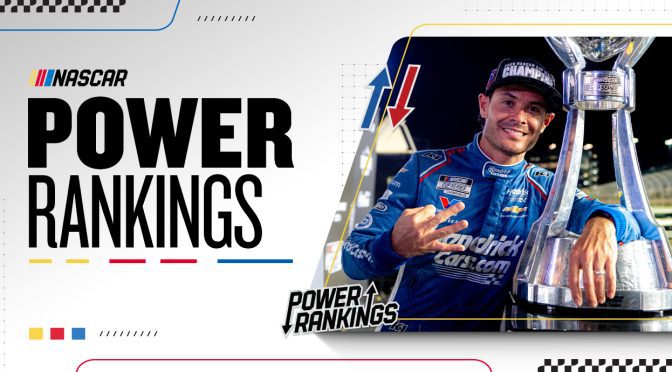
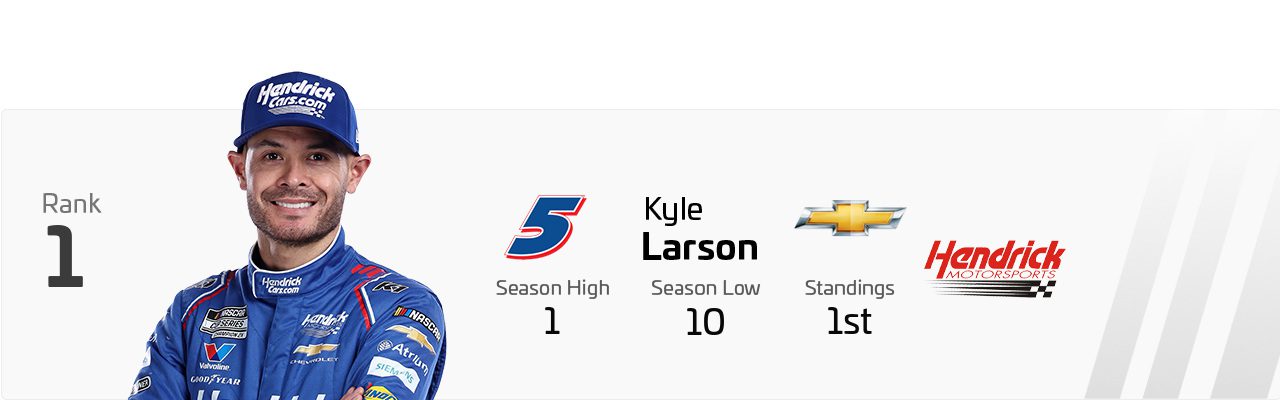
NASCAR.com’s Pat DeCola ranks the top 25 NASCAR Cup Series drivers entering the 2027 season after Kyle Larson won the 2026 championship at Homestead-Miami Speedway.
Analysis: A third championship seemed well within reach entering 2026, but the path there was hardly what anybody envisioned. Larson went the entire 26-race regular season without a victory before flipping the switch in The Chase, winning three times and building such a commanding advantage that he clinched the title with two stages to spare at Homestead-Miami. Perhaps more impressively, the No. 5 team proved it could overcome adversity nearly as effectively as it could dominate. That’s an awfully dangerous combination, and Larson enters 2027 as the rightful favorite to make it three straight.
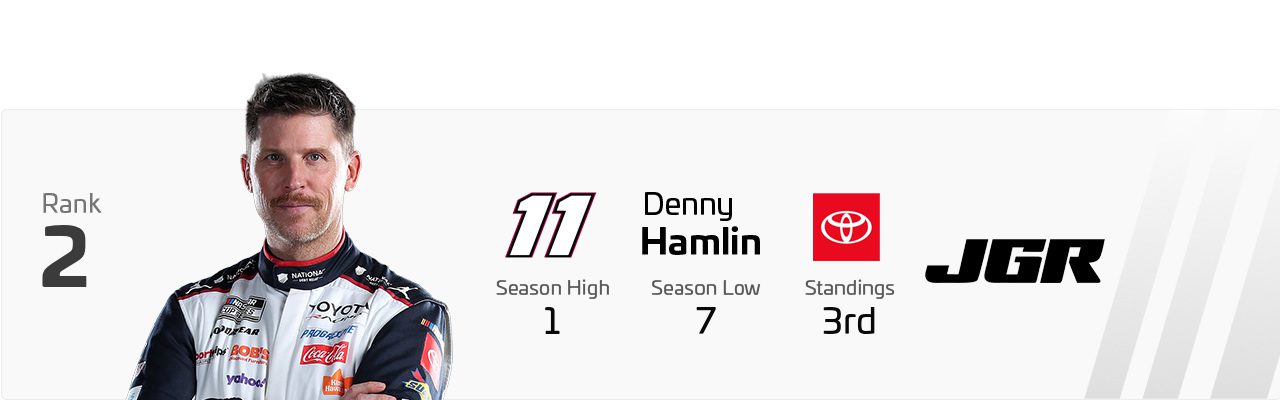
Analysis: Hamlin entered 2026 looking to finally finish the championship job after a heartbreaking conclusion to 2025. Instead, another tremendous season ended without the one trophy that continues to elude him. Four victories, a series-leading 24 top 10s and the No. 1 Chase seed reflected just how strong the No. 11 team was, but Larson’s postseason surge left Hamlin third in the final standings. The speed and consistency remain championship-caliber, though time is becoming an increasingly relevant factor as Hamlin has publicly stated he intends to hang it up after next year. Entering 2027, there’s little reason to expect anything other than another legitimate title push, and it’ll be the perfect storybook ending if he finally does it.
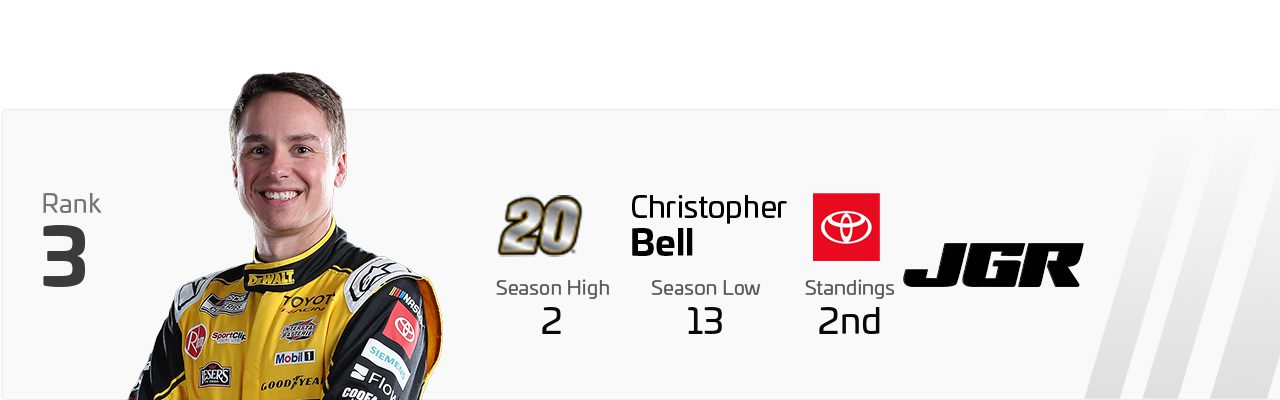
Analysis: Bell’s 2026 campaign was something of a contradiction. A driver coming off four wins in 2025 managed just one this season, yet he ultimately finished second in the championship standings, led more than 800 laps and at times looked like the most formidable driver in the series. The No. 20 team remained among the most consistently competitive in the garage, even if the outright victories didn’t materialize nearly as often as expected, finishing runner-up a dizzying number of times. Bell has now demonstrated that he can contend for the title annually across multiple championship formats. It’s increasingly difficult to envision a Cup title fight without him playing a significant role, and he may be Larson’s greatest threat over the next 10 years.
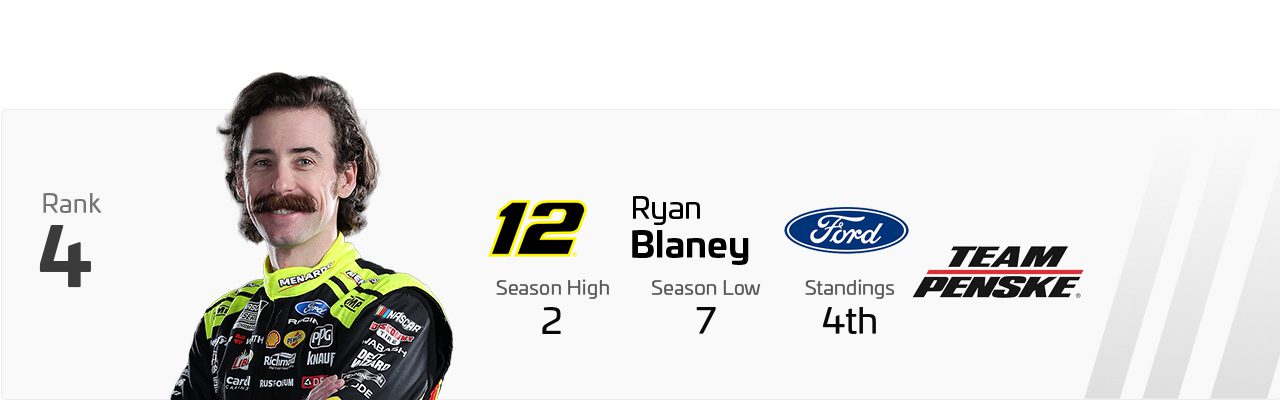
Analysis: Another year, another four victories for Blaney, who continued establishing himself as one of the most dependable A-list championship threats in the sport. His second straight season-ending triumph at Homestead-Miami was a reminder of the No. 12 team’s ability to deliver when it matters, even if Larson had already secured the championship. A fourth-place points finish represented another strong campaign, and Blaney’s combination of speed, race craft and championship experience makes him difficult to rank much lower. He enters 2027 with as credible a path to a second title as almost anybody.
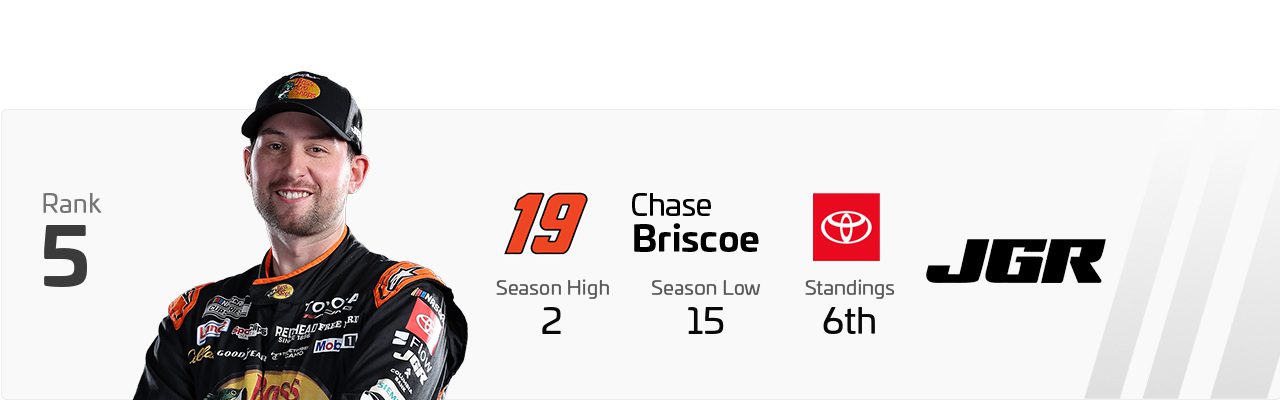
Analysis: Expectations were understandably elevated after Briscoe’s breakout first season with Joe Gibbs Racing, and he largely delivered again in 2026. Three victories, 13 top fives and a sixth-place championship finish further established him as a legitimate front-line contender rather than a driver who simply enjoyed a fortunate first year in elite equipment. His strong late-season performances reinforced that assessment, though the No. 19 team as a whole still has another step to take to match the series’ very best over a full championship campaign (pit crew sure looks ready, though). That feels entirely attainable entering Year 3 at JGR.
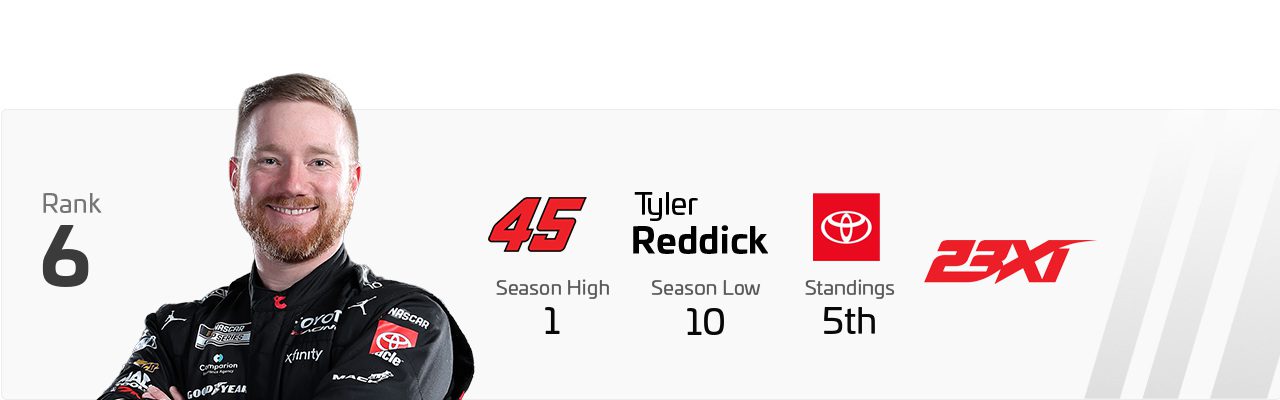
Analysis: Well, that sure answered the questions about his winless 2025. Reddick opened 2026 by winning the Daytona 500 and the season’s first three races, ultimately collecting a series-leading six victories in one of the more remarkable rebounds in recent memory. Yet a fifth-place championship finish showed that even overwhelming early-season success doesn’t necessarily translate to November hardware. Reddick returned to the ranks of NASCAR’s elite in emphatic fashion, and there’s little reason to doubt his ability to win at that level again. The challenge for 2027 is sustaining that excellence deep into The Chase.
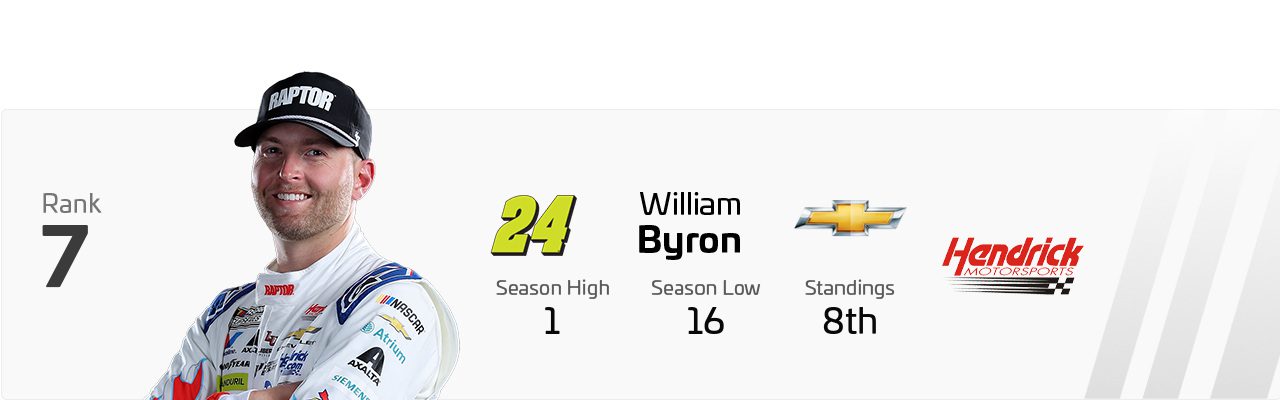
Analysis: Coming off a 2025 Regular Season Championship and another Championship 4 appearance, Byron seemed poised to take the next step in 2026. Instead, the No. 24 team went much of the season without the winning form that had become its trademark, ultimately collecting just one victory — essentially a buzzer-beater, at that — and finishing eighth in points. A late Martinsville triumph and strong Homestead performance provided encouragement heading into the break, but the overall campaign fell short of lofty expectations. Byron remains firmly in the championship conversation for 2027, though he’ll need to rediscover the week-to-week consistency that made him such a formidable contender.
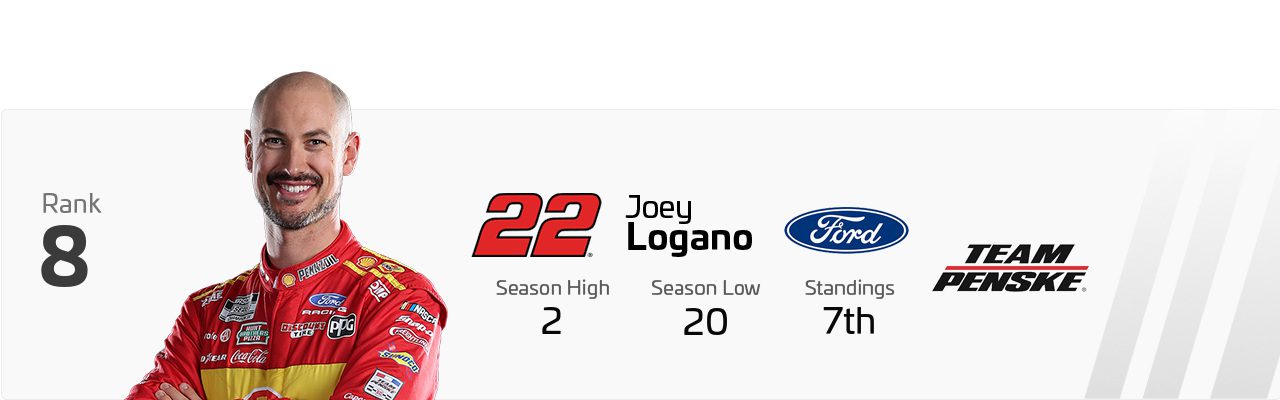
Analysis: Logano’s reputation for even-year success held up to a point in 2026, with three victories and another competitive Chase run. Still, his seventh-place championship finish and relatively modest seven top fives suggested the No. 22 team wasn’t quite on the same level as the season’s most complete contenders or even up to its own typical standard. The three-time champion certainly hasn’t forgotten how to win, as victories at North Wilkesboro, Richmond and Bristol demonstrated. Heading into 2027, the question isn’t whether Logano can deliver another championship-caliber performance on a given afternoon. It’s whether he can string enough of them together to capture title No. 4.
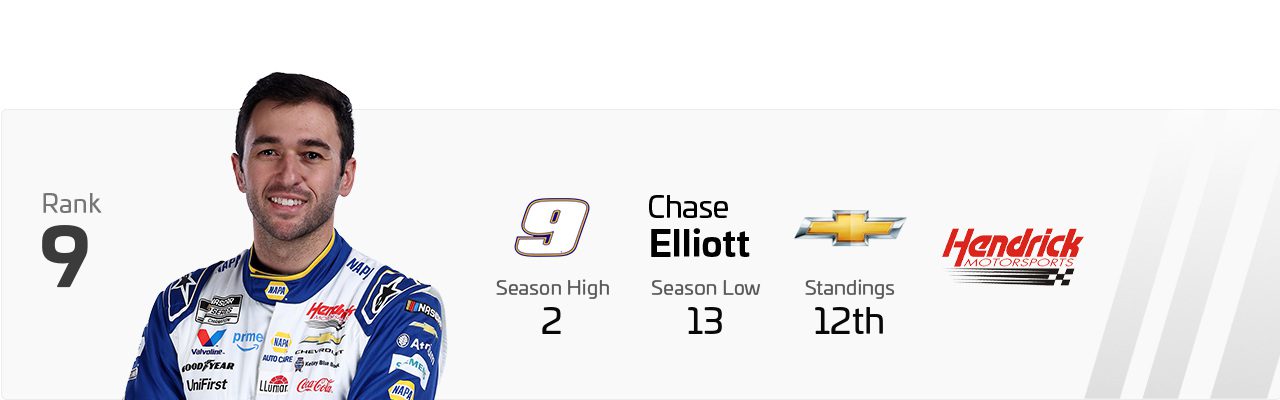
Analysis: Elliott entered 2026 hoping the return to a points-based championship format would reward his trademark consistency and perhaps restore some of his former dominance. Two early victories offered encouragement, but a 12th-place standings finish ultimately represented another season that fell below the standards of a former champion in Hendrick Motorsports equipment. The No. 9 team remains capable of winning races, though the sustained superiority that defined Elliott’s earlier career has become considerably harder to find. He’ll enter 2027 as a credible title contender, but a more convincing season-long performance is overdue.
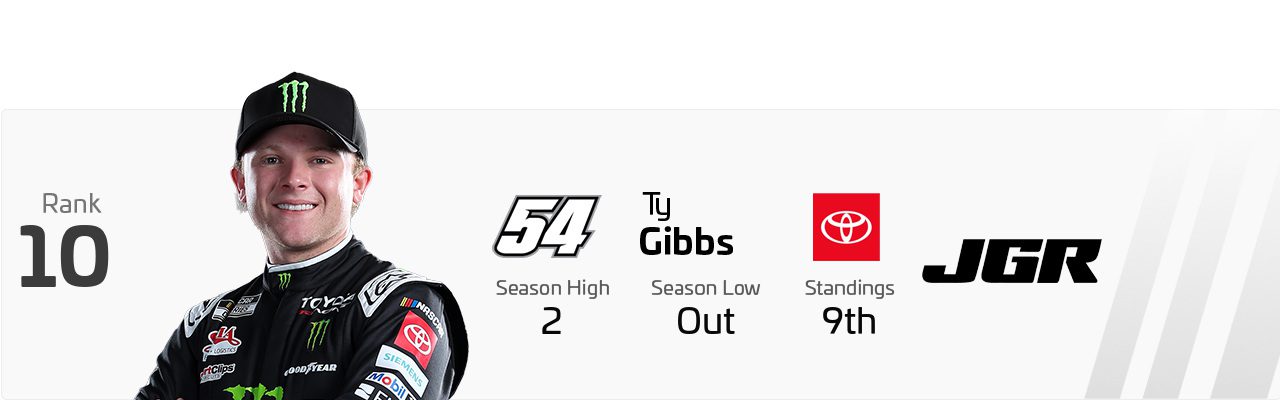
Analysis: If 2026 was supposed to be a pivotal season for Gibbs, he answered the call. After three winless full-time campaigns, the Joe Gibbs Racing prospect finally broke through at Bristol and added another victory at Iowa, collecting 13 top fives and 20 top 10s along the way. A ninth-place points finish confirmed meaningful improvement beyond the two trophies. Gibbs hasn’t yet established himself on the same level as his championship-winning teammates, but the biggest question surrounding his Cup career has finally been answered. The next challenge is turning that breakthrough into sustained championship contention.
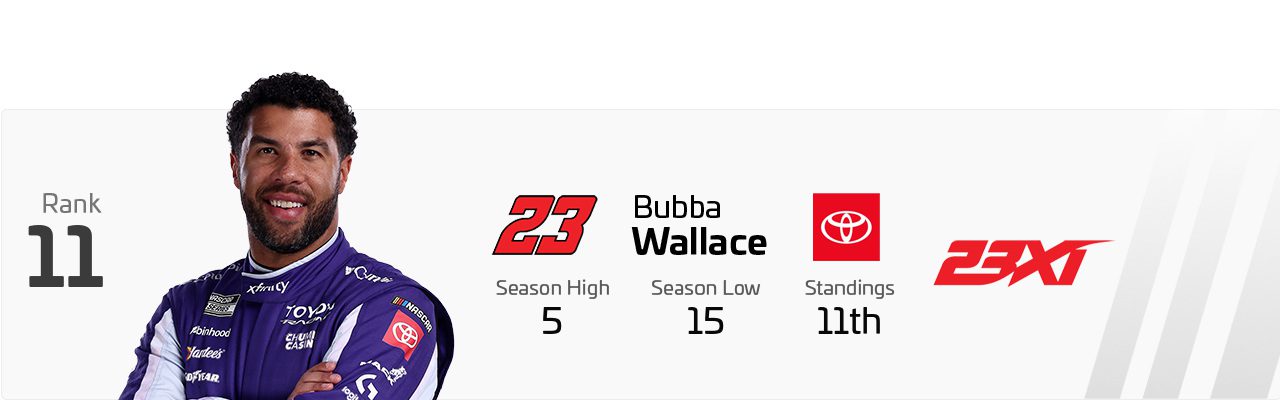
Analysis: Wallace entered 2026 looking to build on a career-best campaign and demonstrate that he could legitimately contend for a championship. The results were mixed. He remained a reasonably consistent presence near the front, collecting 17 top 10s and finishing 11th in the standings, but failed to return to Victory Lane after his breakthrough Brickyard 400 triumph the previous year. With 23XI Racing continuing to establish itself among the sport’s strongest organizations, the opportunities should remain plentiful. Wallace’s next step is converting competitive afternoons into victories more regularly and finding another level when The Chase begins.
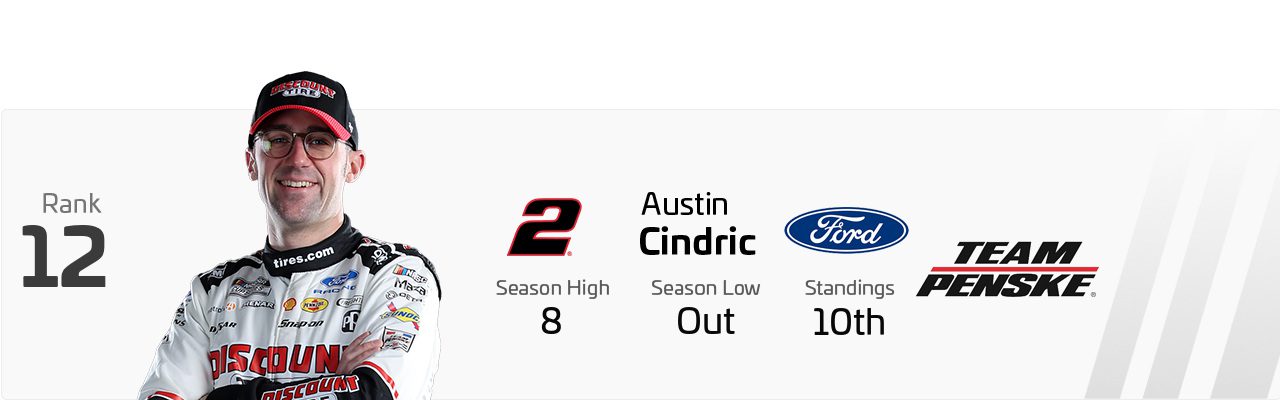
Analysis: Cindric entered his fifth full Cup season hoping to continue closing the gap to his championship-winning Team Penske teammates. A 10th-place standings finish was respectable, but a winless campaign with only four top fives made it difficult to argue that the No. 2 team took a meaningful competitive leap, though there were clear gains the second half of the season, including The Chase. He remains a capable driver in equipment that has repeatedly proven it can win championships, and his experience should only become more valuable. For 2027, however, simply remaining inside the top 10 won’t be enough to establish him as a genuine title threat.
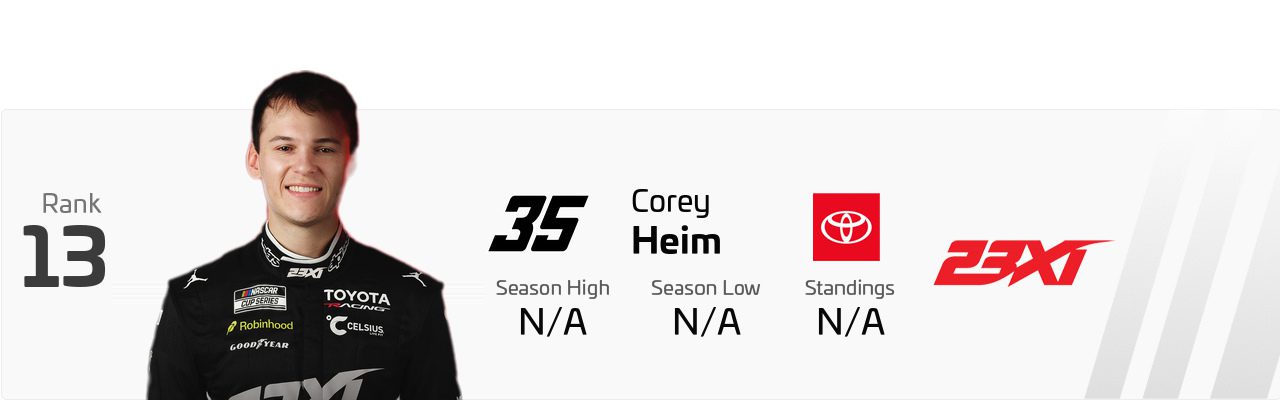
Analysis: Expectations were already substantial for Heim entering 2026, but winning twice in just 12 Cup starts — including the Brickyard 400 — was an extraordinary introduction to NASCAR’s highest level. Those performances validated 23XI Racing’s decision to move him into the No. 35 Toyota full time for 2027, immediately making him one of the sport’s most intriguing championship prospects. Still, succeeding in carefully selected appearances and navigating an entire Cup season are different challenges. The talent and equipment suggest an exceptionally high ceiling, but a little restraint is warranted until we see how Heim handles the full-time grind.
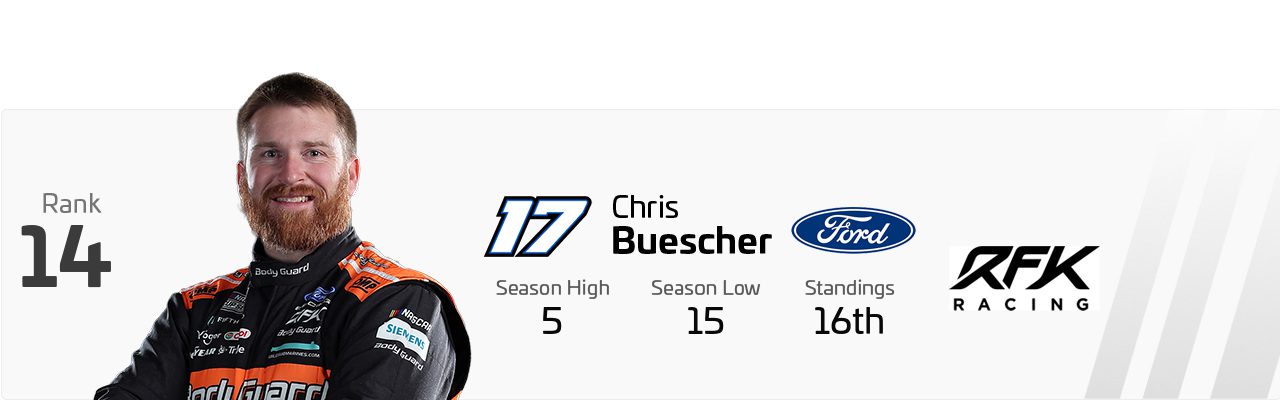
Analysis: The move back toward a cumulative-points championship format seemed tailor-made for Buescher’s steady approach, but 2026 didn’t produce the breakthrough RFK Racing had hoped for. He managed just two top fives, failed to win and finished last among the 16 Chase participants. The No. 17 team’s occasional flashes of speed never translated into the sustained results necessary to challenge the elite. Buescher remains one of the series’ more capable veterans, though 2027 is shaping up as an important opportunity for RFK to demonstrate that its development has moved beyond merely respectable performances.
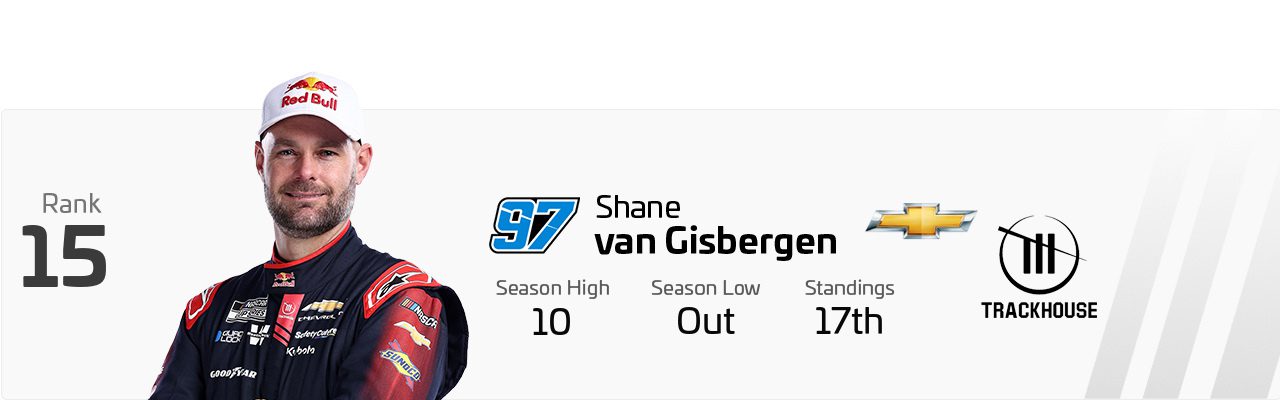
Analysis: The road-course brilliance continued in 2026, with van Gisbergen winning at Watkins Glen and Sonoma, but missing The Chase underscored how much work remained on ovals. Now comes another intriguing wrinkle: Blake Harris arrives from Hendrick Motorsports to replace Stephen Doran, ending a partnership that produced seven Cup victories over the past two seasons. Harris brings considerable experience, but changing the combination behind such an effective road-course operation introduces uncertainty (though it doesn’t, of course, change the guy holding the steering wheel’s extensive road-racing experience). For 2027, the challenge is clear: Find more consistent oval results without sacrificing the dominance that has made van Gisbergen nearly unbeatable on his preferred tracks.
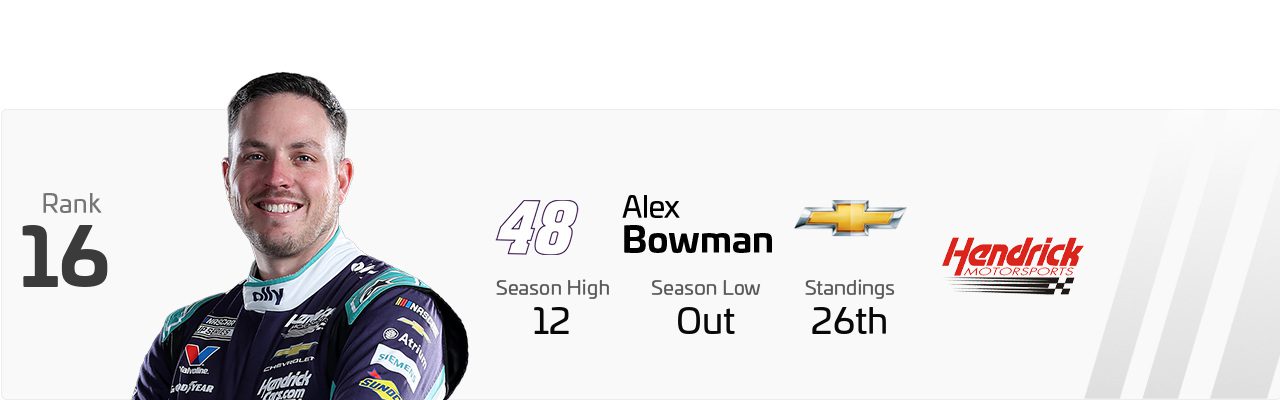
Analysis: A difficult 2026 became considerably more complicated when Bowman was sidelined by vertigo early in the season. He eventually returned, but finished 26th in points without a victory, falling well short of expectations for a Hendrick Motorsports driver. Now, entering his final full-time Cup season, Bowman faces another significant adjustment with longtime crew chief Blake Harris departing for Trackhouse Racing. A replacement has yet to be announced as of Tuesday, leaving an important piece of the No. 48 team’s 2027 outlook unresolved. There’s still championship-capable equipment underneath Bowman, but a strong farewell campaign will require both a return to form and a productive new crew-chief partnership with little time to gel.
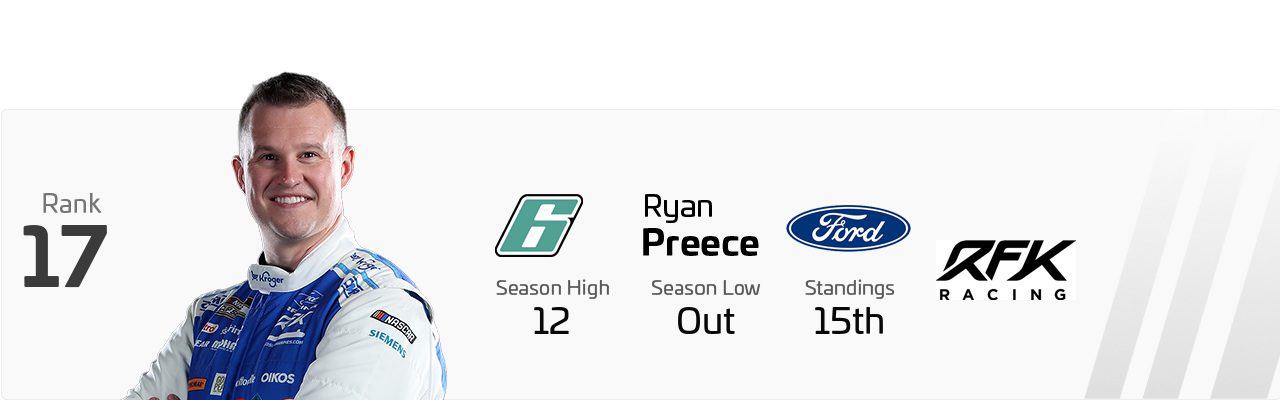
Analysis: Preece’s steady development at RFK Racing finally produced the breakthrough he’d been chasing, as a dramatic Daytona victory secured his first Cup win and a place in The Chase. A 15th-place championship finish represented further progress, though the victory was also his only top-five result of the season. Now moving into RFK’s flagship No. 6 Ford following Brad Keselowski’s departure, Preece faces a completely different level of expectation in 2027. The talent has been apparent for years; now the next step is showing he can compete for victories beyond the occasional breakthrough afternoon.
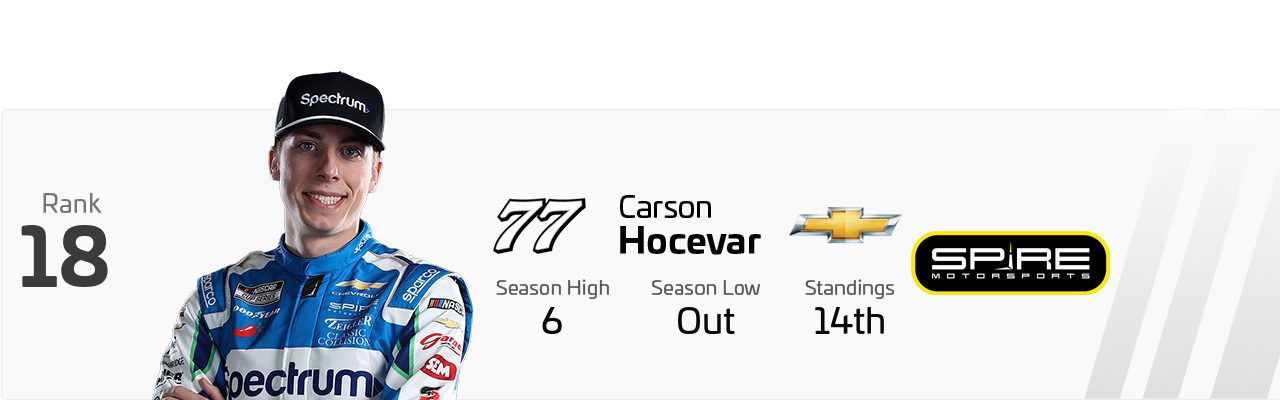
Analysis: Hocevar entered 2026 with significant momentum, but still in search of his first Cup victory. He finally found it at Talladega, added six top fives and made his first Chase appearance, all meaningful steps forward for one of the sport’s most talented young drivers. Unfortunately, that wasn’t all, as a late-season disciplinary controversy and suspension from the Homestead finale — along with a high-profile Bristol fight, among other things — underscored that his development remains unfinished. Hocevar has shown he can contend with the best drivers in NASCAR, but for 2027, his championship prospects may depend as much on channeling that aggression productively as on finding additional speed.
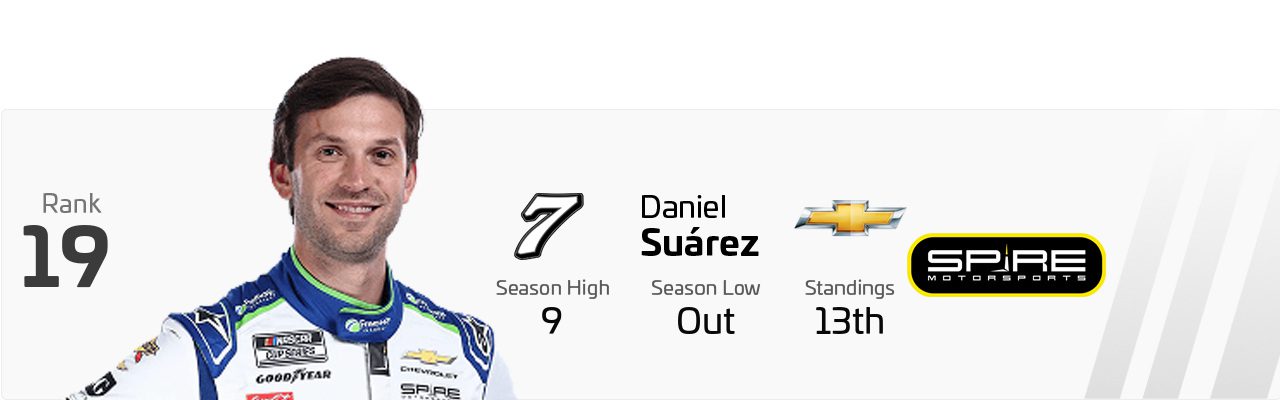
Analysis: Moving to Spire Motorsports in 2026 represented a fresh start for Suárez, and the transition produced one of the season’s defining moments with his rain-shortened Coca-Cola 600 victory in the wake of his former friend and mentor Kyle Busch’s passing just days earlier. The win, along with a season’s worth of steadiness, helped propel him into The Chase and a 13th-place championship finish, a respectable return for a driver adapting to yet another new organization. Still, only three top fives suggested there was room for considerable improvement beyond that signature evening. With a full season at Spire behind him, Suárez enters 2027 looking to turn a successful debut campaign into something more consistently competitive.
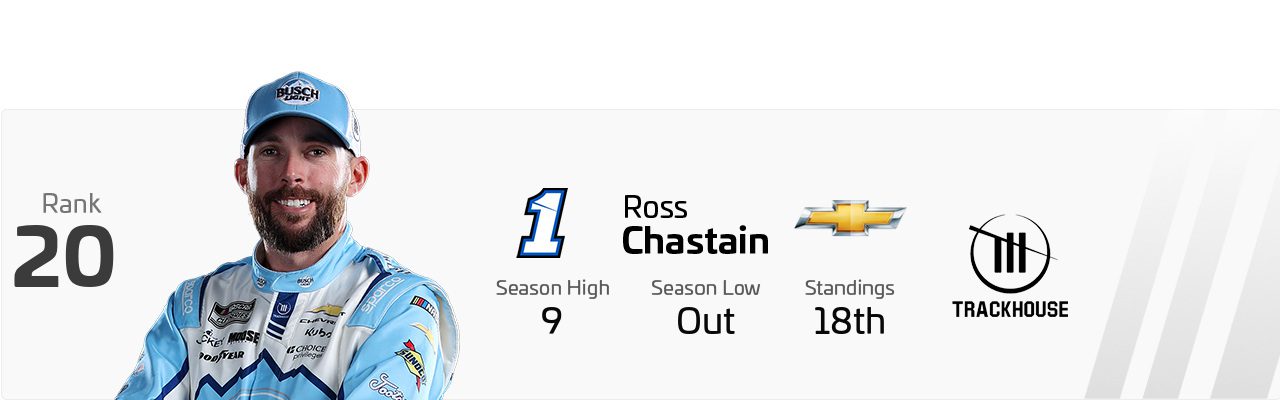
Analysis: Trackhouse Racing entered 2026 having made a significant crew-chief change in hopes of restoring the No. 1 team’s former competitiveness. Instead, Chastain went winless, collected just three top fives and missed The Chase entirely, ultimately finishing 18th in points. It was another frustrating campaign for a driver who once appeared firmly established among NASCAR’s emerging championship contenders. The talent, in theory, hasn’t disappeared, but the results have increasingly struggled to justify that earlier promise. With another year to develop the pairing, 2027 needs to produce a much more convincing return to form.
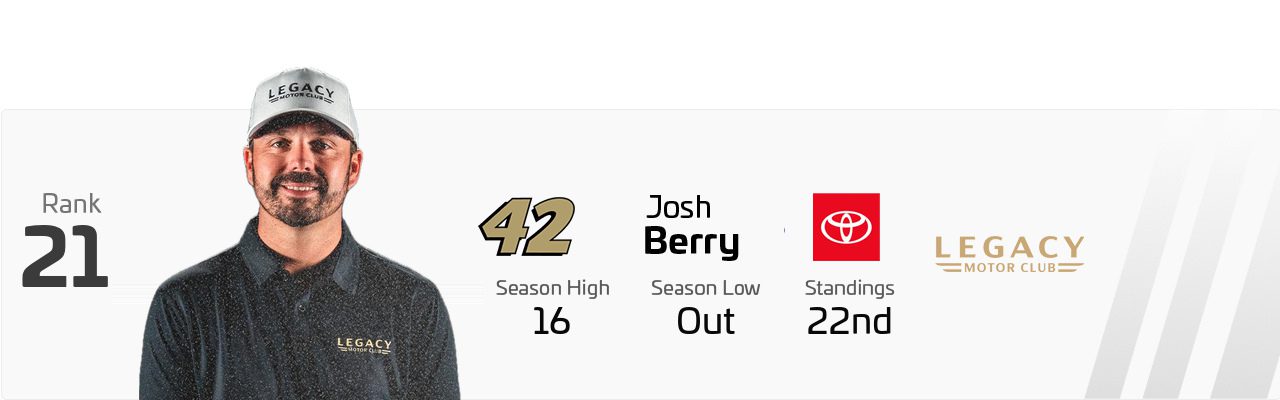
Analysis: Berry’s second season with Wood Brothers Racing didn’t produce a repeat of his breakthrough 2025 Las Vegas victory, but there were encouraging stretches — unfortunately for him, not until after the team announced he would not return in 2027 — that suggested more potential than his 22nd-place standings finish might indicate. A six-race top-10 streak during the summer and continued relevancy during The Chase races were particularly impressive, but the overall campaign lacked the consistency required for serious championship contention. Now moving to Legacy Motor Club’s No. 42 Toyota, Berry gets another opportunity to establish himself in a new environment, and it’s easy to see him thriving there. His 2027 outlook is closely tied to whether Legacy can provide the equipment to build on those flashes of form, but it’s a team headed in the right direction and he could be a big part of its evolution.
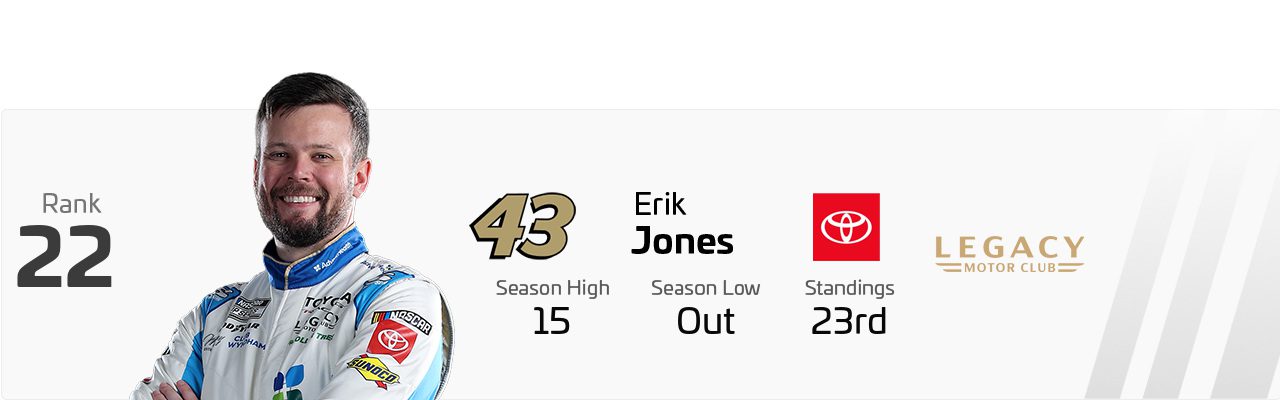
Analysis: The expectations surrounding Jones and Legacy Motor Club were relatively modest entering 2026, and the results did little to dramatically alter that outlook Two top fives and a 23rd-place points finish represented another season spent mostly outside serious contention, despite the organization’s ongoing efforts to strengthen its operation. Some things take time, however, and the arrival of Josh Berry and other changes across the Legacy lineup could provide fresh momentum in 2027, but Jones still needs stronger week-to-week results. His Cup-winning experience remains valuable; the question is whether the equipment can consistently put it to use.
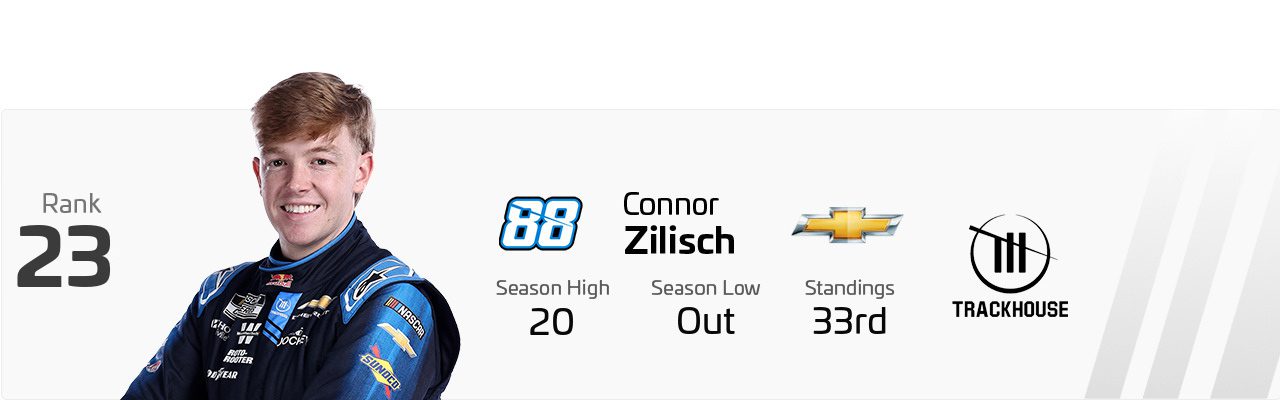
Analysis: Zilisch arrived in the Cup Series with enormous expectations after a dominant 2025 O’Reilly Auto Parts Series campaign, but his rookie season offered a reminder of just how difficult the transition can be. Just two top 10s and a 33rd-place points finish fell well short of the immediate impact some anticipated from NASCAR’s premier young prospect. Still, one challenging season shouldn’t erase the talent that made him such a coveted addition to Trackhouse Racing in the first place (and, in 2028, Hendrick Motorsports). The experience gained in 2026 should prove invaluable, and a substantial sophomore improvement remains entirely plausible heading into 2027 and then from there the sky’s the limit.
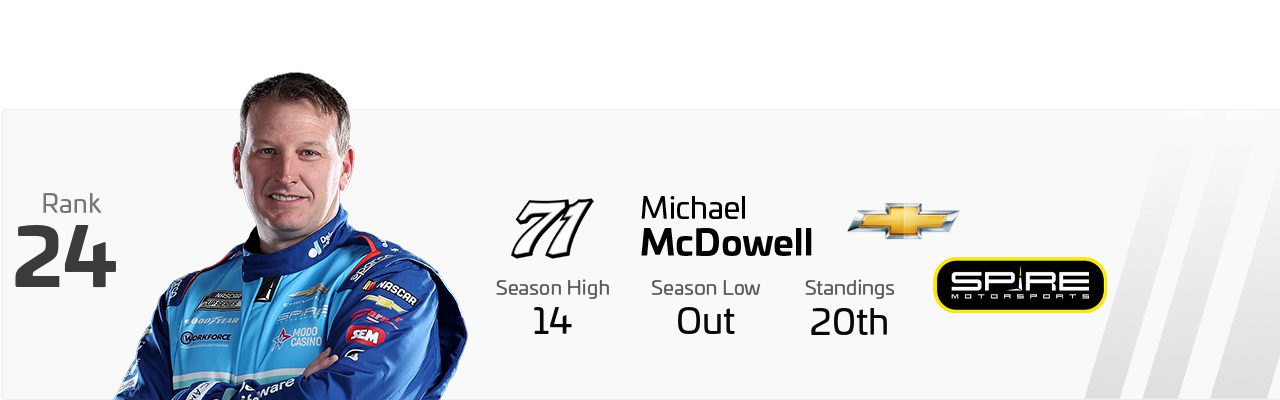
Analysis: McDowell’s second season with Spire Motorsports brought modest progress but little evidence of a major competitive breakthrough, with three top fives and a 20th-place finish in the standings. The outlook for 2027 just became considerably more interesting, however, with Stephen Doran returning to Spire to serve as crew chief of the No. 71 Chevrolet. Doran won seven Cup races working with Shane van Gisbergen over the past two seasons, bringing proven road-course expertise to a driver who already excels on those tracks. The pairing offers genuine upside, though more consistent oval performance remains essential if McDowell hopes to become a serious championship contender. Still, he’s a dark-horse Chase contender.
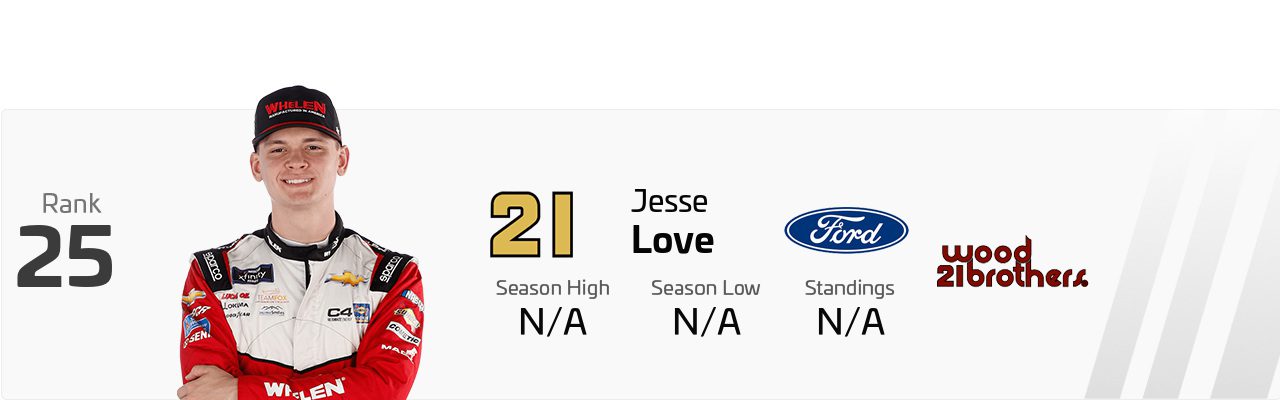
Analysis: Love entered 2026 seeking to defend his O’Reilly Auto Parts Series championship and came agonizingly close, finishing just 14 points behind Justin Allgaier after another two-win campaign. That performance reinforced his credentials as one of NASCAR’s most promising young talents, even if the repeat title never materialized. Now stepping into the famed No. 21 Wood Brothers Racing Ford for his first full-time Cup season, Love faces the same considerable adjustment experienced by nearly every highly regarded prospect. The championship expectations should remain measured, but the talent and organizational support (and Team Penske alliance) make him a compelling addition to the 2027 field.
Sometimes, the sweetest revenge comes in chocolate form.
In July, then-championship front-runner Denny Hamlin offered advice to Hendrick Motorsports and its frustrated supporters during an uncharacteristically difficult NASCAR Cup Series regular season: Have a Snickers.
A little more than three months later, Hendrick took that suggestion quite literally, right next to the 2026 Bill France Cup.
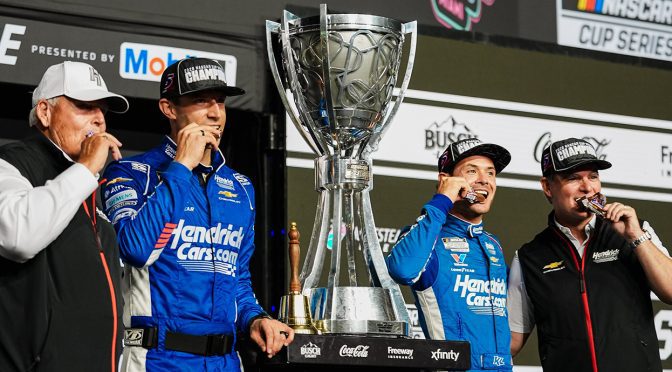
On Monday, a day after Kyle Larson clinched his third Cup Series championship at Homestead-Miami Speedway, the team shared a photo of its championship celebration in Victory Lane featuring team execs Rick Hendrick and Jeff Gordon alongside Larson and crew chief Cliff Daniels, each chomping down on a Snickers bar next to its newest trophy.
The accompanying caption was short, sweet and unmistakably pointed: “Feeling like ourselves again.”
The reference traced back to a late-July episode of Hamlin’s “Actions Detrimental“ podcast, when the Joe Gibbs Racing driver discussed Hendrick’s struggles following a particularly rough Brickyard 400. The organization’s four drivers had gone three consecutive races without a top-10 finish, and Hamlin noticed growing frustration among Hendrick supporters on social media.
“They need to have a Snickers,” Hamlin said. “They’ve not been [themselves] in a while. It’s not really indicative of their speed. They’ve always got a couple cars that are in the top five or near the top five. But just the standard we expect from Hendrick Motorsports, from the legacy, we expect lots of race wins. When I see William Byron in 12th, that’s mind-boggling to me.”
The comment played off the candy bar’s familiar advertising campaign, but Hamlin’s underlying point was serious: NASCAR’s winningest organization wasn’t producing the results its reputation demanded.
That changed rather dramatically shortly after.
Larson snapped a 51-race winless drought at World Wide Technology Raceway at Gateway in September, then added Chase victories at Kansas Speedway and Talladega Superspeedway before mathematically clinching the championship during Stage 1 of Sunday’s Homestead finale — at Hamlin’s expense.
“Rick, he pays attention and he takes it personally, which he should,” Larson said before Tuesday’s NASCAR Awards. “And I think nobody knows more about what happens on the inside of Hendrick Motorsports and Chevy than Rick Hendrick. So I think when he hears people talk like they know all the facts, it probably rubs him the wrong way.”
The title was Larson’s third, his second consecutive and Hendrick Motorsports’ record 16th. Hamlin, meanwhile, led 87 laps at Homestead but finished sixth, his own championship hopes having ended in the opening stage.
“Generally speaking, that’s why people tune in to listen to our podcast for a week. They know they’re going to get an honest take,” Hamlin said “… And back then, Hendrick was struggling, so my job as a podcaster is to discuss those things. And at the time, yeah, I was having their back at the moment.”
Three months after Hamlin’s suggestion, Hendrick rediscovered its championship form — and apparently hadn’t forgotten Hamlin’s advice.
And, as it turns out, winning another title can be pretty satisfying, too.
Kyle Larson is the 2026 NASCAR Cup Series champion!
Larson finished fourth in Stage 1 Sunday at Homestead-Miami Speedway, and those seven points were all that the No. 5 Hendrick Motorsports driver needed to secure his third Bill France Cup in six years and his second in a row. He became just the 11th driver to earn three Cup Series titles, entering rarefied air at stock-car racing’s highest level.
But as Larson celebrated on the Homestead frontstretch, the other 15 Chase presented by Mobil 1 drivers were left scratching their heads about how the 10-race postseason played out. With three races remaining, seven drivers were separated by 56 points, but Larson’s Talladega Superspeedway triumph marked a major turning point in the championship equation.
Take a look at what went wrong for some of the top title contenders, and what needs to change in the 2027 season.
CHRISTOPHER BELL
Entered Chase: Sixth in points, 50 back.
Finished Chase: Second in points, 49 back.
What happened: Bell opened The Chase with a bang, motoring his No. 20 Joe Gibbs Racing Toyota to a crown-jewel victory in the Southern 500 at Darlington Raceway. The speed remained for the entirety of the postseason, but Bell suffered damage in a crash the next race at World Wide Technology Raceway at Gateway, then battled a failing power-steering column a few weeks later at Las Vegas Motor Speedway. Back-to-back top fives at Charlotte Motor Speedway and Phoenix Raceway brought him within five markers of Larson heading to Talladega, but a crash during Stage 1 pit stops in the antepenultimate race marked Bell’s ultimate fatal flaw.
What needs to change: One more spot. Bell placed runner-up eight times across the 2026 season, fittingly culminating in a second-place finish in the final standings. His seven second-place finishes without a win in the regular season tied the most all time, and turning some of those into victories would have resulted in major points swings to improve his starting Chase position. Execution became an issue at times — especially during The Chase — but earning a career-best 16 top-fives proves Bell remains a perennial championship contender. Considering he fractured his left wrist in a crash at Michigan International Speedway over the summer, the season is all the more remarkable for the Oklahoman.
Quotable: “In that moment, like leaving Michigan, I think, if you’d have told me, hey, you’re going to go into Homestead, second in points, 67 back, be like, OK, yeah, that’s pretty good, but, yeah, just the way that we got here, the way that the Chase unfolded, obviously has been disappointing, and yeah, I mean, overall, I think, I don’t know, three months from now, it, I’ll look back at it and maybe, I don’t know … it’s just we’re in the moment today and it is what it is. — Bell on Friday at Homestead, reflecting on Michigan.
DENNY HAMLIN
Entered Chase: First in points, 25 ahead.
Finished Chase: Third in points, 56 back.
What happened: The Chase felt like Murphy’s Law for Hamlin. The No. 11 pit crew had a pair of costly stops at Darlington and Gateway, with the former leading to an on-track incident and damage while racing Michael McDowell. At Las Vegas, Hamlin had an opportunity to trap Larson a lap down while leading, but instead elected to pit. Laps later, Hamlin spun by himself later on, and his Toyota was never the same. A tire failure the next weekend at Phoenix was arguably the most costly, resulting in a 28th-place finish. In the penultimate race at Martinsville Speedway, Hamlin lost control of the lead with pit strategy gone wrong, and a spin after contact from Bell — who was hit from behind by Joey Logano — felt like the straw that broke the camel’s back.
What needs to change: The outcome? Although execution certainly wasn’t great down the stretch, it’s difficult to identify a weakness in the No. 11 team’s game. Hamlin still won four times this season, and amid his postseason struggles, still mathematically had a shot at the title at Homestead. The future NASCAR Hall of Famer has won 27 races over the last seven seasons, finishing worse than fifth in points just once. But Father Time isn’t on his side. Hamlin continues to say that 2027 will be his last behind the wheel, meaning that if he’s true to his word, he has just one more opportunity at a championship. And other than a Brickyard 400 win, that’s quite literally the only box he has left to check.
Quotable: “It was a few times. I mean, I had a role. I think Vegas is certainly one. Now, did I love pitting? No, and did I feel a sense of urgency to make up for that? Yes, but those are mistakes no one on the team’s fault for a couple of the incidents I had. The (Michael) McDowell one, I mean, that probably could have gone either way. Yes, we have an execution problem, but I’m not going to totally remove myself from that problem … we obviously had a great regular season, and the Chase tracks lined up great, but obviously, we just did not perform at a championship level the last nine races.” — Hamlin on his strategies during the 2026 Chase.
RYAN BLANEY
Entered Chase: Second in points, 25 back.
Finished Chase: Fourth in points, 94 back.
What happened: Blaney had blazing speed all Chase — but his results didn’t show for it. He finished inside the top five six times, including the race win Sunday at Homestead, but also had four finishes of 35th or worse. The most notable came at Bristol Motor Speedway, where he led 202 laps before contact with Carson Hocevar ended his night early and resulted in fisticuffs on pit road. A brake rotor failure took him out a week before at Gateway, and the No. 12 Team Penske Ford was involved in the first “Big One” at Talladega.
What needs to change: Limit DNFs. Blaney had three during The Chase, and that doesn’t include damage sustained via a Josh Berry brake check at Martinsville. Certainly, not all of these DNFs were of Blaney’s doing, but it’s become a trend in the last few years. He had six in 2026, which came after eight last year. In 2024, he had seven. Blaney continues to leave valuable points on the table, whether it be in the regular season or the postseason, and it’s cost him since his 2023 championship.
Quotable: “Gateway ending the way it did was frustrating after having a really good day and throwing away a lot of points, and then having to start in the back at Bristol from qualifying being rained out after having our issue at Gateway, doing a really good job getting up through there, had a fast car, had our issue on pit road and we fought back from it and then the night ending poorly again, and just realizing how many more points we lost. It just kind of built,” — Blaney at Kansas Speedway, speaking about his fight with Hocevar.
TYLER REDDICK
Entered Chase: Third in points, 35 back.
Finished Chase: Fifth in points, 104 back.
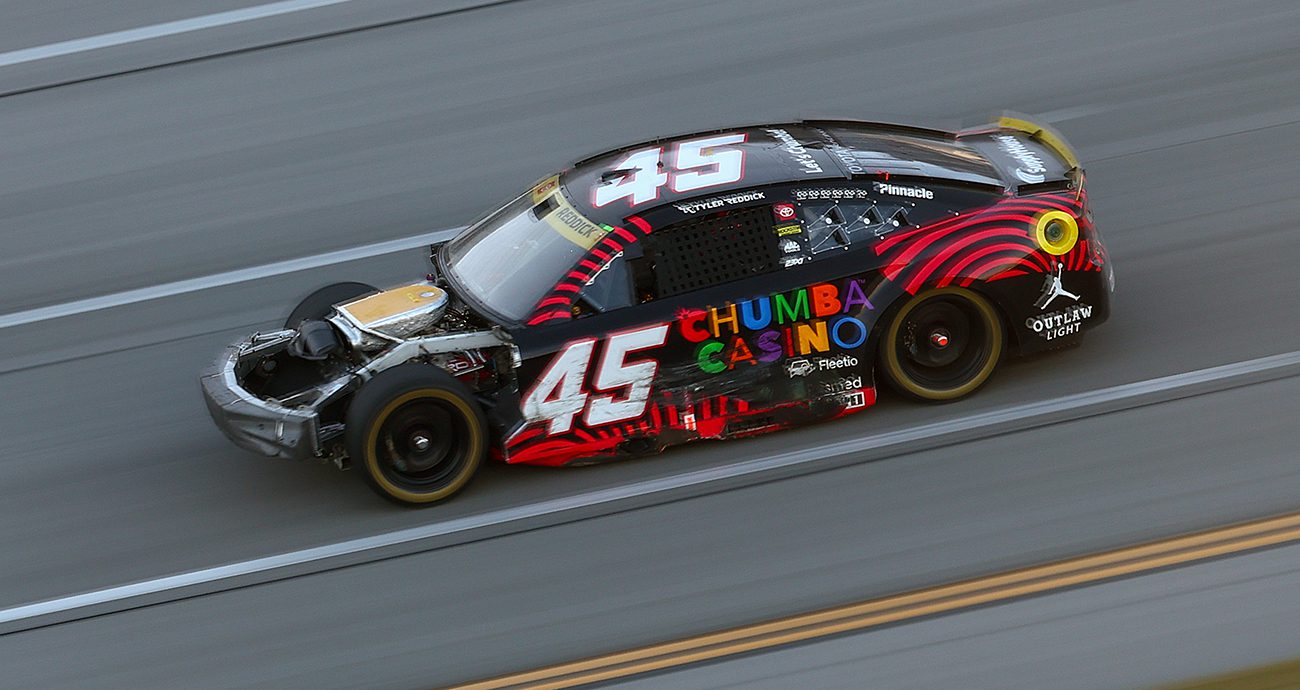
What happened: Reddick limped into The Chase after a historic regular-season start, opening the postseason with two finishes of 18th or worse in the first three races. A stretch of three straight intermediates played into his hands a week before scoring a victory at Phoenix — a significant milestone for a No. 45 23XI Racing team that has generally struggled on flat tracks. That win pulled Reddick within 56 points of Larson. But a week later, Reddick was involved in a crash at Talladega and finished 37th before his elimination at Martinsville.
What needs to change: Sustained success. Reddick won five of the first nine races this season — including the Daytona 500 – and paced the series by 129 markers after the 12th race at Watkins Glen International. But a crash at Michigan in June marked a turning point, beginning a stretch of six finishes of 25th or worse in the next nine races. Certainly, winning five of every nine races isn’t sustainable, but Reddick needs to find a way to keep some measure of solid results throughout the entire 2027, and that’s ultimately what cost him this year. In short, his lows can’t be nearly as low.
Quotable: “There wastwosidestoit,really. We’dbeon,orwe’dbeoff,andnotnecessarilyfromabasestandpoint ofjustexecutingandhavingthecleandaysversushavingcatastrophicdays.Soyeah,Imean,I’dsayifitwasallsunshineandrosesallyearlong,youfeelgoodaboutwhatyoudo,butitisimportanttohaveadegreeoftoughness,adegreeofunderstandinghowtodealwithlosses,howtodealwithfailures,howtodealwithwhateveritis, andwe’vebeenonbothsidesofit.” — Reddick during Chase Media Day in September.
Karl Anderson | Getty Images
CHASE BRISCOE
Entered Chase: Fifth in points, 45 back.
Finished Chase: Tied for sixth in points, 115 back.
What happened: Briscoe got off to a slow start in The Chase that ultimately cost him late. Chase Elliott suffered a brake-rotor failure at Gateway and collected Briscoe, an innocent bystander, and finished 32nd. He pounded the wall with six laps to go at Bristol, which forced a premature retirement. The No. 19 Joe Gibbs Racing Toyota team ripped off back-to-back victories at Las Vegas and Charlotte, and his eighth-place effort at Phoenix put him just 24 points in arrears heading to Talladega. But a crash in the draft all but sealed his championship fate, and a blown engine in the finale at Homestead was the final dagger — even though his 14th-place finish at Martinsville officially eliminated him.
What needs to change: Improve execution. The No. 19 team made three key self-inflicted mistakes during the postseason. Briscoe ran out of fuel at Stage 2 at Darlington, forcing a trip to pit road while it was closed. He ran seventh at Bristol before hitting the wall and heading to the garage early. Briscoe bled multiple spots at Kansas after another wall tap while racing for the win. Widening the scope, Briscoe started sluggish for the second year in a row, placing 33rd in points after four races. In total, he finished 32nd or worse seven times. No doubt, the Indiana native had his fair share of bad luck, but Briscoe left chunks of points on the table due to the team’s own mistakes.
Quotable: “A lot of it’s been myself, so it’s just trying to have a better understanding of risk versus reward and just a better picture. I say execution, but like Gateway, the 9 (Chase Elliott) blows the rotor underneath you; there’s nothing you can do there. You get caught up in the big one at Talladega. Nothing you can do there. You know, the big one was really Bristol for us, and that was a mistake on my end, and then Darlington was the other one where we just ran ourselves out of fuel and had to go to the back. We could have won the stage and controlled the race. I feel like we’re close on an execution level,” — Briscoe after winning the pole Saturday at Homestead.
JOEY LOGANO
Entered Chase: Ninth in points, 65 back.
Finished Chase: Tied for sixth in points, 115 back.
What happened: Logano continued his end-of-summer heater at the start of The Chase, finishing inside the top 10 in six of the first seven races with a Bristol victory sandwiched in between. He sat just 44 points back of Larson with three races to go, but the No. 22 Ford Team Penske Ford flipped in a crash at Talladega before a pit-road mishap at Martinsville officially eliminated the three-time champion from title contention. The 18th-place finish at Martinsville was Logano’s worst finish at “The Paperclip” since 2019 — an uncharacteristic blip.
What needs to change: Start stronger. Logano sat 20th in points halfway through the 2026 campaign, and without three short-track wins in relatively quick order, it’s unlikely Logano would have been any sort of factor in the championship. Multiple times this spring, including Darlington and Kansas, he finished multiple laps down on pace. If Logano can get off to a better start in 2027, theoretically, he should earn a better Chase seed, making his postseason journey easier.
Quotable: “It was a big hole that we dug ourselves into, there’s no doubt, and trying to make that up on, to your point, the best teams, it’s really hard to do that … There was a moment where I was like, I don’t think we’re going to make the Chase here; this is going to hurt. Just crazy how quickly things can turn around.” — Logano after his Bristol victory in September.
Trackhouse Racing announced Monday that Blake Harris will serve as crew chief for Shane van Gisbergen and the No. 97 Chevrolet in the 2027 NASCAR Cup Series season.
Harris joins the organization after spending the last four seasons leading the No. 48 Hendrick Motorsports outfit with driver Alex Bowman. He replaces Stephen Doran atop the No. 97 pit box after Spire Motorsports announced Doran will crew chief the No. 71 car and driver Michael McDowell in 2027.
Harris has one win in the NASCAR Cup Series, leading Bowman to Victory Lane on the Chicago Street Course in 2024, a career-best year for Harris as a shot-caller. The No. 48 team scored eight top fives and 17 top 10s that season in addition to a pole-position effort at Bristol Motor Speedway. Before joining Hendrick, Harris served as crew chief of the No. 34 Front Row Motorsports team with McDowell in 2022, guiding McDowell to 11 top 10s and a 15.8 average finish in 32 races.
The 2026 campaign proved challenging for Harris and the No. 48, losing Bowman for four races as he battled vertigo early in the season. Through combined efforts with Bowman, Justin Allgaier and Anthony Alfredo, the No. 48 team ultimately finished 24th in owners’ points this season. Bowman finished 26th with four top fives and eight top 10s.
Harris now partners with SVG, a three-time V8 Supercars champion and renowned road racer whose transition to full-time NASCAR Cup Series racing took a notable step forward on ovals in 2026. The New Zealand native finished the 2026 regular season just outside The Chase presented by Mobil 1 and earned a career-high six top fives and 10 top 10s in his second full season, improving his average finish of 21.0 in 2025 to 18.9 in 2026. Van Gisbergen won twice in 2026 (Watkins Glen International; Sonoma Raceway), bumping his career total to eight wins, tied for 71st all-time alongside Bowman and Chase Briscoe as well as former driver and current television analyst Kyle Petty.
“Feellikewemadegoodstridesthisyear,andit’dbegoodtogetsomemomentumgoing,” Van Gisbergen said Saturday at Homestead-Miami Speedway. “Westartedtheyearprettyaverageasateam.Middleoftheyearwasaverage,andIfeellike wereallysortofturneditaround the lastcoupleofmonths.Sohopefullythatkeepsgoing.”
Van Gisbergen finished 17th in the final points standings of 2026, the highest available position outside the 16-driver Chase field.
Spire Motorsports announced Monday that Stephen Doran will serve as crew chief of the No. 71 Chevrolet for veteran driver Michael McDowell in the NASCAR Cup Series next year.
Doran will make the move from Trackhouse Racing’s No. 97 Chevy and driver Shane van Gisbergen at season’s end. He replaces Travis Peterson, who has been paired with McDowell for the last four seasons — two with Front Row Motorsports and two with Spire.
Doran has worked the last three years with Trackhouse, scoring seven Cup Series wins and five pole positions in the last two seasons with van Gisbergen. Before joining the Justin Marks-owned organization, Doran spent 11 seasons with Stewart-Haas Racing and was part of the No. 4 team that claimed the Cup Series championship with Kevin Harvick in 2014.
Van Gisbergen ended the season 17th in the Cup Series standings, having just missed The Chase presented by Mobil 1 field.
“I’m incredibly thankful to Justin (Marks) for giving me the opportunity to be a crew chief at Trackhouse,” Doran said in a press release. “I’m equally grateful for the opportunity to work alongside SVG. He’s a world-class driver on the track and an even better person away from it. I’ll truly miss the people and relationships I’ve built within the Trackhouse family.
“The timing felt right to return to Spire Motorsports. Coming back to the No. 71 team is something I’ve thought about since leaving at the end of 2024. What Jeff, Dan (Towriss), and the entire organization have built in such a short time is impressive, and I’m excited to be part of what’s ahead. I can’t wait to get to work with Michael and the entire team as we push to become a consistent race-winning organization for years to come.”
“Our 2027 season starts today, so we’re eager to bring Stephen back to Spire Motorsports,” Spire Motorsports co-owner Jeff Dickerson said in a team release. “He’s an exceptionally talented individual, a winning crew chief and someone who fits in with our group, seamlessly. Spire had a great 2026 season, so we have a lot to be proud of. Adding Stephen to the mix with Matt McCall and reuniting him with Ryan (Sparks), Luke (Lambert) and Dax (Garringer) gives me a lot of confidence that our best days as an organization are still in front of us.”
Peterson helped guide McDowell to the most recent of his Cup Series victories, prevailing at the Indianapolis Motor Speedway road course in 2023 — their first year together. McDowell has been on the outside of the Cup Series postseason field the last three seasons and finished 20th in the standings.
HOMESTEAD, Fla. — Even Kyle Larson admitted that the way he clinched his third NASCAR Cup Series championship verged toward buzzkill. The 34-year-old California kid salted a hard-fought title away in an abbreviated Stage 1, with nary a “WOO!” or even a lower-case “woo” over the No. 5 Hendrick Motorsports Chevrolet’s radio. The championship stage wouldn’t be wheeled to the frontstretch for nearly 190 laps, and the whirring of calculators was the clinch soundtrack instead of fireworks.
“Uh, they’ve declared it. We got it,” said Cliff Daniels, the No. 5 team’s ever-reliable crew chief.
“Like, it’s done?” asked Larson.
“It’s over.”
“OK, that was a little anticlimactic,” Larson said, “but that’s cool. Good job, guys.”
As understated a radio moment as it was, the sense of accomplishment that accompanied one of the most celebrated 12th-place finishes in recent memory should be trumpeted to the Homestead-Miami Speedway rafters. Larson took out all the guesswork early in Sunday’s Cup Series season finale, giving the heralded 1.5-mile track another entry in its rich history of crowning champions.
There’s no understating where Larson ranks now in the conversation among stock-car racing’s all-time greats. Getting just one Cup title is an achievement in itself — a feat that many fine racers aren’t fortunate enough to taste. Winning two moves the needle into the next stage of elite. Now as just the 11th driver to reach three championships in NASCAR’s top division, there’s an easy association with some of the sport’s immortals — Yarborough, Waltrip, Stewart, Pearson, Logano.
His ability to excel in other disciplines of racing, however, has placed Larson on a separate, lofty plateau. At Richmond, Larson expressed his faith in Hendrick Motorsports’ process after some early struggles, trusting that both he and the team would have the ability to turn around their fortunes at the most critical time in the postseason. It was also at Richmond where he ran 300 miles, bolted from his No. 5 Chevy to fly halfway across the country to claim his fourth Knoxville Nationals triumph in the wee hours of a damp Iowa morning.
NASCAR, IndyCar, sprint car. Larson has demonstrated searing speed in all, much in the way legends with names like Foyt and Andretti once did. No less an authority than four-time Cup champ Jeff Gordon said it’s time to put his driver’s name alongside those icons.
“In our eyes, he’s there, right?” said Gordon, Hendrick Motorsports vice chairman. “We see what he accomplishes and everything he gets in. It’s hard to pick the most impressive thing that he does because he gets in an IndyCar, he goes fast. Sprint car, he’ll fly overnight, get in the car, go win Knoxville, then come back and win the Brickyard, hop in the car and fly the next day in the stock car. That’s rare air. Very rare. So few guys that are capable of doing that, or even get the opportunity to do that. Whatever stats he needs to accumulate, OK, if that’s what it takes. I think he’s already there.”
Once the championship race became a mathematical inevitability, team owner Rick Hendrick — who had fretted each time early on when Larson tempted calamity in his search for speed up against the outside wall — finally keyed the No. 5 radio to loosen the reins. “Congratulations, champ,” he said. “Now you can ride the wall.”
With newfound freedom, Larson began ripping along the outer barrier without objection — to the detriment of his car’s scuffed right side, but to the delight of those watching his breathless derring-do. His skillset has always felt like a perfect match to Homestead’s high-banked sweeping turns, where the reward/risk balance of running the highest of lines has lured some of the sport’s bravest.
According to race winner Ryan Blaney, one of his generation’s peers, that wasn’t always the case.
“Right when he got in the sport, he kind of changed the game. He’s one of those guys,” Blaney said, noting how he’d pointed this out years ago when the two drivers were marketed heavily in a “they’ve got next” program. “… He revolutionized running the wall. I don’t know if anyone knows that. Go look up when Kyle Larson came into the Cup Series in like ’14 or even before, was then the Nationwide Series, nobody ran the fence like that. Everyone would kind of go in the middle, fade up to the top, come off of it. Kyle was one of the first guys I’ve ever seen just park it entering, two inches off the wall, and not getting two inches off the wall the whole way. That was a talent like I’d never seen before personally. …
“I think he’s really good at finding the edge,” Blaney added. “He used to step over it a lot in his early days. He would always be at the edge, take himself out of contention. As he’s gotten older, more experienced, he’s really refined that skill of he’s still on the edge but he definitely doesn’t go over it a lot. That’s really dangerous for the rest of us. Obviously he’s incredibly talented. His natural, God-given talent is off the charts. He is very deserving to win his third championship. That group makes it very hard on everybody in the garage. They’re a very good team. Everyone has their work cut out for them to keep contending with that group, specifically that pairing of Kyle, Cliff, all those guys.”
That talent came to its brightest focus under the spotlight of the sport’s first go-round with a new-look Chase format. The freshened postseason structure rewarded winning and consistency, and Larson and the No. 5 team delivered on both in epic fashion, rising from a seventh-seed slot to take a commanding lead. Larson shook off a regular-season slump with victories at Gateway, Kansas and of all places Talladega, where his unlikely charge erased all doubt about the strength of his title candidacy.
With three titles in a six-year span and the amped-up performance over this year’s final 10 races, the parallels to another Hendrick dynasty were bound to be drawn. Jimmie Johnson secured all seven of his record-tying Cup Series championships here and was the last to go back-to-back, and Daniels was a key component to the No. 48 team’s repeated success — prosperity he’s enjoying with a team he now leads. Even Denny Hamlin — among Larson’s closest challengers this year — was quick to connect all those dots.
“Imean,justanexceptionaltalent. He’sthisgeneration’sJimmie,right?” said Hamlin, who ended up third in the final Cup Series standings. “Imean,Ithinkthat’stheonlywayyoucankindofdescribeit.Justwhenitcomestoplayofftime,theyperformtheirbest,andthat’ssomethingthatJimmieusedtodo.Andyouknow,Jimmiewasaguythatcouldgettonsofspeedoutof a car.Kyle’sthesameway, youcouldargueevenmorespeed. There’salittlebitmorevariance intheresultsbecauseofhowhardhepushesit,buthereaps the benefitsbecausehegetslotsofwins,andthat’ssomethingthatcertainlyhe’sgoingtobewinningchampionshipsandraceswellbeyondwhenI’mgonefromhere.Butit’sbeenfuntoreallyraceagainsthimandseehowreallyhe’sgottenbetterandmaturedoverthelast10yearsontherace track.”
And that’s where the conversation goes as NASCAR traipses into its offseason break, even with the trophy-shaped confetti still freshly flown — just how many more titles Larson & Co. can accumulate. Richard Petty’s seven Cup championships were once thought of as an unbreakable record until the rise of Dale Earnhardt. Those two stood alone for more than two decades until Johnson stunningly made it a three-man crowd of seven-timers, complete with his own unprecedented five-in-a-row burner.
Now Gordon can only smile as Larson makes gains on his own Hall of Fame credentials, but potentially on others with first-ballot, Mount Rushmore and GOAT cred. Anticlimactic? Hardly.
“He’s going to pass me. I already came to that conclusion,” Gordon said, grinning. “Kind of knew that when he was going to Hendrick Motorsports. He’s special. It was one of the first things that I said to him when I saw him today. All right, there you go, number three, one more to go.”