Analyzing what happened and where things go from here
RELATED: France: ‘Definitely an improvement’ | Drivers praise new rules package at Kentucky
Saturday night’s first NASCAR Sprint Cup Series race with a new, lower-downforce rules package prompted almost as many questions as it answered at Kentucky Speedway, but in a good way. Based on its early reviews, the opening act could lead to potentially much wider use later this season and beyond.
The blight of frequent rain severely curtailed practice time on the 1.5-mile track, making a small sample size even smaller before the rules package’s race-time application in the Quaker State 400. Despite the scheduling difficulties, the weekend was capped by the most compelling intermediate-track race of the season.

What was learned? What’s next? Who benefited the most? Measuring outcomes or making predictions from Saturday night’s show isn’t an easy task, one that would benefit from the help of a Magic 8-Ball to provide the answers.
With that, let’s give it a shake:
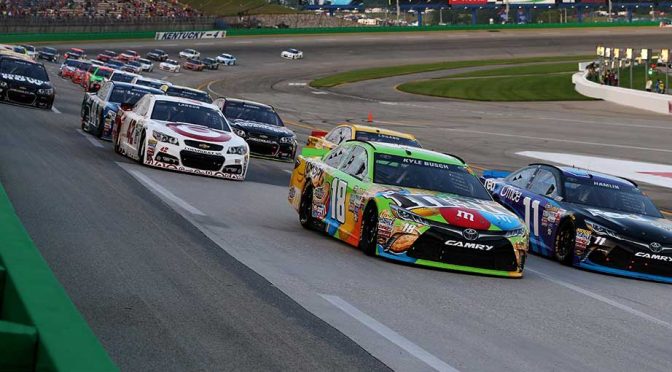
It is decidedly so: Passing increased — a lot. What the package yielded was the most competitive event in the track’s history, based on the number of lead changes and widespread passing — more than double that in the previous year’s Kentucky race — throughout the pack. Chalk some of the statistics up to a track-record 11 caution periods and the frantic restarts — with three- and four-wide racing — that followed, but the rules package deserves the bulk of the credit.
You may rely on it: Separation was still prevalent once drivers settled into a green-flag run, but the advantages of undisturbed "clean air" for a leading car was not nearly as pronounced. The decreased downforce prevented cars from being glued to the race track, placing an emphasis on driver control. With that factor at a premium and perfectly consistent lap times not easy to achieve, overtaking came more into play.
Ask again later: The next stop for the reduced-downforce package comes Sept. 6 at Darlington Raceway, but with what’s expected to be a crucial variable — a softer tire. Goodyear’s production run of Kentucky tires was already complete by the time last weekend’s rules change was announced, preventing a more exact match. By getting the downforce and tire compounds in sync for Labor Day weekend, the verdict on the rules package may be even more conclusive.
MORE: Several tracks to see new rules packages in 2015
Cannot predict now: Are further changes coming? Could the package be used in the Chase for the NASCAR Sprint Cup playoffs? Possibly. Some crew chiefs expressed that NASCAR could go even further in chopping downforce, but that more will be learned with the softer tire compound at Darlington. As for the Chase, NASCAR Executive Vice President and Chief Racing Development Officer Steve O’Donnell said last week that, "all options for us are still on the table." A rules change for the playoffs could be considered drastic, but the precedent for making bold moves has already been set midseason at Kentucky.
RELATED: NASCAR executive discusses Kentucky rules package
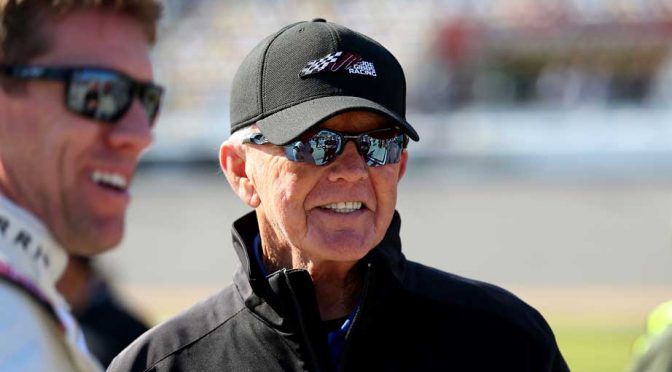
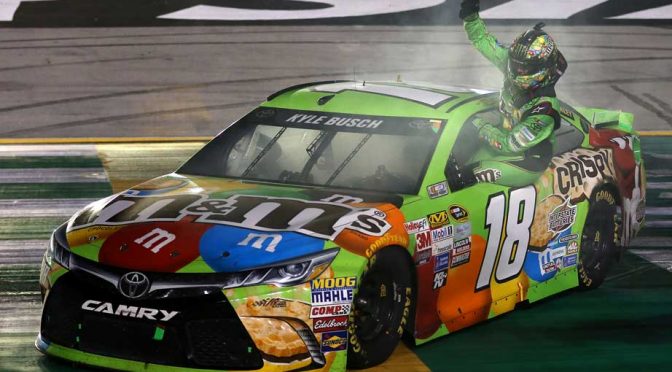
Outlook good: Two teams stood out from the rest in benefiting from the new package — Joe Gibbs Racing and Team Penske. Their half-dozen cars made a clean sweep of the top six, leading all but five laps Saturday night. Race winner Kyle Busch was the most dominant, setting the pace for 163 of the 267 laps, but the show of strength didn’t dampen the quality of the racing, both up front and in the pack.
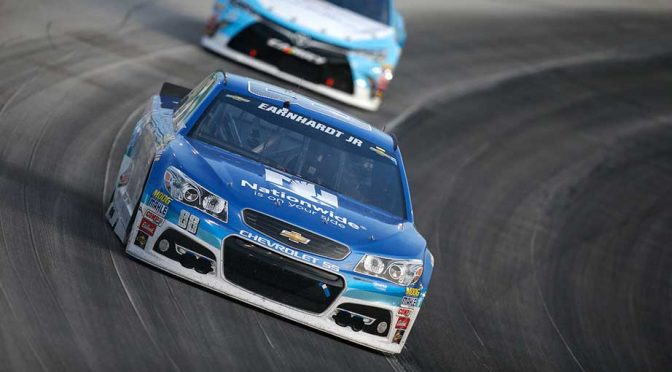
Reply hazy, try again: For whatever reason, Chevrolet teams in general struggled to find the right combination. Four-time series champion Jeff Gordon drove the top-finishing Chevy to seventh place in his last Kentucky start.
Don’t count on it: NASCAR innovation standing pat? Not in this new era, where the decision-makers in the sanctioning body’s R&D center actively seek feedback from drivers, whether in an organized council or otherwise. Their willingness to adapt and change injected life into Saturday night’s racing, and the promise of track-specific packages offers even more potential.
Signs point to yes: Based on the reaction of most drivers and most fans through social media, Saturday’s race may best be remembered as a key building block to an improved on-track product on intermediate-sized tracks. Third-place finisher Denny Hamlin may have stated it best: "This is what race car driving’s all about. And I feel like now it’s back in the driver and crew chief’s hands to get their car handling like it’s supposed to, not just an arms race of who builds the fastest cars in the shop."