Talladega Chairman weighs in on superspeedway qualifying changes
Play: NASCAR Fantasy Live
RELATED: Superspeedway qualifying returns to one timed lap
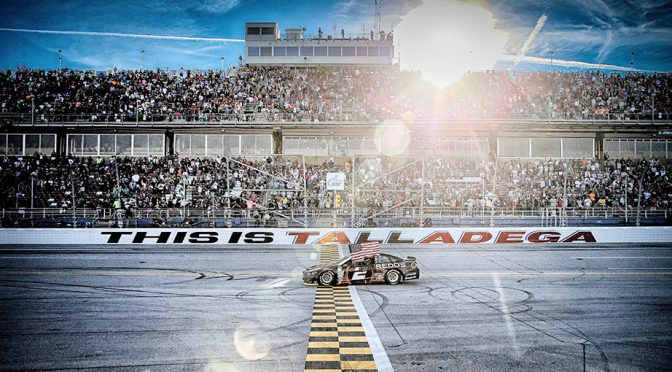
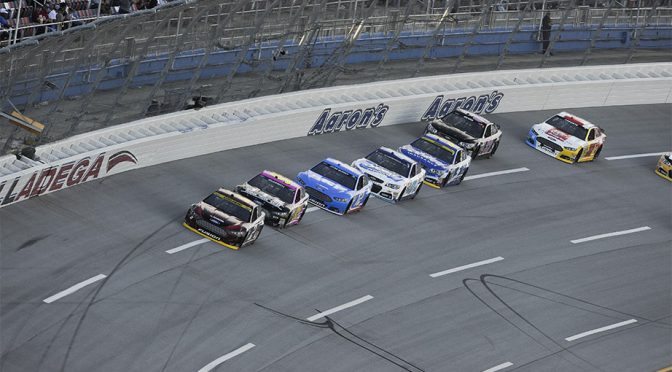
Grant Lynch, Chairman of Talladega Superspeedway, lobbied long and hard for NASCAR’s group qualifying format at his 2.66-mile track.
"I thought it could be something where the fans would finally get to see the cars qualify at the speeds they race," Lynch said Monday. "But obviously it hasn’t worked real well. I think it’s probably time to do what NASCAR’s doing."
The sanctioning body announced Monday that this year’s qualifying format for events at Talladega (and Daytona International Speedway in July) will feature a variation of single-car qualifying, with staggered starts putting one car on track as soon as a previous entry is finishing its run.

There will be no "pack" qualifying, similar to that which took place earlier this year at Daytona and resulted in a four-car crash during the first session for the Daytona 500.
RELATED: Bowyer slams group qualifying at Daytona
Lynch saw the previous format as an opportunity to make qualifying a bit more relevant and a bit more exciting with multiple teams jockeying for position as the seconds clicked off during each session.
Teams saw it as a way to damage a car, if not completely ruin it. In the end, the voices of the teams won out.
Talladega has Sprint Cup and XFINITY Series races on tap for the first weekend in May and will have Sprint Cup and Camping World Truck Series events in October. Daytona will host Sprint Cup and XFINITY Series teams in July.
"I’ve been here for 23 years and during that time I’ve seen various sizes of restrictor plates, I’ve seen multiple types of car configurations that have been put on, with spoilers, with wings, wicker strips, just anything you could imagine," Lynch said. "And qualifying speeds have been all over the chart at Talladega.
"One thing consistently is that when they start the race, the competition on the race track can be some of the most intense, exciting, most competitive motorsports that there is in the world. And it’s right here. Whether we’re running 200 miles an hour or 191 miles an hour, if (fans) want to see close fender-to-fender action, you can’t see it anywhere other than Talladega."
According to NASCAR officials, the new qualifying format for this year’s remaining restrictor-plate races will consist of two rounds, with the fastest 12 from the second round advancing to the final round. The qualifying order will be determined by a random draw for the opening round; final round order will be based on first-round results, from slowest to fastest. Only one timed lap will be allowed and cars will be released in a predetermined time interval.
Lynch said the entire session, barring any delays, should take no more than 90 minutes to complete.
"Even if we did it a different way … what really counts is the race," he said. "That’s where we shine. That’s why we had 88 lead changes among 29 drivers in one race. That was in 188 laps; that’s a lead change every two and two-thirds of a lap or something like that."
From 2008 through 2011, Sprint Cup Series races at Talladega saw an average of 71 lead changes per race, with a race record 88 in the spring events of 2010 and ’11.
REDUCTiON IN TIRE SETS GETS MIXED REVIEWS
• NASCAR’s move to reduce the number of sets of tires available to teams during some race weekends this year is getting mixed reviews from the garage.
With 10 cautions falling before Sunday’s STP 500 at Martinsville Speedway had reached its halfway point, several teams began revising pit strategy as their tire supplies dwindled.
In what they say is a cost-cutting move made after conversations with teams, NASCAR has reduced the number of tires teams are provided for practice and qualifying at Talladega and Daytona (from four to three), the road courses of Sonoma and Watkins Glen (from five to four) as well as the summer night race at Bristol (also from five to four).
The number of race-day sets provided dropped from 11 to 10 at Martinsville; Dover, both Michigan races, Kentucky and Indianapolis sets drop from 10 to nine; sets for Pocono Sprint Cup events will fall from nine to eight; Sonoma and Watkins Glen from six to five; and from eight to seven for New Hampshire’s first event later this summer.
Sprint Cup Series Managing Director Richard Buck said teams had, on average, one to two sets of new tires remaining following the race at Martinsville.
"I think the allotment was quite reasonable," he said. "Again, it’s (based on) feedback from the teams.
"We’ve done an audit on past races … what tires were left over, we looked at the number of cautions, (did) a complete analysis on it. There are certain races that we can put a limit on the tires that looks like it will not affect the strategy. So that’s … what we did at Martinsville."
Chad Knaus, crew chief for six-time Sprint Cup champion Jimmie Johnson said he understands the savings argument but said, "From a competitor standpoint, I hate it."
"For instances we are in Phoenix a couple of weeks ago, we come around off of Turn 4 on the first lap and get pushed up into the fence," he said. "The caution comes out shortly thereafter, we come down and have to change tires. Well that is one set of tires gone in one lap. If you are at a track like here at Martinsville, you go out there and you get crashed and you have to come in and change tires. It goes on and on and on. Before you know it, you are out of tires."
There are tracks where cutting back on the number of sets likely won’t be a factor, he said.
"We don’t want to hinder a team that is trying to come back from a mishap on the race track or something bad happens and take them out of an opportunity to go up there and compete for the win," Knaus said. "Or a top-five or a top-10 just because of a tire allotment rule."
Goodyear tires cost approximately $450 per tire, or $1,800 per set. That’s an $18,000 tire bill for each team at Martinsville, and that’s only for race day.
BACK TO R&D
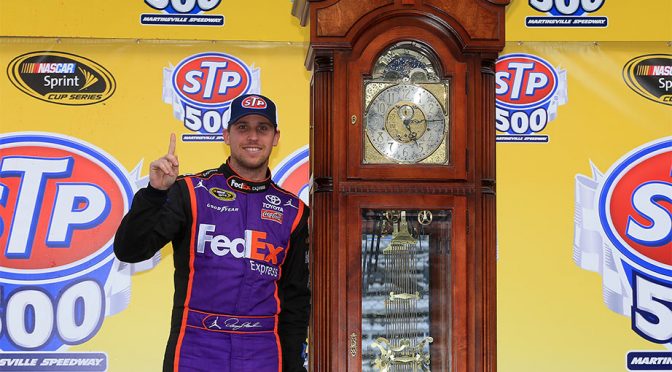
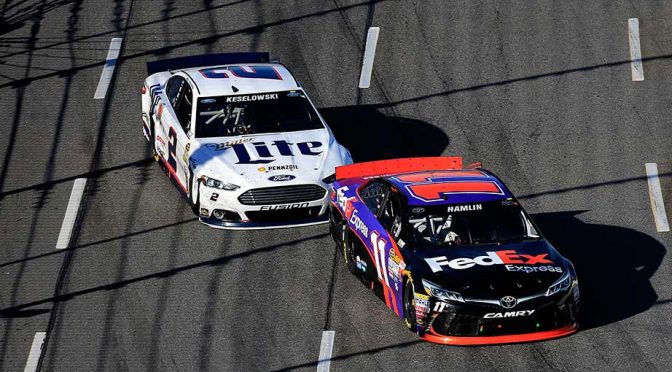
• Following Sunday’s STP 500, as part of its post-race inspection process, NASCAR took the cars of the winner Denny Hamlin, runner-up Brad Keselowski and seventh-place Danica Patrick back to the R&D center for additional evaluation.
Tires were also taken back the R&D, from the teams of Joey Logano, AJ Allmendinger, Martin Truex Jr., and Matt Kenseth.
PIT ROAD PENALTY WRAP-UP
• NASCAR issued a season-high 43 penalties Sunday at Martinsville, surpassing the 42 doled out in the season-opening Daytona 500. Two penalties surfaced for the first time this season — pitting outside the assigned pit box (HScott Motorsports No. 51, Lap 208) and passing on a start/restart (Phil Parsons Racing No. 98, Lap 293).
Teams are not allowed to service a vehicle if its front or rear is on or beyond the front or back lines determining his or her pit stall, or if the right front of the vehicle is on or beyond the line markingthe outside edge of the stall. The back end of the vehicle may be outside the box.
Kurt Busch (Stewart-Haas Racing) was initially flagged for passing on a start/restart as well, but that penalty was waved off when officials determined no infraction had occurred.
Drivers are not allowed to change lanes and improve their position at the start of a race or during subsequent restarts before they reach the start/finish line.
There were six penalties for uncontrolled tire violations, matching the previous high called at Auto Club Speedway a week earlier.
MORE:
|
NASCAR news |
PLAY: Sign up
|
WATCH: Latest
|
FOLLOW LIVE: Get
|
|---|