LOUDON, N.H. — When the checkered flag flew in Saturday’s Xfinity Series race at New Hampshire Motor Speedway, Brandon Brown thought he finished fifth. Turns out, with both the cars of Landon Cassill and Noah Gragson getting disqualified, the No. 68 car finished a season-best third.
Brown hovered inside the top 20 for the opening half of the race, earning six stage points in the opening stage when crew chief Doug Randolph chose not to call the No. 68 car to pit road when a caution flew inside of 10 laps remaining in the stage. On a four-lap dash to the stage end, he dropped three positions from second to fifth.
Buried in traffic on the restart, Brown finished the second stage in 19th. But he was able to stay out of trouble in the second half of the race when many others were not, as there were six yellow flags in the final stage alone.
The pivotal point for Brown was when Akinori Ogata blew an engine on Lap 175. With just 17 cars on the lead lap, Randolph brought the No. 68 Chevrolet to pit road for four fresh tires. Over the 21-lap sprint to the finish, Brown was able to race to as high as fourth position but dropped to fifth when the race was complete.
“That last stint was all attack mode, give it everything that I had and push as hard as I could every single lap,” Brown said. “I was trying my hardest not to break the grip and break the plane to where I started sliding and tearing up the tires. But I did it just one too many times.”
When the race concluded, Brown radioed his crew, telling them he had a winning car. He had just made too many mistakes to catch race winner Justin Allgaier.
“With the (new) tires, it had the chance to win,” Brown said. “It just needed the driver to make the right moves. Maybe just one more caution would have been great.”
The eventual third-place finish was needed for Brandonbilt Motorsports. In the first 17 races of the season, the team had just a pair of top-10 efforts, with the most recent of those coming at Richmond Raceway back in early April.
Over the last few weeks, Brown had consecutive DNFs at Road America and Atlanta Motor Speedway. In the former, he totaled the car in the massive 13-car pileup. He then made a mistake at Atlanta, getting into the wall after battling inside the top 10 early and even finishing fourth and third, respectively, in the first two stages.
“This is everything to our team because we’ve had very minimal media time up until now,” Brown said. “(That) really hurts for a team like us, especially with the sponsorship hunt and how hard it can be.
“Everyone knows how hard I hustle for sponsors. It means everything for us to get back up and get these strong runs and show these brands and companies, ‘Hey, Brandon Brown is in there and he’s going to put you in a chance to win.’ We’re out here to compete.”
With Cassill being awarded just one point for his disqualification, Brown gained 39 points on the cutline, now just 61 markers behind with eight races remaining.
While it may take some more good fortune for Brown to increase his chances of making the postseason for the second time in three years, he has a fighter’s chance.
“I think it’s obtainable,” he said. “I think it’s going to be a lot of work and a ton of strategy calls like that. We really need to take advantage of every opportunity given to do this and not choke anything away.”
I really like NASCAR racing at New Hampshire Motor Speedway.
This isn’t because of a big betting win or memorable on-track racing, but because after growing up in North Carolina, I moved to the Boston North Shore in 2011.
North Carolina offers plenty of options for NASCAR fans to attend races in person, while the greater Boston area does not.
However, New Hampshire Motor Speedway was just a two-hour drive from where we lived, so before the craziness of having kids, we made plenty of treks to the tracked dubbed the “Magic Mile” and had a blast every time.
So whether you’re attending Sunday’s Ambetter 301 or watching from home, here are two bets I like for the race at New Hampshire.
Busch struggled in qualifying — posting just the 17th-fastest speed during time trials — but I’m giddily buying this price discount.
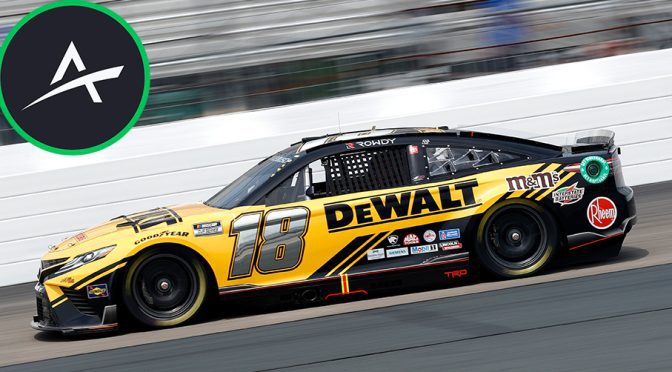
The driver of the No. 18 Toyota has been extremely fast on tracks similar to New Hampshire this season, especially on the tire combination that will be used Sunday afternoon.
In three previous races (Phoenix Raceway, Richmond Raceway and World Wide Technology Raceway at Gateway) on this tire this season, Busch has the second-best average finish, has run the second-most fast laps, has the second-best average running position and has posted the second-best driver rating.
Busch backed up that speed in practice Saturday, ripping off the best 10-lap average, so this car is plenty fast heading into Sunday’s race.
Chase Briscoe (+100) for a top-10 finish
Buying low, you say? I’m doing it once again with Briscoe.
Sure, Briscoe was very disappointing in qualifying, but his 29th-place starting position isn’t enough to scare me away from his speed in race trim.
First off, Briscoe won at Phoenix earlier this season on this tire combination, and that speed carried over to this weekend at New Hampshire, evidenced by his second-fastest 10-lap average in practice.
It should be hard to pass this afternoon at New Hampshire, so I’m wary of betting Briscoe to win. However, maneuvering his way into the top 10 by the end of the race is very manageable and something I expect him to do more than 50% of the time, which is what his +100 price implies.
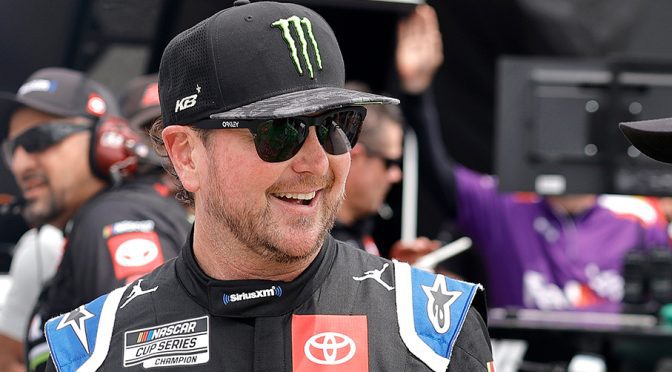
Entering the weekend, many industry insiders believed the same drivers who ran well earlier in the year at Phoenix Raceway, Richmond Raceway and World Wide Technology Raceway at Gateway would stand out at New Hampshire Motor Speedway. Team Penske was an outlier, however, with none of its cars making the final round of qualifying. On the flip side, Kurt Busch found speed he hasn’t had in recent years at the “Magic Mile” and has therefore soared up my fantasy board.
Dustin Albino’s race-day lineup:
Starter 1: Martin Truex Jr.
Starter 2: Ryan Blaney
Starter 3: Kevin Harvick
Starter 4: Kurt Busch
Starter 5: Christopher Bell
Garage pick: Joey Logano
NEXT IN LINE: Chase Elliott, Bubba Wallace, Aric Almirola, Kyle Larson
RISING: Kurt Busch’s speed at Gateway seems to have correlated over to New Hampshire in Saturday’s qualifying session at New Hampshire, as the No. 45 car will start third on Sunday. As he put it, he found a unicorn prancing across Turns 1 and 2 of his first round run, which is reasonable to think due to his lack of success recently at the “Magic Mile.”
Chase Elliott admitted Saturday morning he has struggled at finding a feel for New Hampshire since joining the Cup Series in 2016. But his No. 9 Chevrolet was fast in practice (sixth) and will start on the front row for the race. Odds are, Elliott is one of your most-used drivers. If that’s the case, save him for one of the final six regular-season races.
FALLING: To many betting websites, Ryan Blaney is listed as the favorite for Sunday’s race. However, the No. 12 car missed the final round of qualifying – as did his two Team Penske teammates – and will start 11th. Blaney told the media that he was surprised by the lack of speed and how far off his car was. But looking at Gateway and recent flat tracks, Blaney should be in your lineup.
Speaking of Team Penske, Joey Logano was the quickest car on paper at Gateway. He will make up Row 6 with Blaney for the green flag, as he qualified 12th. More concerning is the No. 22 car was 24th in practice, though tied for the most laps run with 29.
FEATURED MATCHUPS:
Ryan Blaney vs. Chase Elliott: Ah, two besties fighting it out in fantasy. Based on recent success at New Hampshire, Blaney would be the choice this weekend. But with Elliott having his best qualifying effort ever at the 1.058-mile track, and bettering the No. 12 car in practice, theories would suggest picking Elliott. Tough selection, but don’t count out the Fords. My choice, as my lineup states, is Blaney.
Alex Bowman vs. William Byron: As noted in Fantasy Fastlane earlier this week, both of these drivers have struggled in the past at New Hampshire. However, Byron was quickest in practice and will start sixth while Bowman lines up in 27th. Byron is the clear favorite in this teammate battle, as his results since Martinsville Speedway isn’t a true indicator of the speed the No. 24 car has shown.
Ross Chastain vs. Denny Hamlin: We love igniting fuel to this flame, don’t we? Chastain’s 18th-place qualifying position is among his worst of the 2022 season, though Hamlin’s lap wasn’t much better in 14th. Just on experience alone, the No. 11 car gets the advantage, as Hamlin is one of the most successful drivers ever at New Hampshire with three victories.
Aric Almirola vs. Austin Cindric: Almirola enters the weekend as the defending winner at New Hampshire, which was arguably the biggest upset in the 2021 Cup season. Since joining Stewart-Haas Racing in 2018 – and even dating back to his days at Richard Petty Motorsports – Almirola has a knack for running well on small, flat tracks. Cindric, meanwhile, will start 28th.
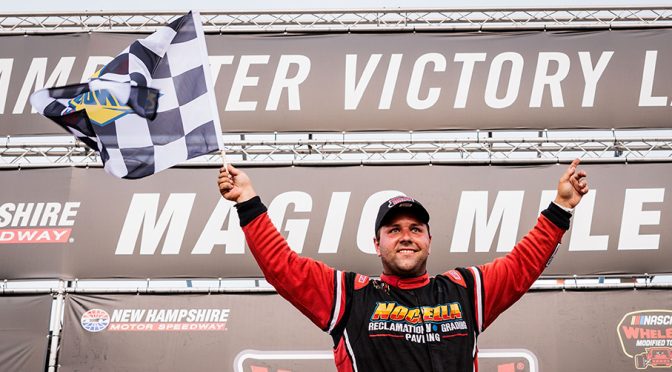
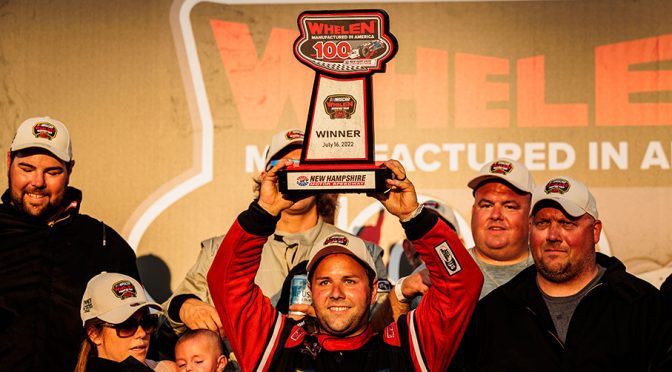
LOUDON, N.H. — When the field came off Turn 4 to take the checkered flag in the Whelen Manufactured in America 100 at New Hampshire Motor Speedway, Anthony Nocella found himself running in the fourth position.
Rather than settle for a Top 5, Nocella instead celebrated his first NASCAR Whelen Modified Tour victory after race leaders Patrick Emerling and Eric Goodale crashed on the frontstretch while battling for the win.
Nocella has worked tirelessly during the past several years to stay competitive with the top drivers on the NASCAR Whelen Modified Tour and was overwhelmed to finally break through in his own car at the series’ most prestigious venue.
“I’ve ran [the Whelen Modified Tour] off and on over the years,” Nocella said. “We’ve been close to getting some wins and have worked very hard, but just hadn’t gotten one yet. It’s awesome to finally get a win [at New Hampshire] of all places, especially in my family-owned car.”
Prior to his triumph on Saturday, the closest Nocella came to a victory was in 2017 at Massachusetts’ Seekonk Speedway, where he finished second to six-time series champion Doug Coby.
Nocella put together that performance while driving his family-owned car, which he was piloting Saturday evening for the first time since 2020 after spending most of the past two seasons driving for Danny Watts Jr.
Nocella’s familiar No. 92 showed speed from the opening laps. Nocella managed to mix it up with the leaders and briefly led early before gradually fading to the rear during a long green flag run.
Once the caution came out for Tommy Catalano’s expired engine with less than 20 laps left, Nocella knew that he had an opportunity to charge back up to the front if he made the right moves on the restarts and in the draft.
“We had a great car at the start but got too loose and faded back,” Nocella said. “This motor didn’t really like getting bogged down, but I knew we had a shot with the short run. I expected [Goodale and Emerling] to drive it in hard and wash up. That’s exactly what happened and thankfully we were in the right lane.”
Nocella watched as Emerling sailed his car around Goodale in Turn 3 on the final lap to take the lead. Goodale attempted to cross Emerling over, but ended up turning him around, allowing Nocella to slip under both of them to narrowly claim the win ahead of Kyle Bonsignore.
Once the shock of how the race ended subsided, Nocella made sure to appreciate the magnitude of obtaining his first NASCAR Whelen Modified Tour victory at New Hampshire.
In the series’ history at the facility, names like Coby, Ted Christopher, Mike Stefanik, Reggie Ruggiero, Ryan Newman, and many more have all visited the track’s Victory Lane. Nocella dreamed of joining those drivers one day, but never imagined that accomplishment would also serve as his first Tour win.
Nocella plans to celebrate his New Hampshire win with his family and crew for as long as possible before going right back into the shop to make sure he can add more victories to his NASCAR Whelen Modified Tour résumé.
“This is a big one for sure,” Nocella said. “We’ve been working hard for this and it’s awesome to finally get it at [New Hampshire].”
With Kyle Bonsignore placing second, the damaged cars of Emerling and Goodale crossed the finish line in third and fourth, respectively. Jon McKennedy completed the top-five, which helped him gain precious ground on Ron Silk in the battle for the series championship after Silk was involved in an early crash.
Rounding out the top-10 were Ryan Preece, Coby, Donny Lia, Corey LaJoie and Craig Lutz.
A replay of the Whelen Manufactured in America 100 at New Hampshire Motor Speedway can be seen on the USA Network on Friday, July 22 at noon.
The NASCAR Whelen Modified Tour returns to action on Friday, July 29 for the Clash at Claremont 150 at New Hampshire’s Claremont Motorsports Park. The race will be streamed live on FloRacing.
LOUDON, N.H. — The Nos. 9 and No. 10 Chevrolet Camaros of Noah Gragson and Landon Cassill, respectively, were disqualified after post-race inspection after Saturday’s Crayon 200 at New Hampshire Motor Speedway.
Cassill took the checkered flag third, followed closely by Gragson in fourth. The two drivers were scored 37th and 38th officially after the penalty. The top five was revised to race winner Justin Allgaier, Trevor Bayne, Brandon Brown, Jeremy Clements and Austin Hill.
The No. 9 JR Motorsports Chevy was disqualified for violating Rule Book section 14.17.3.2.1.2.a (Post-Qualifying and Post-Race Front Body Inspection Heights) with the car too low in the front. The No. 10 Kaulig Racing Chevy violated Rule Book section 14.17.3.2.2.2.a (Post-Qualifying and Post-Race Rear Body Inspection Heights) with the car too low in the rear.
Gragson is locked into the Xfinity Series playoffs, currently sitting fourth in the playoff standings. The penalty is a costly one for Cassill — Saturday’s finish would have been his second-best of the season and best since landing a top five at Talladega earlier this spring. He would have been inside the top 10, but now sits on the cutline in 12th. He stands 61 points ahead of Brown, in 13th.
Cassill led 17 laps late in the race as his team cranked on his No. 10 all afternoon and it came alive late in the final stage. It’s now all for naught.
“I really thought that I would keep the lead, but I just needed a little more right-rear tire,” he said before inspection negated his result. “I kind of struggled with that all day, we tightened the car up all day, and it was better. I mean, that’s when it really came to life. But I just needed a little bit more to hang on to be able to keep the lead and win the race.”
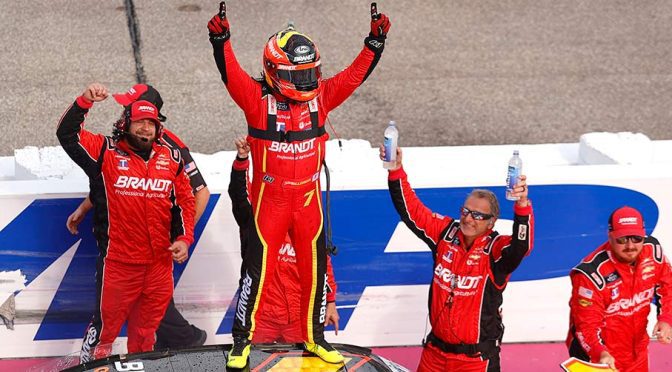
Justin Allgaier prevailed in an action-packed Crayon 200 at New Hampshire Motor Speedway on Saturday, earning his third victory of the season and a very special birthday present for his wife, Ashley. A race trophy.
The driver of the No. 7 JR Motorsports Chevrolet delivered Chevy’s first win at the 1.058-mile track in 15 years. It’s Allgaier’s third win of the season — coming a comfortable 3.869 seconds ahead of Joe Gibbs Racing Toyota driver Trevor Bayne, who was trying to earn the JGR team its seventh consecutive New Hampshire win.
“We finished second here last year to one (Toyota) and I told these guys I really wanted to win here,’’ said Allgaier, who now has three wins in the last eight races. “This place has been so much fun over the years.’’
“First of all, it’s my wife’s birthday, so if I can’t be with my wife on her birthday, the best thing to do is take home a trophy to her. Just proud of the team.”
It was, at times, a dramatic drive for the 36-year-old Illinois driver. He had an incident with Julia Landauer’s car early — apologizing to her after the race. And although he ran top five for most of the day, he didn’t actually lead the race until 48 laps remaining — dicing it up with Landon Cassill, who was looking for his first career win.
The two exchanged the lead five times in the closing 60 laps with Allgaier able to pull away for good with 19 laps to go.
Cassill, who led 17 laps, ultimately had his third-place finish disqualified for post-race inspection violations — the rear of his No. 10 Kaulig Racing Chevrolet was ruled too low.
The fourth-place finisher, Allgaier’s JR Motorsports teammate Noah Gragson in the No. 9 JRM Chevrolet, was also disqualified after a failed post-race inspection. His car failed front body inspection heights and was too low. The DQ dropped him from fourth place to fifth place in the season standings, now 99 points behind leader AJ Allmendinger but safely in the playoffs with two victories.
The two disqualifications moved fifth-place finisher Brandon Brown in the No. 68 Chevrolet into third place in the official race results — the best result and first top five of the season for the 29-year-old Virginian’s family-owned team.
It may have been a Toyota-dominated Victory Lane for most of the past few years, but even with the disqualifications to Cassill and Gragson, Chevrolet drivers still made up nine of the top 10 positions on Saturday.
Ty Dillon, Austin Hill, Kyle Weatherman, Mason Massey and Bayley Currey rounded out the top 10. It marked the second top-10 finish of Weatherman’s season and the second top-10 result of both Massey’s and Currey’s careers.
The race included 10 caution periods (including a nearly eight-minute red flag), and there were 15 lead changes among 10 drivers with Joe Gibbs Racing’s Ty Gibbs leading the most laps (49) on the day.
Both Gibbs and championship leader Allmendinger were noticeably absent from that group atop the scoreboard. Gibbs’ No. 54 JGR Toyota suffered a mechanical problem just after the Stage 2 break and he finished 21st — the second week in a row he’s had a sub-20th-place showing.
Allmendinger was involved in one of the multi-car accidents, hitting the wall with 58 laps remaining and forced to pit for extensive repairs to his No. 16 Kaulig Racing Chevrolet. He finished one position ahead of Gibbs in 20th place.
The race was red-flagged with 125 laps complete after contact between the cars of Sheldon Creed and pole winner Josh Berry sparked a multi-car stack-up exiting Turn 2. Myatt Snider, Ryan Sieg, Jeb Burton and Riley Herbst all piled in behind Berry’s spinning No. 8 Chevrolet, with Sieg’s No. 39 entry vaulting up after heavy contact from Burton’s No. 27.
The rough day for Gibbs and the good day for Allgaier shook up the points standings with Allmendinger now leading Allgaier by 16 points. Gibbs is now third place, 28 points back.
Landauer placed 36th in the 38-car field in her Xfinity Series debut, completing just 90 laps after involvement in a pair of crashes with her No. 45 Alpha Prime Racing Chevrolet. Contact with the No. 7 Chevy of Allgaier on Lap 34 sent her car spinning into the inside retaining wall, and a Lap 98 tangle with Matt Mills left Landauer’s car with terminal damage.
The Xfinity Series’ next race is scheduled next Saturday (5 p.m. ET, USA, NBC Sports App, MRN, SiriusXM) at Pocono Raceway.
Note: All other cars passed post-race inspection without issue, affirming Allgaier’s victory.
Given Reddick is locked up with RCR for 2023, just picked up his first Cup Series win earlier this month and offers the organization its best shot at picking up its first championship since Dale Earnhardt’s seventh title in 1994, the news came as a surprise to probably everyone outside of the small group of people who negotiated the 26-year-old’s future deal.
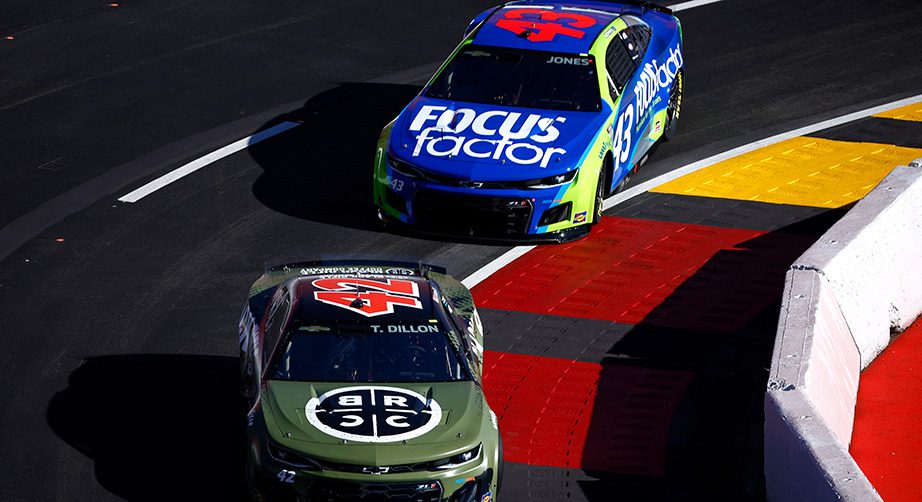
As if that wasn’t enough, as teams were just getting set up for the race weekend at New Hampshire Motor Speedway on Friday afternoon, Ty Dillon dropped a bomb on Twitter with a statement saying — after just 19 races together — he and Petty GMS “mutually agreed to go our separate ways” at the conclusion of 2022.
The two-car Petty GMS organization appeared to be one on the rise, building a solid foundation with a pair of talented former prospects looking to re-establish themselves as Cup Series presences. Dillon’s abrupt departure announcement was almost as surprising as Reddick’s.
“So many things have happened this week,” Dillon said. “Obviously, I’m so focused on doing the best I can in the 42 this year, and get all I can prove to people that I can win races in the Cup Series and that I’m one of the best 36 drivers in the series, which I know I am. But I’m a free agent, which is always exciting, you know, and it’s just a bridge to the next opportunity that I’m looking forward to taking advantage of, and I’m gonna have fun with it. You know, this week’s been tough dealing with all the news about leaving, but from here forward, I get to focus on what’s next. And also leaving it all out on the line knowing I’m not coming back, it’s kind of freeing in a sense to just go and give it all I have every weekend. And you know, I think it’s only going to be the best for me, and I wish the best for them in the future.”
Dillon elected not to divulge any of the details of the split, saying “that’s probably a question for (Petty GMS),” and Jones mentioned not being privy to the full extent of it as well — “I don’t know all the insides of it. Obviously, there’s probably some business stuff there” — but wait a minute. Perhaps there is no acrimony. Perhaps a different scenario presented itself, abruptly and unexpectedly, for Dillon’s future.
Reddick’s move means the No. 8 car will be available for 2024 if RCR keeps two cars. The team’s other car is driven by Austin Dillon, Ty’s brother. The team is owned, of course, by Childress — Ty and Austin’s grandfather. It almost feels too perfect of a scenario to just line Ty up to replace Reddick a year and a half from now, maybe throwing him back in an Xfinity car with the team to bridge the gap year. But it’s a possibility that the 30-year-old Welcome, North Carolina, native has certainly entertained.
“Obviously, I’ve always wanted to race for my grandfather since I started racing,” said Dillon, currently 27th in points. “So that’s certainly something I’ll be looking at. But you know, there’s a lot of things to still happen throughout the year. And there’s lots going on with that situation. But I’m available. I’m available for everyone. So we’ll see what happens.”
To some degree, it has always felt inevitable Childress would eventually field Cup cars for his grandsons, it just hasn’t played out in that way to this point for various reasons. This might open the door to making it a reality, and if it does, Dillon would have had one of the most topsy-turvy, winding paths to a competitive premier series ride in recent memory.
Austin’s trajectory was extremely straightforward, starting his full-time NASCAR career with RCR in 2010 in the Camping World Truck Series, winning the title the next year, doing a similar two-year stint in the Xfinity Series — with another title in 2013 — before hopping in Earnhardt’s former No. 3 in 2014, where he has been since. Ty was on essentially the same path with two seasons in Trucks and three at the Xfinity level before starting full-time in Cup in 2017 with Germain Racing, where he was until 2020 before the team closed its doors. After Ryan Newman left the team in 2018 there was speculation Ty would replace him, but Ty elected to stay with Germain and the car — which was then the No. 31 Chevrolet — went instead to Daniel Hemric, who eventually ceded it to Reddick the next year.
Ty Dillon’s last two years then saw a handful of unfruitful starts with Cup startup Gaunt Brothers Racing, 12 Xfinity starts split across four different teams with just three top 10s and now an early ending to what seemed like, from the outside, a good long-term home for him with “The King” and Maury Gallagher’s operation.
“It’s certainly not easy (to maintain my determination), but I think as you grow and you mature, situations happen in your life,” Dillon told NASCAR.com. “At the end of the day, you have your family and the people that matter most and they believe in you. And if you don’t believe in yourself to begin with, you’ll never give yourself the full opportunity. So I’ll never give up on myself and knowing that I can do it. I’ve proven to myself that I can do it. Just a matter of situations coming together. And I think one thing about it, and it’s our family motto with my wife and kids, is that we’re Dillons and we don’t quit, so I can’t show them any quit in my life. And I can use whatever happens in my life, whatever comes and goes as an example for them to live off of in the future.”
As Dillon’s outlook at the moment is murky at best, Jones indicated Saturday he could be announcing a long-speculated extension with Petty GMS in the near term. The Byron, Michigan, native further negotiated his deal with Gallagher earlier this week over FaceTime — while in the “Great Lakes State” for his grandfather’s 90th birthday — and says the paperwork is down to just “pretty small details here at the end of the day” and is “for the next year at least, and hopefully more in the future, too.”
Getty Images
Jones appears to have found a comfortability with Petty GMS, having the option at this juncture to speak to other teams but saying he’s not really interested in doing so and would rather just get everything settled with his extension. The feeling must be mutual, because the Chevy organization is seeking his feedback for who will be his future teammate, even if that decision is still a ways away.
“I don’t, right now (who will be in the 42),” Jones said. “You know, obviously, those talks go on a little bit. And, you know, as we’ve made this decision, you know, I get asked kind of who I think (it should be) a little bit right, which I appreciate that, you know, that they trust me to try to go pick somebody, which it’s still up to them at the end of the day. But obviously, there’s a few names out there that, you know, are probably deserving of a shot in the Cup Series. I don’t think it’ll be a guy (currently) in the Cup Series.”
As for what’s next for Dillon, well, he still has plans to finish out the season with Petty GMS. But in the meantime, he said “there’s been conversations starting” with other teams. There’s no question he still believes in himself and his ability, it’s just a matter now of if there’s a team out there that wants to take a flier on him.
“I have a lot of the year still left, we have 17 races or so to go to continue to show what I can do,” he said. “And a lot of things will still happen with other seats and other rides and the sport in general. So like I said, I’m a free agent, and I can talk to whoever and I’m available. So we’ll see how that plays out.
“I’m certainly never giving up on my dream. And that’s winning Cup races and championships, and I’m gonna do whatever it takes to get myself to that position with a team that really believes in me and wants to give me a good shot.”
Ambetter 301 at New Hampshire Motor Speedway
(⏰ 3 p.m. ET | 📺 USA Network, NBC Sports App | 📻 PRN, SiriusXM)
Everything you need to know for Sunday’s NASCAR Cup Series race at New Hampshire Motor Speedway, the 20th regular-season event of the 2022 campaign.
Race-day info 📝
Where: Loudon, New Hampshire Approximate start time: 3 p.m. ET | Full weekend schedule TV/Radio: USA Network, NBC Sports App, PRN, SiriusXM NASCAR Radio | Full TV schedule The purse: $7,102,088 Forecast: Mostly sunny, with a high near 86 degrees, according to NOAA.gov | Weather tracker Race distance: 301 laps | 318.46 miles Stages: 70 | 185 | 301 Pit-road speed: 45 mph Caution car speed: 50 mph New Hampshire 101: Get the full lowdown
Starting lineup: Where drivers will start
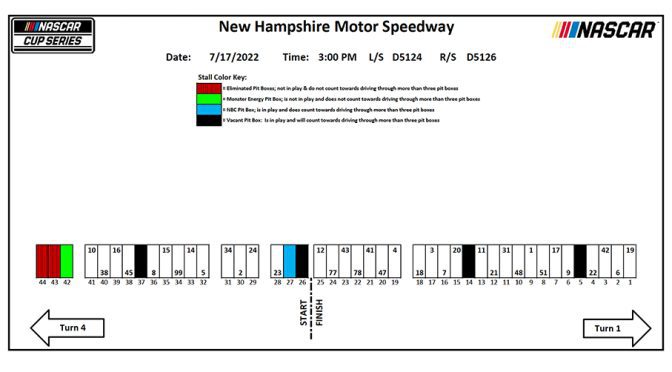
Pit stalls:Where drivers will pit
Key things to watch 🔑
Big story line
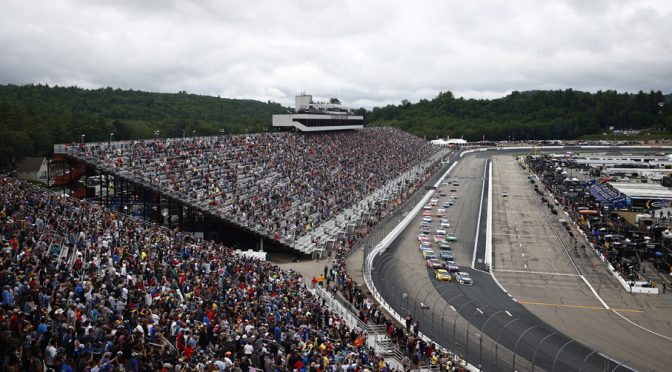
What will New Hampshire race like this time around? With the weather primed to be hot and sunny, cars could be slipping and sliding around the flat, 1.058-mile oval as we have seen at times in the past. Teams have already compared it to Phoenix Raceway, Richmond Raceway and World Wide Technology Raceway at Gateway, trying to pull notes from each to get a better handle on what to expect Sunday. We already know one thing for sure: expect to see a lot of shifting. But with increased shifting and close racing through the turns, that leaves room for a lot of mistakes we have already seen cost drivers big time due to the Next Gen’s new shifting pattern. Comparing those valuable notes to key in on a race-winning setup early in qualifying, and giving yourself valuable track position, could be the difference in a stellar finish on Sunday. Miss it by a wide margin and you will likely be playing catchup all afternoon.
Who’s hot? Who’s not?
Is there a driver in better form than Chase Elliott right now? Elliott is as scorching as the summer heat, finally landing the elusive victory at his home track in Atlanta Motor Speedway. And with that monkey off his back, there is little in the way of his focus on running down another Cup Series championship. Even when he is not reaching Victory Lane, his results are still remarkable — eight more top 10s in the last 15 races (not including the three wins, pushing the total to 11). However, New Hampshire has been his Achilles’ heel in the past, finishing 11th or worse in six of his eight starts. If he can continue his impressive form Sunday at a track where he has struggled mightily, the debate for the current championship favorite should end.
For Kyle Busch, the last handful of races has not gone to plan. From Kansas Speedway to World Wide Technology Raceway, Busch looked like the driver to beat this season, stringing together a trio of top-three results. Since then, he has yet to finish inside the top 19 — a four-race slump. Adding to the Busch fans’ growing concern is back-to-back DNFs at New Hampshire. But with a new car and a new race package, Sunday would be the perfect time to hit the reset button and pick up some playoff momentum. If anyone can do that, it is the two-time Cup Series champion.
Driving under the radar
Trending upward, there is no better time for Kevin Harvick to get a win than at the track he has dominated in the past. Entering Sunday, the No. 4 team has begun to find its rhythm, reeling off three top 10s in the last four races. At New Hampshire specifically, Harvick has reached Victory Lane in two of the last four races and led laps in eight of the last 11. To put it simply, it is arguably his best track and not many are tabbing him to continue the success this weekend. Fighting for a spot in the NASCAR Playoffs, this may be his best chance to punch his ticket with a win. And as we know, Harvick, “The Closer,” knows how to come through in the clutch.
Practice and qualifying
Entering the weekend, all eyes were on Ford as the manufacturer expected to dominate Sunday. But during Saturday morning’s two-group practice session, combined results were a mixed bag — at least at the top of the chart. William Byron topped the chart in his No. 24 Chevrolet, followed by Kyle Busch in the No. 18 Toyota. Then came the first Ford in Chase Briscoe before the Blue Oval made its presence known en masse, grabbing the seventh through tenth spots on the board. But another veteran grabbed the starlight in qualifying: Martin Truex Jr., who finished fifth in practice. Truex blitzed the field, topping an exceptional mark by Chase Elliott in the final round to snag his first Joe Gibbs Racing pole. | Full practice, qualifying recap
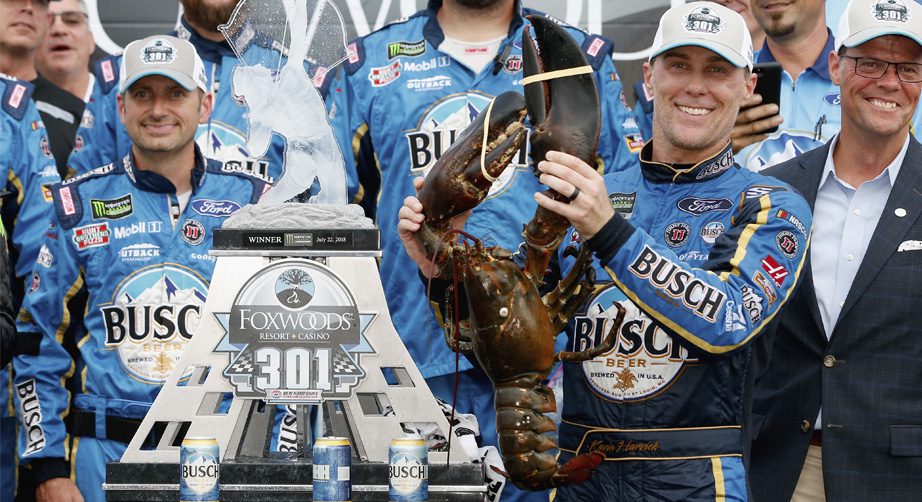
Kevin Harvick holds the iconic prize for winning at New Hampshire, where he is a four-time winner (Brian Lawdermilk | Getty Images).
Race-day staples ✅
Our biggest pieces of the week — get covered for race day from all angles.
• Paint Scheme Preview: Cup and Xfinity looks for New Hampshire | Pick a favorite
• Power Rankings: Austin Cindric quietly sizzling as the summer heats up | Latest Cup Series driver rankings
• Fantasy Fastlane: Ford aims for five-peat at New Hampshire | Top plays, sleepers
• NASCAR betting: Which driver is the favorite for Sunday? |BetMGM betting odds
• Backseat Drivers: Does Chase Elliott think he can match Bill’s 44 wins? | Watch the debate
• Playoff Watch: How the 2022 Cup Series playoff picture is shaping up | Bubble battles, playoff locks
Catch the pack 💨
Read up on the top headlines from the week leading up to Sunday’s race.
• Kyle Busch: Feels like he still has a seat at JGR for 2023 | Read more
• Kurt Busch: Opens up on future, impact of Tyler Reddick signing | Read more
• Blockbuster deal: 23XI signs Tyler Reddick for 2024 season | More details
• Candidates: Assessing the top potential drivers for the No. 8 | Read more
• Penalty-free: No penalty for No. 20 team for tire mishap at Atlanta | Full details
• Analysis: Passing by Joe Gibbs Racing at New Hampshire | Read more
• Ty Dillon: Dillon, Petty GMS Motorsports to split up after 2022 | Read more
• Ryan Preece: Driver embracing role at Stewart-Haas Racing, focusing on Cup future | Read more
• Aric Almirola: Assessing Cup Series future, relishing the moment | Read more
• Corey LaJoie: Making Whelen Modified Series entry at New Hampshire | Full story
• Departure: Tyler Reddick’s wake leaves shoes to fill at Richard Childress Racing | Read more
• Official partner: NASCAR, SeatGeek launch new partnership | More details
• FloRacing: Kyle Larson, Brad Sweet collaborate to form new Sprint Car series | More details
Get in on the action 💰
Think you know NASCAR? Put your mettle to the test with gaming, fantasy.
• BetMGM: Can Chase Elliott snap Chevy’s drought? | Full analysis
• The Action Network: Ryan Blaney, Chase Elliott highlight tough matchups | Read more
• Play it LIVE: Full guide to 2022 NASCAR Fantasy Live game | Get the FAQ
• Going all the way: 2022 Cup Series championship odds | See them here
Land of the lobster 🦞
Time to embrace the sea creature, as New Hampshire provides one of the most unique prizes in sports.
Hard-hitting, race-relevant statistics, brought to you by the experts at Racing Insights.
• Chevrolet has only one pole at New Hampshire since 2014. • Stewart-Haas Racing drivers have won three of the last four races at New Hampshire. • Three of the last four New Hampshire winners started outside the top 10. • At least one driver led 100 laps or more in 14 of the last 16 New Hampshire races. • The winner took the lead within the final 10 laps in 13 of 19 races in 2022.
Say what? 🎙
Notable quotes from the stars of the sport heading into Sunday’s race.
• “New Hampshire can be a challenging track. When you hit your setup just right, it’s an extremely fun track, but if you miss it, it can be one of the most difficult tracks we go to. Hopefully this gives us a chance to work on our short track program on both the Xfinity side and the Cup side.” — AJ Allmendinger, driver of the No. 16 Kaulig Racing Chevrolet (Cup Series part-time and Xfinity Series full-time)
• “With the playoff picture being as tight as it is, every point matters. Loudon is a great track for us and we need a good showing. I’m ready to see what we can do this weekend.” — Christopher Bell, driver of the No. 20 Joe Gibbs Racing Toyota
• “We were fast and ran up front all day at Phoenix and we were fast and ran up front all day at Richmond. Gateway, we had a pretty good car. I think our car was better than what it showed. We qualified bad and had a hard time passing cars, but our teammate with the 14 was really fast all weekend and led some laps before blowing the left-rear tire, so we feel good about what we’ve got and what we’re taking and probably the most confident we’ve been in a good while.” — Rodney Childers, crew chief of the No. 4 Stewart-Haas Racing Ford
See where your favorite driver will pit for Sunday’s NASCAR Cup Series Ambetter 301 at New Hampshire Motor Speedway (3 p.m. ET, USA Network, NBC Sports App, PRN, SiriusXM NASCAR Radio).