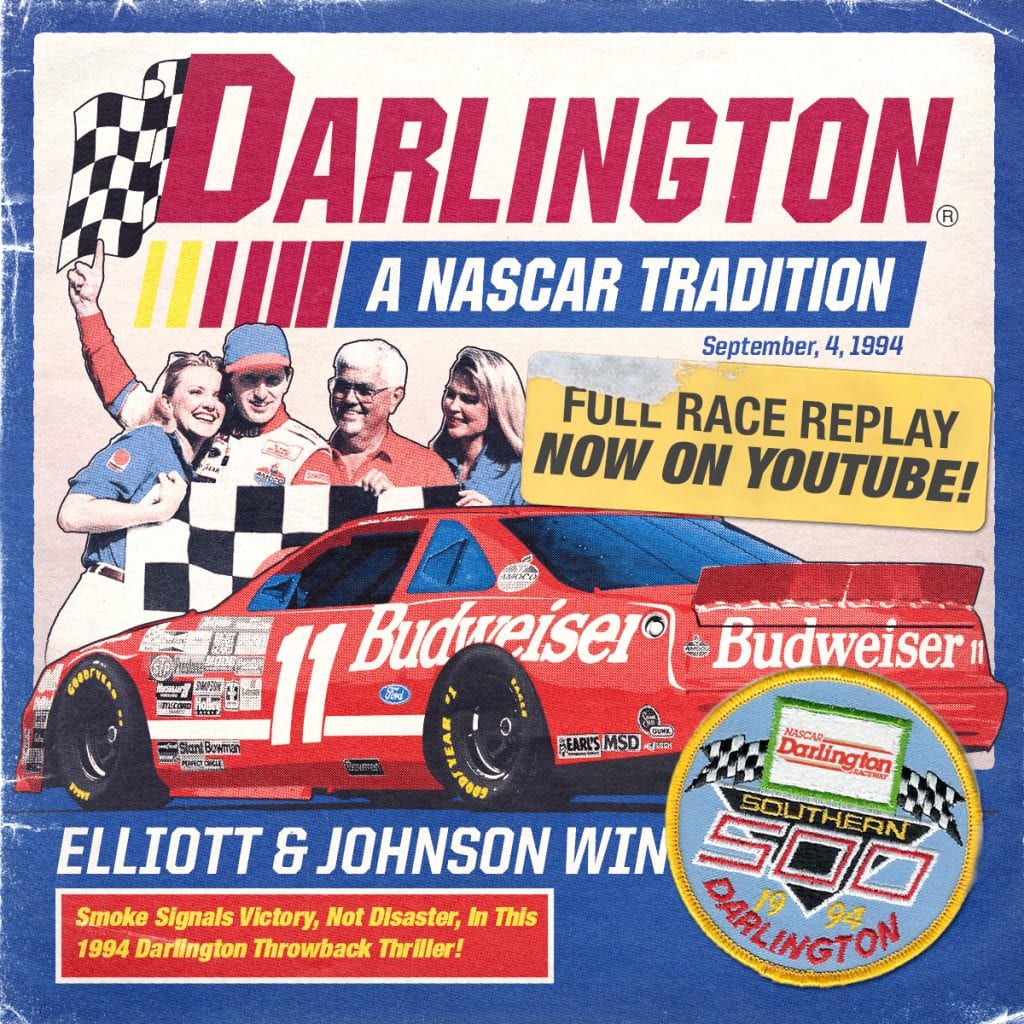
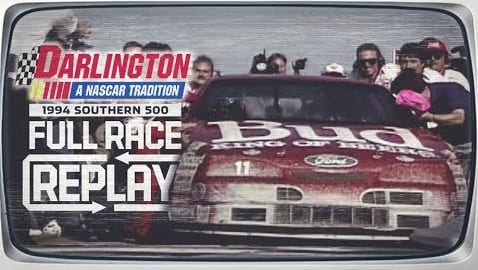
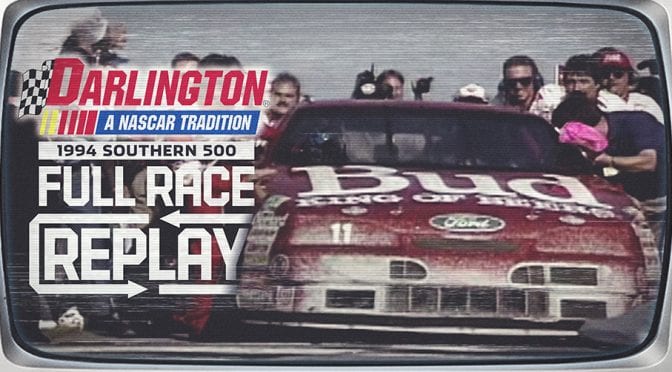
Bill Elliott had one win in 1994 driving for Junior Johnson and it came at one of NASCAR’s most storied tracks, Darlington Raceway.  Arguably one of Elliott’s best tracks, “Awesome Bill” was able to drive Johnson’s No. 11 Ford Thunderbird to Victory Lane for the last time in the fall of that year by holding off Dale Earnhardt.

Tensions were high in the closing laps as the No. 11 Ford started to smoke toward the end of the race. Luckily for Elliott and Johnson, the car held together and they closed the day victorious.

Edi Youtubetbt Southern500 94 Tw
NASCAR Creative Design

RELATED: Race results | Junior Johnson through the years

Johnson amassed 50 wins as a driver from 1953 to 1966 and and had 132 victories and six championships as a successful team owner over his tenure in the sport.

Johnson, a moonshiner turned NASCAR icon, died Dec. 20, 2019, at age 88.

In this historic NASCAR Full Race Replay, we dive into the 1994 Southern 500 and enjoy Johnson’s final win as a car owner delivered by none other than one of the sport’s most popular drivers.

Watch the full version by clicking the image below, and visit our YouTube channel for more historic full race replays.

Youtube Embed Link

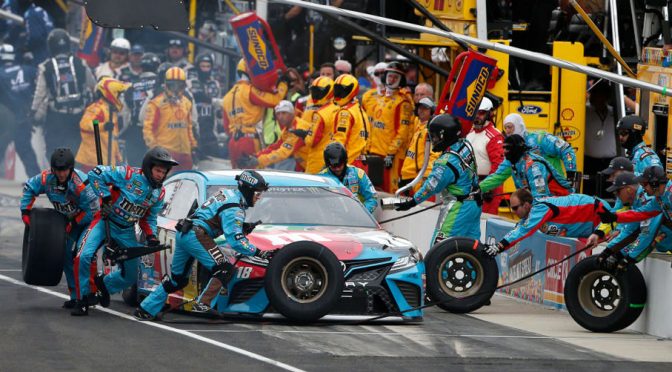
Not only did Kyle Busch have the best finish to the decade by claiming his second NASCAR Cup Series championship, but he also had the most efficient pit crew throughout a large portion of the 2019 season.

With each second holding race-altering value in a sport with such narrow margins of victory, the No. 18 Joe Gibbs Racing Toyota team frequently topped the charts with the fastest four-tire stop in 13 of the 36 races — a staggering six more than the next closest team, Chase Elliott’s No. 9 crew.

RELATED: Analyzing Kyle Busch’s championship season

Each of the 13 speedy stops nearly always translated into on-track success, resulting in three of Busch’s five wins — Phoenix, Auto Club and Homestead — and only two finishes outside the top 10. The exceptions to this Victory Lane trend came in Busch’s April win at Bristol and his June victory at Pocono, though he did have the top pit stop in the later Pocono race where he finished ninth.

Heading into the NASCAR Playoffs, Busch’s crew was second — only outranked by Elliott’s Hendrick Motorsports team — in the time it took for an average four-tire stop at 14.208 seconds.

During the postseason run, his crew outperformed its average and claimed four of the best stop times during the 10-race stretch by outpacing the field at Dover, Kansas and Texas while hurrying to a pair of sub-12 second times in Busch’s championship-winning effort at Homestead. For comparison, only seven sub-12 second times were recorded on four-tire stops during the entire season and Busch’s crew had five of them — bringing the season average to a series-best 13.799 seconds.

Amid the No. 18 team claiming just one Busch Pole Award during the course of the season and averaging a 12.3 starting position, achieving better track position via pit-road performance proved to be instrumental in aiding Busch’s front-running success. Of the Championship 4 contenders, only JGR teammate Martin Truex Jr. averaged a worse starting position (13.1) during the year, and despite this, no driver matched Busch’s series-leading 8.9 average finish.

RELATED: See every Kyle Busch national series win

While Busch’s on-track results — third consecutive season with at least five wins and fourth since 2015 — vaulted him into consideration for the top driver of the decade, exceptional performances from his pit crew throughout the year — and especially during the championship run — deserve to be noted and remembered.

Pit stats provided by SportsMEDIA Technology Corporation.

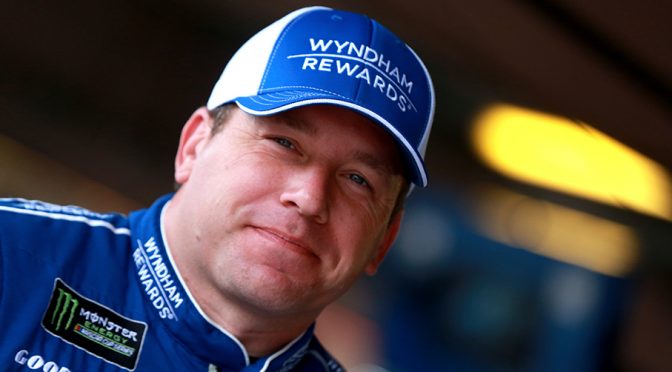
CONCORD, N.C. – Roush Fenway Racing has announced a multi-year extension with Wyndham Rewards that will continue to see the award-winning rewards program serve as a primary sponsor on Ryan Newman’s No. 6 NASCAR Cup Series Ford Mustang. Wyndham Rewards will make its 2020 debut as a primary partner at Las Vegas Motor Speedway for the 400-mile Cup Series race on February 23rd.

RELATED: Ryan Newman 2019 season in review

“It’s great to have Wyndham Rewards back on board,” said Newman, who powered the No. 6 Ford back into the NASCAR Cup playoffs in 2019. “They will be on the car at Las Vegas and hopefully we can reward them with a strong run and a trip to Victory Lane.”

Newman has finished inside the top 10 in 10 of his 21 starts at Las Vegas, including a top-10 finish there last fall. The Indiana native and Purdue graduate will look to build on a 2019 season where the team posted 14 top-10 finishes en route to a solid playoff run.

Wyndham Rewards first joined Roush Fenway Racing as a primary sponsor in 2018, teaming with NASCAR Champion Matt Kenseth, before continuing its partnership with the team and Newman in 2019.

NASCAR officials introduced rules changes Tuesday for pit stops — both for personnel and procedures — in select Xfinity Series and Gander RV & Outdoors Truck Series events this season, effectively eliminating “live” pit stops in those targeted events.

Officials indicate the changes are designed to enhance pit strategy and to streamline the personnel performing pit stops at those specified races. The rules also place limits on the types of service that teams can perform in each trip to pit road.

2020 Pit Stop Procedure

The rules will be in place for four Xfinity Series races: May 30 at Mid-Ohio Sports Car Course, both events at Iowa Speedway (June 13 and Aug. 1), and the Aug. 8 stop at Road America. Gander Trucks teams will operate within these rules at three events this season: June 12 at Iowa, Aug. 21 at World Wide Technology Raceway at Gateway and Sept. 6 at Canadian Tire Motorsport Park. None of the races are companion events with the NASCAR Cup Series.

RELATED: NASCAR schedule | Other offseason changes

“We really feel like this new pit stop procedure for the stand-alone races is kind of a unique opportunity we have with those events to try something new in the Gander Truck Series and the Xfinity Series that we hope will provide some increased incentive for teams to make differing strategy calls,” said Eric Peterson, Xfinity Series technical manager. “It will help mix up the event, provide more comers and goers and on-track passing during the race. The only way to really get a view of this is to do it, and we felt like taking a deliberate approach and doing it at the stand-alone events would be an excellent way to test it out, analyze the results when we get done and see where we go.”

In these seven events, team rosters will not have designated pit crew members. Each series will have a maximum of eight road crew members at these races who will also perform over-the-wall duties during pit stops — four to service the car (tires, jack), one fueler and one for driver assistance. The road crew total signifies an increase of one for Xfinity teams and two for Gander Trucks teams.

Teams cannot gain or lose positions based on the speed of pit service in these races (more below).

Peterson said the rationale for implementing these rules at stand-alone events was to provide efficiencies for the teams instead of a reliance on specialized pit-crew members from Cup Series teams. Two stand-alone Gander Trucks events were excluded: July 30 at Eldora Speedway, which has rules unique to the dirt-track showdown, and June 5 at Texas Motor Speedway, where fuel mileage comes into play with the length of the race and its stages.

“The stand-alones in general provide some additional logistical and efficiency challenges for Gander Trucks and Xfinity teams,” Peterson said. “Any time you have races where we’re not a companion to Cup or Cup is in a different area of the country, it is logistically harder for the Xfinity and Truck teams to accomplish those races and do all the things we do on a normal weekend. … A lot of the teams — a good portion, not all of them — do utilize sharing pit crew personnel between Cup and Xfinity and Gander Trucks that it is a logistical hurdle for the teams to fly those individuals back and forth. Trying this procedure at these events certainly alleviates a lot of that burden on the teams to make that happen.”

HOW IT WORKS

  • During a yellow-flag full cycle (non-quickie yellow) pit stop at oval tracks, a team may change two tires and add fuel. For a four-tire stop, a team must pit a second time during the caution period.
  • At road courses for a full-cycle caution period, a team may change four tires or add fuel. A team opting for four tires and fuel must make a second trip to pit road.
  • On both types of tracks, abbreviated caution periods — or “quickie” yellows — will provide only one opportunity for all cars to pit. Teams may change two tires and add fuel on their only stop on oval tracks in a quickie yellow. On road courses during quickie yellows, teams may change four tires or add fuel on their only opportunity to stop.
  • Pit stops under the yellow flag must also be completed within a set time limit, measured from the yellow lines marking pit entry and pit exit. The overall time limit will vary from track to track, dependent on the length of pit road, but the timing of how long a vehicle will be serviced in its stall will be the same at each race. Peterson said that time is still being determined as part of the dialogue between competition officials and teams.
  • The restart lineup will be based on pit stop strategy. Vehicles that did not pit will line up first, followed by (in order): vehicles that pitted once, those that pitted twice, lap(s)-down vehicles that did not pit, lap(s)-down vehicles that pitted once, lap(s)-down vehicles that pitted twice, free-pass vehicles, wave-around vehicles and penalized vehicles — an order that should offer its own elements of pit strategy. Teams cannot gain or lose positions based on the speed of pit service in these races; positions will only be gained or lost based on their strategy, whether they stay out or opting for one stop versus two.”The goal is to allow — like in the Truck Series, Jordan Anderson, who has had many good runs, and then we come down pit road and he can’t compete on pit road with the pit crew,” said David Pepper, general manager for ThorSport Racing in the Gander Trucks ranks. “This will allow that to go away and a team like that to compete at a high level and have an opportunity to showcase their crew chief and driver talent and their team’s talent in building a fast race truck. So we’ve leveled the playing field, and I think you’re going to see a lot of really good stories from a lot of really good race car drivers that are out there that are going to have an opportunity to go run in the top five and go run in the top 10. And it’s going to create stories and names that maybe aren’t household names that you see every single week, and it’s just going to make the competition better.”
  • No time limit will be enforced on green-flag pit stops, except for vehicles on the six-minute Damaged Vehicle Policy clock. Tire changes under green will only be allowed if a vehicle has an incident (a flat tire, spin or crash) verified by race officials. Teams will be permitted to add fuel during a green-flag stop.
  • Teams will be issued a two-lap penalty for violating the restrictions on tire changes and fuel. Teams will be sent to the rear of the field for restarts for exceeding the pit-road time limit and pitting any time other than their designated lap.
  • Peterson indicated there are no immediate plans to expand the use of these pit-stop and crew personnel rules in more races or beyond the Xfinity and Gander Trucks series in 2021 and beyond.”We’re definitely using it as a trial and something that we can take a look at with these events and analyze it and go from there,” Peterson says. “There’s no imminent plans to do anything beyond what we’re doing right now, but just like everything, we try to look all the time at how we can make it better for our fans and we’re going to use these events to see how it plays out and analyze the results to look at for the future.”

Team Penske is putting familiar faces in unfamiliar roles.

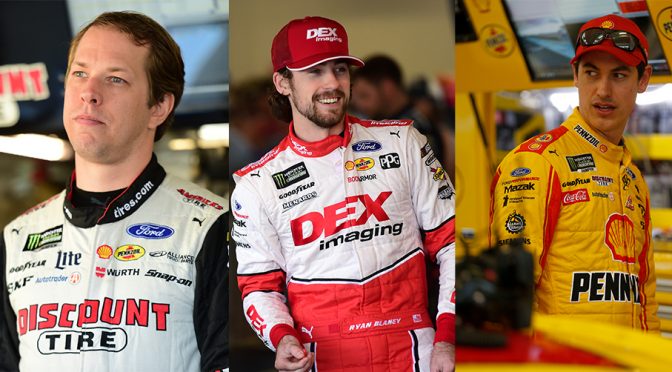
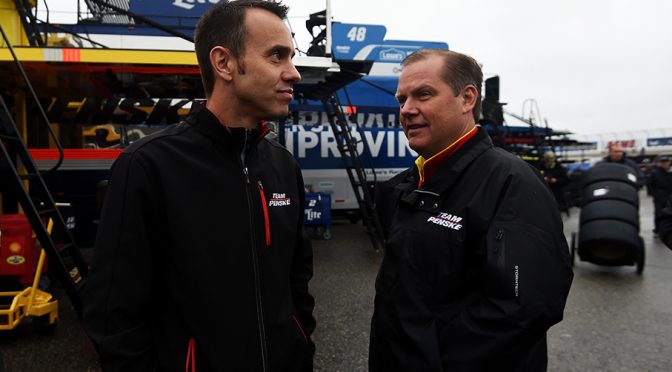
All three of its crew chiefs will have new drivers in 2020, with all parties remaining in-house. Paul Wolfe moves from Brad Keselowski to Joey Logano, while Todd Gordon moves from Logano to Ryan Blaney and Jeremy Bullins switches from Blaney to Keselowski.

The organization announced the changes late Monday, with about a month to go until the season-opening Daytona 500 on Feb. 16 in Florida, and surely it wasn’t just a luck of the draw who ended up where.

RELATED: Key players in Silly Season

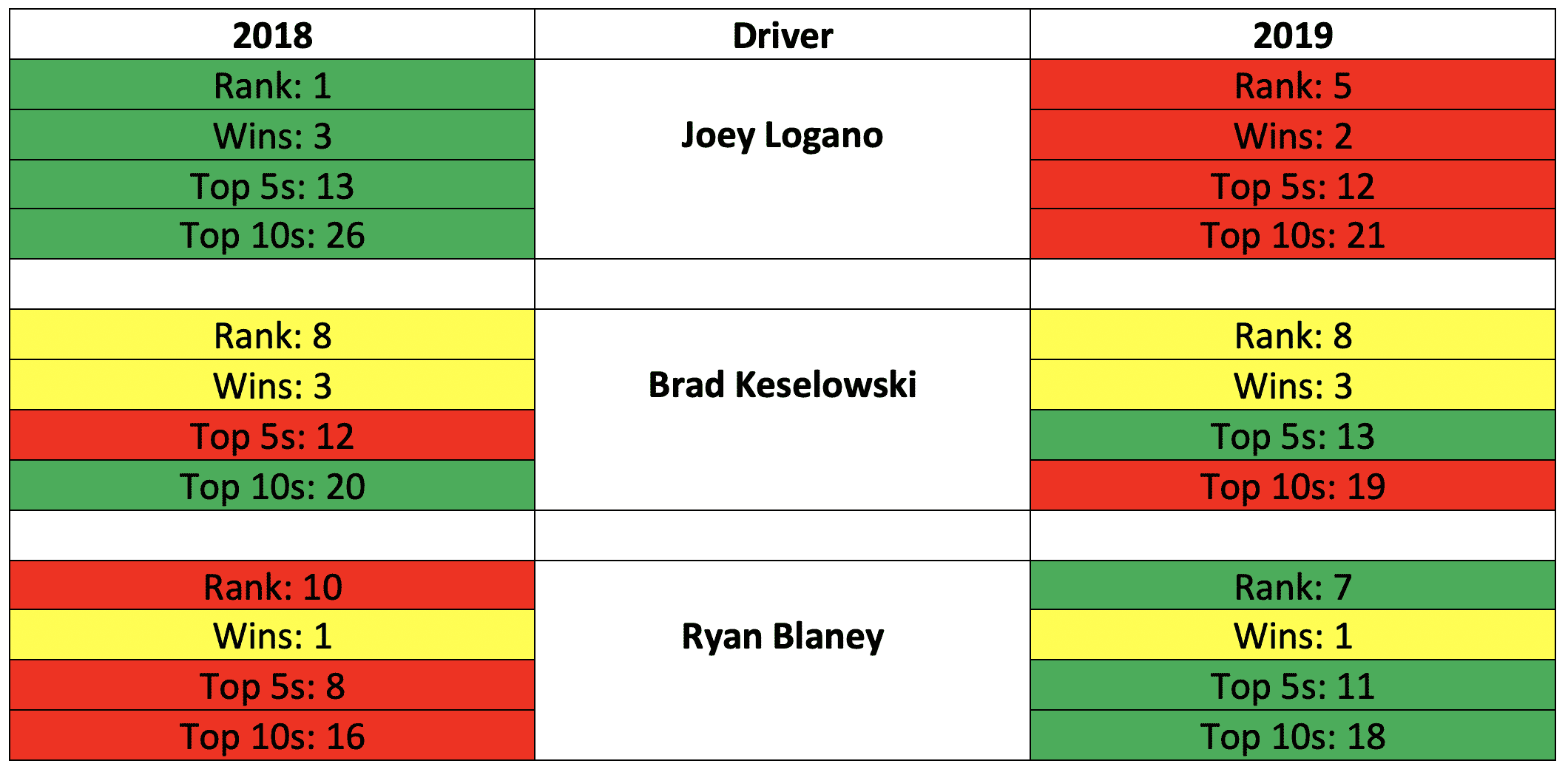
When looking at last season alone, Logano had the most successful 2019 due to his fifth-place finish in the final standings. Blaney was then seventh, and Keselowski ended up eighth.

But zoom out here. Logano actually had a down season. The driver of the No. 22 Ford was the reigning champion, yet didn’t make the Championship 4. Keselowski, in the No. 2 Ford, matched his 2018 ranking. It was Blaney who improved his year-to-year overall mark by three spots, among other bettered statistics with the No. 12 Ford.

Take a look.

Screen Shot 2020 01 07 At 4.23.26 Pm

So, going back to the recent shake-up, it would make sense to give the driver who is growing overall (Blaney) a crew chief who can further aid in that development (Gordon).

Gordon has eight years — all but one with Logano — in the Cup Series. That’s less than Wolfe’s nine years — again, all with Keselowski — but Gordon has the most recent championship from 2018 and the only Team Penske championship under the current NASCAR Playoffs elimination format (established in 2014, after Keselowski’s 2012 title). Also worth noting is the Wolfe-Keselowski title came in Team Penske’s last year with Dodge, as the organization has fielded Fords since.

Speaking of the postseason, Blaney was the only Team Penske driver to score a checkered flag during the 10-race final stretch (Talladega Superspeedway in the Round of 12). Keselowski’s three wins all came during the opening 12 races. He managed just one runner-up showing afterward. Logano’s pair of victories fell within the first 15 events. He also managed just one runner-up showing afterward.

None of them advanced to the Championship 4. Keselowski got the boot after the Round of 12, while Logano and Blaney got cut after the Round of 8.

Blaney also happened to have the best average playoff finish among his teammates.

Average finish in the NASCAR Playoffs

  1. Ryan Blaney: 11.4 (a win, four top-five and six top-10 finishes)
  2. Joey Logano: 11.8 (two top-five and six top-10 finishes)
  3. Brad Keselowski: 13.7 (four top-five and five top-10 finishes)

That’s not to say the second half of the season matters more than the first — 2019 NASCAR Cup Series champion Kyle Busch had a 21-race winless drought end at Homestead-Miami Speedway — but it could signify growth. Blaney’s playoff average was better than his season average (13.7), while Logano’s (10.8) and Keselowski’s (12.9) were worse.

Putting Logano with the next-most experienced option in the garage (Wolfe) fits, considering the veteran did bring Team Penske its latest championship. That leaves Bullins for Keselowski, who could possibly use a fresh perspective after nine years with the same pit-box commander and his recent stagnancy.

This could all mean absolutely nothing. Maybe team owner Roger Penske just wants to shake things up; he has been known to in the past. Perhaps there is, in fact, a method to his offseason madness.

Regardless: No risk, no reward.

The NASCAR Cup Series Playoffs have seen a bit of turnover in the elimination era. Four of the past five seasons have seen at least four drivers reach the postseason after not making the playoffs in the previous year. The exception to that trend? The 2019 season where just two drivers – William Byron and Ryan Newman – hopped into the 16-driver field after not being a part of it the year before.

With a host of drivers in new places and one of the most competitive rookie battles on tap, the field is ripe for some turnover.

Which two drivers are most likely to reach the playoffs in 2020 after not reaching the postseason in 2019? NASCAR.com’s RJ Kraft and Jonathan Merryman each offer their main candidate to join the field.

RELATED: 2020 Cup Series schedule

MERRYMAN: It’s the preseason, and I’m not in the mood for a safe bet. I’m going to take a risk on Chris Buescher making a huge step in his young career and say he is the most likely driver to make the playoffs in 2020 after missing out in 2019.

Buescher has a few things going for him in the No. 17 Ford Mustang — the first of which is familiarity. He’s comfortable in house at Roush Fenway Racing. Buescher won the NASCAR Xfinity Series title for Jack Roush in 2015, but circumstances kept him out of one of Jack’s Cup cars back then.

His second advantage is his teammate, Ryan Newman. The addition of Newman helped the performance of the No. 6 team last year at RFR, and Buescher should study Newman closely. We know Buescher can finish races, and if he wants to finish off the season in the playoffs, following Newman’s 2019 model of keeping the car out of trouble to nab top 10s, 12s and 15s may be the key to his success.

MORE: Key drivers in Silly Season

KRAFT: Like you, Jonathan, I’m going to take a driver in a new place as my pick to most likely surge into the playoffs. That pick would be Matt DiBenedetto. The move to Wood Brothers Racing is yet another step up for the 28-year-old.

Being armed with the Penske power — Team Penske has an alliance with Wood Brothers — should make a noticeable difference for Matty D at superspeedways and intermediates and help lead to better finishes and more consistency. Consistency is the key point with DiBenedetto. In his first 15 starts with Leavine Family Racing in 2019, he had just one top-15 finish. In the final 11 regular-season races, he had six top 10s, including a memorable runner-up finish in the Bristol Night Race. I expect his 2020 results to closer mirror that stretch of races.

A win at Pocono Raceway in 2017 helped Ryan Blaney reach the playoffs in the iconic No. 21. The organization’s next win will be its 100th at the NASCAR Cup Series level, and I would not be surprised if DiBenedetto nabs it to secure his place in the playoffs — although, I expect him to be able to point his way in if necessary.

PHOTOS: Wood Brothers Racing through the years

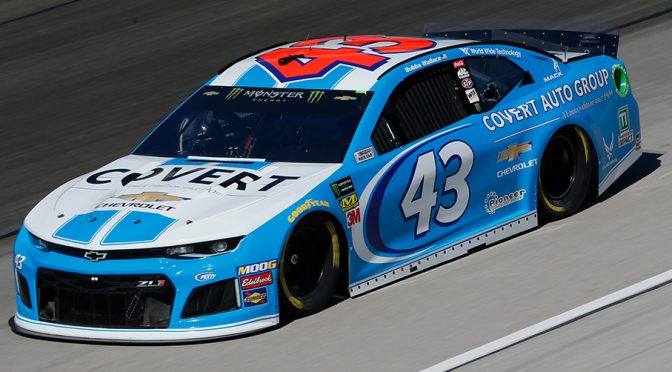
WELCOME, N.C — Richard Petty Motorsports announced Monday that Jerry Baxter will join the organization as crew chief of the No. 43 Chevrolet Camaro ZL1 1LE driven by Bubba Wallace in the NASCAR Cup Series.

A native of San Diego, California, Baxter is no stranger to teaming with Wallace, as the pair worked together for two seasons dating back to Wallace’s time in the NASCAR Gander RV & Outdoors Truck Series. It was with Baxter that Wallace finished third in the Gander Truck Series driver point standings in 2014. As a duo, Wallace and Baxter have amassed five victories, 14 top-five finishes and 25 top-10 finishes while leading 963 laps collectively, as well as securing three pole awards.

“During our time together, he trusted what I did as a crew chief, and trusted himself more and more, and we got better and better as we went,” Baxter said. “This is an incredible opportunity, and change is good. Having the confidence of Bubba and everyone at Richard Petty Motorsports means a lot to me. I am excited about working with Bubba again, and the foundation Richard Petty Motorsports has in place with their group of guys.”

SILLY SEASON: All the offseason movement

Since 2012, Baxter served as a crew chief in the Gander Truck Series, building strong foundations for many careers. Most recently, Baxter spent the 2019 season on top of the pit box for the 2018 Gander Truck Series champion, Brett Moffitt, collecting four wins en route to championship contention.

“The 2020 NASCAR Cup Series season is a crucial year for Richard Petty Motorsports,” Wallace said. “As a team, we have made a ton of progress from my debut in 2018, and we are looking to continue that progress with Jerry calling the shots.

“He has been a great mentor, and even better friend, since we were able to work together in 2013 and 2014. I am excited to see him get this opportunity in the NASCAR Cup Series and use our past success to take this team to new levels.”

With 34 years of experience as a crew chief in NASCAR, Baxter has been atop the pit box in the Cup Series, Xfinity Series, and Gander Truck Series. He has scored victories in two of the top three series with nine drivers, including Wallace. In 2007, Baxter led his team to a runner-up finish for the NASCAR Xfinity Series championship and guided David Reutimann to his first career victory.

In 2015, as a California native, Baxter was inducted into the West Coast Stock Car Hall of Fame.

Team Penske pulled the string on a major personnel shake-up before the 2020 NASCAR Cup Series season, shifting the driver-crew chief pairings for all three teams.

The new alignment for Roger Penske’s organization:

  • No. 2 Ford: Brad Keselowski, the operation’s senior-most driver, will work with crew chief Jeremy Bullins.
  • No. 12 Ford: Ryan Blaney will be paired with crew chief Todd Gordon.
  • No. 22 Ford: Joey Logano will have veteran crew chief Paul Wolfe atop his pit box.

RELATED: Key players in Silly Season 

All three drivers won races last season and finished among the top 10 in the final Cup Series standings, but none reached the Championship 4 round of the playoffs. Team owner Roger Penske indicated the timing was right to make a move, even if it meant breaking up long-running driver-crew chief partnerships.

“As we do after the completion of each season, we evaluated what we can do to better achieve our goals and we felt it was time to make these changes to better position us to reach our potential,” Penske said in a release provided by the team. “We are fortunate that we have three very strong leaders in Paul, Todd and Jeremy, who work with experienced and talented crews. Pairing each of these winning teams with different drivers and cars should provide new energy and a fresh approach for the 2020 season.”

2019 YEAR IN REVIEW: Ryan Blaney | Brad Keselowski | Joey Logano

Keselowski and Wolfe had been one of the longest-established pairings in the NASCAR garage, dating back their run to the Xfinity Series championship in 2010. The two had been paired together for the last nine seasons at the NASCAR Cup Series level, accumulating 29 victories and the 2012 series championship. 

Gordon and Logano had been paired together since 2013, Logano’s first year with the Penske organization. Together, they teamed up for 21 wins and a march to the 2018 series crown.

Blaney and Bullins had worked with each other on at least a part-time basis since 2012, when Blaney first entered the Xfinity Series. Their pairing in the Cup Series spanned a three-year stint with the Wood Brothers (2015-17) and the last two seasons with Team Penske. The Blaney-Bullins combination has yielded three Cup Series victories, one in each of the last three seasons. Bullins also has 21 Xfinity Series wins spread among a group of Penske drivers.

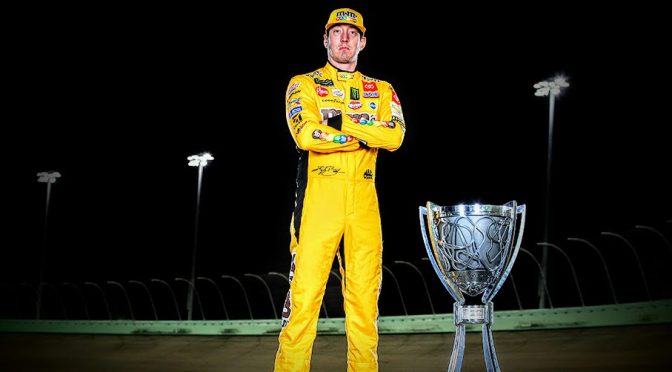
Kyle Busch came out hot in 2019, snagging a trio of race victories amidst an 11-race top-10 streak to start the season. It seemed a foregone conclusion at the time that he’d be a championship favorite — but after his victory at Pocono Raceway in early June, the Joe Gibbs Racing driver was held winless until his somewhat surprising title-clinching victory at Homestead-Miami Speedway in November.

Given his talent behind the wheel and resources at JGR, Busch would appear to be a slam dunk to repeat as NASCAR Cup Series champion — but is he? Many had him pegged as the least-likely Championship 4 driver to win after his second-half drought and up-and-down playoffs, but Busch and crew chief Adam Stevens found a way to prevail.

Is a third Cup Series title in the cards for Busch in 2020? NASCAR.com’s Pat DeCola and Chase Wilhelm debate.

RELATED: Kyle Busch 2019 season review | Backseat Drivers analyze Rowdy

DeCola: In absolutely no way am I ruling out Kyle Busch as a championship contender … but I don’t think he’s going to repeat. Through the first six iterations of the elimination-style NASCAR Playoffs format, we’ve yet to see a repeat champion, and in two of the last three years, the champion from the previous season failed to even make it back to the Championship 4.

Rowdy’s victory at Homestead-Miami Speedway, though impressive, felt like more of a rising-to-the-occasion-type moment for him, Stevens and the No. 18 team than a sign all of their second-half ailments had all of a sudden been cured. The early portion of Busch’s 2019 season was dominant at times, but the group seemed to either lose its footing midway through or, perhaps, were just caught up to by other organizations as the summer months ticked off. Kevin Harvick’s No. 4 team, specifically, seemed to have the inverse of Busch’s season, sputtering out the gate a bit but riding a hot streak to Miami.

Throw in that two of his own teammates in Denny Hamlin and Martin Truex Jr. — arguably the two best drivers of ’19 — are destined for more success this season and Busch might not even be the championship favorite in his own stable.

I fully expect Busch to win around five races in ’20 and probably make his sixth Championship 4 appearance in seven years — who knows, maybe he could steal it away again — but I’d probably put him at about third overall on my championship favorites list at the moment.

MORE: 2020 Power Rankings | 2020 schedule

Wilhelm: During Championship 4 Media Day in Miami, I was persistent in saying Busch had the lowest chances of hoisting the 2019 NASCAR Cup Series trophy at Homestead-Miami Speedway compared to Denny Hamlin, Kevin Harvick and Martin Truex Jr.

Let’s just say I’ve learned from my mistakes.

So, I’m going to try a different strategy by getting on the Rowdy train and riding it all the way to the finale at Phoenix Raceway in 2020. I think Busch hits a stride this upcoming season, winning way more than three races on his way to defending his title.

Busch didn’t have a career season by any stretch last year, but that should teach everyone to never count out the No. 18 Joe Gibbs Racing team led by mastermind crew chief Adam Stevens — no matter the circumstances. Regardless of his winless streak after Pocono Raceway last season, we should have known not to bet against him when the odds aren’t in his favor. Case in point: 2015 when he missed 11 races and came back to earn five race victories en route to his first championship.

Are there plenty of other championship-caliber drivers who will give him a hell of a run for his money this year? Yes.

But will Busch be able to handle any pressure thrown at him for the ultimate prize? Fo sho.
In NASCAR, the goal is to win races. Everybody knows that. However, with 40 competitors vying for the same checkered flag each week, there’s a small dilemma: 39 of those 40 don’t win. 

Luckily, for the 39 losers, there’s another goal at hand: chasing what we’ve dubbed the All 40 Challenge — the feat of finishing in every single position first through 40th at least once over the course of a driver’s career. 

Sure, that 25th-place finish isn’t a great points day, but maybe it’ll check off a box on the All 40 Challenge tracker. An underdog steals a top 10 at Talladega against all odds? Another box checked on the chart.

No, there’s no prize or points bonus for completing the All 40 Challenge sweep; it’s nothing more than a neat stat that a majority of drivers never complete. 

Thirteen full-time active drivers have completed the All 40 Challenge, however: 

– Aric Almirola

– Ryan Blaney

– Alex Bowman

– Clint Bowyer

– Kurt Busch

– Kyle Busch

– Denny Hamlin

– Kevin Harvick

– Jimmie Johnson

– Joey Logano

– Ryan Newman

– Ricky Stenhouse Jr.

– Martin Truex Jr.

Aric Almirola (second place), Ryan Blaney (21st place) and Alex Bowman (first place) joined the elusive list in 2019.

The now-retired David Ragan came oh-so-close to completing the sweep before hanging up the helmet at the end of 2019, but somehow he never finished ninth in his 470-start career spanning 14 seasons. 

A handful of drivers are just two finishes away:

– Austin Dillon (2nd, 40th)

– Brad Keselowski (28th, 40th)

– Kyle Larson (22nd, 32nd)

– Reed Sorenson (1st, 2nd)

We’ll track the finishes of drivers throughout the 2020 season below, keeping vigilant watch of drivers’ pursuits of the All 40 Challenge. Highlighted numbers indicate positions where a driver hasn’t yet finished; grayed-out names indicate drivers who’ve already finished in all 40 positions throughout their careers.