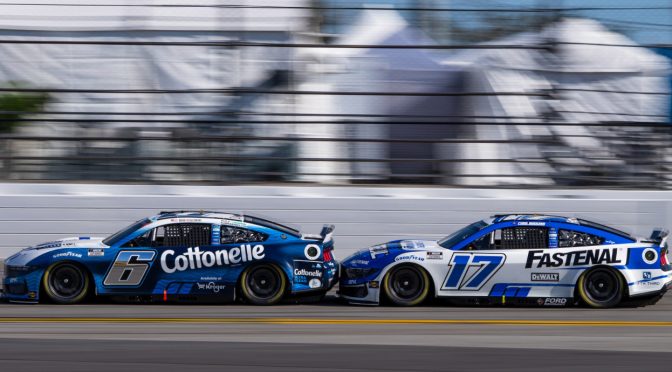
The 67th running of the Great American Race — the Daytona 500 — kicks off the 2025 NASCAR Cup Series regular season.
Daytona always produces intense racing, and with the aerodynamic and engine package that’s run here, at Talladega Superspeedway, and at Atlanta, that intensity can quickly turn into calamity — or glory.
One stat I like to point to is how winning at Daytona is hard! If we take the top eight superspeedway drivers between the two big superspeedways, Daytona and Talladega, they’ve won a combined eight times in 137 starts in what I call the “chaos races.” To me, that means the Daytona 500 and the second Daytona race, specifically when it has been positioned one or two races away from the playoff cutoff on the schedule.
That is a 5.8% hit rate, so it becomes very hard to bet any driver at anything shorter than about 16-1 when the very cream of the crop are winning at a sub-six percent rate. So while I do think the likes of Ryan Blaney, Joey Logano, Kyle Busch, Denny Hamlin, and Brad Keselowski are rightly the race favorites, it’s just too hard to bet them at such short prices.
That means I’ll be looking down the order to find value.
As always with superspeedway betting, and particularly Daytona, keep your bets small, feel free to sprinkle the board on some long shots, and hope your bets survive what’s likely to be a chaotic handful of laps as the 500 miles — or more — wind down.
Daytona 500 Odds, Expert Picks
Austin Cindric to Win Daytona 500
In his young career, Austin Cindric has quickly transformed into one of the best superspeedway drivers in the series. He’s finished second or better in all four of his Daytona Duel races, has a win in the Daytona 500, and last year was one of just two drivers to lead 12-plus laps at all four races at Daytona and Talladega.
My model has him not far off his Team Penske teammates, Ryan Blaney and Joey Logano, as one of the favorites to win the Great American Race.
If you can get him 20-1 or longer, my model likes that value.
The Bet: Austin Cindric to win (+2400 at FanDuel) | Bet to: +2000
Ross Chastain to Win Daytona 500
The market has sharpened over the week of on-track action, but I’m still showing moderate value on a driver that fits a couple of characteristics I really look for at superspeedways.
Ross Chastain is capable of winning at superspeedways, having already pulled off the feat once at the 2022 GEICO 500 at Talladega.
The other factor: aggression.
Chastain has no problem making an aggressive push or block, or making a daring move into a hole that barely exists. We saw that come to a head again at Talladega in 2023 as Noah Gragson led the field with Chastain lined up directly behind him on the high line on an overtime restart. Chastain went for a small hole between Gragson and Blaney and ultimately put Gragson into the outside wall.
My model has Chastain at 3.9% to win, which is just around 25-1 as fair value. To leave a little wiggle room, I’d be fine playing this down to 28-1, but definitely shop for the 30-1 and 31-1 prices out there at BetMGM and FanDuel if you can.
The Bet: Chastain to win (+3100 at FanDuel) | Bet to: +2800
John Hunter Nemechek Top-10 Finish, Top Toyota
Nemechek enters his third full-time Cup Series season, but this is the first time he kicks his Cup year off with continuity from the year prior. His team, Legacy Motor Club (LMC), nearly won a Daytona Duel race already this year as Erik Jones trailed Cindric by about a foot when the caution flag flew to end the race on the last lap.
That shows what those LMC cars are capable of.
Nemechek is also plenty capable, grabbing five straight top-11 finishes at Daytona and Talladega to start his career. He hasn’t had a top-11 at these tracks since, but that still gives him a 62.5% rate of finishing 11th or better in eight career Cup starts at the two big superspeedways.
My model give him just shy of a 20% chance to finish inside the top 10, so I’m fine playing this to around +450.
The Bets: John Hunter Nemechek Top 10 (+470 at FanDuel), Top Toyota (+3000 at DraftKings) | Bet to: +450 and +2500, respectively
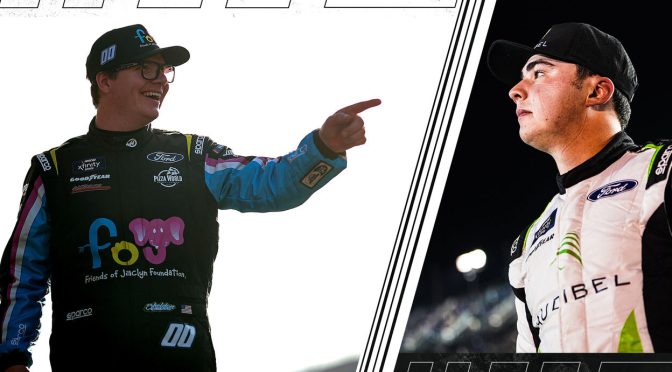
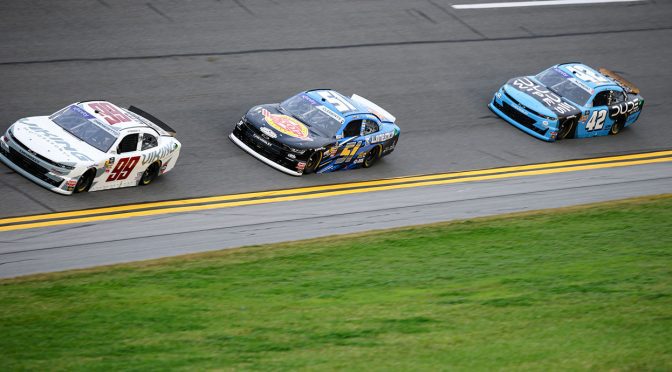
DAYTONA BEACH, Fla. — Sam Mayer and Sheldon Creed began their tenure as Haas Factory Team teammates in exemplary fashion on Saturday night.
The fresh-faced Ford duo avoided calamity and worked together to forge Haas Factory into a new era in the rebranded organization’s debut race, starting strong with a second-place finish for Mayer ahead of third-place Creed at Daytona International Speedway.
Mayer and Creed opted for the inside lane on the overtime restart in the United Rentals 300, leading their lane with an excellent opportunity to win. But leader Jesse Love got a helpful shove from Taylor Gray to clear Mayer and pounce to the bottom lane. The Haas duo broke up momentarily through Turns 3 and 4 with Creed utilizing a huge run to charge to the outside. But a multicar crash through the tri-oval coming to the white flag eliminated any chance for Mayer or Creed to fight for the win, instead allowing Love to score the season-opening victory.
Nonetheless, nothing could sour a podium day for HFT’s debut start, netting dual top fives in their inaugural outing. Mayer, who joined the No. 41 team after three-and-a-half years under the JR Motorsports banner, was elated with the group’s performance.
“It was awesome,” Mayer said. “This was some of the most fun I’ve had working with a teammate, just purely because at JRM, there’s four, sometimes five of us, so you’re kind of working with whoever’s around you because there’s someone around you at all times. Whereas now, you have to really find your one teammate out there and really hook up with him and do everything on your own.
“It was a lot of fun because it was challenging, but we both did a really good job. Sheldon is one of the best (restrictor) plate racers in the series right now, so that helps a lot, too.”
Creed was equally overjoyed with his opening run with HFT’s No. 00 team, slotting into a seat previously filled by 2023 champion Cole Custer after Creed spent 2024 with Joe Gibbs Racing.
“I had a lot of fun — probably the funnest I’ve had on a speedway,” Creed told NASCAR.com. “Usually I get, like, frustrated and (wonder) ‘What do I do?’ But I just tried to not get mad and take every run. I had a lot of fun tonight.”
That philosophy led Creed to leave the back bumper of Mayer heading into Turn 3 on the final green-flag lap in an effort to move farther forward.
“We talked about it before, and we were just like, ‘Take every run you have,'” Creed said. “Like, if we’re together, help each other. If lanes are falling, you can let one another in, but it’s your job to get yourself there. And then, once you’re there, just take your runs. We won’t get mad at each other. We get the full help when we do. I thought it worked well.”
Brittney Wilbur | NASCAR Digital Media
Haas Factory Team president Joe Custer was thrilled to open a new chapter for his organization’s shop in Kannapolis, North Carolina, with such positivity. The team’s prior run as Stewart-Haas Racing ended its Xfinity era in Victory Lane at Phoenix Raceway with Riley Herbst in November 2024. To kick off the Haas Factory campaign with second and third-place finishes in the next event meant a significant deal to Custer.
“It’s critical for our company,” Custer told NASCAR.com. “We’re Haas Factory Team now. And we love our heritage, but there’s new people, and we want to charter a destiny going forward to compliment the past, and these guys are doing it. And I can’t wait to get to the shop on Monday and celebrate. But make no mistake, we’re working at the shop Sunday, literally.
“But this kind of cohesive commitment from everybody in the company makes it so fun, and the drivers did their parts. I expect them to do what they did. I’m not sitting here going, ‘I didn’t think that would happen.’ I’m thinking, ‘That’s exactly what they’re capable of.’ And they can give better, and we intend to.”
Custer, father of Cole Custer, who returns to the Cup Series this year, said the team unity displayed Saturday night is the same that he’s seen over the past two months in the offseason. The group, he said, has “completely committed” to the idea of “two cars, one mission.”
“We didn’t get the win, so we got some work to do,” Custer said. “But as far as what the drivers delivered and the team and the pit stops and the strategy and the commitment to restart together, it speaks for itself. …
“We work from a standard of constant improvement. So if we can start at this level and see areas that we can (improve on) — and we do have areas we can improve on. It’s gonna be a fun year. It’s all the human capital.”
DAYTONA BEACH, Fla. — In a typically wild finish at Daytona International Speedway, Jesse Love won the NASCAR Xfinity Series season opener in overtime — taking the white flag moments before a massive multicar accident behind him brought out a caution officially ending the United Rentals 300.
An out-of-breath Love emerged from his No. 2 Richard Childress Racing Chevrolet’s roof hatch on the Daytona infield grass to the cheers of his team celebrating the 20-year-old Californian’s second career win.
“So many people have helped me get to this point,” said Love, who led three times for 30 laps on the evening.
“Not sure what happened to the 21 (teammate Austin Hill) tonight, but he was really dominant tonight,” Love continued. “We’re working on changing our culture here at RCR. We’re winners, we know we are and we really want to win a championship for Richard Childress. I’m ready to go to [the next race at] Atlanta now.”
Love put his Chevrolet out front on the final three restarts, exchanging the point briefly with Haas Factory Team’s Sheldon Creed before taking the position for good with 18 laps remaining and ultimately holding off the Haas drivers Sam Mayer and Creed. Rookies Carson Kvapil and Taylor Gray were just behind rounding out the top five.
As Love indicated, for most of the early race, it looked as if his teammate, three-time defending race winner Hill was going to turn in an incredible fourth straight win in the season opener. He won both Stage 1 and 2, leading 56 of the opening 82 laps — the most laps out front all night. Together Love and Hill led all but 40 of the race’s 126 laps
Hill’s No. 21 RCR Chevrolet, however, had engine issues shortly after the second stage break — Hill reported smoke inside his cockpit and other drivers said his car was leaking fluid out the back.
Although Hill stayed out front, he pitted with a handful of other Chevrolets on Lap 80, and when the RCR team checked under the hood, it was apparent the issue was terminal.
The team declared the car done, reiterating to their driver it wasn’t “for lack of effort” on the night.
“Such a bummer, we had such a fast Chevrolet,” Hill said after parking his car in the garage. “Everybody at RCR and ECR did a great job building this race car. We showed we were the dominant team again getting the stage wins there. I just wish that we could have lost this race on our terms, not from a mechanical failure.
“I’d almost rather get turned on the backstretch on the white flag lap and end up on my lid than have it end like this. This one is going to sting a little bit, but we have Atlanta next week and I feel like we’re going to be good all year long in 2025. I feel really good about this team.”
The two rookies who finished inside the top five were indicative of a strong showing for the large first-year class. Several were eliminated while running inside the top 10 on track — from Daniel Dye in the race’s opening accident to highly-touted series newcomers Connor Zilisch, William Sawalich and Christian Eckes, who were all collected in an accident with three laps remaining in regulation — all running in the top 10 at the time.
Last summer’s Daytona Cup Series race winner Harrison Burton finished sixth in his return to full-time Xfinity Series racing. Jordan Anderson, Dean Thompson, Jeremy Clements and Patrick Emerling rounded out the top 10 in a race that saw 11 different leaders and 24 lead changes on the 2.5-mile Daytona high banks.
Clements set the Xfinity Fastest Lap of the race earning a bonus point. Creed takes a nine-point lead over Love atop the early championship standings.
The Xfinity Series returns to competition next Saturday on the Atlanta Motor Speedway high banks at 5 p.m. ET. (The CW, PRN Radio, SiriusXM NASCAR Radio).
Georgia native Hill swept both Atlanta races last year.
NOTE: Post-race inspection in the Xfinity Series garage concluded without issue, confirming Love as the race winner.
Track: Daytona International Speedway
Location: Daytona Beach, Florida Track length: 2.5 miles When: Sunday, 1:30 p.m. ET Where to tune in: FOX, MRN Radio, SiriusXM NASCAR Radio Race purse: $30,331,250 Race distance: 200 laps | 500 miles Stages: 65 | 130 | 200 Defending winner:William Byron, February 2024 Starting lineup: Chase Briscoe, Austin Cindric on front row
Prestige on the line in the “Great American Race”
Chase Elliott knows the weight that comes with winning the Daytona 500. The son of two-time Daytona 500 champion Bill Elliott has seen firsthand that the “Great American Race” is, perhaps, the most special event on the entire NASCAR calendar.
Still in search of his own Harley J. Earl Trophy after nine prior attempts, he also knows what wait comes with winning the Daytona 500 — and that it will be worth the wait if he ever lands in Victory Lane.
“It means a great opportunity to submit your name in the history books of the sport,” Elliott said Wednesday, with a clear view of that trophy ahead of him during Daytona 500 Media Day.
Forty-one drivers will have that same opportunity Sunday afternoon when the green flag flies for the 67th annual running of the “Great American Race” (1:30 p.m. ET, FOX, MRN Radio, SiriusXM NASCAR Radio). A handful — like Elliott, Todd Gilliland and Ryan Blaney — have an even deeper appreciation for their chance at glory after watching their fathers pursue it themselves.
David Gilliland was the polesitter for the 2007 Daytona 500. Dave Blaney nearly scored the victory in 2012 after a lengthy red flag. Today, their sons have their eyes set on a win that could ultimately change their lives.
“Personally, this race means the most by far of anything,” Todd Gilliland said. “I think it’s the biggest race in the whole world. I do think a lot of that comes from growing up around the race track. And I think one of my earliest memories is my dad being on the pole in that 2007 Daytona 500. Just feeling the energy, being down on pit road at such a young age, I think made me (realize) that’s a feeling I want to feel one day. And then once I ran my first Daytona 500, it was amazing. It was everything I’ve hoped for. So just to be able to come back, it’s really hard. There’s so much pressure, so much anticipation.”
Ethan Smith | For NASCAR Digital Media
Blaney, the 2023 NASCAR Cup Series champion, felt that same rush growing up before running his first 500 in 2015. Ten years later and now married, Blaney wants nothing more than to walk out of the 2.5-mile mecca of motorsports as a different kind of champion.
“I think it would just mean a lot to me personally to have my family here because Dad spent so many years trying to win it,” Ryan Blaney said. “And I’ve spent so many years (trying), so having that all come full circle I think would be pretty big.”
Other past champions of the sport have been searching for their Daytona 500 glory even longer. Kyle Busch, a two-time Cup champ, is 0-for-19 in the “Great American Race.”
“Two years ago, we led mile-marker 500, but unfortunately, we were coming to the yellow (flag),” Busch said. “Been right there. Been close. Finished second, finished third, finished fourth, all the top five spots. There’s definitely some angst over trying to win this one.”
The relief, glory and immortality that comes with hoisting the Harley J. Earl Trophy makes the wait worth it for those who finally win.
From atop the pit box …
What do crew chiefs have in focus to win Sunday’s race?
Simplistic as it sounds, to win the race, one must have enough fuel to get to the checkered flag. But it’s the driver who spends the least time on pit road who will have the best opportunity to win the Daytona 500.
To do so, drivers will need to burn fuel efficiently while racing two- and three-wide in the pack at 190 mph. Race in the throes of the pack, and the turbulent air of the draft will aid the driver’s ability to conserve Sunoco gasoline. But the deeper they’re mired in the field, the more difficult it is to work back to the front of the field.
Mike Ehrmann | Getty Images
Billy Scott, crew chief of Tyler Reddick’s No. 45 Toyota at 23XI Racing, explained that maximizing the pit cycle by spending the least amount of time refueling will be the key to winning.
“That’s the hardest part is finding the balance,” Scott told NASCAR.com Saturday. “You want to save fuel, certainly, and everybody’s doing it to some level. But you also don’t want to get so far back that you come off pit road behind everybody. It’s a tough balance. The drivers have a big part in that, perfecting their ability to save it. A lot of it, though, just comes down to execution on the cycle.”
Circumstances also demand effective relationships between the driver, crew chief and spotter to ensure the driver is abreast of how much fuel he or she can afford to use.
“Communication is the key at these races right now,” No. 8 crew chief Randall Burnett told NASCAR.com Friday. “So the driver knows where he’s at relative to other guys, the amount of fuel savings, getting on and off pit road and executing a clean race.”
History tells us…
Don’t panic if your driver doesn’t lead early. According to Racing Insights, the eventual winner of the Daytona 500 did not lead for the first time until Lap 157 or later in seven of the last eight runnings of the “Great American Race.” Four of the last eight winners didn’t lead for the first time until Lap 200 or later.
He may not be the favorite to win, but watch out for …
ERIK JONES. He appeared to be the winner of the second Duel at Daytona on Thursday night … until video showed the caution came out just before Jones’ No. 43 Toyota got to the start/finish line on the final lap, inches behind Austin Cindric’s No. 2 Ford. Jones has won at Daytona before — albeit in the 400-mile summer race back in 2018. He’s also carrying the number Richard Petty made famous, in part, by winning seven Daytona 500s. After a strong showing from the Toyotas on Thursday, perhaps Jones can restore glory to the No. 43 all over again in the “Great American Race” on Sunday.
Speed reads
Our biggest pieces of the Speedweeks — get covered for race day from all angles.
• Racing Insights: Full finishing order projections for Sunday’s “Great American Race” | Read article
• JRM to make Cup debut: Earnhardts savor moment as Allgaier races into Daytona 500 | Read article
• Try, try again: Brad Keselowski zones in on ‘last crown jewel’ in Daytona 500 | Read article • Now boarding: Daytona Beach International Airport sparks NASCAR season each year | Read article
• Built by hands: Sculptor John Lajba on the intricate details of Daytona’s Earnhardt, France family statues | Watch video • NASCAR Classics: Revisit thrillers from past Daytona 500s | Visit NASCAR Classics
• Paint Scheme Preview: New schemes aplenty ahead of new season | Pick your favorite
Brad Keselowski topped the leaderboard in Saturday’s final NASCAR Cup Series practice session at Daytona International Speedway for Sunday’s 67th running of the Daytona 500 (1:30 p.m. ET, FOX, MRN Radio, SiriusXM NASCAR Radio).
The No. 6 RFK Racing Ford driver set the pace at 193.307 mph over Hendrick Motorsports’ Alex Bowman (193.274 mph) and Haas Factory Team’s Cole Custer (193.212 mph).
This was an important session for Keselowski, who did not set a time in Friday’s practice while his team continued to prepare his backup car after the primary car suffered damage in his Duel race Thursday night.
Justin Allgaier (193.204 mph) and Kyle Larson (193.195 mph) rounded out the top five.
Corey LaJoie (193.166 mph), Ryan Preece (193.029 mph), Justin Haley (193.005 mph), Chris Buescher (192.806 mph) and Zane Smith (192.707 mph) completed the top 10.
Like Keselowski, Justin Haley, Shane van Gisbergen and Daniel Suárez did not participate in practice on Friday but all got valuable on-track time in the final session Saturday before the 500-mile crown jewel race.
Van Gisbergen and Suárez were 18th and 19th fastest, respectively. Their Trackhouse Racing teammate Hélio Castroneves got 14 laps of practice under his belt in his repaired No. 91 Chevrolet, setting the 20th fastest time at 189.629 mph.
Early Saturday afternoon, Castroneves finished fifth in the ARCA Menards Series season opener at Daytona, driving the No. 82 Pinnacle Racing Group Chevrolet.
Only 24 drivers participated in this session, while the rest of the field shifted their focus to the “Great American Race.” Many on-track participants turned laps in the draft and practiced execution on the pit road.
For 17 consecutive years, the final descent into Daytona Beach International Airport in February has seemed the unofficial start of the NASCAR season for Joey Logano.
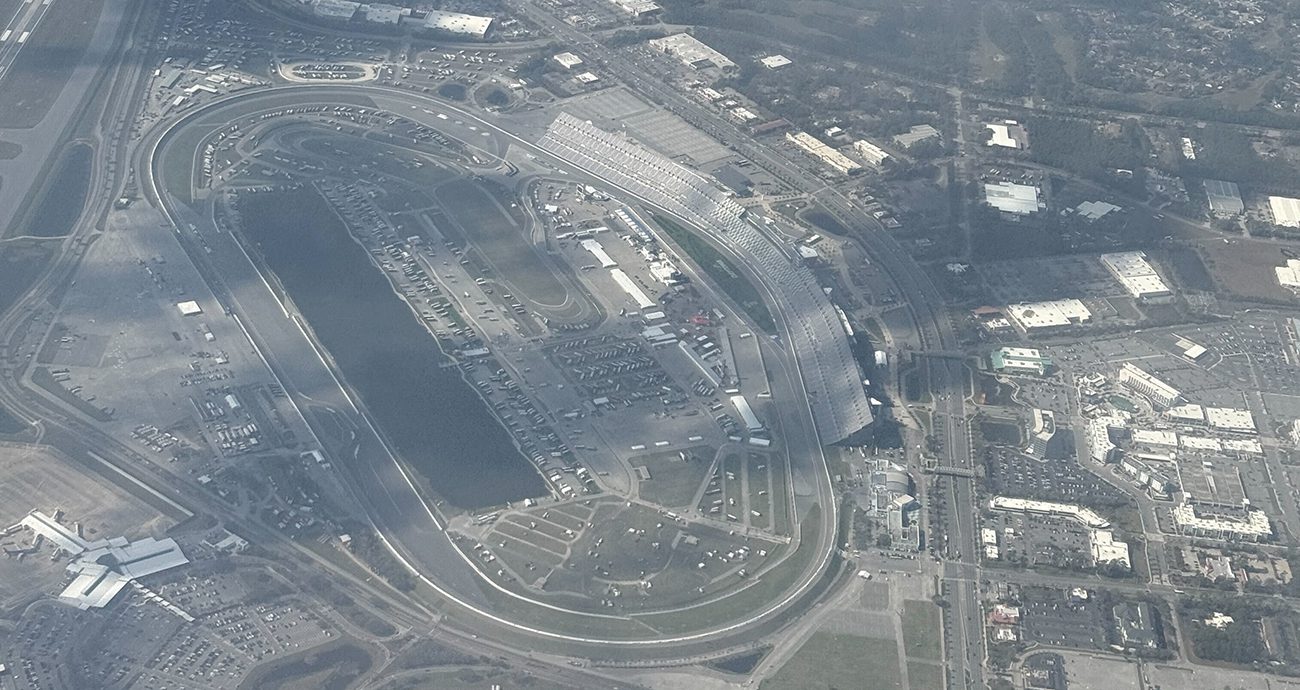
The approach offers a jaw-droppingly sprawling vista of the 2.5-mile home to the Daytona 500 that kicks off the year annually.
“It’s still cool, and it never changes,” the three-time Cup Series champion said. “I always enjoy the first flight of the year because you get on, and everyone is excited. You land right next to the race track, then you drive right into the tunnel, and it’s, ‘OK, a new year, here we go.’ That magic to me has never left.
“It is more fun now to do that with your kids. My oldest being 7, he gets excited when he sees the race track flying in now. He’s like, ‘Oh, it’s right there!’ and you’re landing, and he’s still talking about it. That’s a little extra special moment.”
From sheer physical proximity to an awe-inspiring arrival zone, Daytona Beach International Airport is the literal doorstep to Daytona International Speedway.
It’s fewer than five minutes from the unloading zone on Catalina Drive to the Turn 4 tunnel – making it the shortest trip from an airport to virtually any major sports stadium in the country.
The track actually occupies 376 of the airport’s 2,000 acres. It’s a swath that cuts through Turns 2 and 3 and is leased by the track for facility buildings and parking lots (DAB counts DIS among its oldest long-term tenants).
That next-door presence has made the airport synonymous with some of the most iconic images in the speedway’s history.
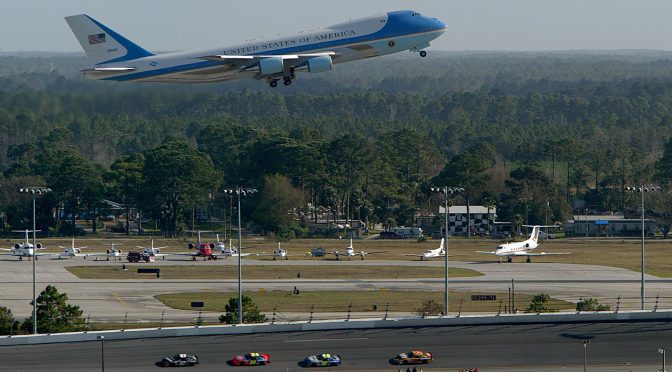
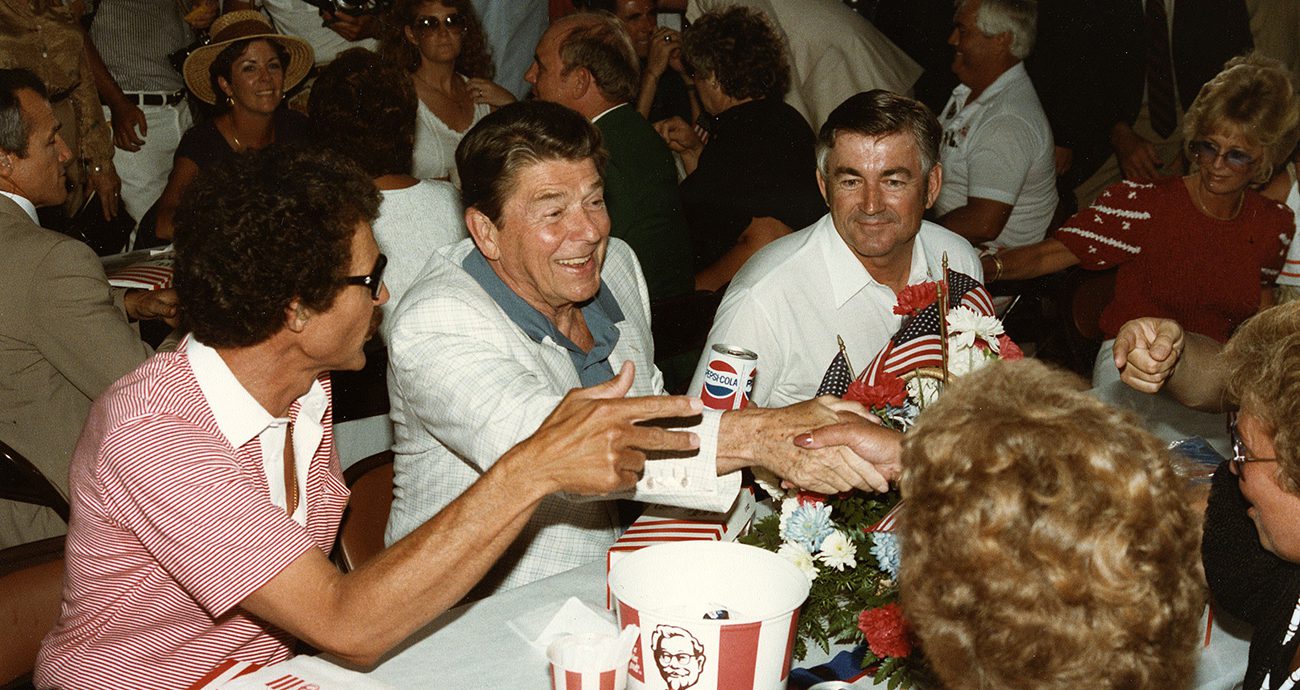
There have been four DAB landings by Air Force One during NASCAR weekends, including a very famous arrival by President Ronald Reagan during Richard Petty’s 200th and final victory.
“I think the airport is such a critical component in the success of NASCAR at the World Center of Racing, from presidents of the United States to presidents of the FIA,” track president Frank Kelleher said. “The ease and the luxury that it is right behind the backstretch and with the police escort, you quickly can get right to at the start-finish line.
“It’s one of the busiest airports in the state of Florida, and when you stack on from the Rolex 24, through the Daytona 500 through the conclusion of Supercross, it’s got to just be a breathtaking number of jets in and out.”
Zach Sturniolo | NASCAR Digital Media
Airports have played a longtime intrinsic role in NASCAR. The Cup Series’ first road course race was held June 13, 1954 at an airport in Linden, New Jersey (Al Keller won in a Jaguar). Many tracks (namely Atlanta Motor Speedway and Talladega Superspeedway) lay claim to having adjacent airstrips.
But DAB is unique in having commercial flights that link the World Center of Racing to the outside world in a way unlike any other speedway.
Air traffic spikes during Speedweeks with nearly 10,000 flying in and out of the 175,000-square-foot airport that has six gates and an international terminal. This year, Friday was busiest with an additional eight flights, more than doubling the arriving passenger capacity to 2,300. Undoubtedly, at least a few were fans visiting NASCAR’s cathedral of speed for the first time.
Flying in from the west over I-95 and its nearby junctions with I-4 and International Speedway Boulevard, they were treated with an eye-popping introduction to the speedway. The runway is so close, it’s easy to read the car numbers on the scoring pylon.
“Years ago, we used to have a slogan, ‘If you land any closer to the speedway, you’d be on the backstretch,’ ” said airport director Karen Feaster, who has worked at DAB for 32 years.
Feaster said the speedway and airport have a tight working relationship reflective of their neighborly location.
During a recent hurricane season, an Aer Lingus flight from Orlando to Dublin was diverted to DAB for a late-night emergency landing that created a scramble to find lodging. Noticing several Florida Power & Light buses were staged in the DIS parking lot, airport officials called the track, which helped coordinate busing the stranded passengers out of Daytona within an hour.
The airport and speedway regularly meet about their big events and prepare contingency plans. In a triennial drill to test the airport’s emergency response, the track took part in simulating a plane crash into Lake Lloyd, assembling hundreds of first responders in the infield.
“We’re very intertwined, and they work very well with us,” Feaster said of the Daytona track. “They’re always open to help in any way they can, and we are as well. So it’s just really nice having that relationship.”
The airport’s operations and security team also work with Daytona International Speedway for the logistics of accommodating special guests and VIPs, such as Air Force One and the motorcade of more than 100 vehicles for the short drive to the track.
Reagan’s July 4, 1984 visit was the first to a NASCAR race by a sitting president, followed by George H.W. Bush on July 4, 1992, George W. Bush on Feb. 15, 2004 and Donald Trump on Feb. 16, 2020.
Each gave the command to start engines, and Reagan famously delivered his address while in flight. His landing at DAB was captured on national TV as a memorable backstretch backdrop for stock cars racing near halfway of the Firecracker 400.
Reagan witnessed the final 50 laps from the press box and then congratulated Petty in person at an “invitation-only” postrace picnic that drew a crowd of 1,200.
“It just blew his mind that we were running at each other like that at 200 mph,” Petty later told reporters while chomping a victory cigar. “He couldn’t believe we were touching at those speeds.”
During his high-profile stay, Reagan anointed NASCAR as “a major American sport” in praising drivers for a courageous display.
“We are celebrating our country’s birthday and the skill and daring of our forefathers,” Reagan said. “If Patrick Henry had been here, from what I’ve read about him, he would have been out there in one of those cars.”
NASCAR Research & Archives Center | Getty Images
Aside from sharing property, the airport and race track also share daredevil roots in the white sands of the world’s most famous beach.
At roughly the same time that stock cars began zooming around the famous south and north turns on the road course along A1A, the beach also was serving as a runway for pilots who were hired by upscale hotels to provide entertainment for guests. With a growing need for airmail deliveries, it eventually morphed into the first airport in Volusia County.
It moved from the beach to Bethune Point along the Halifax River in 1928. Two years later (and near 30 years before Daytona International Speedway was born), the airport was moved to its current location and became a pilot training ground during World War II.
Terminal construction began in 1942 to establish a new gateway to the city then known as “the Atlantic City of the South.” Volusia County took over management in 1969, and the newly rechristened Daytona Beach International Airport unveiled a $47 million renovation in 1992 with a 10,500-foot runway extension and widened access roads snaking around the speedway.
DAB endured rocky years before and after Sept. 11 (with the departure of US Airways and Continental, only Delta remained with six daily flights at the end of 2001). But the airport has rebounded well in the 21st century as a quieter alternative to the vacationing throngs of families who swarm Orlando.
In a 2022 economic impact study, the Florida Department of Transportation estimated DAB generates $3.2 billion annually for the region (up from $2.1 billion in 2019), and more than 719,000 flew through the airport last year. With a high volume of flight training for nearby Embry-Riddle Aeronautical University, DAB consistently ranks as Florida’s fifth-busiest airport – and Speedweeks ensures February typically is its craziest month.
Delta added flights this week from New York’s LaGuardia and Detroit, and American brought in extra planes from Dallas-Fort Worth and Washington, D.C. New DAB carrier Breeze used Speedweeks to launch twice weekly flights to Westchester County, New York, Providence, Rhode Island, Hartford, Connecticut, and Raleigh, North Carolina.
The airport runs promotions to highlight its NASCAR connections (two-time Daytona 500 winner Michael Waltrip recently was a celebrity bartender and greeter). Joanne Magley, the director of air service, marketing and customer experience at DAB, said the race track sells itself when there are cars on track.
“The exposure during events at DIS is very valuable, mainly for visitors who may not realize Daytona Beach has a commercial airport,” she said. “Anytime there’s racing going, you can hear the race cars all the time, so imagine if you’re a visitor just getting off the plane, and you’re hearing that already.”
Even those immersed in racing can be awed. When he flew in for an ARCA test, Alex Bowman recalls being shocked at “how big the race track and the facility are and just the magnitude of everything” from the majestic bird’s-eye view.
“Landing next to the race track is always really special,” Bowman said. “It definitely kind of feels like that first day of the year at school.”
Nate Ryan has written about NASCAR since 1996 while working at the San Bernardino Sun, Richmond Times-Dispatch, USA TODAY and for the past 10 years at NBC Sports Digital. He also has covered various other motorsports, including the IndyCar and IMSA series.
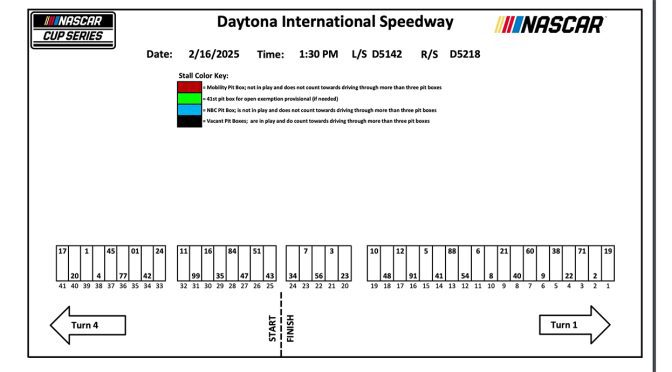
See where your favorite NASCAR Cup Series driver will pit for the Daytona 500 at Daytona International Speedway on Sunday (1:30 p.m. ET, FOX, MRN Radio, SiriusXM NASCAR Radio).
The first thing you need to know about the Daytona 500 trophy is that it is heavy, as in, it weighs a lot. Like, really heavy, like, I don’t care how strong you are, you would not want to lift that thing over your head on live TV, especially not after racing 500 grueling miles on the high banks of Daytona International Speedway.
The second thing you need to know about the Daytona 500 trophy is that it is heavy, as in, the pursuit of it weighs on drivers, consumes them, eats up their insides. The endless chase to win the Daytona 500 exacts an unending toll on them, their families, their friends, their teams, even their fans. Chasing dreams, especially dreams that, if fulfilled, make you a legend, is not free or easy. It leaves scars if you never catch those dreams … and even if you do. The cruel irony is winning one only makes you want another one that much more.
Since 1996, Daytona 500 winners have borne the weight of trophies crafted by Omaha sculptor John Lajba (LIE-buh). The trophies weigh on him, too. He feels an obligation to the entire sport as he creates art meant to convey weight in both the literal and metaphorical sense — the weight of glory.
Jack Campbell | NASCAR Digital Media
• • •
It’s a bitingly cold Friday in January. Wind slices through downtown Omaha as Lajba welcomes a crew from NASCAR.com to his studio. The Daytona 500 is less than a month away in sunny, warm Florida, 1,387 miles from freezing, dreary Nebraska.
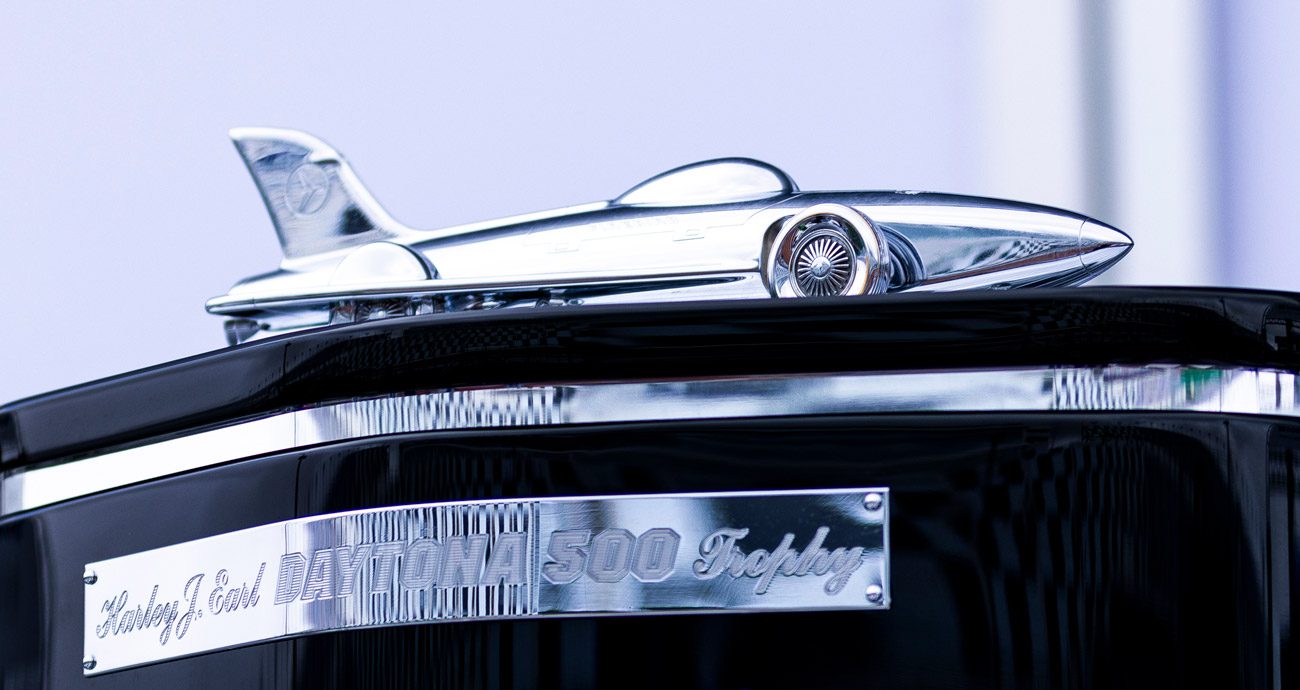
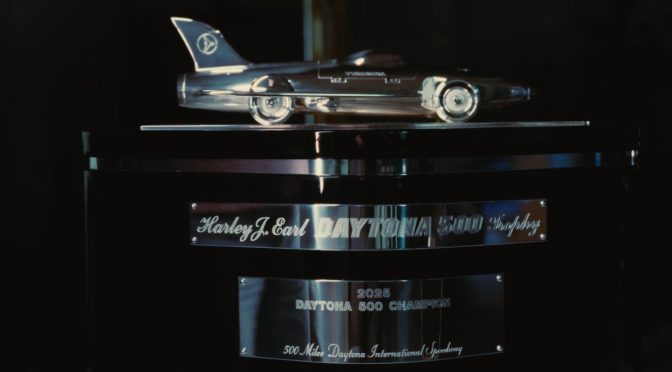
The Harley J. Earl Trophy sits on a table under plastic sheeting in Lajba’s studio. There’s three of them, actually — one for the winning driver, one for the winning owner and one for the Thunderbirds to celebrate 25 years of flyovers.
The trophies are not literally glowing under there, it just seems like it. Lajba has spent the past five months creating them with a team of about 10 others. He finished them in the last few days; the NASCAR.com crew is the first to see the finished products.
We keep our distance at first, which is fine by Lajba. “I won’t even look at them without putting gloves on,” he says, and he’s joking, but barely. He stores them in a dust-free and static-free environment, and he “washes” them only with Lemon Pledge and microfiber towels. He never wears rings or belt buckles near them and is wary of shirts with buttons.
He dropped a wheel from the car on the trophy once, years ago. It clanged on his floor like a steel rod and cost him three weeks and several hundred dollars.
Maybe nobody would have ever seen the tiny dent.
But he knew it was there, and there was no way he could leave it like that. There was too much at stake. Lajba has been making the trophy since the 1996 race, and he approaches each one with something close to awe at being chosen for such a privilege. “It’s beyond pride,” he says. “It really touches me. I feel honored and blessed.”
Lajba obliges a request to uncover the trophies, and they glisten when he does. I’ve seen versions of the trophy many times — on TV and in person in the media center at Daytona and in trophy cases. But I’ve never looked down on one from above, as I do now. I never realized the base is shaped like Daytona International Speedway.
Lajba gives me a pair of gloves and invites me to lift it. Confession: I don’t want to. Hockey players are superstitious and won’t touch the Stanley Cup until they’ve won it. My trepidation is more practical: I don’t want to be known as the guy who dropped the Harley J. Earl Trophy. If dropping a wheel cost him three weeks and hundreds of dollars, what would it cost him if I dropped the whole thing?
But I also don’t want to be so afraid of life that I won’t lift a trophy. Holding it from the side is awkward. Add the weight and yikes! I hoist it a few inches off the table and set it down. He says it weighs 62 pounds. It felt like more than that, and that heft “is a necessity,” Lajba says. The Daytona 500 trophy has to have presence, physicality, meatiness. Otherwise, it wouldn’t be worthy of the victory it represents.
It goes without saying that this is the most coveted race trophy in American motorsports. It’s also the most displayed. I can’t prove this, but I feel confident in saying none of Lajba’s trophies are gathering dust in a warehouse as countless lesser trophies surely are.
Jeff Gordon, for example, won 93 Cup races. He couldn’t possibly display all of them. I interviewed him in his trophy room in his basement once. He had seven race trophies; all three of his Daytona 500 wins are among them.
Chris Graythen | Getty Images
William Byron, winner of last year’s race, has examined his Harley J. Earl Trophy closely, admiring Lajba’s craftsmanship. He has moved it from his living room to his front entry to his office, where it lives now. He likes how the coloring and the material come together. “The weight of it,” he says, “closely relates to the weight of the win.”
The weight of the win … that’s not there yet on the trophies in Lajba’s studio.
The life of the Daytona 500 trophy is like the life of the winner of it: It changes dramatically when the race ends. As it sits in Lajba’s studio, the Harley J. Earl Trophy represents one thing: hope. Everyone in the sport yearns to win one. Then the race ends, and that hope vanishes because who hopes for what he already has?
The second the race ends, the trophy becomes about “strength and power and speed,” just as Lajba crafted it to be.
• • •
Lajba’s 14,000 square feet studio spreads across three floors, and inside it looks like an antique shop’s warehouse. The items scattered about reflect the curiosity that propels him.
His studio features a statue of a man crawling out of the wall, an old pickup truck and a ping-pong table he uses as a desk. On it sits a book called “Telegraphy Self Taught: A Complete Manual of Instruction.” He has old suitcases, old strollers, old picket fences, old pictures he bought at garage sales.
The three brand-new Harley J. Earl trophies share space with those artifacts. The Firebirds that sit atop the trophies are made with rolled, extruded bronze that is then dipped in blue liquid that coats it in silver. The car, shockingly heavy, looks futuristic even though the late Harley J. Earl, GM’s head of design who also designed the Corvette, created it in 1954.
“I really wanted it to look like it was moving, like it was flying,” Lajba says. He pulls out his original, which is red and made of balsa wood. He gave it to his son as a toy, and he promptly broke the tail off.
Jack Campbell | NASCAR Digital Media
That’s an echo from Lajba’s own childhood. His dad would thumb through an encyclopedia, find something that looked like fun to make, and they’d make it together out of clay and wood. In 1963, Lajba won first place in the Nebraska State Fair for sculpting a kangaroo and a mouse out of clay. He celebrated by smushing the clay back together and making something else.
He never envisioned sculpting as a career. Only in looking back does his boyhood hobby seem like the beginning of a thread that, as it unspooled, became his life. He dropped out of the University of Nebraska-Omaha and jumped around odd jobs for a few years — washing dishes for $1.62 an hour, working in a mailroom, and wondering what to do with himself.
He enrolled in sculpting classes at Creighton University and Bellevue University, from which he graduated summa cum laude with a BFA in sculpture. Suddenly he was passionate about learning for the sake of learning. That cranked the engine of the rest of his life. “It just opened me up to not be afraid of looking at the truth about things and discovering things,” he says. “That attitude carried me through my artwork, and it carried me through all of my classes — English, geology, speech, everything. It was like an energy. I had this thirst of wanting to know things and wanting to learn and wanting to be educated.”
After that intellectual awakening, his life story sounds like that of a race car driver: Talented nobody from nowhere gets a few breaks and crushes them when he does.
He made a sculpture of Gen. Jimmy Doolittle, a Medal of Honor winner who spent 42 years in the Army and Air Force. Someone at Mutual of Omaha — where Lajba had worked in the mailroom — saw the piece and liked it. Mutual of Omaha bought it and gave it to the Air Force Association, a private 501c3 that Doolittle helped found and served as its first president.
Comedian Bob Hope, a friend of Doolittle, saw it and liked it, too, and Lajba was hired to make a sculpture of Hope for Bob Hope Village in Florida. A board member for Bob Hope Village was close with NASCAR founder Bill France, and Lajba was hired to create a sculpture of France and his wife, Anne, and eventually Dale Earnhardt, Bill France Jr., Betty Jane France and the Harley J. Earl Trophy.
• • •
Lajba has hands like a lumberjack. They are gnarled, bent, thick. And yet he uses them like a jeweler, sanding and sculpting, refining, chasing perfection that he knows is impossible. He notices details and seeks them out because it is in details that “the truth about things” starts to emerge. Sometimes those details are literal, like the year of the lucky penny that Dale Earnhardt glued to the dashboard of his 1998 Daytona 500 winning car. Sometimes those details are intangible, like what it feels like to be with a person.
In crafting the statue of Bill France Jr., the son of NASCAR’s founder, Lajba’s biggest challenge was capturing France Jr.’s presence. Here Lajba chooses his words carefully. He was very fond of France Jr., NASCAR’s CEO from 1972 until 2000, and doesn’t want to say it the wrong way. But the sculptor in Nebraska knew about Bill France Jr. what every driver in North Carolina knew: He commanded a room, and when he talked, people listened.
NASCAR history pulsates with stories of big-time stars being called into France Jr.’s office, at which time they learned exactly who was in charge. The sport also overflows with stories like the one Lajba tells about stopping by to say thanks to France Jr. as he left Daytona one morning. Lajba planned to simply leave a message, but France Jr. walked out of a meeting to come out and shake Lajba’s hand and tell him goodbye, an act of class he still appreciates all these years later.
France Jr.’s mix of power and grace is an elusive combination to capture in a static medium, and to do so, Lajba immersed himself in the statue for more than a year. He thought about France Jr. while in his car, in his studio, everywhere.
Jerry Markland | Getty Images for NASCAR
France Jr.’s pose — his mouth slightly open, as if he was about to speak — illuminated a part of France that those who knew him recognized immediately. “It’s Bill Jr. It’s him,” then track president Joie Chitwood said at the 2012 unveiling. “I can almost hear the words coming out of his mouth when I see his expression.”
For the statue of Dale Earnhardt, Lajba flew from Omaha to North Carolina, then drove to Welcome, home of Richard Childress Racing headquarters. While there, he stuck his head inside the cockpit of Earnhardt’s 1998 Daytona 500 winning car. While awed to be near such an important piece of history, he pulled out a piece of dental impression material and pressed it against the dash to create a cast of the lucky penny that was glued there.
That’s how he knows that penny was a 1977.
• • •
The trophy is heavy to lift, it’s heavy to win, and it’s heavy to make. “There’s a great deal of pressure,” Lajba says. “I want it to be perfect. There’s a lot of people counting on me.”
He’s not just making it for NASCAR or the track or the driver or the owner. He’s making it for the whole sport — “for everybody who experiences the joy and power of NASCAR, the fun of NASCAR. It’s more than a trophy. It’s a celebration.”
He jokes that he mothers the trophies to death, and that’s a fitting analogy. This year, as every year, he raised them from before it was even a thing, when they were just a disconnected collection of materials. He oversaw (or did himself) the engraving, the carving, the screwing on of the wheels and more.
Finally, he finished them, covered them in plastic … and hoped like hell nothing happened to them.
He spent several hours on the last Monday in January packing the three trophies into custom-made crates for transport from Nebraska to Florida. A moving crew arrived — he uses them so much they’re on a first-name basis — put the crates in a truck and drove off.
He tried to let them go, like a parent sending a kid off to college.
But he didn’t. He can’t. He still feels responsible. He always does.
That starts to fade when the trophies arrive safely in Florida. That mothering instinct ends only when the race does, and a driver’s life is changed forever, a change made manifest when he lifts that trophy and struggles to hold it up under the weight of glory it has just attained.
Lajba has always watched that from home. He will attend the Daytona 500 for the first time this year, at which he’ll get an inside look at the life of his trophy that he’s never seen before.
He’ll watch when his trophy is awarded, at which point it will stop being his and become someone else’s … and not a moment too soon. He’ll do his best not to care when the trophy gets doused in Gatorade and beer and covered in confetti. He’ll smile knowing he played a small part in that raucous, exuberant, joyful, celebration.
And then he’ll head back to Omaha, unburdened, light, free of the weight of trying to meet the expectations of the entire sport.
The Daytona 500 — the “Great American Race” — is more than just the NASCAR Cup Series season opener; it’s a showcase of motorsport history, drama and unforgettable moments.
As the 2025 race and the start of the NASCAR season approaches, we’re celebrating its legacy with a 25-day countdown, reliving the top moments that have defined this iconic event. From breathtaking photo finishes and trailblazers to stunning upsets and famed fisticuffs, these stories capture the essence of Daytona: where legends are made, dreams are realized and the thrill of competition reaches its peak.
Join us as we revisit the victories of legends like Richard Petty and Dale Earnhardt, alongside the heartbreaks, comebacks and acts of sportsmanship that have etched this race into the annals of sports history. Whether you’re a lifelong fan or new to NASCAR, each day promises a star-studded reminder of why the Daytona 500 stands as a pinnacle of speed and determination.
Buckle up and get ready to celebrate the magic of Daytona!
📝 Notes: Arguably the greatest moment in NASCAR history, period — the 1998 Daytona 500 stands as a monument to perseverance, redemption and the power of belief in oneself, with a twist of good fortune in the form of a lucky penny from a small child.
For Dale Earnhardt, this moment, No. 1 in our 25-day countdown, ended a winding, 20-year quest to conquer the “Great American Race.” It was a feat that had eluded him through 19 previous attempts marred by mechanical failures, late cautions and agonizing near-misses, witnessing one-hit wonders claim glory while this remained the sole unchecked box on his resume. On Feb. 15, 1998, Earnhardt dominated the field as he undeniably rode to the Daytona 500 crown, leading 107 of 200 laps in his iconic black No. 3 Richard Childress Racing Chevrolet and crossing the finish line under caution.
Earnhardt’s performance was a masterclass in control, fending off challenges from fierce competitors and champions Bobby Labonte and Jeff Gordon throughout the afternoon. The win shattered a 59-race winless streak and cemented his legacy as a transcendent figure in motorsports and beyond; the Victory Lane celebration became iconic as crew members from every team lined pit road to applaud him in an unprecedented display of collective respect. For a driver known as “The Intimidator,” the win transcended rivalry, symbolizing a triumph shared by the entire sport.
Going deeper, the race’s emotional core lay in a chance encounter with Wessa Miller, a six-year-old fan with spina bifida, who met Earnhardt through Make-A-Wish the day before the race. She gifted him a penny she’d rubbed for luck, insisting, “You’re gonna win the Daytona 500.” Earnhardt, deeply moved, glued the penny to his dashboard with crew chief Larry McReynolds’ help. After the win, he credited Wessa as his “angel,” and the penny remains preserved in his race-winning car at the Richard Childress Racing Museum to this day.
The race’s cultural impact was magnified by CBS’s live broadcast, which captured the raw emotion of crew members’ impromptu tribute, while the penny became a lifelong symbol of hope. For fans, it underscored the humanity behind Earnhardt’s steel resolve and “Intimidator” persona that drove him to a record-tying seven NASCAR Cup Series championships. Though tragically killed at Daytona three years later, Earnhardt’s 1998 triumph endures as a testament to resilience, luck and the unyielding pursuit of glory.
📝 Notes: The 1979 Daytona 500 fatefully became a cultural inflection point for NASCAR in a perfect storm — literally — of chaos and “Great American” carnage, merging live television’s raw power with a brawl that seared the sport into America’s consciousness forever.
For the first time in the race’s existence, CBS aired the race live from start to finish, flag to flag; a gamble that paid off when a historic snowstorm paralyzed the Northeast, trapping millions indoors and funneling record viewership to Daytona’s drama as one of NASCAR’s most notorious finishes unfolded.
Richard Petty clinched his sixth Daytona 500 victory after leaders Cale Yarborough and Donnie Allison wrecked each other on the final lap, and a post-crash fistfight between Yarborough and the Allison brothers in front of CBS cameras and its 16 million viewers captivated a nation on a snowy Sunday. This collision of spectacle and serendipity transformed NASCAR from a regional curiosity into a national phenomenon almost in the blink of an eye.
The race’s climax unfolded with cinematic tension.
Yarborough, trailing Donnie Allison by inches, attempted a slingshot pass on the backstretch, only for both cars to collide, spin into the wall, and skid into the infield. As Petty surged past to claim victory, Yarborough stormed toward Bobby Allison — who’d stopped to check on his brother — and swung his helmet through Bobby’s car window, igniting a further muddy, helmet-swinging brawl.
CBS announcer Ken Squier’s iconic call — “And there’s a fight!” — captured the chaos live, embedding images of furious drivers and bloodied faces into pop culture for decades to come. For viewers unaccustomed to NASCAR’s visceral rivalries, the unscripted drama was irresistible: a primal clash of ego and adrenaline in the sport’s biggest race. What’s not to love?
Legacy-wise, the 1979 Daytona 500 cemented NASCAR’s TV future and mythologized its rebel spirit, introducing it to a slew of new fans up north. The fight became a parallel for the sport’s unvarnished authenticity, a counterpoint to sanitized and over-officiated stick-and-ball sports. CBS’s gamble validated flag-to-flag broadcasts, paving the way for NASCAR’s 1990s boom and future billion-dollar broadcast deals. Meanwhile, the Allison-Yarborough feud entered lore as a symbol of racing’s emotional stakes; a moment where passion overruled polish.
📝 Notes: The 1976 Daytona 500 stands as one of NASCAR’s most electrifying moments; a visceral clash between two titans of the sport in Richard Petty and David Pearson that, quite simply, redefined racing drama.
Entering the final lap, the two NASCAR Hall of Famers were locked in a duel that transcended rivalry — the actual disdain for each other was tangible. Petty, seeking a record sixth Daytona 500 win, led Pearson’s Wood Brothers Mercury by inches until Turn 3, where Pearson executed a daring slingshot pass. What followed was a split-second miscalculation that splintered into mayhem: Petty’s Dodge clipped Pearson’s left front fender, sending both cars careening into the wall and spinning into the infield grass mere yards from the checkered flag. The crash, unfolding in a cloud of smoke and screeching metal, epitomized NASCAR’s high-stakes intensity in its greatest spectacle, blending raw skill with unpredictable chaos.
As Petty’s flooded engine stalled, Pearson — cool under pressure, true to his “Silver Fox” nickname — feathered his clutch to keep the Mercury’s engine just alive enough. With his car crumpled and hood mangled, Pearson limped across the line at a crawl, securing his first Daytona 500 victory in his 15th attempt. Petty, meanwhile, watched helplessly as crew members illegally pushed his car forward, a futile effort that underscored the desperation of the moment. The finish, captured live on ABC amid interruptions of Winter Olympics coverage, became an instant classic, showcasing NASCAR’s capacity for theater even in wreckage.
For Pearson, the win validated his reputation as a tactician whose 105 career victories often fly under the radar despite being a three-time champion as well. For Petty, the loss became a footnote in a career defined by resilience, his eventual still-standing record seventh Daytona 500 coming not long after later cementing his “King” status.
Decades later, the 1976 chaotic finish remains a benchmark for NASCAR’s golden era. The mutual respect (?) between Petty and Pearson elevated their clashes into something mythic, helping to elevate the sport’s profile in the process of putting down arguably the greatest final lap in history.| Read more: Present, future collide in historic ’76 Daytona 500
📝 Notes: The 1959 Daytona 500 stands as a cornerstone of NASCAR lore, sparking an annual American tradition while simultaneously going down as one of the most controversial finishes in racing history.
When Lee Petty’s Oldsmobile and Johnny Beauchamp’s Ford Thunderbird crossed the finish line three-wide with lapped driver Joe Weatherly to conclude the inaugural Daytona 500, officials faced an unprecedented dilemma — in short, what was the conclusion?
Our current-day photo-finish technology, obviously, was far from existence, and Beauchamp was initially declared victor. A celebration in Victory Lane followed, with trophies, beauty queens and the whole gamut. But Petty’s vehement protests — bolstered by photographer T. Taylor Warren’s film showing his Oldsmobile two feet ahead at the line — triggered a 73-hour review to determine the rightful winner. NASCAR founder Bill France Sr., also leveraging Hearst newsreel footage, reversed the call on February 25 to cement Petty’s place as the race’s first champion and ignite debates that persist today.
This chaotic conclusion mirrored the race’s high stakes — the first “Great American Race” also marked the debut of Daytona International Speedway, a $3 million marvel replacing the beach course and designed to propel stock car racing into the modern era.
Warren’s photograph became a relic of racing lore, displayed today in the NASCAR Hall of Fame alongside Petty’s trophy and helmet. The $53,050 purse, with Petty earning $19,050, underscored the event’s financial heft, while the caution-free race — a major rarity at the time — highlighted the track’s smooth design in its debut. Yet the outcome haunted Beauchamp, who never won a Cup race and faded into obscurity, his legacy overshadowed by Petty’s dynasty.
For NASCAR, the 1959 race was a masterstroke of reinvention. The speedway’s 31-degree banks and 2.5-mile tri-oval redefined speed, attracting more than 40,000 fans and establishing Daytona as the sport’s spiritual home. Petty’s victory launched his family into racing royalty, paving the way for his son Richard’s record seven Daytona 500 wins. Meanwhile, the photo-finish drama became a marketing boon, amplifying NASCAR’s national profile during a pivotal expansion era.
France’s gamble — building a “motorsports stadium” on Florida swampland — paid dividends, as both the race and track have only continued to gain in national prowess in the decades since. The speedway itself, now a $400 million renovated colossus, stands as a monument to France’s vision and a reminder of how far this race has come. | MORE: Photo finishes, a picture-perfect snapshot of NASCAR’s beauty
📝 Notes: The 2016 Daytona 500 marked, literally from start to finish, a watershed moment for NASCAR, blending the sport’s most iconic race with a transformative venue overhaul and making history in the process. Denny Hamlin’s victory over Martin Truex Jr. by a razor-thin, 0.010-second margin — the closest finish in Daytona 500 history — captured the relentless drama of stock car racing on a proud and prosperous day for the superspeedway.
As the two future NASCAR Hall of Famers drag-raced to the checkered flag, their Toyotas nearly touching, this get-on-your-feet climax was amplified by its timing, as the first Daytona 500 held after the completion of the years-long, $400 million Daytona Rising renovation. The project was a reimagination of the speedway as a modern “motorsports stadium” and the largest undertaking the track had started since its opening in 1959. The collision of record-breaking action and cutting-edge infrastructure cemented the 2016 race as a defining chapter in NASCAR lore.
The Daytona Rising project revolutionized the fan experience, aligning the venue’s grandeur with its storied legacy. The renovation introduced a plethora of wider seats, tripled concession stands, doubled restrooms, and added five sleek entrances (“injectors”) with escalators and elevators to sprawling concourses. Social hubs dubbed “neighborhoods” and trackside luxury suites catered to both casual viewers and corporate guests, while upgraded Wi-Fi and fiber-optic connectivity ensured the speedway met 21st-century demands. It became everything a modern sports venue could be — and so much more.
These enhancements weren’t merely cosmetic, either; they prioritized comfort and accessibility, a strategic move as NASCAR sought to retain its core audience while attracting new fans. The 2016 race became a showcase for this vision, blending the sport’s gritty roots with polished modernity.
The race itself unfolded like a cinematic narrative, underscoring Daytona’s renewed status as a motorsports mecca. After a chaotic final lap, Hamlin executed a daring block on Kevin Harvick, surged past Joe Gibbs Racing teammate and past 500 winner Matt Kenseth and edged Truex in a literal photo finish. That the electrifying conclusion played out against the backdrop of the speedway’s gleaming new frontstretch grandstand was just the cherry on top of a finish that still gets talked about today.
Hamlin’s victory launched him into elite company, earning his first Daytona 500 crown in a career-defining performance; arguably checking the second-to-last remaining box in his illustrious career. | Hamlin wins 2016 Daytona 500 by a nose
📝 Notes: The 2007 Daytona 500 produced one of the most electrifying finishes in racing history, seeing Kevin Harvick edge Mark Martin by 0.020 seconds in a mad dash to the line while carnage erupted behind them. As the field roared through the final turn, Martin’s No. 01 Chevrolet led Harvick’s No. 29 Richard Childress Racing Chevy by just under two car lengths, setting up a dramatic drag race to the checkered flag that resulted in one of the closest finishes in the race’s history and created an instant NASCAR classic.
The finish unfolded in spectacular fashion as Harvick used a push from Matt Kenseth to surge alongside the NASCAR Hall of Famer Martin — a part-time Cup Series entrant in 2007 — coming off Turn 4. As the leaders charged toward the finish line, contact between Kenseth, Kyle Busch and Jeff Gordon triggered a massive crash that sent Clint Bowyer’s car sliding on its roof in a trail of sparks. NASCAR officials let the race continue as Harvick and Martin drag-raced to the line, with Harvick’s momentum carrying him to victory by mere inches while a furious fracas enveloped the field.
The win carried special significance for both drivers — Harvick earned his first Daytona 500 victory while denying the 48-year-old Martin what would have been a storybook triumph in NASCAR’s biggest race for one of the sport’s most popular figures. Martin, who had come out of semi-retirement to drive for the underdog Ginn Racing team, showed remarkable grace in defeat.
This breathtaking conclusion perfectly embodied everything that makes the Daytona 500 special — side-by-side racing, last-lap drama and a finish so close you couldn’t tell who won at first. The image of Harvick and Martin drag-racing to the line while cars wrecked wildly behind them became one of NASCAR’s most iconic moments, proving why the “Great American Race” consistently delivers some of motorsports’ most unforgettable finishes and spectacular scenery. | Ten years later: Harvick recalls Daytona 500 victory
📝 Notes: The 1988 Daytona 500 marked a pivotal moment in NASCAR history as 50-year-old Bobby Allison held off his son Davey in the first-ever restrictor plate race at Daytona, creating the only father-son, one-two finish in the event’s storied history. The race represented a new era in NASCAR, with speeds reduced by approximately 16 mph after Ken Schrader’s pole-winning speed of 193.823 mph reflected the impact of the newly mandated restrictor plates.
Bobby Allison masterfully worked the draft throughout the 200-lap event, leading 70 laps and being the car to beat all afternoon. The veteran’s experience proved crucial in the closing stages as he took the lead for the final time with 18 laps remaining and maintained perfect position while his son Davey, who had led only Laps 162 and 163, waited in second place for an opportunity to strike. As they took the white flag, Bobby held a two-car-length advantage that would prove insurmountable despite Davey’s last-corner charge through Turns 3 and 4 as father and son battled for a “Great American Race” crown.
The victory carried profound significance beyond the typical celebration. At age 50, Bobby became the oldest driver to win the Daytona 500 — a record that has stood three-plus decades and no threat on the horizon — while also earning the distinction of being the first driver to win the race both with and without restrictor plates. The win would prove to be the 85th and final victory of Bobby’s illustrious career as a devastating crash at Pocono later that season took him out of the driver’s seat from that point and, unfortunately, the memories from the Daytona celebration along with it after sustaining a head injury.
This watershed moment represented both an ending and a beginning — the conclusion of NASCAR’s unrestricted era and the dawn of a new age of restricted racing designed to keep speeds under 200 mph. Victory Lane photos of Bobby pouring beer on his son’s head became especially poignant given the elder Allison’s subsequent memory loss — along with Davey’s own premature death a few years later — preserving forever the pure joy of NASCAR’s greatest father-son moment. |‘What a thrill’: ’88 Daytona 500 remains heartfelt father-son moment
📝 Notes: The 1963 Daytona 500 delivered one of motorsports’ greatest fairy tales when DeWayne “Tiny” Lund, a 6 feet 5, 270-pound journeyman driver, captured NASCAR’s biggest prize just days after a heroic rescue.
Ten days before the race, Lund was pulling through the Daytona tunnel when he spotted Marvin Panch’s experimental Ford Maserati upside down and ablaze after a violent crash. Without hesitation, Lund and several others lifted the burning wreckage so he could pull Panch to safety, earning him the Carnegie Medal for heroism — and the opportunity of a lifetime.
From his hospital bed, the injured Panch insisted the Wood Brothers give his ride to Lund, who had arrived at Speedweeks, as legend would have it, with just 17 cents in his pocket and no ride. The team agreed, putting Lund in its potent No. 21 Ford despite his being winless in 131 previous NASCAR starts. Crew chief Leonard Wood devised a brilliant strategy — they would attempt to run the entire 500 miles on one set of tires and one fewer pit stop than their competitors.
The plan seemed doomed when race day brought rain, but this actually worked in their favor. The first 10 laps were run under caution to dry the track, helping Lund’s fuel strategy. As the race unfolded, Lund masterfully drafted off faster cars to save fuel. In the closing laps, both Fred Lorenzen and Ned Jarrett passed Lund but had to pit for fuel, while Lund’s car sputtered across the finish line on fumes to secure an improbable victory.
This triumph represented far more than just another Daytona 500 — it was a testament to karma, strategy and human courage. Lund won four more Cup races in his career before his tragic death at Talladega in 1975, but nothing would match the magic of that February day when a selfless act of heroism led to one of NASCAR’s greatest Cinderella stories. The victory marked the Wood Brothers’ first Daytona 500 win and proved that sometimes the most incredible stories in sports are the ones that couldn’t be scripted.
Editor’s note: ‘Miracle at Daytona — The Tiny Lund Story’ aired in 2017.
📝 Notes: The 2004 Daytona 500 delivered one of NASCAR’s most emotionally charged moments when Dale Earnhardt Jr. captured his first victory in the “Great American Race,” just three years following both the death of his father in the same race and the September 11 tragedies, with President George W. Bush actually in attendance after serving as grand marshal. On the track that took his father — certainly on his mind as he rounded Turn 4 coming to the checkered flag — Junior masterfully piloted his No. 8 Chevrolet through the field all afternoon, showcasing the superspeedway prowess that had become an Earnhardt family trademark.
Notably, Junior’s win was also six years to the day of his father’s lone Daytona 500 win, after 20 years of trying.
The race reached its dramatic peak in the closing laps when Earnhardt Jr., displaying both patience and precision, found himself battling fellow Hall of Famer Tony Stewart for the lead. With the two strongest cars on track slicing and dicing, Junior timed his final move perfectly, executing a decisive side draft before breaking away from Stewart’s challenge. Once in front with 20 laps remaining, Earnhardt’s superior car performance with his No. 8 DEI Chevrolet ensured “Smoke” or anybody else could not mount a serious challenge to his position.
The victory carried profound significance beyond the typical celebration. Unlike his emotional July 2001 win at the same track, which came just months after his father’s death, this triumph allowed Junior to experience pure, unbridled joy at Daytona on the sport’s grandest stage. As he crossed the finish line, Earnhardt Jr. was overcome not just with elation but with relief, finally able to celebrate a Daytona 500 victory without the shadow of tragedy.
This watershed moment allowed for a sense of healing for both the Earnhardt family and NASCAR Nation, and it was evident in Dale Jr. himself. 2004 proved to be his best season in a near-20-year Cup Series career, turning in six wins and a fifth-place standings finish. | Read more
📝 Notes: The 1960 Daytona 500 revolutionized stock car racing when Junior Johnson, the “Last American Hero” and former moonshine runner from the hills of North Carolina, discovered and perfected the art of stock-car drafting to capture an unlikely victory — in the largest field (68 drivers) in Daytona history.
Driving an underpowered 1959 Chevrolet against the dominant Pontiac teams of drivers such as NASCAR Hall of Famers Cotton Owens and Fireball Roberts, Johnson realized he could tuck his car behind the faster machines, getting pulled along in their aerodynamic wake before slingshotting past them at crucial moments.
The race became a masterclass in Johnson’s innovative technique as he methodically worked his way through the field despite his ride’s “get-up-and-go” disadvantage. With a tangible horsepower deficit to the factory-backed Pontiacs, among others, his Chevrolet stayed competitive by utilizing the draft and proving that technique can sometimes outweigh pure drive. Johnson found that by positioning his car inches from another vehicle’s rear bumper, he could gain a noticeable speed increase on the straightaways, negating his power hole — while preserving his engine.
As the laps wound down, Johnson’s strategy paid off when race leader Bobby Johns’ rear window popped out with nine laps remaining, forcing him to pit. Johnson inherited the lead and held off the remaining challengers to claim what would be his only Daytona 500 victory. His average speed of 124.740 mph was a new race record, achieved not through superior horsepower but through tactical innovation. It allowed the Hall of Famer to stretch his lead to a whopping 23 seconds by the time he took the checkered flag, too.
This watershed moment transformed NASCAR racing forever. Johnson’s discovery of drafting changed the fundamental approach to superspeedway racing, introducing a strategic element that remains crucial even in today’s modern racing. Johnson’s long-term impact on the sport has proven immeasurable, turning aerodynamic disadvantage into an advantage, illustrating one of the beauties of NASCAR that remains today — where innovation and cunning can triumph over raw power in a sport so reliant on physics and engineering.
The 1960 race stands as the moment NASCAR evolved from pure horsepower contests into the strategic, high-speed chess matches we know and love today, one of several major contributions an indelible NASCAR character left to the sport. | Junior Johnson: 1931-2019
📝 Notes: The 2011 Daytona 500 produced NASCAR’s most improbable victory when Trevor Bayne, just one day after his 20th birthday, shocked the motorsports world by winning the “Great American Race” in just his second Cup Series start.
Driving the iconic No. 21 Ford for Wood Brothers Racing, Bayne masterfully navigated through a record 74 lead changes and 16 cautions that eliminated many of NASCAR’s biggest stars, including a devastating 14-car wreck that collected several Hendrick Motorsports Chevrolets.
Despite his inexperience, Bayne showed veteran poise during late-race chaos when David Ragan was black-flagged for changing lanes before the start/finish line on the first green-white-checkered attempt. Bayne inherited a spot on the front row and, despite having champions like Bobby Labonte and Tony Stewart behind him, never flinched during the final two-lap shootout.
The magnitude of the upset was staggering — Bayne became the youngest Daytona 500 winner ever, breaking Jeff Gordon’s record by five years. The victory delivered Wood Brothers Racing its fifth Daytona 500 trophy and first since David Pearson’s triumph in 1976, earning the underdog team a stunning $1.46 million payday.
The win transcended typical racing story lines as the fresh-faced Tennessee native — who still admitted his favorite TV show was Nickelodeon’s “Rugrats” — captured America’s attention. Bayne admitted he didn’t even know the way to Victory Lane, creating an endearing moment that perfectly captured the pure joy of NASCAR’s newest and most improbable Daytona 500 champion.
The victory marked a fairytale beginning that would stand as Bayne’s only Cup Series win in a 187-race career, making it even more legendary as the day David truly slayed a field of Goliaths. | Read more
📝 Notes: The 2014 Daytona 500 delivered one of NASCAR’s most significant modern moments when Dale Earnhardt Jr. captured his second victory in the “Great American Race” after a marathon day that included a record six-hour, 22-minute rain delay. Starting from the ninth position, Earnhardt masterfully piloted his No. 88 Hendrick Motorsports Chevrolet through multiple crashes and challenging weather conditions, leading 54 laps en route to a dramatic victory that rejuvenated both his career and helped ignite NASCAR’s digital presence.
A battle for track position all evening eventually resulted in Earnhardt — always a superspeedway maven – working with teammate Jeff Gordon before perfectly blocking a last-gasp charge from Denny Hamlin to secure the emotional victory … and change social media forever.
The win’s significance, a decade removed from his only other Daytona 500 victory and at a time when many were questioning if the ship had sailed on Earnhardt’s career, extended far beyond the race track.
All of a sudden, at 2:32 a.m. ET, the long-registered but until then dormant @DaleJr account on Twitter (now X) was finally fired up and utilized — and in spectacular fashion. Earnhardt’s first tweet, featuring the uber-popular driver cheesing hard while casually hanging out with the Harley J. Earl Trophy, launched a social media revolution in NASCAR and completely reinvigorated the North Carolina native’s engagement level with the sport. It was perfectly timed, as Earnhardt went on to turn in four victories that year – the most he’d had since 2004 — as he became a legitimate title contender once again.
Earnhardt then hastily received a crash course in Twitter from his PR team, marking the beginning of his transformation from an introverted driver who often shied away from revealing too much of his inner workings to arguably NASCAR’s most affable character over the past decade.
The victory represented more than just a second Daytona 500 trophy — it marked the complete resurrection of Dale Jr.’s career and popularity. After years of struggling to meet enormous expectations, Earnhardt’s triumphant performance, capped by his enthusiastic declaration, “We’re going to burn this thing down!” in Victory Lane, reignited his connection with fans and launched him into a new era of success both on and off the track, as we’ve seen with his broadcasting and podcast careers.
The win, combined with his embrace of social media, helped modernize NASCAR’s approach to fan engagement while cementing Earnhardt’s legacy as both a superspeedway master and the sport’s most influential personality. | MORE: How 2014 Daytona 500 took Dale Jr’s stardom to next level
📝 Notes: The 1990 Daytona 500 delivered motorsports’ ultimate instance of David versus Goliath when journeyman driver Derrike Cope shocked the racing world by defeating Dale Earnhardt in the final mile in arguably the greatest upset in the sport’s history. “The Intimidator” had thoroughly dominated the day in his menacing black No. 3 Richard Childress Racing Chevrolet, leading 155 of 200 laps and building a commanding half-lap lead that evaporated in the blink of an eye.
Adding to the day’s unique atmosphere were camera crews for Paramount Pictures’ upcoming film “Days of Thunder,” capturing live racing footage, with two additional cars painted to match movie characters Cole Trickle and Rowdy Burns out on the track at times as well.
The drama reached its crescendo when Earnhardt — riding a lengthy and notable Daytona 500 drought at this point — rounded Turn 3 on the final lap and started having a right rear tire go down. Cope, piloting his white and blue Purolator Chevrolet prepared by an underfunded Whitcomb Brothers Racing team, made a split-second decision to dive left and avoid the dwindling champion before charging ahead to an improbable victory. The moment was so unexpected that when Cope took the checkered flag ahead of Terry Labonte and Bill Elliott, he had to ask his crew where to find Victory Lane.
Cope’s team operated on a shoestring budget compared to Earnhardt’s ride at RCR, and his career statistics entering the race included zero wins or top fives and only six top 10s in 71 starts. Earnhardt, meanwhile, was at this point a four-time Cup champion with 42 career wins.
This perfect storm of circumstances — the underdog victory, Hollywood’s presence and Earnhardt’s heartbreak — created what many consider as NASCAR’s biggest shocker. The 1990 Daytona 500 proved that in racing, no victory is certain until the checkered flag waves, while simultaneously delivering a Cinderella story that even Hollywood couldn’t script — but, with a front-row seat, probably got some ideas from. | MORE: Where are they now? Catch up with Cope
📝 Notes: The battle for the 1993 Daytona 500 win led to one of NASCAR’s most electrifying broadcasts when CBS commentator Ned Jarrett took off his analyst hat to become a father, calling his son and fellow future NASCAR Hall of Famer Dale Jarrett to victory over Dale Earnhardt in a heart-pounding, last-lap duel. The dramatic finish, forever known as the “Dale and Dale Show,” saw the younger Jarrett pilot his Joe Gibbs Racing Chevrolet past Earnhardt’s intimidating black No. 3 Richard Childress Racing Chevy, marking both his first Daytona 500 victory and the first Cup Series win for former NFL coach Joe Gibbs’ fledgling team.
As the checkered flag waved, Ned Jarrett’s voice cracked with emotion as he guided viewers through his son’s pursuit of glory: “Dale’s gonna make it! Dale Jarrett’s gonna win the Daytona 500!” The raw emotion in Ned’s voice, temporarily abandoning journalistic neutrality for fatherly pride, created one of the most memorable broadcasting moments in NASCAR history. His passionate call perfectly captured the human element that makes auto racing special.
The victory was bittersweet for NASCAR fans at large as it came against the ultra-popular Earnhardt, still chasing his own elusive first Daytona 500 win and not too far removed from another heartbreaker in 1990. Jarrett’s perfectly timed move on the final lap, diving low through Turns 3 and 4 showcased both his racing acumen and the power of his Jimmy Makar-prepared race car. The win also validated Joe Gibbs’ decision to leave his successful NFL coaching career and venture into NASCAR, laying the foundation for what would become one of the sport’s most successful teams by winning NASCAR’s biggest race.
This watershed moment in NASCAR history combined multiple compelling storylines culminating in one frenzied finish — a father calling his son’s biggest victory, a new team’s breakthrough win and the continued frustration of the sport’s biggest star at Daytona. The “Dale and Dale Show” remains one of racing’s most replayed finishes, not just for the on-track action, but for Ned Jarrett’s unforgettable call that turned a great race into an iconic moment in sports broadcasting history. | NASCAR in 1993: Story lines, key moments
📝 Notes: On a sun-drenched February afternoon in 1981, Richard Petty reminded the NASCAR fiefdom of his status as “The King” by capturing an unprecedented — and, to this day, unmatched — seventh Daytona 500 victory. Behind the wheel of his iconic STP Pontiac, Petty capitalized on a late-race miscalculation by Bobby Allison, who ran low on fuel and had to conserve in the closing laps, to claim what would become his final triumph in the “Great American Race.”
The victory was a masterclass in Petty’s trademark patience and racing intelligence. After qualifying eighth, he methodically worked his way through the field, avoiding the numerous accidents that eliminated several contenders. The race’s complexion changed dramatically when leader Buddy Baker, who had battled the leaders much of the day, suffered a mechanical issue at the front of the field with 38 laps remaining to set up an intense fuel-mileage battle between Petty and Allison.
As Allison’s car sputtered coming off Turn 2 with just three laps to go, Petty surged past to a thunderous roar from fans. The moment perfectly encapsulated Petty’s career-long ability to position himself to capitalize on others’ misfortune and be there when it counted. Crossing the finish line ahead of Bobby Allison’s slowed machine, Petty collected what would stand as the final jewel in his Daytona crown, a record of seven victories that still stands with no realistic threats on the horizon. | Shift: Petty’s first time at Daytona
📝 Notes: Open-wheel racing sensation Mario Andretti shocked the NASCAR world by capturing the 1967 Daytona 500 in dramatic fashion, sending shockwaves throughout the global racing community and adding to his legend.
Racing for the Ford-backed Holman-Moody team, the 26-year-old, Italian-born driver masterfully handled his blue No. 11 Fairlane, leading an impressive 112 of 200 laps despite starting from 12th.
The race featured an intense battle between Andretti and defending NASCAR Cup Series champion David Pearson, who swapped the lead several times over 100 laps in the middle portion of the race. When Pearson’s engine expired with 41 laps remaining, Andretti found himself dueling with teammate Fred Lorenzen in a controversial finish.
During the final pit stop, the Holman-Moody team deliberately held Andretti for several seconds to give Lorenzen an advantage, hoping their full-time NASCAR star would claim victory instead of the part-timer.
The tomfoolery only fueled Andretti’s determination.
After falling behind Lorenzen on Lap 164, it took the fired-up star just four laps to hunt down and re-pass his teammate. Andretti led the final 33 laps, becoming the first foreign-born driver to win NASCAR’s greatest race.
The victory stood as one of the most significant achievements of Andretti’s career to that point, aiding in firmly establishing himself as the motorsports icon he is today. Andretti’s mastery of NASCAR’s superspeedway spectacle — in just his seventh NASCAR start — demonstrated his exceptional versatility and cemented his legacy as one of racing’s most complete drivers.
The 1967 Daytona 500 victory was Andretti’s first and only NASCAR win, with just a handful more starts coming after it, making the moment even more legendary as the day “Super Mario” conquered stock car racing’s biggest stage.
It’s a remarkable triumph that remains one of the most significant crossover victories in motorsports history. | READ MORE
📝 Notes: After years of being one of NASCAR’s most polarizing figures, Darrell Waltrip’s quest for Daytona glory reached its pinnacle in 1989, and his Victory Lane moment endeared him to fans across the sport and laid the groundwork for victory celebrations for decades to come.
In his 17th attempt at the “Great American Race,” the three-time NASCAR Cup Series champion and Hall of Famer executed a brilliant fuel strategy, stretching his final tank an unprecedented 53 laps by putting on a fuel-saving clinic as top competitors Ken Schrader and Dale Earnhardt were forced to pit.
When Waltrip finally took the checkered flag to give Hendrick Motorsports its first Daytona 500 victory, raw emotion poured out in Victory Lane as “D-Dubya” grabbed CBS reporter Mike Joy and exclaimed, “I won the Daytona 500!”
But what followed would change NASCAR celebrations forever.
Inspired by Cincinnati Bengals fullback Ickey Woods’ famous touchdown dance that had swept the nation that NFL season, Waltrip spontaneously performed “The Ickey Shuffle” — stepping left, stepping right, before spiking his bright orange helmet into the ground. (Sound familiar?)
The celebration transformed NASCAR’s Victory Lane culture, marking the first time a driver had borrowed a celebration from another sport, and he certainly raised the bar on celebrations in general. Plus, what could have been seen as showboating was instead embraced as pure joy by a veteran driver who had finally achieved his dream, and DW was never viewed in the same light by fans. The moment helped change Waltrip’s image from controversial figure to beloved champion and eventually longtime popular TV booth broadcaster while connecting NASCAR to broader sports culture in a way few moments had before.
Decades later, fans still reference the “Ickey Waltrip Shuffle” as the moment NASCAR Victory Lane celebrations evolved from subdued to spectacular.
📝 Notes: The 2012 Daytona 500 transcended traditional motorsports narratives, becoming a surreal blend of chaos and digital innovation over 36 unforgettable hours. Persistent rain postponed the race for the first time in its 54-year history, pushing the start to Monday night under the bright lights of Daytona International Speedway in prime time.
On Lap 160, the world witnessed disaster strike when Juan Pablo Montoya’s Chip Ganassi Racing Chevrolet suffered a suspension failure under caution, sending his car hurtling into a jet dryer — loaded with fuel. The collision triggered a massive explosion, engulfing Turn 3 in flames and forcing a red flag for more than two hours as safety crews battled the fire and worked to repair the track.
Amid the unprecedented delay, Brad Keselowski — still parked on the track, in his No. 2 Team Penske Dodge — used his iPhone to tweet a photo of the fiery scene from his car, gaining more than 135,000 followers in a handful of hours and showcasing the untapped potential of real-time fan engagement. Remarkably, he later won his first — and, to date, only — Cup Series championship that year.
NASCAR’s decision to embrace this digital moment marked a turning point in social media strategy at large and with the sanctioning body as fans around the world saw this viral moment and followed updates of the race through tweets and live coverage when perhaps they otherwise would not have. “Daytona 500” trended globally, drawing attention far beyond the typical motorsports audience.
When the race finally resumed after midnight ET, Matt Kenseth capitalized on the chaotic night, holding off Dale Earnhardt Jr. and Greg Biffle in a green-white-checkered finish to claim his second Daytona 500 victory. The checkered flag waved at 1 a.m. Tuesday morning, concluding a marathon event that captivated audiences with its blend of disaster and drama.
The ’12 Daytona 500 redefined NASCAR’s ability to adapt to modern challenges, both on and off the track. From Keselowski’s pioneering tweet to track workers cleaning up an unprecedented incident, the race proved that even amid chaos, NASCAR could deliver moments of innovation and unforgettable spectacle, making it one of the most significant Daytona 500s of the 21st century. | MORE: Race Rewind: 2012 Daytona 500
📝 Notes: The 1992 Daytona 500 captured a pivotal moment in NASCAR history, blending triumph, legacy and transition.
NASCAR Hall of Famer Davey Allison delivered a dominant performance in his No. 28 Texaco Havoline Ford, starting sixth and methodically taking control of the race in its second half. On Lap 92, a multicar crash eliminated top contenders Bill Elliott and Sterling Marlin, clearing the path for Allison to take command and shine the rest of the way. He led 95 of the final 100 laps, holding off fierce challenges from Morgan Shepherd and Geoff Bodine, showcasing both speed and tactical brilliance in his one and only victory in the “Great American Race.”
The win carried deep emotional weight, with Davey’s father and fellow Hall of Famer, Bobby Allison, still recovering from a career-ending crash in 1988, watching from the pit box. Their shared moment in Victory Lane became even more poignant after Davey’s untimely death just 17 months later, solidifying this race as a cornerstone of the Allison family legacy.
Meanwhile, Richard Petty — as well as notable NASCAR moonlighter and racing icon A.J. Foyt — competed in his final Daytona 500, marking the end of a truly historic era. “The King” received a standing ovation from the packed grandstands, his farewell symbolizing NASCAR’s shift from its golden era to a more modern, competitive age. Conversely, it also marked the last Daytona 500 to not feature future three-time “Great American Race” winner Jeff Gordon … all the way until the 2016 running of the race, two and a half decades later.
The field also featured legends like Dale Earnhardt, still chasing his elusive Daytona 500 win, and Alan Kulwicki, who would later claim the 1992 championship before his own untimely death the following year. It was also the inaugural race for a future championship-winning organization in Joe Gibbs Racing, with Dale Jarrett taking the No. 18 Chevrolet (!) home in 36th.
This race represented a convergence of NASCAR’s past, present, and future. With Allison’s masterclass on the track and emotional Victory Lane moment, Petty’s farewell and the intense competition among the sport’s brightest stars, the ’92 Daytona 500 remains one of the most significant and emotional moments in NASCAR history.
📝 Notes: Buddy Baker’s 1980 victory was a defining moment in NASCAR history, blending personal triumph with groundbreaking innovation. After 19 years of chasing victory in the “Great American Race,” Baker finally prevailed, piloting the iconic “Gray Ghost” No. 28 Oldsmobile to a record average speed of 177.602 mph — a benchmark for the fastest Daytona 500 ever, still unbroken more than four decades later.
The Ranier Racing team’s revolutionary car, featuring wind tunnel-tested aerodynamics and a sleek, silver-and-black paint scheme (a favorite of Dale Earnhardt Jr.’s), was so dominant that NASCAR required reflective decals to make it more visible on track after protests from competitors.
Much of the car’s speed was credited to legendary crew chief Waddell Wilson, whose engine expertise and strategic brilliance turned the ride into an unbeatable force. Baker’s mastery on the track was evident as he led 143 of 200 laps, fending off challenges from Bobby Allison and Dale Earnhardt. The Baker/Wilson pair was inducted into the NASCAR Hall of Fame in 2020.
The win carried added weight, given a slew of near-misses for the “Gentle Giant” at Daytona, including a heartbreaking engine failure while leading in 1973. Beyond personal redemption, Baker’s triumph ushered in an era where aerodynamics became as crucial as horsepower, reshaping how race cars were designed for decades to come. | Read more
📝 Notes: Danica Patrick’s performance in the 2013 Daytona 500 was a landmark moment in NASCAR history. Securing the pole position with a lap speed of 196.434 mph in her No. 10 GoDaddy.com Chevrolet, she became the first woman to achieve this feat and lead the field to green in the sport’s premier race. Her precise handling throughout the race on Daytona’s high banks demonstrated her skill and composure under immense pressure. She continued to prove throughout her career that she presented a formidable challenge on superspeedways.
Throughout the 200-lap race, Patrick remained a consistent presence in the top 10, running as high as third after relinquishing the lead following her opening laps at the front. She paced a total of five laps under green flag conditions, becoming one of the few drivers in history to lead in both the Daytona 500 and Indianapolis 500, a race in which she also had six top 10s in nine starts. Patrick set the record for the highest finish by a woman in the race’s history, ultimately finishing eighth in a remarkable achievement in her first full-time Cup Series season.
Patrick’s performance stood out on NASCAR’s grandest stage as she competed with stock car racing’s best — a whopping 10 current or future Cup champions were in the 43-car field — earning praise from race winner Jimmie Johnson, who captured his second Harley J. Earl Trophy that day en route to his sixth Cup Series title later that season.
Beyond the track, her achievement continued to break down gender barriers in motorsport, inspiring a new generation of drivers and fans. While her NASCAR career spanned until 2018, her historic run at Daytona remains one of the sport’s defining moments, solidifying her legacy as a trailblazer in stock car circles and the sport as a whole. | Read more
📝 Notes: Janet Guthrie made history at the 1977 Daytona 500, blazing a trail as the first woman to compete in NASCAR’s premier event. Starting from the 39th position in her Chevrolet Monte Carlo, she faced immediate challenges when mechanical issues, including a damaged oil pump belt, forced her into early pit stops. Despite these setbacks, Guthrie steadily advanced through the field of competitors, demonstrating exceptional skill alongside racing legends like Richard Petty and Cale Yarborough to ultimately finish in a solid 12th place.
Her performance effectively silenced critics and earned respect from fellow drivers who had initially doubted her abilities. The achievement resonated beyond the race track, occurring during a decade of significant progress for women’s rights and opening doors for future female drivers in NASCAR. Guthrie’s partnership with team owner Lynda Ferreri marked a unique moment in NASCAR as well, with both women breaking barriers in their respective roles.
The impact of her Daytona 500 run continues to influence motorsport today, serving as a milestone in racing history at large. | Guthrie pioneered the fast lane more
📝 Notes: A fresh-faced, 25-year-old Jeff Gordon captured his first Daytona 500 victory in 1997, becoming the youngest winner of the “Great American Race” at the time — a record he would hold for a decade and a half until Trevor Bayne’s victory in 2011. The win held even more significance as Gordon led teammates Terry Labonte and Ricky Craven across the finish line, marking the first time any team had achieved a 1-2-3 finish in Daytona 500 history.
Adding emotional weight to the achievement, the Hendrick Motorsports sweep came during a period when team owner Rick Hendrick was battling a life-threatening case of chronic myelogenous leukemia.
“On one hand, we were concerned and had heavy hearts thinking about (Hendrick) and wishing he was there but at the same time, we were using it as motivation to get it done,” Gordon said. “I think that was across the board for all of us. For Ricky, Terry and myself it was, ‘Let’s go get this done for Rick.'”
The victory helped establish Hendrick as NASCAR’s dominant force, with Ken Willis of the Daytona Beach News-Journal at the time comparing them to “the Yankees of the Babe Ruth and Lou Gehrig era,” marking a pivotal, emotional moment in the sport’s history.
📝 Notes: Putting a thrilling bow on NASCAR’s bold leap into a new era, 23-year-old rookie Austin Cindric piloted the Next Gen racer — a Team Penske Ford Mustang, in this case — to its first victory in the 2022 Daytona 500, edging Bubba Wallace by a mere .036 seconds in NASCAR Overtime.
The win stands as one of the sport’s more shocking, with Cindric becoming the first full-time rookie to win NASCAR’s most prestigious race — and doing it on team owner Roger Penske’s 85th birthday, to boot.
Cindric’s victory served as the perfect debut for NASCAR’s Next Gen car, which features the most innovative technical changes to the sport in decades. The race delivered everything NASCAR hoped for with its new vehicle, featuring 35 lead changes among 13 drivers and 104 green flag passes for the lead — the fifth-most since the creation of Loop Data statistics in 2007.
For Cindric, who had lost the Xfinity Series championship just months earlier, redemption came in the form of stock car racing’s most coveted trophy — the Harley J. Earl.
📝 Notes: With an eye-popping, 30-something wins at Daytona International Speedway across multiple NASCAR series and racing disciplines, Dale Earnhardt is synonymous with the famed, 2.5-mile superspeedway despite claiming just one Daytona 500 win in his legendary career. It had been nearly 20 years to the day, however, since the infamous No. 3 Richard Childress Racing Chevrolet had found Victory Lane there in the Cup Series, save for a 1999 Duel win by “The Intimidator,” until Austin Dillon took the iconic entry across the finish line first in the 2018 “Great American Race.”
To give you even more tingles — Dillon, the grandson of team owner Richard Childress, actually celebrated with Earnhardt in Victory Lane for his win back in ’98 as a 7-year-old. And there was even another “lucky penny” riding in the No. 3 for this one like there was for Earnhardt’s, too.
“This is so awesome to take the No. 3 car back to Victory Lane. This one is for Dale Earnhardt Sr. and all those (Dale) Sr. fans. I love you guys,” Dillon said after claiming the checkered flag. “We are going to keep kicking butt the rest of the year!” | Read more