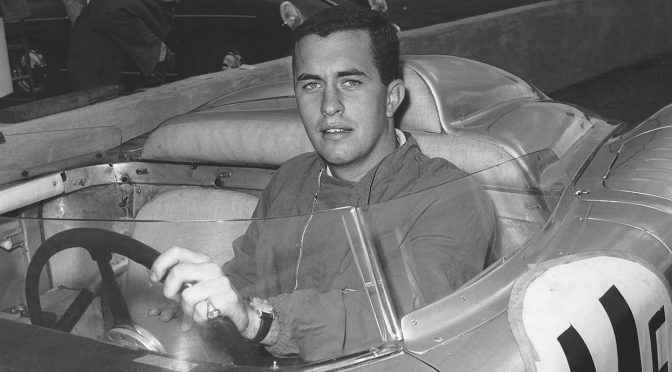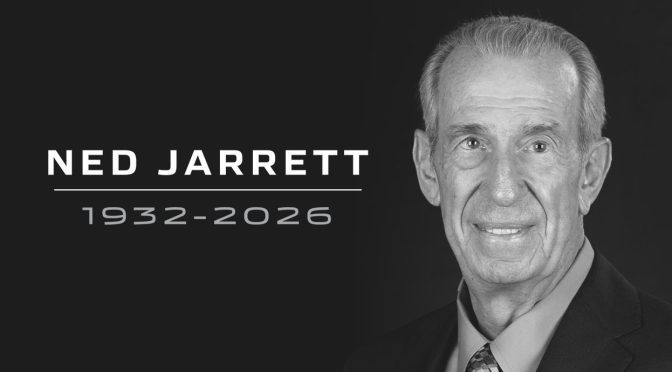
Ned Jarrett, twice a NASCAR premier-series champion as well as a second-year inductee into the NASCAR Hall of Fame and one of the first competitors to make a successful transition from the race car to the television booth, has died. He was 93.

The Jarrett family made the following statement: “With profound sadness, the family of NASCAR Hall of Fame driver and radio/TV personality, Ned Jarrett, announces his passing on Thursday, June 4, 2026. He died peacefully of natural causes at his home in Newton, North Carolina, with his family by his side. He was 93 years old. Our father was a devout Christian and a devoted, loving family man. He was a friend to everyone he met and NASCAR’s oldest living champion. By all accounts, he was a true NASCAR legend. While we mourn his passing, we celebrate the remarkable life of an amazing man and truly the best father anyone could have wished for. Rest in Peace, Dad.”

“Despite his calm demeanor, ‘Gentleman’ Ned Jarrett was as fierce a competitor as NASCAR has ever seen,” NASCAR CEO Steve O’Donnell said in a statement. “His on-track accomplishments speak for themselves with wins and championships across several NASCAR divisions. But it was his off-the-track persona that separated Ned from his peers. He was as kind as his nickname indicated. And his endearing personality helped him excel in his second career as a broadcaster. Ned was an outstanding ambassador for the sport for more than six decades, and he will be dearly missed. On behalf of the France family and all of NASCAR, I offer my deepest condolences to all of Ned’s family and friends on the loss of a NASCAR legend.”

The third driver to win at least 50 NASCAR premier-series races, Jarrett won championships in 1961 and 1965 in what is known today as the NASCAR Cup Series. He is also a two-time Sportsman champion, claiming back-to-back titles in 1957 and ’58 after finishing second to Ralph Earnhardt in ’56.

Jarrett holds the record for the premier series’ largest margin of victory — claiming the 1965 Southern 500 at Darlington Raceway by a whopping 14 laps.

His 50 career wins came in just 352 starts during a career that lasted 13 years, from 1953 through 1966. However, he ran more than half the scheduled races only six times.

In that short span, Jarrett still totaled 185 top-five finishes and 239 top-10 results.

His championships came with two team owners — his ’61 title was won while competing for shipping heir B.G. Holloway, while his ’65 title came with owner Bondy Long.

It was also in ’65 that Jarrett suffered his worst injury in racing — breaking his back in a crash at Greenville-Pickens Speedway.

That injury, and the temporary withdrawal of Ford Motor Company from stock-car racing the next year, hastened Jarrett’s retirement at the age of 34.

“With the help of a lot of good doctors and a lot of people, we were able to keep going and finish out the season and went on to win the championship,” Jarrett said during his NASCAR Hall of Fame acceptance speech in 2011. “I’m very grateful for that.”
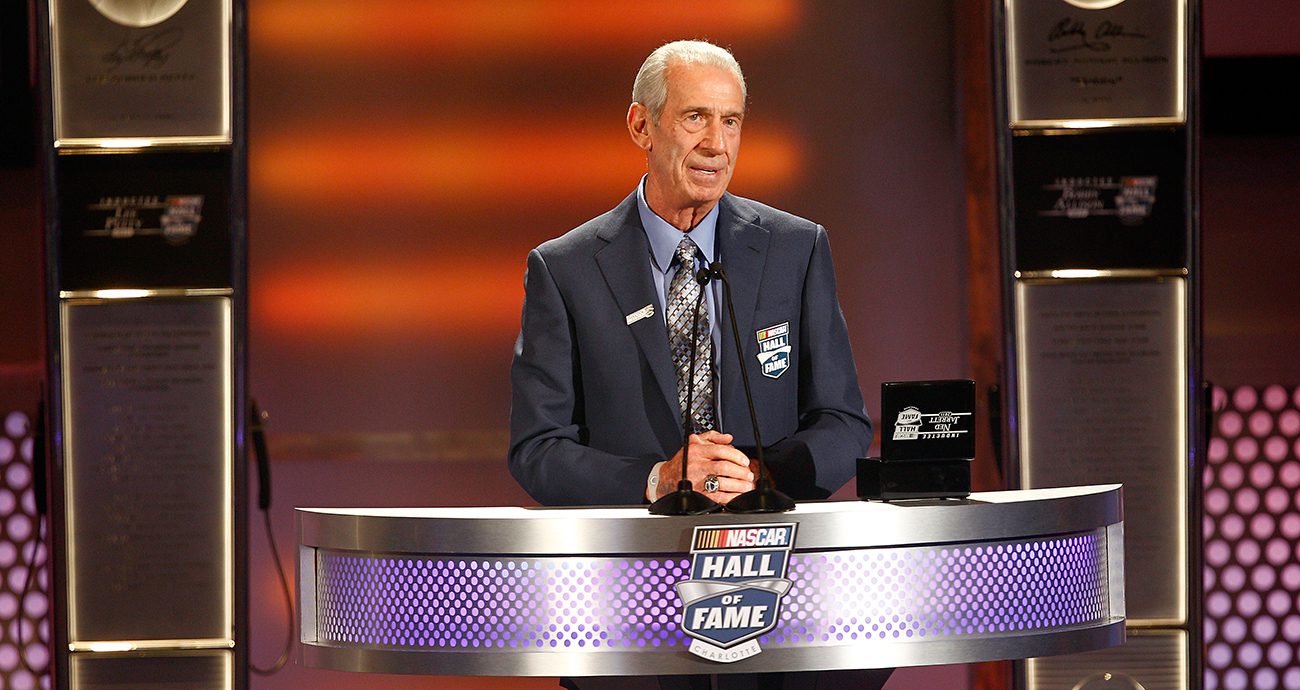
Ned Jarrett talks.
John Harrelson | Getty Images

Jarrett was named one of NASCAR’s 50 greatest drivers in 1998, and his 43 victories in Ford entries remain tops for that manufacturer.

After his retirement from driving, Jarrett quickly became a fan favorite behind the microphone. “Ned Jarrett’s World of Racing,” a daily radio news show, became a staple among those in the sport and those who followed it.

He worked with the Motor Racing Network (MRN) as a pit-road reporter before moving to the television booth, where he enjoyed stints with CBS and ESPN. His call for CBS of the final laps of the 1993 Daytona 500, in which his youngest son, Dale Jarrett, held off (at the time) five-time series champion Dale Earnhardt for the victory, remains one of the most memorable calls in NASCAR.

“C’mon, Dale, go baby, go,” the elder Jarrett said as the final lap unfolded, urging on his son while a national television audience listened in. “… Don’t let him (Earnhardt) get to the inside of you coming around this turn. Here he comes, Earnhardt; it’s the Dale and Dale show as they come off of Turn 4.

“You know who I’m pulling for, it’s Dale Jarrett. Bring her to the inside, Dale, don’t let him get down there. He’s gonna make it! Dale Jarrett’s gonna win the Daytona 500! Alright!”

Ned Jarrett was born Oct. 12, 1932, near Newton, North Carolina, and grew up working on his family’s farm and sawmill. When talk of a new race track, Hickory Speedway, became hot news in the community, Jarrett began making plans to compete when the track held its first premier-series event in 1953.

“I played a little basketball and baseball in high school (and) thought I had some athletic ability,” he said. “When they opened the speedway, I ran the first race they ever run there. I was hooked.”

Racing was little more than a hobby at that time for Jarrett, who said he won half interest in his first race car in a poker game.

When he began running in the Sportsman Series full-time and winning regularly, he started to consider moving up to the premier series, where he could try to race for a living.

When no car owners came calling, however, Jarrett found himself still competing in Sportsman races. After one particularly stressful night, Jarrett said he told others he needed a change. “I need to get in a car that will win a race for me or run up front on a consistent basis,” he said.

What followed remains one of the more interesting stories in NASCAR lore.

After his induction into the NASCAR Hall of Fame in 2011, Jarrett shared the story with members of the media.

“There was a 1957 Ford for sale, being maintained in my hometown,” Jarrett said. “Junior Johnson was winning on a fairly regular basis in that car. They were building Junior a new Dodge to run at Darlington that year, 1959.”

The owners wanted $2,000 for the car. Jarrett didn’t have $2,000, but he did have a plan — which was to write a check for the car after the bank closed on Friday, meaning it would be at least Monday before the money could be drawn out of his account.

“There was a 100-mile race, pays $950 to win Friday night at Myrtle Beach,” he said. “There was another race on Sunday afternoon in Charlotte that pays $950 to win. That’s $1,900. I can cover that check on Monday morning.

“You can’t be foolish enough to try that, but I did. I had no doubt in my mind. I was cocky enough to believe if Junior Johnson could win races in that car, I could, too.”
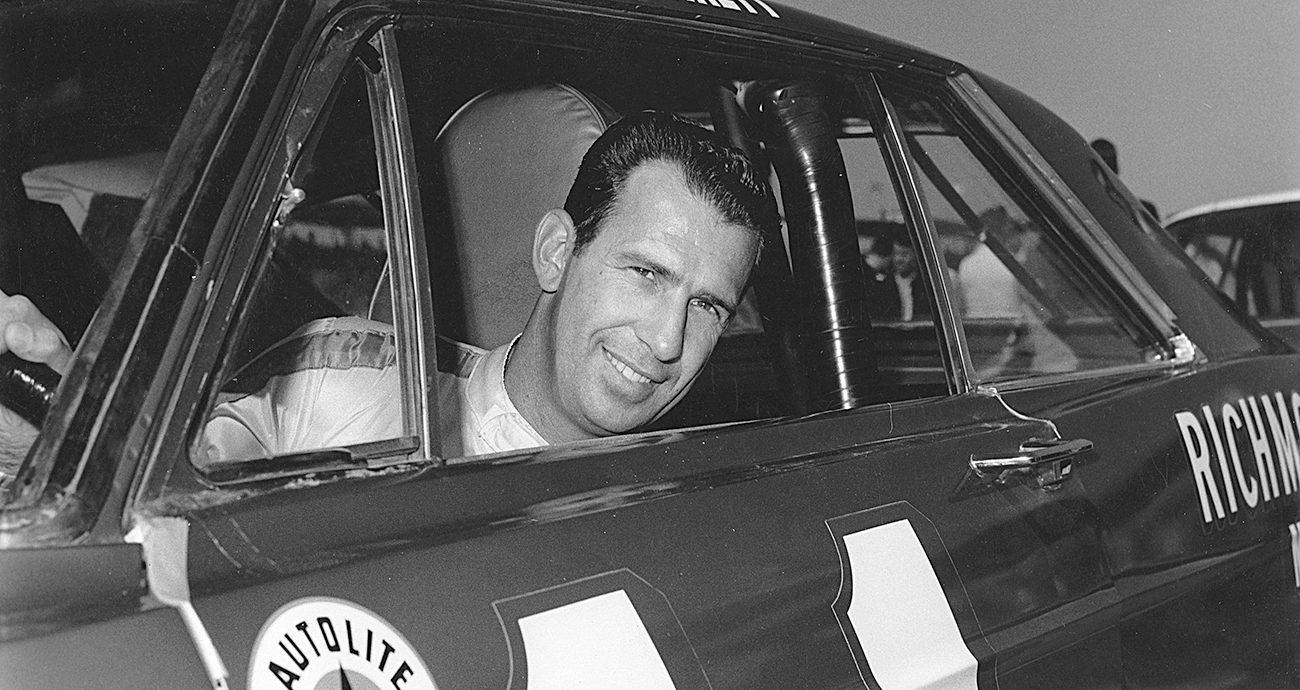
Ned Jarrett looks on.
NASCAR Research & Archives Center | Getty Images

The result was Jarrett’s first two premier-series victories as he won back-to-back events at Rambi Raceway in Myrtle Beach, South Carolina, on Aug. 1 and Southern States Fairgrounds in Charlotte, North Carolina, on Aug. 2.

“We were able to pull it off,” he said. “… That’s what launched me into the Grand National Series.”

Jarrett won five times the following season as he ran 40 of the 44 races on the schedule and finished fifth in the points standings.

In 1961, he hooked up with Holloway and Chevrolet — thanks to a recommendation from 1960 series champion Rex White — and won his first title despite winning only one race. He finished in the top five in 23 of his 46 starts, outpointing White for the title.

Jarrett won a career-best 15 races driving for Long in 1964 but finished second to Richard Petty in the battle for the championship.

In the ’64 running of the World 600 at Charlotte Motor Speedway, Jarrett helped pull a critically injured Fireball Roberts from his burning car after a crash. Roberts suffered third-degree burns, while Jarrett was treated for minor burns.

Roberts, one of NASCAR’s first superstars, died two months later while still being treated for his injuries.

The ’65 season saw Jarrett win 13 more times and capture his second series title. Included in his victories was the stunning 14-lap winning margin at Darlington. He made his final start the following year, finishing third in Rockingham while driving for Long.

Besides a driving and broadcasting career, Jarrett also took a turn as a track promoter, running Hickory Speedway from 1968 through 1977. He was named Promoter of the Year twice for his efforts.

All three of Jarrett’s children — sons Dale and Glenn and daughter Patti — have NASCAR ties.

Dale Jarrett won the NASCAR premier-series title in 1999 and retired with 32 career victories. He was inducted into the NASCAR Hall of Fame in 2014.

Glenn Jarrett competed in both the Cup Series and NASCAR O’Reilly Auto Parts Series before embarking on his own broadcasting career, while his daughter, Patti Makar, is married to Jimmy Makar, who was the Senior Vice President of Racing Operations for Joe Gibbs Racing.

Ned Jarrett was preceded in death by Martha, his wife of 67 years, on Feb. 5, 2023.

In January of 1963, Ned Jarrett spoke to the Associated Press about the business of running a race team, its pitfalls as well as its advantages.

“There’s very little glamour in this business of stock-car racing,” Jarrett said at the time. “It is hard work. To make money in it, you’ve got to run your team like you would any other business.

“You’ve got to match dollars that go out with dollars that come in. You can’t live on fame.”
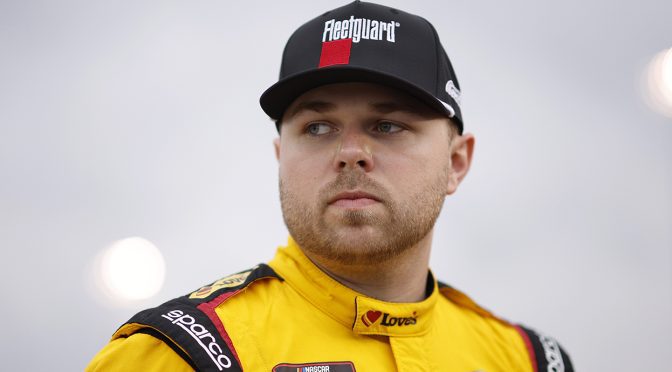
Eleven races into the 2026 NASCAR Craftsman Truck Series season, Layne Riggs has emerged as the hottest driver at the level. The pilot of the No. 34 Front Row Motorsports Ford leads full-timers in virtually every category: laps led (200), stage points (120), wins (3) and most importantly, points after surpassing Kaden Honeycutt last weekend at Nashville Superspeedway.

As one of the top prospects to eventually make the jump to the Cup Series, the 23-year-old will be a part of the Silly Season rumor mill as he continues to visit Victory Lane.

Speaking to the media over Zoom on Tuesday, Riggs explained that his current success — as well as active Cup drivers who had Truck Series success — are giving him optimism that a call-up could be inevitable.

RELATED: Layne Riggs driver page | Truck standings

“It gives me confidence that I’m going to have an opportunity in the future,” Riggs said. “Not just from Corey (Heim), but you look at Zane (Smith), you look at (Carson) Hocevar, you look at a lot of other guys that went straight from Trucks to Cup, I feel like that’s a common path nowadays. It seems like when you do get to a national level, you either go straight to Trucks and then you go to Cup, or you go straight to the O’Reilly (Auto Parts) Series and then go to Cup. I have the confidence that I’m going to be there one day. I’m waiting for that right opportunity whenever it becomes available, but I do feel like that will be the inevitable if I keep staying on track at the performance that I have now.”

Patience has been key for Riggs in his national series career so far. It took 23 starts and missing the playoffs in 2024 before he scored his first Truck Series triumph at The Milwaukee Mile. Riggs is on a current run of eight wins across the last 43 events.

But moving up the national series ladder is easier said than done, regardless of the resume built.

Heim, who won 12 Truck Series races and the series championship last year, is on a part-time schedule in 2026 but will run full-time at the Cup level for 23XI Racing in 2027.

And when getting to Cup, can the accolades translate against the best the sport has to offer? That mountain is even steeper to ascend.

As an example, Riggs mentioned rookie Connor Zilisch and how the phenom is struggling to put together consistent runs in his maiden campaign at the top level, despite dominating the O’Reilly Series a year ago.

MORE: Michigan weekend schedule

“You have to race Cup to learn how to run a Cup car,” Riggs said. “You look at the tough start that Connor Zilisch has had this year and every driver that starts in the Cup Series, their rookie year is usually pretty rough. I think that waiting for the right opportunity that comes when the timing is right. I feel like if it’s a rushed opportunity to do so or something that I’m not really comfortable with, or the teams really aren’t set up to be ready to have me yet, I would rather just stay where I’m at, develop a little bit more and wait until that opportunity and timing is right.

“I would be fine with running eight years in the Truck Series and then having a 15-year-long Cup career. That sounds like a lot of fun. But just with the way timing works out, you can’t stay but so long or you kind of get stuck. I think it’s easy for drivers to get stuck in a series and get labeled as ‘you’re this series guy’, ‘you’re a Truck guy’ or ‘you’re an O’Reilly guy.’ The prospects aren’t really looking for you anymore as a guy that wants to move up.”

As the Truck Series heads to Michigan International Speedway on Saturday (1:30 p.m. ET, FS1, NRN Radio, SiriusXM NASCAR Radio), Riggs is eyeing to become the first Ford driver in the Truck Series to win three races in a row since Greg Biffle in 2000.

The second-generation driver is going to keep making waves moving forward, but Riggs says there’s no added pressure.

“I think that our results recently just kind of speak for themselves of the performance we have,” he said. “I want to move up, but I want the opportunity to be right so just waiting for that, and trying to make sure I do all I can in this series that I’m in and focus on that, and hopefully the rest will take care of itself.”

Editor’s Note: Keep tabs on this page for lineup advice following qualifying, including changes you should consider.

The 2026 Cup Series season has belonged to Toyota through 14 races, as 23XI Racing and Joe Gibbs Racing have combined to win eight times. Chevrolet and Ford will put added emphasis on strong performances this weekend at Michigan International Speedway, with both OEMs’ headquarters nearby. It’s an opportune race for Ford, which has won nine of the past 11 Michigan races, though five of those were delivered by the retired Kevin Harvick.

Also returning to Fastlane this year is my weekly NASCAR 36 for 36 pick, where you can play along. It’s a season-long points battle introduced in 2024 where strategy is the primary emphasis. With 36 chartered cars and 36 races on the 2026 schedule, players can choose each car once for the duration of the season.

RELATED: NASCAR Fantasy Live hub | Play 36 for 36

MUST START

Driver: Denny Hamlin, No. 11 Joe Gibbs Racing Toyota
Selections remaining: 3
Comment: Past the halfway point of the regular season, it’s time to get creative with lineups. I’ll have to bite the bullet here with Hamlin, who has eight straight top-10 finishes at Michigan — the longest active streak. He has an average finish of 4.0 in four Next Gen starts — the best among active drivers.

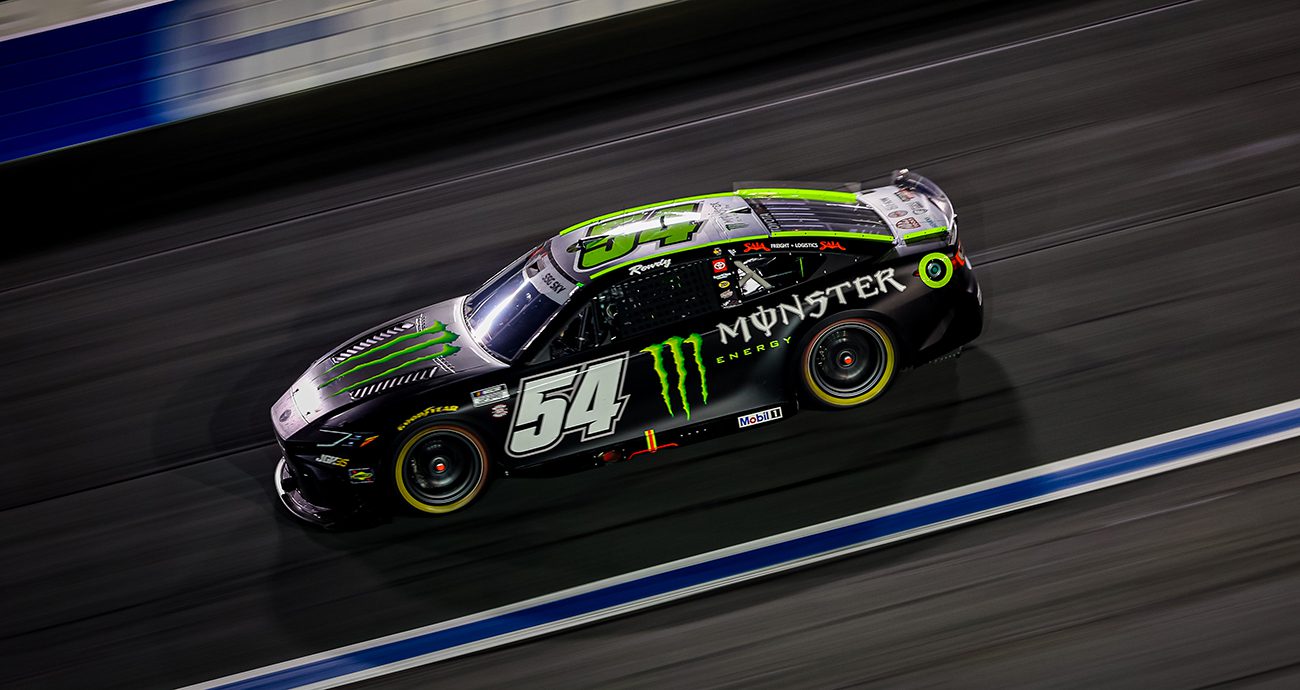
Driver: Ty Gibbs, No. 54 Joe Gibbs Racing Toyota
Selections remaining: 9
Comment: Gibbs excels at venues where the throttle is hammered down, and that sums up Michigan precisely. The No. 54 team has consecutive third-place finishes here, and Gibbs has never placed worse than 11th in four starts. His 6.8 average finish ranks as his best at any track.

Driver: Kyle Larson, No. 5 Hendrick Motorsports Chevrolet
Selections remaining: 5
Comment: Larson won three consecutive Michigan races during the 2016 and 2017 seasons. He has also cracked the top 10 in five of his last six MIS starts, with two of those being third-place efforts. Maybe this is the week the two-time Cup champion snaps his 38-race winless drought.

ty gibb
David Jensen | Getty Images

DRIVERS TO AVOID

Driver: Tyler Reddick, No. 45 23XI Racing Toyota
Selections remaining: 4
Comment: Winner of five events already in 2026, Reddick has been the class of the field and has yet to finish outside the top 15. Sure, he won at Michigan in 2024, but that’s his lone result better than 13th in seven starts. Reddick has an average finish of 20.6 at Michigan, his worst among active non-drafting circuits.

Driver: Christopher Bell, No. 20 Joe Gibbs Racing Toyota
Selections remaining: 5
Comment: Coming off the heartbreak of losing to Hamlin on the final lap at Nashville Superspeedway, Bell probably isn’t thrilled that a visit to Michigan is on the horizon. It’s his only active track without a top 10, as he has a best effort of 13th three times in seven starts. Like Reddick, his 19.0 average finish is his worst among active non-drafting tracks.

tyler reddick
Sean Gardner | Getty Images

SLEEPERS OF THE WEEK

Driver: Chris Buescher, No. 17 RFK Racing Ford
Selections remaining: 7
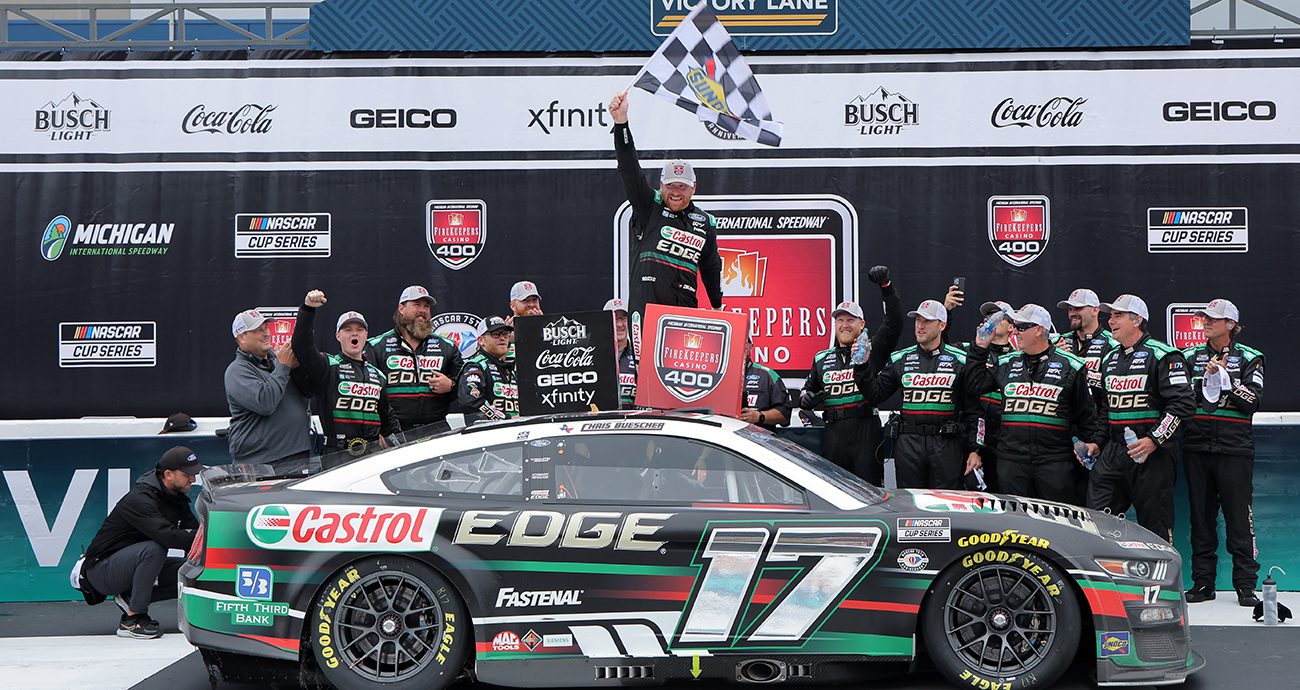
Comment: Since winning at Michigan in 2023, Buescher has remained red-hot in Ford’s backyard. He has three consecutive finishes of sixth or better here, with two of those being in the top two positions.

Driver: Zane Smith, No. 38 Front Row Motorsports Ford
Selections remaining: 10
Comment: Smith continues to impress in 2026, earning top 10s in the last two races. Michigan happens to be his best track on the schedule through two starts, as he has taken the checkered flag in seventh both times.

chris buescher wins michigan in 2023
Jonathan Bachman | Getty Images

FEATURED MATCHUPS

Denny Hamlin vs. Tyler Reddick
Pick: Hamlin
Comment: Owner and driver have ruled the series in 2026, separating themselves from third-place Ryan Blaney in the championship standings. Hamlin gets the leg up in this duel, as his recent Michigan track record is unmatched, and he enters as the defending race winner. Unlike his 2026 numbers, Reddick has been inconsistent in the Great Lakes State.

Chris Buescher vs. Ty Gibbs
Pick: Gibbs
Comment: With a pair of third-place finishes in the last two Michigan events, Gibbs has made that Toyota horsepower sing in enemy territory. Buescher finished runner-up last year and led Ford in two of the last three Michigan events. Gibbs still gets my vote.

Brad Keselowski vs. Ross Chastain
Pick: Keselowski
Comment: Chastain’s spring slump has been one to forget for the No. 1 bunch, as he has just two finishes better than 16th all season and has fallen to 26th in points. Hometown favorite Keselowski has long excelled at MIS and hopes to replicate the Wolverines’ March Madness title run.

Carson Hocevar vs. Bubba Wallace
Pick: Hocevar
Comment: Wallace has slid to 15th in the standings, losing 258 points to the championship lead over the last nine events with five finishes of 29th or worse. Michigan has been kind to the No. 23 team recently, with a pair of top fives in the last four races. Hocevar has plenty of speed, however, and is another local favorite looking to earn a signature victory.

MY LINEUP

Starting five: Kyle Larson, Ty Gibbs, Chris Buescher, Chase Elliott, Bubba Wallace.
Garage pick: Carson Hocevar.

36 FOR 36

Pick: Zane Smith, No. 38 Front Row Motorsports Ford
Comment: Smith and the No. 38 team are warming up, banking a pair of top 10s in the last two races. Between the Coca-Cola 600 and Nashville, Smith has paced the field for 49 laps after leading 41 laps total in his prior 91 Cup attempts. His 7.0 average finish at Michigan is his best among all tracks.

The list of drivers who have carried Team Penske colors across the years could fill a motorsports hall of fame. To name only a handful: Rusty Wallace, Rick Mears, Mark Donohue, Will Power, Joey Logano, Hélio Castroneves, Brad Keselowski, Josef Newgarden and Ryan Blaney.

Anywhere Roger Penske’s name is spoken in the motorsports world, from one series to another and across oceans, star-class drivers are part of the conversation. Their success is celebrated in racing museums across the country and at Team Penske’s North Carolina headquarters, and their names are scattered across a library of record books.

The name that is missing from the grand list of career-long Penske drivers? Roger Penske.

Before he became a global motorsports success story and the leader of an extensive network of businesses employing more than 73,000 people, Penske was a respected, on-the-rise race car driver. Had he stayed on that path, many believe, he could have put his name alongside the great drivers of his era.

RELATED: All of Team Penske’s wins by driver | All of Team Penske’s Cup Series wins

Instead, Penske took a detour into business and a highly successful second career as a racing team owner. The sensational results of that choice make clear it was the right move, but questions nevertheless remain about the other road and the racing lanes he could have taken.

“He would have been one of the all-time great drivers,” said Walt Czarnecki, a Penske lieutenant for decades. “One thing that has always caught my attention when I’m listening to him on the spotter stand is that he can talk to the drivers as if he’s in the car. There’s a video around of him driving at Road America, and he’s commenting on the lap, talking about what he’s doing in this corner and that corner.”

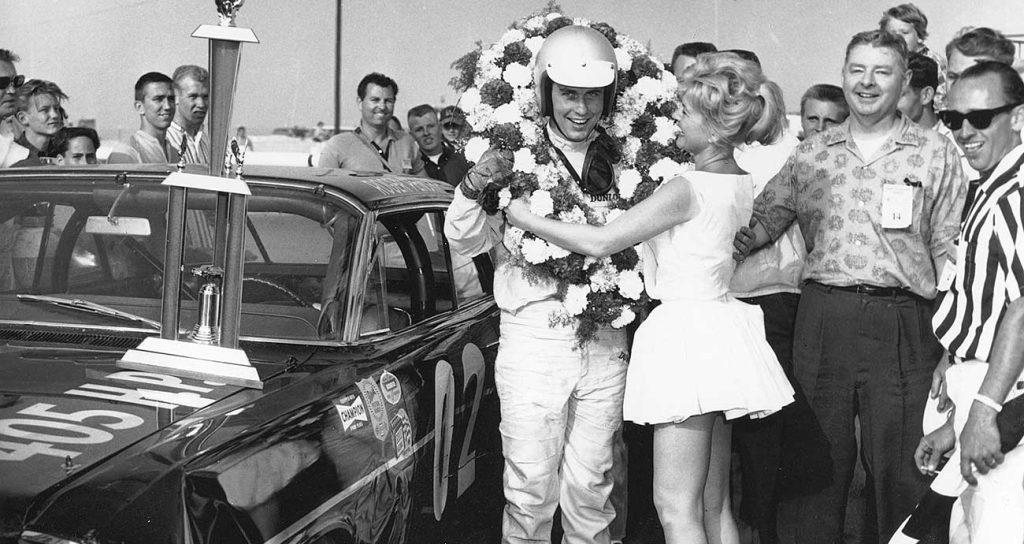
In 1958, Penske, then 21 years old, began driving in Sports Car Club of America events. Smart, handsome and a quick study, he picked up the finer points of racing in a hurry and became a spotlighted driver at virtually every event. In 1961, he won the SCCA National D Modified championship and was named SCCA Driver of the Year by Sports Illustrated magazine. A year later, he scored a United States Auto Club championship and won Driver of the Year honors from The New York Times. In 1963, he won a NASCAR Pacific Coast Late Model race at Riverside International Raceway in California.

Roger Penske celebrates his only major stock-car win as he drove a Pontiac to victory in the NASCAR Pacific Coast Series race at Riverside International Raceway in 1963.
A victorious Roger Penske at Riverside in 1963. (NASCAR Research & Archives Center | Getty Images)

Penske seemed to be on an upward trajectory as a driver, but he faced a difficult decision. He had big ambitions in the automotive and business world, and he realized he couldn’t take both roads. In an interview with the NASCAR Hall of Fame, which he entered in 2019, Penske said, “I had to make a decision that was either going to be stay as a race driver or be in business. And I had an opportunity to go to work for a Chevrolet dealer in Philadelphia, George McKean. When I went there, I said, ‘Look, I’d like to own this business in a couple of years.’ And I knew at the time that would take place, I’d have to make that decision.”

With financial help from his father, Penske bought the Philadelphia dealership in 1965, and was off and running. Just not on a track.

He jumped back into racing from the ownership side, building a many-pronged organization that has garnered 48 national championships and scored almost 700 race victories. The Team Penske trophy cases bulge.

Could he have filled some himself?

“He definitely understands how to drive a car,” said Keselowski, who drove in NASCAR for Penske from 2009 to 2021, winning the organization’s first Cup Series championship in 2012. “I remember one race at California when I slid through my pit box. I had a call from him a couple of days later. He said it looked like I had too much front brake in the car. I was like, ‘That was it.’

“I sense from him that his motorsports driving career was something that he really enjoyed. He was hesitant to give up on it, but he was doing the best he could for his family. He had an opportunity in business outside of it, so I respect him for making that move.”

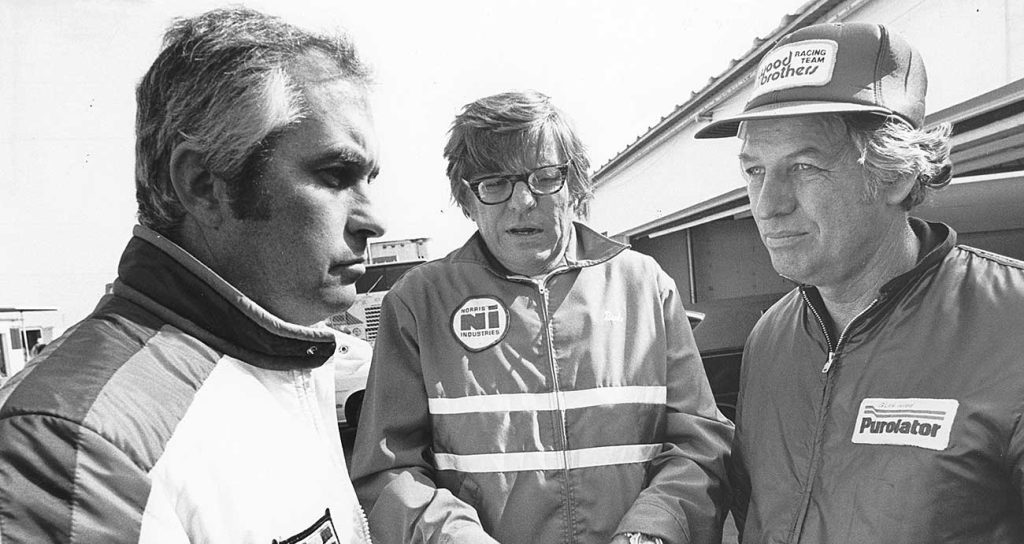
A 1976 meeting of team-owner giants (from left) Roger Penske, Bud Moore and Glen Wood in the NASCAR garage.
A 1976 meeting of team-owner giants (from left) Roger Penske, Bud Moore and Glen Wood in the NASCAR garage. (NASCAR Research & Archives Center | Getty Images)

Logano, whose stagnant career flourished when he arrived at Team Penske in 2013, said he benefited from driving advice from the boss.

“There was a lot of coaching, especially when I started, and it was awesome,” Logano said. “He was a really good race car driver. He would say, ‘You do a floater into a corner.’ Or maybe, ‘Try some different things here and there.’ It wasn’t the same every week, but it was pretty specific a lot of times.”

After giving up driving, Penske attracted some of the world’s best drivers to his surging organization, and his business successes expanded into track ownership and operations. His portfolio included Michigan International Speedway, site of this weekend’s Cup Series race, and Auto Club Speedway. He now owns Indianapolis Motor Speedway, a Penske mecca and the place where his teams have won 20 Indianapolis 500s.

MORE: NASCAR Hall’s Team Penske 60 exhibit

Team Penske’s many accomplishments across 60 years are being celebrated this year with an exhibit at the NASCAR Hall of Fame. The exhibit includes numerous artifacts and race cars, including the 1996 Ford driven by Rusty Wallace, the first Cup Series car developed by the team.

Wallace, the driver who played a major role in solidifying Penske’s success in NASCAR, said the team built a replica of the Pontiac, numbered 02, that Penske drove to victory at Riverside, California, to honor that long-ago accomplishment.

“He never talked much about driving, but when you start researching what he’s done, holy cow, he was good, a damn good driver,” Wallace said.

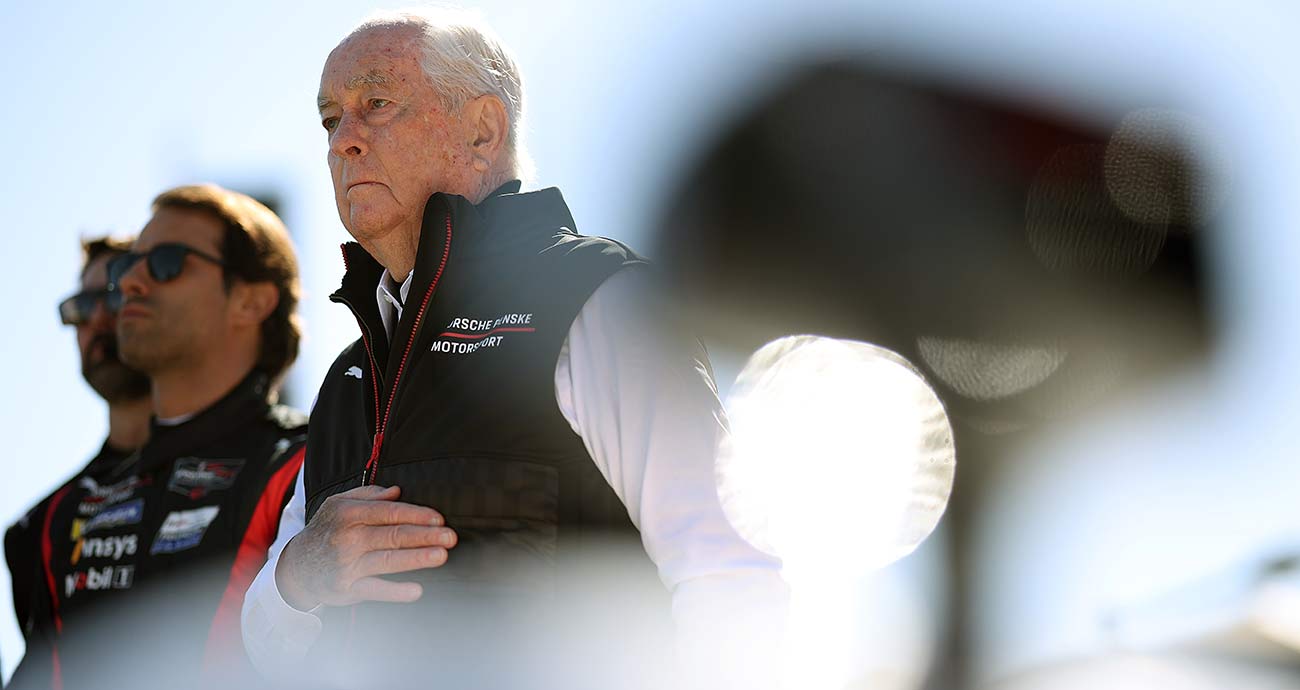
Roger Penske stands on Daytona International Speedway's pit road for pre-race ceremonies at the Rolex 24 in 2025.
Roger Penske stands on Daytona International Speedway’s pit road for pre-race ceremonies at the Rolex 24 in 2025. (James Gilbert | Getty Images)

The two season-long NASCAR Cup Series championship leaders, Tyler Reddick and Denny Hamlin arrive at Michigan International Speedway for Sunday’s FireKeepers Casino 400 (3 p.m. ET, Prime Video, HBO Max, MRN Radio, SiriusXM NASCAR Radio) as the last two race winners at the two-mile track.

Hamlin, the defending race winner and driver of the No. 11 Joe Gibbs Racing Toyota, shows up in Michigan’s scenic Irish Hills fresh off a hard-fought victory last weekend in Nashville. His series’ best 756 laps led are a career-high for him through the opening 14 races. He is seventh all-time in multi-win seasons (15). And, he is on a streak of eight top-10 finishes at Michigan.

RELATED: Cup Series standings | Michigan weekend schedule

Reddick, driver of the No. 45 23XI Racing Toyota – co-owned by Hamlin and NBA great Michael Jordan – climbs into his cockpit not only as the 2024 Michigan winner but the absolute most dominant driver of the 2026 season; his five wins through the opening 13 races have put him a remarkable 97-points ahead of Hamlin in the standings.

It’s the first time since April that Reddick, who won the first three races including the Daytona 500, has led the championship by less than 100 points, and remains the only driver to lead the championship in 2026. Only upcoming NASCAR Hall of Fame inductee Jeff Burton (17) has had more consecutive top-15 finishes to start a season than Reddick, whose 5.57 average finish ties Richard Petty for the seventh best mark all-time through 14 races.

Even though Hamlin and Reddick have established this impressive run atop the standings and statistics, Michigan has been a Ford track historically. In just the last decade, Ford won nine races consecutively before Reddick’s 2024 win.

A victory this weekend would go a long way for the blue oval, which has celebrated only one points-paying trophy hoist this year – Ryan Blaney’s victory at Phoenix back in March for Team Penske.

To his credit, the 2024 NASCAR Cup Series champion Blaney is doing his best to keep Reddick and Hamlin honest. He sits third in the points, but is an incredible 174 points off Reddick’s total. He is responsible for the last five Ford victories, dating back to last season.

Ford is the all-time winningest manufacturer at Michigan with 44 wins – 18 more than Chevrolet and 37 more than Toyota.

Of Ford’s nine most recent wins at Michigan, retired driver and upcoming NASCAR Hall of Fame inductee Kevin Harvick owns five of them, and his NASCAR on FOX broadcast partner, driver Clint Bowyer, owns another. Blaney (2021), his Penske teammate Joey Logano (2019) and RFK Racing driver Chris Buescher (2023) fill out the recent Ford Michigan winners list.

For both Logano and Buescher – Logano especially – a win this week would go a long way to righting an uncharacteristically slow start to the season. Logano’s three Michigan wins are tied for most among active drivers, and the RFK organization, which Buescher drives for, leads all teams historically with 14 victories.

Buescher is ranked eighth in the championship standings with six top-10s. RFK owner-driver – and Michigan-native – Brad Keselowski is 13th in the championship, and his three Michigan runner-up finishes are the most for a driver without a win at the track.

Just past the regular season halfway mark, Team Penske driver Austin Cindric is holding onto that 16th position in the standings – the final transfer spot into The Chase. He holds a two-point edge on RFK’s Ryan Preece and is nine points up on 18th-place Logano.

MORE: Recap last year’s race

“I feel like those guys have had some pretty big misfortunes this year that has kind of put them where they are at,” the driver of the No. 12 Team Penske Ford, Blaney, said of his teammates Cindric and Logano. “I think they’ve run a lot better than what it’s showing in the points.

“I know Joey and Austin are doing a really good job of trying to utilize everything they can week in and week out. I just feel like they run into some problems that really aren’t what they’re doing. And it’s really stuck.

“And I’ve been there before, and it just kind of seems like nothing’s going your way, and those guys are kind of in that right now. But I think they’re working hard to get where they need to be, and, like I said, I think the mood is pretty good.”

Saturday’s practice (5 p.m. ET) for the FireKeepers Casino 400, followed immediately by Busch Light Pole Qualifying (6:10 p.m. ET), will both be broadcast on Prime Video, MRN Radio and SiriusXM NASCAR Radio. JGR’s Chase Briscoe is the defending pole-winner.

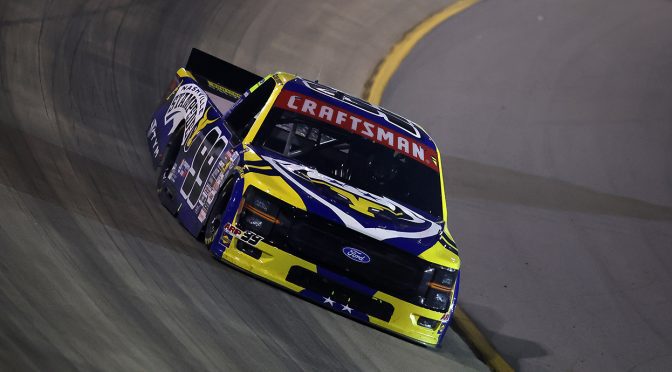
The No. 99 ThorSport Racing team in the NASCAR Craftsman Truck Series was penalized following last weekend’s race at Nashville Superspeedway.

Jackman Evan Clay and rear tire changer Pedro Martinez have been suspended for the next two points races through Naval Base Coronado after a wheel came off driver Ben Rhodes’ truck during the final stage at the 1.33-mile concrete oval near Music City. The loose wheel is a safety violation noted in Sections 8.8.10.4A and 10.5.2.5D of the NASCAR Rule Book.

RELATED: Michigan schedule | Truck Series standings

Per the NASCAR roster portal, Jabari Carney will serve as jackman for Saturday’s race at Michigan International Speedway (1:30 p.m. ET, FS1, MRN Radio, SiriusXM NASCAR Radio), while Matt Kurinyj will sub in as rear tire changer.

Rhodes currently sits seventh in points, 52 markers ahead of the Chase cutline.

In racing, consistency has a habit of leading directly to championships.

Several of the NASCAR Cup Series’ top stars through the years have proven that sentiment. Benny Parsons and Matt Kenseth both won Cup Series titles with just one win but relied on incredible consistency to outclass the competition.

With that in mind, Austin Beers and the KLM Motorsports team have taken the consistent approach to a completely different level on the NASCAR Whelen Modified Tour.

RELATED: Everything to know before Saturday’s Mod Tour race at Oxford Plains

Beers and KLM Motorsports have finished in the top 10 in 35 consecutive Modified Tour races. His last finish outside the top 10 was a 26th-place run at Richmond Raceway in 2024, which was the result of a crash.

That consistency helped carry Beers and KLM Motorsports to the Modified Tour championship last year; the team won twice while securing 12 top-five and 16 top-10 finishes across 16 races.

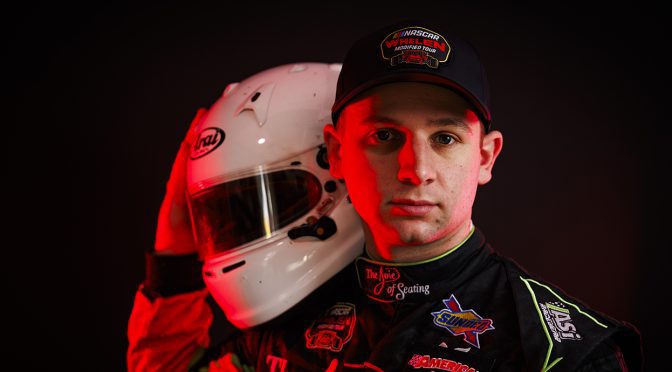
Austin Beers
Austin Beers has finished in the top 10 in more than 70 percent of his NASCAR Whelen Modified Tour starts. (Photo: Ted Malinowski/NASCAR)

In fact, in 75 Modified Tour starts to date, Beers has finished outside the top 10 in just 16 events. That means he’s finished in the top 10 in an astounding 78.66 percent of all Modified Tour races he’s run.

Beers is once again off to a consistent start to the Modified Tour season. Through five events, he has three top-five and five top-10 finishes with a worst finish of seventh, which came last Saturday night at New York’s Riverhead Raceway.

That’s all fine and dandy, but Beers and KLM Motorsports don’t enter races to finish in the top 10. The goal is to win, and Beers hopes to get back to his winning ways during Saturday’s All States Materials Group 150 at Oxford Plains Speedway (6:15 p.m. ET on FloRacing).

“The streak is definitely cool and a good stat to have. It shows the consistency our team brings every time we touch the race track,” Beers said. “With the being said we come to the track to win, and we want to start doing that again.”

35 years later, the Modified Tour is back at Oxford Plains

It’s been a long wait, but this Saturday, the Modified Tour returns to one of the tracks that appeared on the inaugural Tour schedule in 1985.

Oxford Plains Speedway, located in Oxford, Maine, has a long and storied racing history that dates back to 1950. The track opened as a half-mile dirt track but eventually evolved into the current 0.375-mile asphalt oval we see today.

The track is perhaps best known for the popular Oxford 250, a marquee late model race that has been won by drivers like Kyle Busch, Geoff Bodine and Kevin Harvick.

The Modified Tour made its debut at the track during the Tour’s inaugural season in 1985, with Richie Evans earning his final series victory prior to his passing in a crash at Martinsville Speedway a few weeks later.

Jimmy Spencer won the next two Modified Tour events at the track, with Mike McLaughlin and Jeff Fuller also collecting victories. Fuller’s triumph, which came in 1991, is the most recent stop by the Modified Tour at Oxford Plains Speedway.

Anthony Nocella
Anthony Nocella has won multiple races at Oxford Plains Speedway during his career, which could give him an edge ahead of Saturday’s NASCAR Whelen Modified Tour event. (Photo: Adam Glanzman/NASCAR)

Hirschman, McKennedy and Nocella have an Oxford Plains experience edge

Of the drivers entered in Saturday’s All States Materials Group 150 at Oxford Plains Speedway, only a select few have ever turned laps at the historic race track.

The three with the most experience are undoubtably Matt Hirschman, Jon McKennedy and Anthony Nocella.

Hirschman, a 10-time Modified Tour winner, has visited Victory Lane at Oxford Plains as recently as 2019, when he won a Modified event that also featured drivers like Ronnie Williams, Andy Jankowiak, Ron Silk, Woody Pitkat and Matt Swanson.

McKennedy has multiple Supermodified triumphs at Oxford Plains Speedway, with his most recent coming during the 2024 season.

Nocella, a part-time Modified Tour competitor, is a victor in both a Midget and a Modified at Oxford Plains Speedway. His most recent Oxford Plains win came in 2021.

With 14 races in the books already, the 2026 NASCAR Cup Series season is already past the midway point of the regular season, and the final stretch before the Chase field is finalized is fast approaching.

That means it’s the moment in the schedule when teams start to find out who they really are, for better or for worse. A recent upward trend now could carry a driver from decent to great, as we saw just last season with Chase Briscoe’s midseason improvement starting around May and propelling him all the way to the Championship 4. A poorly-timed downturn, on the other hand, could unravel an otherwise strong start to the year.

RELATED: Cup Series standings

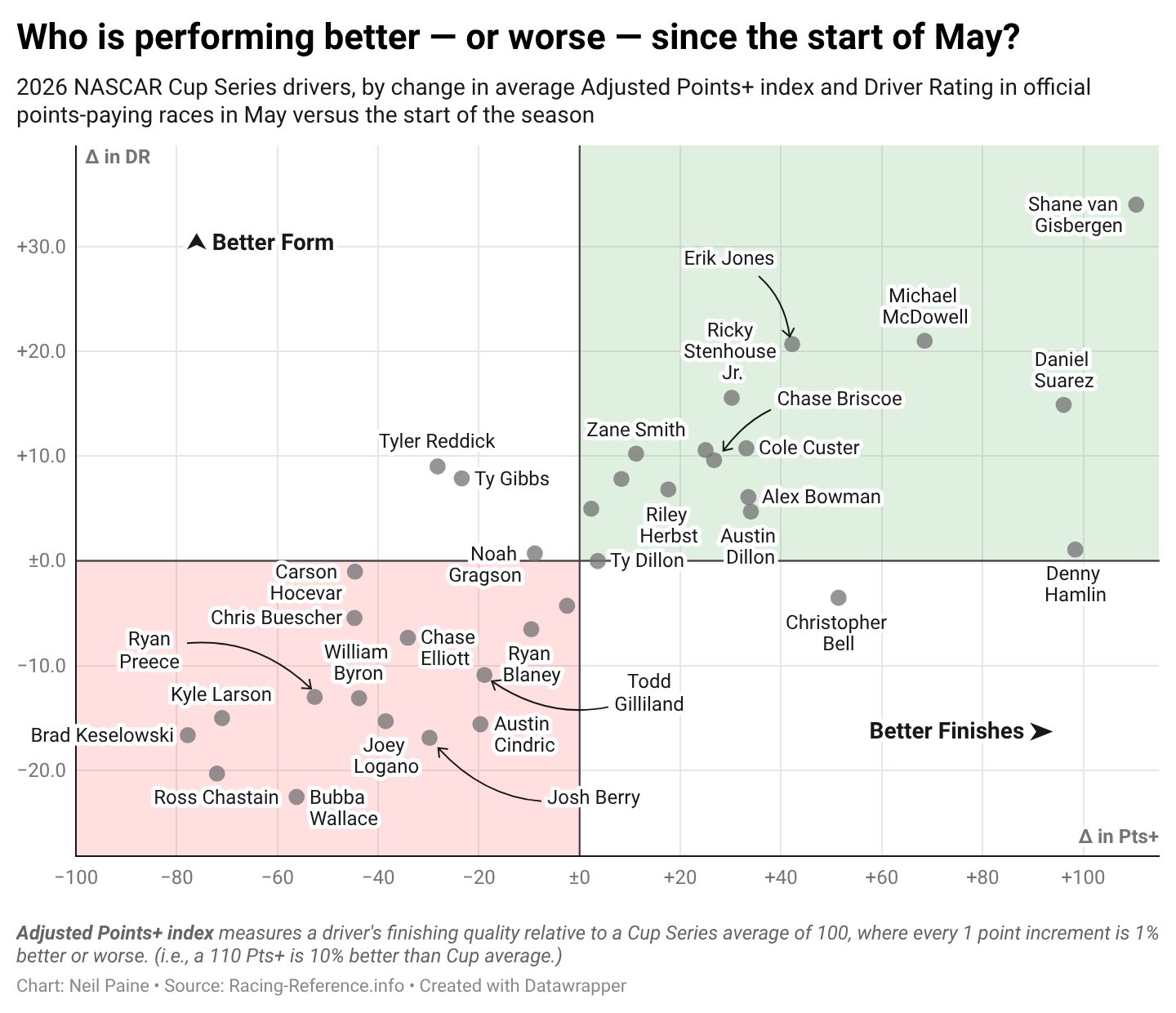
So let’s dig into which drivers have been trending up or down over the past month of points-paying races. First, here’s a plot of every Cup regular’s change in both Adjusted Points+ index (which measures finishing quality relative to a Cup average of 100) and Driver Rating (which measures mid-race speed and dominance in addition to finishes) since the start of May, relative to their performance in the ’26 campaign leading up to May 1:

A graphic depicting driver performance metrics.

Drivers in the top-right (green) quadrant are finishing better, with better underlying speed and race-long performance as well. Drivers on the bottom-left (in red) are doing worse in both regards. And the rest have mixed results, most likely due to mismatched finishing luck.

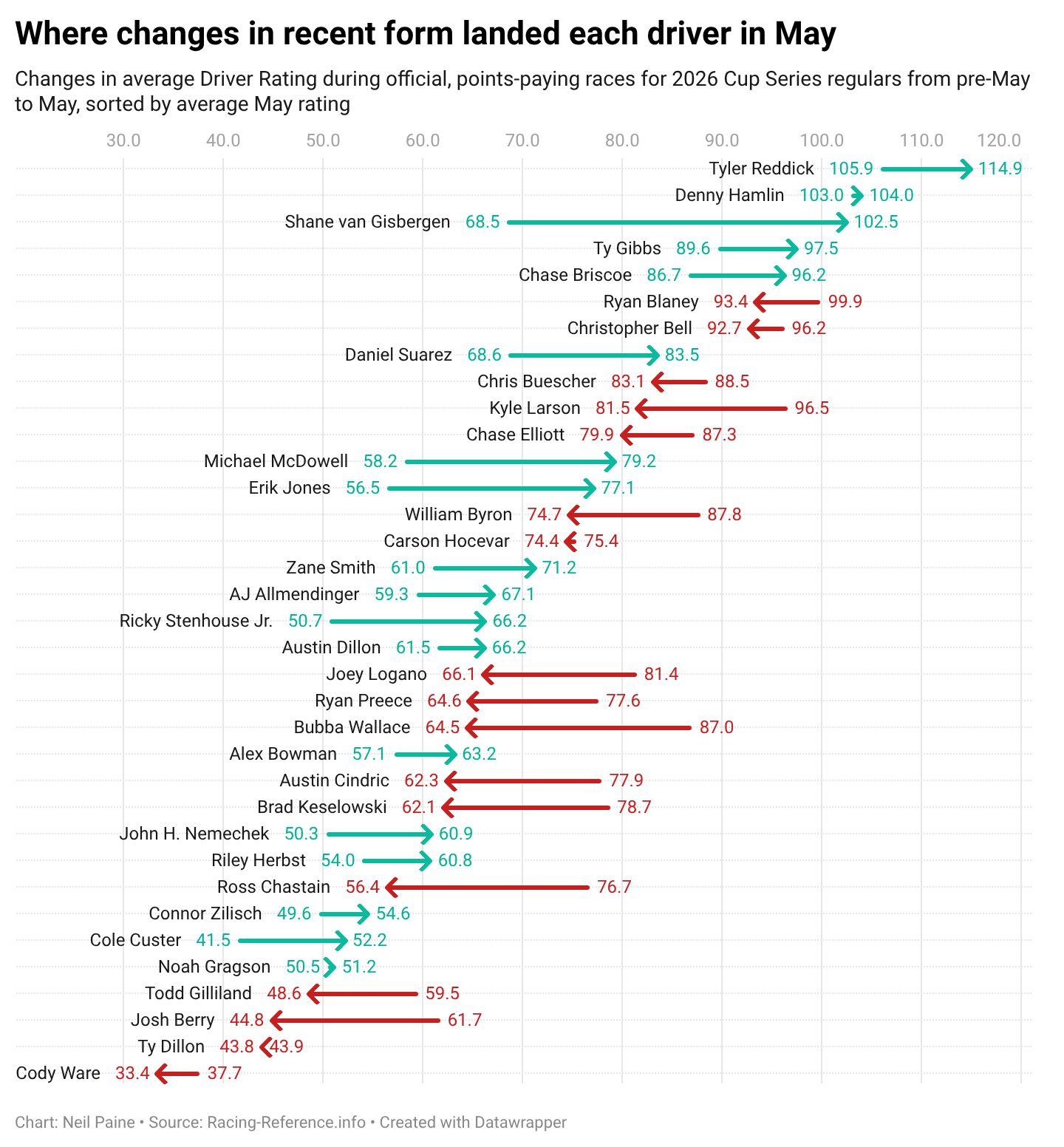
Tyler Reddick, for instance, is on less of a race-closing heater than he was when he won five of the season’s first nine races, but his underlying form might actually be better! (His average Driver Rating over the past month is actually up nine points despite zero wins in May.) Conversely, Christopher Bell is holding fairly steady in the rating department — 92.7 May rating versus 96.2 beforehand — but he has a much higher rate of top fives and top-10s, indicating that his finishes are simply catching up to the quality of drives he’s had all along. 

For everyone else, let’s dive into the five most (and least) improved drivers by the numbers over the past month.

Trending Up

1. Shane van Gisbergen: SVG was always going to improve statistically in a month containing a road-course race as May did (with Watkins Glen, which van Gisbergen won via an overwhelming late-race comeback) for the first time since early March. But beyond the right-hand turns, SVG has shown remarkable improvement at a wide range of other tracks, finishing 20th or better in five consecutive races — a stretch that includes a superspeedway and three intermediates. With an average Driver Rating of 98.1 over that span, this is the best five-race stretch of his career containing fewer than three road courses, and his Chase odds are now up to 66%.

2. Michael McDowell: McDowell came on strong at the end of last season, with a handful of top 20s and even a few top 10s, but he started 2026 running mostly in the back half of the field aside from consecutive top-10s at Circuit of The Americas and Phoenix Raceway. In recent weeks, however, he has gotten a lot more speed out of the No. 71 Chevy. Yes, McDowell — like SVG — benefited from another road course, but he also has a pair of consecutive top-15 runs at Charlotte Motor Speedway and Nashville Superspeedway, bringing his May averages up to a 142 Adj. Points+ and a 79.2 Driver Rating after sitting at 73 and 58.2 in those metrics, respectively, before the month began.

3. Daniel Suárez: Suárez’s career seemed to be at a crossroads after a mediocre 2025 with Trackhouse Racing. But after opening the 2026 season — now as a Spire Motorsports pilot — with a series of respectable finishes (two top 10s and a top five) entering May, he turned things way up in the past month. The rain-shortened win at Charlotte was the most memorable run — not least because it was in tribute to his late mentor, Kyle Busch — but he also scored a top 10 at Texas Motor Speedway and led 10 laps at Nashville on Sunday. All of a sudden, Suárez hasn’t finished outside the top 20 in a race since Phoenix on March 8. And, like SVG, those strong recent runs have greatly bolstered Suárez’s Chase chances, which now sit in the high-70 % range.

4. Erik Jones: Leading up to May, Jones seemed content to continue being the definition of a mid-pack driver. (He didn’t finish in any position other than 23rd in the entire month of April.) But something changed starting in Texas, where Jones finished 12th, and that uptick has followed through three more top-20 finishes in a row, including an 11th-place run at Nashville, with a 96.8 Driver Rating that was his best form in a race since a 109.5 at Darlington Raceway last August. Though he’s still waiting to break through with another single-digit finish (it’s been since that third-place Darlington run for one of those as well), Jones’ No. 43 car has been much more competitive.

5. Ricky Stenhouse Jr.: Stenhouse can always be counted on for a strong superspeedway run, and indeed, he’s finished second at Daytona International Speedway and sixth at Talladega Superspeedway in 2026 so far. But his recent oval form has been uncommonly solid as well, with an average finish of 11.7 in his past three intermediate races, capped off by a fourth-place finish at Nashville on Sunday, his best at an intermediate since finishing second at Dover in 2022. Aside from a 31st-place road-course run at The Glen, Stenhouse hasn’t finished any worse than 21st since Martinsville Speedway in late March.

Next up: Cole Custer, John Hunter Nemechek, Chase Briscoe.


Trending Down

1. Ross Chastain: Chastain’s form has been steadily sliding towards Cup-average since his wall-riding breakout of 2022 had him looking like the sport’s next big star. But while he was inconsistent, Chastain began 2026 with flashes of the old form — including a pair of top 10s at EchoPark Speedway and Talladega and additional laps led at Daytona, COTA and Martinsville. Ever since, though, he hasn’t managed any better than a 26th-place run at Texas, with an average finish of 31.3 and a 56.4 average Driver Rating in May. That set of finishes is his worst four-race stretch since October 2018, and it has pushed his Chase odds south of 10%.

2. Brad Keselowski: The top-line numbers for Keselowski’s 2026 (16.1 average finish, 116 Adjusted Points+, 74.0 Driver Rating) look almost identical — if not actually slightly better — than what they were a year ago (18.5, 110, 72.3). But those figures were on track to be much better earlier in the year, when Keselowski had four top 10s in his first nine races and an average rating of 79.8, including three showings at or above 91.0. But he hasn’t recorded a top 10 since Kansas Speedway on April 19, and his rating has dipped to 63.4 over that span. He ought to still make The Chase, but too many more slowdowns like this will make that outcome less certain.

3. Bubba Wallace:
Just like Keselowski, the overall numbers for Bubba this season are almost perfectly in line with his career norms — right down to an average finish (18.4 vs. 18.5) and Driver Rating (80.6 vs. 80.7) within a tenth of a point of last season — but that hides a hot start followed by a recent slump. After finishing 11th or better in seven of the season’s first nine races, Wallace crashed his way to a 36th-place day at Talladega (where he usually runs well) on April 26, starting a stretch of four finishes outside the top 20 in his most recent five races. (The only exception was a 9th-place run at Texas.) Bubba, too, isn’t in terrible Chase shape despite sitting 15th in the standings, but he needs better finishes soon.

4. Kyle Larson:What’s wrong with Kyle Larson?” is a question that’s growing from a whisper to a full-blown storyline as the No. 5 has now failed to find its way to Victory Lane in 38 races and counting. Despite the lack of wins, Larson’s 2026 start wasn’t much of a concern — he had six top 10s in the first nine races of the year, and his two finishes outside the top 30 still carried a Driver Rating at or above 88.0, mainly indicating a luck issue. But since finishing dead-last (40th) at Talladega, Larson has a single finish better than 23rd (fifth place at Charlotte) and a mortal-seeming 75.6 average rating. By Adjusted Points+ index, this is Larson’s worst stretch of five races (70 Pts+) since April 2019.

5. Ryan Preece: As he was establishing himself as one of the best breakout stories of 2025 after a move to RFK Racing, Preece’s hallmark became a downright scary level of consistency: From Kansas in May 2025 through the end of the schedule, he scored 11 top 10s in 25 races, finishing outside the top 21 just three times. Following a 25th-place run at Daytona to open 2026, Preece seemed to continue the same trend, with two top 10s and all top 20s in the next 11 contests. But back-to-back runs of 33rd and 36th at Charlotte and Nashville, respectively, are Preece’s first set of consecutive finishes outside the top 30 within a season since July 2024.

Next up: Josh Berry, Joey Logano, William Byron.


One important addendum to the idea of upward or downward trends is that some drivers have more room to rise or fall than others without necessarily changing their general level of performance relative to the overall Cup pecking order. Here’s a plot of Driver Rating changes in May versus the previous races on the calendar, with positive changes in green and negative ones in red, but ordered by May rating:

A graphic depicting driver performance metrics.

While some of the recent orderings will raise eyebrows — SVG is up to No. 3 in the past month, while Hendrick drivers Larson, Chase Elliott and William Byron are borderline top 10 — a driver like Stenhouse could gain 16 points of rating and still be nearly double-digits behind, say, Byron, even after the latter lost 13 points from his own rating. In other words, up/down stock trends are not power rankings.

MORE: Cup Series schedule

But trends still matter, especially at this point in the calendar. In this new Chase format, one hot month can change a driver’s entire outlook, whether it’s SVG and Suárez moving from the bubble toward safer playoff odds, or Chastain and Preece watching once-promising bids start to look shaky. And with just 12 weeks left before the Chase cutoff arrives, the next handful of weeks will tell us which of these May moves were merely temporary, and which will end up being the start of something truly meaningful.

While the O’Reilly Auto Parts Series has its first off weekend of 2026, the Cup Series and Craftsman Truck Series will be in action up near the Great Lakes Region as NASCAR heads to Michigan International Speedway. Bookmark this page for everything you need throughout race weekend, including qualifying orders, practice speeds, race results and more.

RELATED: Full weekend schedule | TV listings

NASCAR Cup Series

Race day: Sunday at 3 p.m. ET on Prime Video. The categories listed below will be filled out with links as the information becomes available.

Tires: Eight sets for the weekend (six new sets for the race, one set for qualifying, which transfers to the race, and one set for practice).

Entry List
Qualifying Order
Practice Results
Practice Lap Averages
Practice Lap Times
Starting Lineup
Pit Stalls
Stage 1 Results
Stage 2 Results
Race Results

NASCAR Craftsman Truck Series

Race day: Saturday at 1:30 p.m. ET on FS1. The categories listed below will be filled out with links as the information becomes available.

Tires: Five sets for the weekend (three new sets for the race, one set for qualifying, which transfers to the race, and one set for practice). 

Entry List
Qualifying Order
Practice Results
Practice Lap Averages
Practice Lap Times
Starting Lineup

Pit Stalls
Stage 1 Results
Stage 2 Results
Race Results

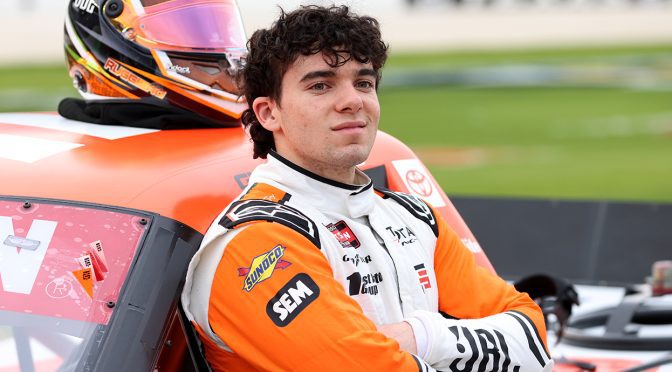
When Gio Ruggiero went NASCAR Craftsman Truck Series racing in 2025, he faced an understandable learning curve — yet still put up numbers. Just over a year later, the defending Rookie of the Year is a premier contender.

Ruggiero grew up in Seekonk, a Massachusetts suburb of Providence, Rhode Island. He began racing at 11 at the famed Seekonk Speedway — a twice-a-year stop on the Whelen Modified Tour. But instead of racing the ground pounders, he drove Bandolero and Legend cars, eventually traveling across the Northeast before first participating in Charlotte Motor Speedway’s Summer Shootout. He then transitioned into Late Models, driving for Anthony Campi Racing in Florida before moving to North Carolina at just 15 to further pursue a racing career.

In 2023, Ruggiero signed with Toyota Racing Development and Wilson Motorsports, embarking on a super late model schedule. He won the prestigious Winchester 400 that fall, setting up his debut in the ARCA Menards Series the next year.

RELATED: Truck Series standings | Michigan weekend schedule

Ruggiero contested the entire East Series schedule in 2024, finishing third in points after winning the season opener at Five Flags Speedway. He made a handful of additional ARCA starts, finishing second three times.

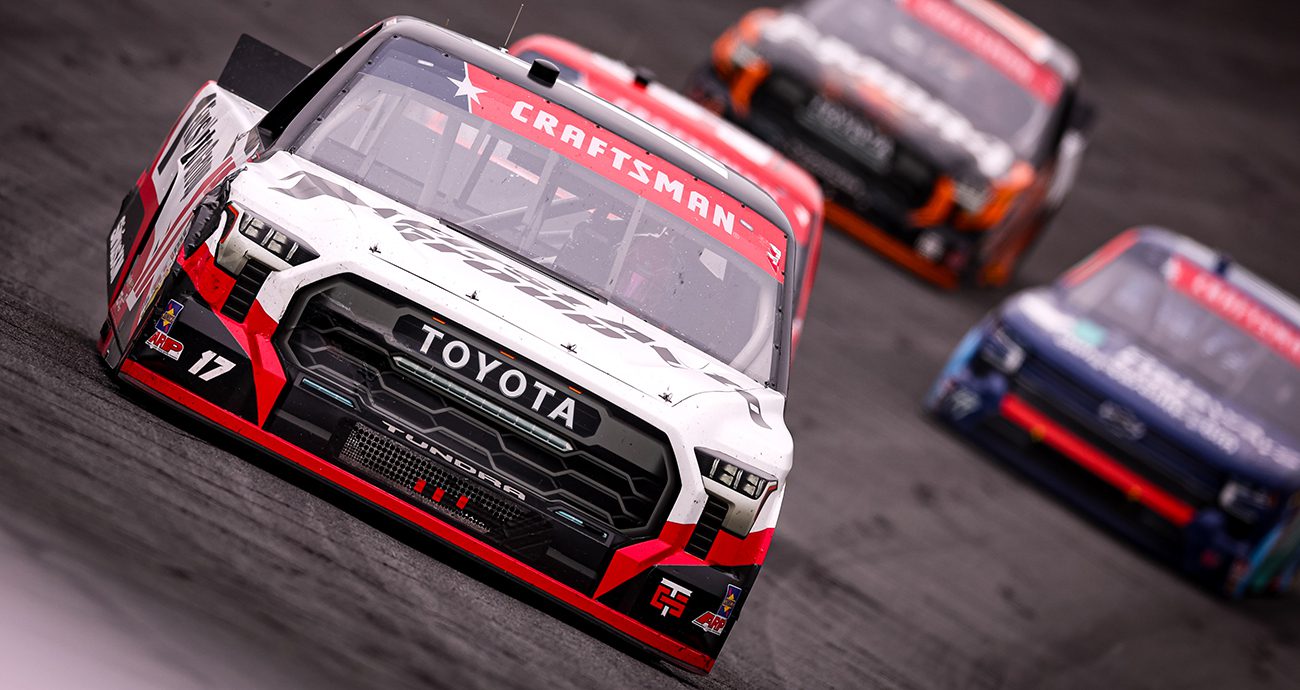
Soon after turning 18, Ruggiero had a full-time ride at Tricon Garage, piloting the team’s No. 17 Toyota. But he had made just one start in any series on ovals larger than a mile.

“It definitely was the biggest jump so far in my career, going from super late model racing right to Trucks,” Ruggiero told NASCAR.com this week. “It was definitely a super big learning deal for me, and had some growing pains as well to start, but I think what made it easier was racing for Tricon and having a team with super fast trucks and really good teammates.

“I had Corey [Heim] my first year, which was great to have him as a teammate and kind of be able to try and learn from him. And really the biggest learning point for me for the mile-and-a-half stuff is just the dirty air. It’s so tough at first trying to figure out how to set up passes, and really just race craft is so much different than short-track racing, so that was the biggest part of the learning curve for me, and I feel like once I figured that out, I definitely had a lot more success and just better results.”

Despite the steep adjustment, Ruggiero nearly made the playoffs in his maiden campaign. He finished the regular season with three top-six finishes in the final four races but ultimately missed the postseason by just 12 markers.

Two months later, Ruggiero wheeled to a win at Talladega Superspeedway, leading 37 of 90 laps and bookending a stretch of three consecutive top-four results. For someone who had never raced in the draft before 2025, he’s pretty good at it. He has two career second-place Daytona finishes, as well as a win in the ARCA race there this spring.

And Ruggiero’s honestly not sure why that’s a strong suit.

“Our trucks just had so much speed at the superspeedways, and that made it a lot easier for me,” he said. “You have to be cautiously aggressive, and I feel like that’s something I was good at last year, and just being really patient at the superspeedways is important. Just starting off in the trucks, I was probably a little bit more timid than I am now, and I think that may have just kind of helped me at the superspeedways.”

Around the same time as Ruggiero’s Talladega victory, Tricon added veteran crew chief Jeff Stankiewicz to the organization’s competition staff, later announcing him as crew chief of the No. 17 Toyota. Ruggiero worked with Jerame Donley in 2025, with Donley moving to the team’s No. 1 all-star truck for this season.

Stankiewicz previously served as shot-caller for Grant Enfinger, before that working with Sheldon Creed in ARCA, Trucks and the O’Reilly Auto Parts Series. With Creed, he won the 2020 Truck Series title.

gio ruggiero races in the craftsman truck series
David Jensen | Getty Images

“[Tricon] felt like they were wanting to do something different with Gio, try and get a better working relationship with him,” Stankiewicz told NASCAR.com. “I didn’t really know a whole lot about Gio when [competition director Matt Puccia] first brought it to my attention, and I kind of did some research on him and looked at the stats and was honestly pretty impressed with his rookie, first-year stats in the Truck Series.

“It’s a learning curve. I got to keep reminding myself that he’s only 19 years old, and he still has a long way to go. But he’s excelling really fast, and I’m very impressed at how hard he works at this.”

So far, so good for the first-year pairing. Through 11 races, Ruggiero has four top fives and six top 10s, ranking fifth in points and above former champions like Ty Majeski and Ben Rhodes. But that still doesn’t tell the full story.

At Texas, Ruggiero drove from fourth to the lead before a caution with three laps to go set up an overtime restart. Carson Hocevar cleared him on the jump, but while battling three-wide for second on the final lap, Ruggiero slid up the track and plummeted outside the top 10. A week later at Watkins Glen, Ruggiero was penalized for jumping a restart from the lead, with NASCAR officials confirming afterward he should not have been penalized. At Dover, a flat tire derailed a potential top-five effort.

MORE: Gio Ruggiero driver page

“Just really need to finish these races off, minimize mistakes and just execute a good day all around from all perspectives,” Ruggiero said. “Sometimes that’s just the way it goes in racing. You lose some that you should have won, and sometimes you’ll run into a win [where you] shouldn’t have won the race. The way that I look at it, I’ve always kind of had this evaluation of it, but if you’re going to win three races, you probably should have been in contention for five or six of them to get that three. That’s just how racing works. There’s always so much that could go wrong or right, and you really need to have speed multiple times just to get one win.”

Ruggiero’s average start is more than four positions better than last year. His average running position is up over two positions as well, good for third among series regulars. He also ranks third in quality passes and fourth in driver rating.

Why the big jump, and why right now?

“Just probably going back to the same race tracks again with notes,” Stankiewicz said. “Him being able to go back to that race track, understand the tendencies of the race track, understand the tendencies of the race car from the start of the race to the end of the race, too, has been a big thing for him to understand, what the tracks do when they take rubber.

“When we unload and execute, we have an opportunity to run in the top five week in and week out … There’s a little disappointment on the front we haven’t won, but we also feel very confident that we are maintaining top five in points, getting good stage points, unloading with good speed off the truck.”

Stankiewicz believes the team isn’t far from championship-caliber. Michigan International Speedway lies ahead this Saturday (1:30 p.m. ET, FS1, MRN Radio, SiriusXM NASCAR Radio), a place where Ruggiero contended and led laps last year before suffering damage in a late crash. But it won’t be until late September when the tailgaters return to intermediates. Two road courses and a slew of short ovals lie ahead, including his home race at New Hampshire Motor Speedway.

No matter where the series goes, Ruggiero’s confidence is clear. He’s hungry and looking to keep building his meteoric — yet possibly overlooked — rise in NASCAR.

“The competition and the series is so tough, which is why I love the Truck Series,” Ruggiero said. “I really like racing with all the Cup guys and I feel like I’ve learned a lot just really last year, but as well in the first few races this year racing with Cup guys and just racing up front for the win a couple times for the lead of these races has taught me a lot.

“I have a super big drive to succeed and win, which I feel like a lot of people do have, but also not as many as you may think have the determination that I feel.”