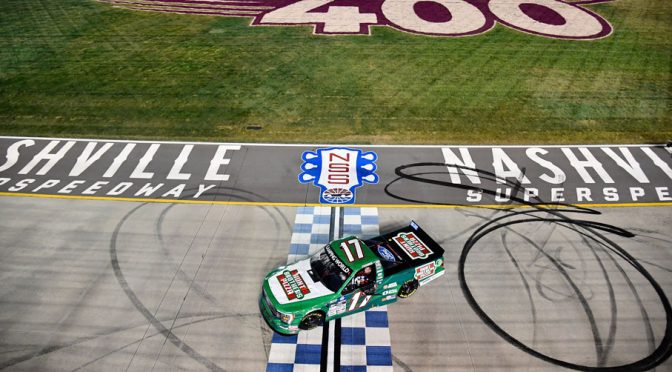
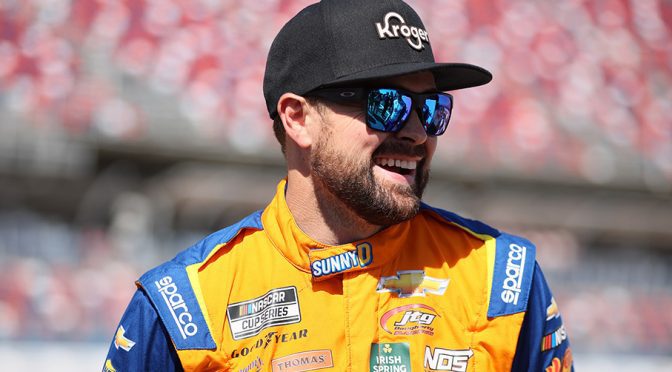
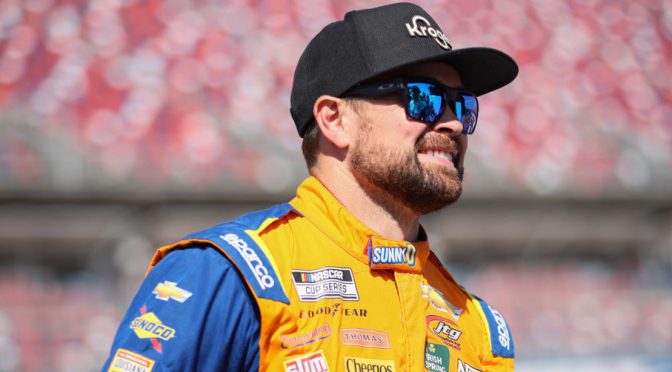
LEBANON, Tenn. – His tires chattering with age over the final few laps, Ryan Preece held off charges from Zane Smith and Carson Hocevar to win Friday night’s Rackley Roofing 200 at Nashville Superspeedway.
The victory was the second straight for David Gilliland Racing, after Todd Gilliland won last Saturday’s NASCAR Camping World Truck Series race on dirt at Knoxville Raceway in the No. 17 Ford, the same number Preece drove on Friday.
The win was an encore performance for Preece, who scored his first Truck Series victory in last year’s Nashville race. A part-time utility player in the Ford camp this season, Preece triumphed for the second time in his eighth career start.
In addition to the traditional guitar trophy, Preece also earned a $50,000 bonus for winning the second event in the NCWTS Triple Truck Challenge.
“We got a second guitar — I may have to start a band!” Preece exulted after climbing from his truck. “These guys (in the shop) work their tails off, and I know what it takes to win races. They give me phenomenal race cars. I’m just proud to be the one holding the steering wheel.”
Preece took control of the race in the second stage, passing Smith for the lead on Lap 74. After winning the stage, which ended on Lap 95, Preece forged a comfortable lead before the trucks of Grant Enfinger, Corey Heim, Matt DiBenedetto and Ty Majeski hurtled into Turn 3 four-wide.
Contact between Heim and DiBenedetto ignited a bone-jarring wreck that ended the race for Enfinger, Heim and DiBenedetto. Majeski escaped without damage and rallied to finish fourth behind Preece, Smith and Hocevar.
“It was the end of the race, and everybody went crazy, just like always in these truck races,” Enfinger said.
Preece got the jump on the subsequent restart on Lap 135 of 150, but the green-flag action was short-lived. Moments after the restart, contact from Max Gutierrez’s Chevrolet sent Hailie Deegan’s Ford sliding into the outside wall.
On the restart with 10 laps left, Preece once again forged ahead, but both Smith and Hocevar closed dramatically with three laps left, forcing Preece to play defense.
“It was a little closer than I wanted it to be,” Preece said. “Just old tires, the heat cycles. They were chattering. I had clean air, and I put as much dirty air on him (Smith) as possible. I wasn’t going to give it up.”
Stewart Friesen finished fifth, followed by Christian Eckes, Tyler Ankrum, Gutierrez, John Hunter Nemechek and Matt Crafton.
Smith took the series lead by 21 points over Nemechek.
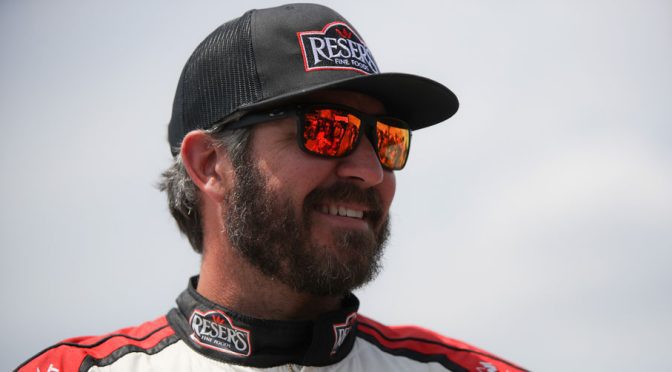
Truex, the 2017 Cup Series champion, provided his decision moments after practice to end months of speculation that the longtime mainstay might potentially be hanging up the fire suit at season’s end.
“I will be back in the 19 next year,” he said succinctly, within seconds of taking questions, in a very Martin-Truex-Jr.-esque manner.
Truex has competed for Joe Gibbs Racing since 2019, earning 12 of his 31 career wins for the storied organization. His tenure at JGR follows stints at Dale Earnhardt, Inc., Michael Waltrip Racing and Furniture Row Racing, the last of which he earned his championship with.
Gibbs, himself, was a strong voice in the contract negotiations, with Truex saying he’s “pretty good (at convincing),” but that the decision ultimately was a personal one with a litany of factors.
“We don’t have enough time,” Truex said, when asked to divulge some of them.
“I tried to just think about all this myself and figure it out. Friends and family helped as well. Just wanted to look and make sure I was doing the right thing.
“I never had my mind made up. I felt like it was an opportunity for me to look at everything. I’ve never really done that before. I’ve always just did what I was doing and I just wanted to make sure if I was going to keep going, I was going to be happy with that decision and I’ve got the opportunity to do the things on the race track that I want to do. It all feels great. I’m happy and we’ll see what we can do from here.
A Championship 4 driver in four of the previous five seasons, Truex has — by his standards — gotten off to a bit of a sputtering start in the Next Gen era, winless through 16 races while amassing an average finish that’s tied for his worst figure since missing the playoffs in 2014.
A perennial front-of-the-field driver, Truex has led double-digit laps in just four races this year with a total of just 172 on the season. At this point last year, he’d already done it seven times and paced 627 total circuits out front through 16 races.
Those numbers aren’t entirely concerning in their own right, but with a fast and furious Ty Gibbs — the team owner’s grandson — tearing it up in the Xfinity Series, the rumors grew louder and more frequent as the season carried on with no clarity on the soon-to-be 42-year-old’s future.
Internally, there didn’t appear to be any concern over whether Truex could still get the job done, however, with Toyota Racing Development president David Wilson telling NBC Sports on Thursday the manufacturer was putting forth a “truly remarkable” level of effort to retain one of its star drivers.
“We know he can get it done,” said Wilson. “I feel terrible because we haven’t given him the tools in many cases and haven’t let him exploit the handful of times he’s had a really good car.”
Truex, one of the most unshakable, even-keeled drivers of the past two decades, wasn’t worried about his performance being a negative factor on contract negotiations, either.
In fact, he feels they’re about to turn a corner.
“I don’t like not running good. I’m here to win,” Truex said. “I feel like everybody is working really, really hard right now. I’ve got an awesome team. They’ve got my back, I’ve got theirs. It’s an up-and-down sport. I’ve been a lot worse off than this before. We’re sitting in a good spot in points, just depends on how many guys win if we can’t. I feel like we’re getting closer and we’ll keep doing all we can.”
Truex also has 13 Xfinity Series victories and two NXS titles in 2004 and 2005. He also claimed his lone Camping World Truck Series triumph in March 2021 in the inaugural race on Bristol Motor Speedway’s dirt.
As for how long he’ll want to continue adding to his accolades, only time will tell.
“I’m sure I’ll know in six months. Big decisions are not easy,” Truex said.
“It took me six months to figure out this decision, give me six more to figure out the next one at least.”
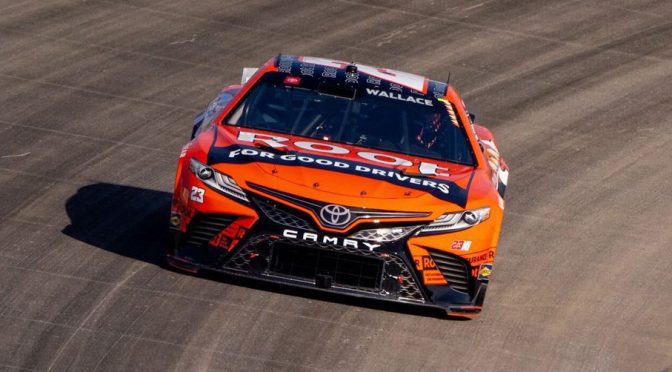
Bubba Wallace returned from the NASCAR Cup Series’ off week with plenty of speed.
The No. 23 Toyota topped the leaderboard at 161.708 mph in Friday’s 50-minute practice session at Nashville Superspeedway ahead of Sunday’s Ally 400 (5 p.m. ET, NBC, NBC Sports App, MRN, SiriusXM NASCAR Radio).
Just behind Wallace was fellow Toyota driver Kyle Busch at 160.936 mph, proving a strong rebound for the manufacturer after disappointing results at Sonoma Raceway on June 12 left Kurt Busch the highest-finishing Toyota in 18th place.
Each of the six Toyotas entered in this weekend’s race — two from 23XI Racing and four from Joe Gibbs Racing — posted laps within the top 11 positions. Kurt Busch was sixth (160.107 mph), Denny Hamlin ninth (159.941 mph), Martin Truex Jr. 10th (159.792 mph) and Christopher Bell 11th (159.760 mph)
Completing the top five on Friday evening were Tyler Reddick (160.456 mph), Kyle Larson (160.418 mph) and William Byron (160.391 mph).
In eighth place, Ryan Blaney (160.043 mph) was the quickest Ford in the session. The next best Blue Oval was Chase Briscoe back in 16th (159.488 mph).
Past champions and fellow Ford pilots Kevin Harvick and Brad Keselowski struggled to find speed at the 1.33-mile concrete oval, which hosts NASCAR’s premier series for just the second time. Harvick was 29th-quickest at 158.187 mph while Keselowski was 33rd of 36 drivers at 156.042 mph.
Qualifying for Sunday’s Ally 400 kicks off at 1 p.m. ET on Saturday (USA Network, NBC Sports App, MRN, SiriusXM NASCAR Radio).
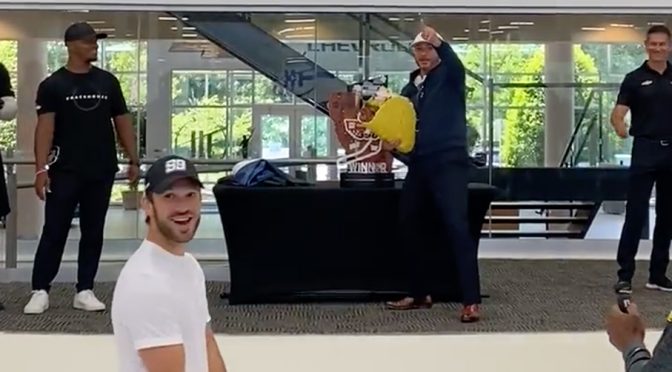
Yes, that’s worldwide music superstar and Trackhouse Racing co-owner Pitbull in the middle of a race shop tossing a piñata full of cash to his driver Daniel Suárez, who earned an indelible place in NASCAR history two weekends ago at Sonoma Raceway.
Not only was the win a long time coming for Suárez, with five-plus full-time Cup seasons and nearly 200 starts under his belt — so was the piñata.
“A few months ago, I had a few conversations with a few friends in Mexico about a piñata. They asked me what my celebration was going to be and I had no idea; and then a piñata came into the conversation,” the Monterrey, Mexico native said Friday at Nashville Superspeedway, site of Sunday’s Ally 400 (5 p.m. ET, NBC, NBC Sports App, MRN). “Then, I had a similar conversation with my teammate, Ross (Chastain), about it. Slowly, it just started making sense. Matt Norris, he works at Trackhouse Racing, he went to check for a piñata. He sent a few pictures of piñatas and a taco piñata was there, so we decided to pick the taco piñata. It’s been with us in the hauler for six or eight weeks, so it was about time to smash it.”
And that’s just what Trackhouse Racing does. Smash things.
From perceptions of what a fresh Cup team is capable of, already with both of its drivers provisionally locked into the playoffs with a trio of victories between them, of course, two of those wins ending with bits of watermelon spread out like a Jackson Pollock painting on the front stretches of Circuit of The Americas and Talladega Superspeedway via Ross Chastain’s signature celebration.
For Chastain, sending fruit flying is an homage to his family heritage as multi-generational watermelon farmers.
The piñata ties run just as deep for Suárez.
“In Mexico, that’s a big culture thing,” he said. “Since I turned 1 year old and all the way to 30 years old, for every birthday, I’ve had a piñata. And I will say that every kid does it; it’s a big culture thing. It was fun.”
The win was perfectly timed for the No. 99 Chevrolet driver, as well, as he managed to sneak in a trip back home to celebrate with his family in his native country with no Cup Series action last weekend.
“It was quite a special moment. It was probably the most special trip I’ve ever had to Mexico,” Suárez said. “Everybody was very, very excited for me. The people that have been with me on this journey for 10 years now in the U.S., they know how hard it’s been. … They’ve known me when the lows were low, and known me when the highs are high. It was a lot of fun to see all the people that have stuck with me. All the people that I love. Honestly, if I could write down everything I wanted it to be for that first win, it’s exactly how it happened. So, I’m very, very blessed and very fortunate.”
And for Pitbull, a first-generation American born to Cuban immigrant parents, to be the one to toss him the taco — filled with a “heavy” amount of cash, according to Suárez — had to be special. But thank goodness the pitch was on the money.
“I have to say, thank you to Pitbull for throwing the piñata the right way because if it wasn’t for him, I was probably going to miss. But he threw it very, very good,” said Suárez.
“It was great. That day was also very special for me. That was the last day of celebration for me because that was the last day that I got to enjoy it with Pitbull and my team again. That night, I put it in my mind to flip the page. I enjoyed every second of it, but for me, it’s in the past. Now, it’s time to get some more.”
Not even halfway through the 2022 season, Ricky Stenhouse Jr. has matched his top-five tally and topped his top-10 tally from 2021.
The driver of the No. 47 JTG Daugherty Racing Chevrolet owns one top-five and five top-10 finishes through 16 races. In all 36 last year, he had one and two, respectively.
Better yet, in the last six events alone, Stenhouse has finished in the top 10 four times. That stretch alone exceeds last season. It started at Dover Motor Speedway with a runner-up highlight. He was then eighth at both Darlington Raceway and Kansas Speedway. At Charlotte Motor Speedway, he placed seventh. The 32nd run at World Wide Technology Raceway and 25th showing at Sonoma Raceway that follow bucked his streak.
Stenhouse not only capitalized but cashed in on recent changes.
The introduction of the Next Gen car has shaken up the competition overall. There have been four first-time winners – most since 2011 at this point – and 12 different winners overall – tied for second most all-time at this point.
Also, new this year, JTG Daugherty Racing is fielding only one car. It used to be a two-car operation. So, Stenhouse now receives all of the organization’s resources.
With all that said, Stenhouse is still far outside the NASCAR Playoffs picture with 10 races remaining in the regular season. He’s seven spots and 135 points below the cutline. The number of different winners doesn’t help, leaving just four berths on the table. Stenhouse hasn’t made the 16-driver postseason field since 2017, when he ultimately closed out the season 13th, his career-best ending. That was also the last time he won, and he did so twice.
NASCAR’s next stop on the schedule is Nashville Superspeedway (Sunday, 5 p.m. ET on NBC, NBC Sports App, MRN and SiriusXM NASCAR Radio). It’ll be just the second time the Cup Series has ever visited the 1.33-mile track in Lebanon, Tennessee. Kyle Larson from Hendrick Motorsports won the inaugural event in 2021. Stenhouse turned out sixth.
That sixth place was Stenhouse’s second-best result last year, but it was his best on a non-dirt surface (was second in the Bristol Dirt Race). He fired off 14th and crossed the line seventh at the end of Stage 1 and eighth at the Stage 2 conclusion, leading to an average running position of 6.3.
“We’re hoping for another good concrete track run at Nashville like we had a Dover, where we finished second,” Stenhouse said. “This style of race track has been better for us than some of the other ones and I love Nashville. It was a really good track for us last year, but of course it’s a totally different car. The biggest thing for us is to have a good practice session on Friday and make sure we have a car that handles good and is easy on the tires for our race.”
Stenhouse has also performed well as of late on intermediate-length venues like Nashville this season. Darlington, Kansas and Charlotte all fall under that category, and those were sites of the three most recent top 10s.
BetMGM lists Stenhouse at 50-1 odds to win Sunday.
Ricky Stenhouse Jr. and JTG Daugherty Racing agreed to a multiyear contract extension that will keep the veteran driver behind the wheel of the No. 47 Chevrolet. The news was revealed Friday at Nashville Superspeedway as the NASCAR Cup Series prepared for Sunday’s Ally 400 (5 p.m. ET, NBC, NBC Sports App, MRN, SiriusXM NASCAR Radio).
Stenhouse is a two-time winner in the Cup Series with both of those victories coming in 2017 when he was driving for then-Roush Fenway Racing. He also won two Xfinity Series championships for Roush in 2011 and 2012.
“I’m ready to continue our progress together as a team,” Stenhouse said. “We’ve made some strides with this new car at some tracks and we know there’s some work to do on others. I look forward to that process with the good group of people we have in place at JTG Daugherty Racing. I’m grateful to our partners for giving us an opportunity to continue to make our program better. I’m really happy with the first three years here at JTG Daugherty Racing.”
Stenhouse moved over to JTG Daugherty Racing in 2020, and since then, he has posted 11 top-10 finishes, including five in the first 16 races this season. His best finishes with JTG Daugherty have all been runner-ups — in 2020 at Talladega Superspeedway, in 2021 at the Bristol Dirt Race and in 2022 at Dover Motor Speedway.
“We’re pleased to announce Ricky Stenhouse Jr. is returning to the company,” said Tad Geschickter, co-owner of JTG Daugherty Racing with Jodi Geschickter, Gordon Smith and Brad Daugherty. “Ricky has done a solid job on the race track and off the track during Kroger Racing in-store activations for our esteemed partners. We’re continuing to learn the new car and we’re making progress. We’ve led laps, earned stage points and been close to winning this year.”
Stenhouse is 24th in the points standings entering Nashville, 135 points below the playoff cutline.
LEBANON, Tenn. — Josh Berry has been around for a while.
While in the midst of just his first full-time season at the NASCAR national series level, the No. 8 JR Motorsports driver — one of the few full-timers at the Xfinity Series level over the age of 30 — has a longer page on Racing Reference than most of his peers. No, really, go look for yourself and get ready to scroll.
The row at the top, however — his Cup Series stats — is one of the shortest ones. He’s determined to change that.
“It’s tough, right? I feel like I’m continuing to establish myself. I feel like I’m in a really good place as a race car driver. I still feel like I have a lot that I can do better and learn from and continue to improve,” Berry said Friday at Nashville Superspeedway, site of Saturday’s Tennessee Lottery 250 (3:30 p.m. ET, USA Network, NBC Sports App, MRN, SiriusXM NASCAR Radio). “My number one goal is obviously just to stay at this level, but at the same time I definitely have aspirations to move up.”
While his pair of Cup starts for Spire Motorsports last season didn’t result in finishes inside the top 25, the Henderson, Tennessee native has certainly done his part this year in reminding everyone why he got the call for fill-in duty in the first place. Currently fourth in NXS points and locked in for the playoffs, Berry has a pair of 2022 wins while compiling a strong 11.1 average finish — numbers certainly worthy of a look for a full-time Cup ride when combined with his overall racing acumen.
“I think if I’ve come this far, I think that there’s no reason why I wouldn’t have a set goal of racing in a Cup car one day,” Berry said. “Who knows if that day will come?”
JRM entering the Cup Series is a long-rumored move, but one with little front-facing traction and often downplayed by the organization’s famous co-owners. Still, Berry has a tremendous shot at further impressing his boss, Dale Earnhardt Jr., who will be on site for NBC Sports’ inaugural coverage weekend of 2022.
“Right now, I’m trying to enjoy this opportunity as much as I can and try to keep winning,” the accomplished late-model legend said. “I think that’s the important thing and that’s what they want and expect of me when I started driving the 8 and we’re going to try to keep doing it.”
And if he keeps doing it, the Cup Series might just come calling once again.
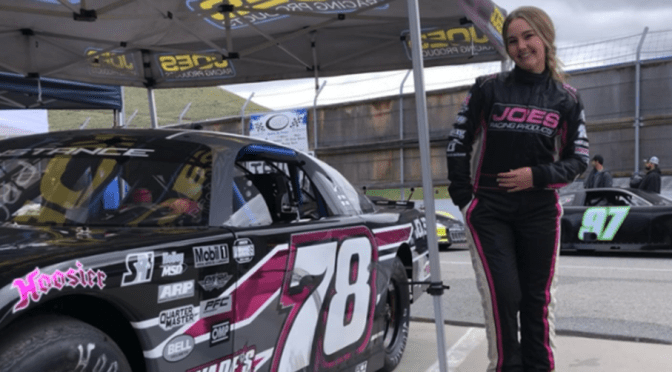
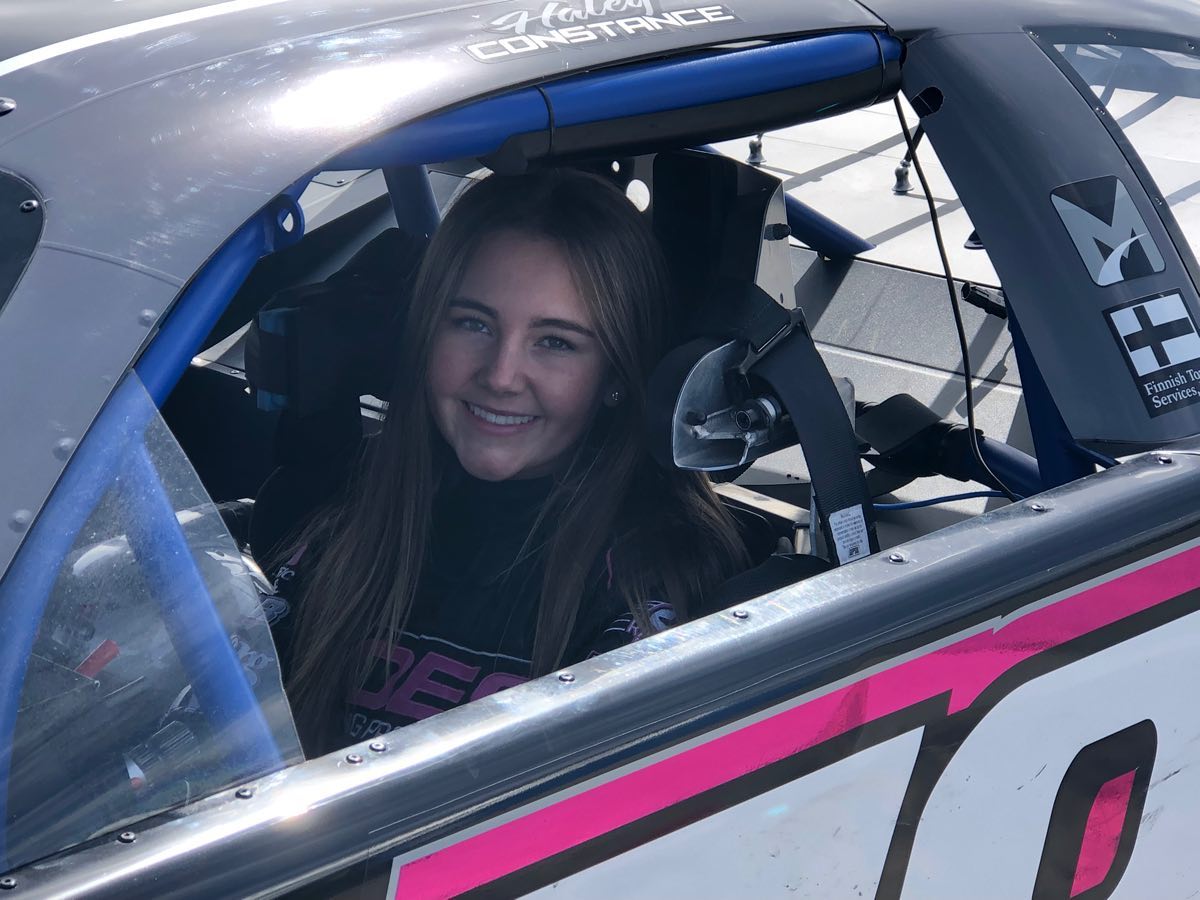
Haley Constance played volleyball and basketball growing up in Washington, but neither of those sports fueled her competitive spirit like racing.
“Racing, it’s a feeling like no other. For me at least,” Constance said. “I played sports growing up, too, but racing was just always different for me. I would sacrifice everything just to go race. I would miss hanging out with my friends. I would rather go racing on the weekends, instead. I’ve always just had a really big passion for it ever since I was little. That’s what really keeps me in it.”
Constance first got behind the wheel at a young age. A very young age.
She was 3 when she started racing go-karts, and she eventually moved into stock cars and late models. The 17-year-old now races in the Speedway Chevrolet Pro Late Model division at Evergreen Speedway, a NASCAR-sanctioned asphalt oval track in Monroe, Washington.
In her second year in a pro late model, Constance has a top-three and a top-five finish in three races at Evergreen this season. She is currently fifth in the track’s points standings.
“This season I really want to get my first win in a pro late model,” she said. “That’s my ultimate goal. But just finish in the top three and get the podium a couple times, that’s our main goal. Just stay up front and keep racing how we do.”
Still a teenager, Constance is one of the youngest drivers in Evergreen’s Pro Late Model division. Since jumping up from the Junior Late Model class, she’s learned how to race with other drivers and gain their respect.
“There’s a common respect between race car drivers, so it was pretty easy at first, but the more you race with them the more you earn respect if you just race clean,” she said.
Constance said she would describe herself as a clean, respectful driver who likes to race everybody the right way, the way she would like to be raced.
Most everything she knows about the sport Constance learned from her dad, Joe, who also raced and now serves as her crew chief and spotter.
Even though she was really young, being a driver like her dad was always something Constance knew she wanted to do.
“I understood the concept of it, but obviously you’re so young so it takes a little bit to learn, but as I got older I learned more and with my dad coaching me I just developed as a race car driver,” she said.
“He helps me a lot in racing… It’s really nice. It’s a great opportunity having somebody like my dad be able to coach me, because I know some people don’t get that usually. And it’s nice because it just turned it into a family sport, and I get to spend more time with my family while I do something I love.
(Photo: Haley Constance)
Constance is a respectful driver, but there are two competitors with whom she admittedly is extremely competitive: her younger sister, Brooklyn, and her older brother, Spencer. The other siblings both race micro sprint cars, so when Haley also gets in her own micro sprint, the three face off on the track against one another.
“We’re very competitive,” Constance said with a laugh. “It definitely does make it more fun. Sometimes it can get a little hard when we get too competitive, but it makes it more fun, and it’s just good that we can all do that together and spend time together.
“I definitely love that my whole family does it and keeps us close, because we’re always going to have that within our family.”
The family reserves Tuesday and Thursday nights each week for their “shop nights,” so they can all get together and work on the cars to prepare for that weekend’s races.
For as much as Constance said she loves being on the track, she has learned to love her shop nights just as much. Not only does it give her a chance to work on the car, but it gives her more time to spend with loved ones.
“I think that’s one of the most important things because I think most races are won in the shop,” she said. “If you’re not in the shop constantly trying to improve your car then you’re not going to do any good when you’re actually racing. So it’s almost like 50-50. You have to spend half your time in the shop, but you also have to be a good race car driver, too.
“I like getting in the shop because it helps me understand the car better, the mechanics of it. So it’s always nice, and especially when you’re doing it with your family. You can talk to them about stuff and bounce ideas off of each other, so it’s actually pretty enjoyable working on the car during the week, too.”
Just three races into the season, Constance said her goals of getting her first win are still the same, though her other goals may have grown some, too.
“I think winning is probably the highest goal you can have when you’re racing,” she said. “Maybe actually getting the championship this year since we’ve been doing good and finishing higher up. I also really want to get on the podium this weekend for the Galloway. That’s one of our biggest races. So that should be pretty exciting.”
Evergreen Speedway will host the 2022 Mark Galloway Shootout, the first race of the year on the Speedway’s 5/8-mile big track. The night of racing will feature a 100-lap Pro Late Models race, Mini Stocks, Legends, Street Stocks, and Vintage Mods, beginning at 5 p.m. PT.
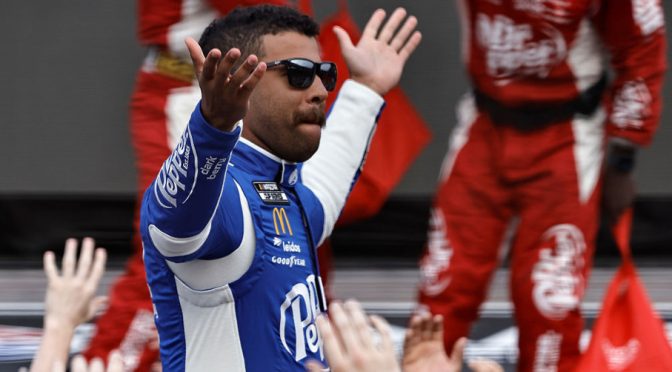
Bubba Wallace of 23XI Racing earned a nomination for Sportsman of the Year at the BET Awards 2022 (8 p.m. ET on Sunday). The organization called out the NASCAR Cup Series driver’s contributions on and off the track for reasons why he was in contention for the award.
Wallace’s Netflix docuseries, “Race: Bubba Wallace,” was released earlier this year and highlighted the driver’s experience with newfound social activism and his role in helping the sport become more inclusive.
In addition, Wallace won his first Cup Series race in 2021 at Talladega Superspeedway, joining Wendell Scott as the only Black drivers to win in NASCAR’s top series.
Other nominees for the award include Aaron Donald (Los Angeles Rams), Giannis Antetokounmpo (Milwaukee Bucks), Ja Morant (Memphis Grizzlies), LeBron James (Los Angeles Lakers) and Steph Curry (Golden State Warriors).
With 10 regular-season races left in 2022, Wallace was in 25th place in the points standings, 139 points below the playoff cutline. His best finish this season was second place in the Daytona 500.
After a week off for Father’s Day, the Cup Series was set to resume Sunday at Nashville Superspeedway with the Ally 400 (5 p.m. ET, NBC, NBC Sports App, MRN, SiriusXM NASCAR Radio).
With three races left in the NASCAR Camping World Truck Series regular season, five drivers have clinched playoff spots on the basis of race wins — John Hunter Nemechek, Zane Smith, Ben Rhodes, Chandler Smith and Stewart Friesen.
That leaves five berths available, at least two of which will be decided by position in the points standings.
Hovering around the cutline for the final spot are Matt Crafton and Derek Kraus, who are 10th and 11th in the standings, respectively.
Crafton, a three-time series champion, currently holds a 27-point lead over Kraus entering Friday night’s Rackley Roofing 200 (8 p.m. ET, FS1, MRN, SiriusXM NASCAR Radio). Crafton has 14 starts at Nashville, 13 of which came from 2001-11.
The battle for the final five playoff spots isn’t the only intense competition. At the top of the standings, Nemechek, Zane Smith and Rhodes are waging a pitched battle for the regular-season championship, a title worth 15 playoff points to the winner.
Nemechek currently leads Smith by five points and Rhodes by 10. To Nemechek, the key to securing the regular-season title is executing three mistake-free races.
“I think for us, we just need to have consistent runs and not make mistakes,” Nemechek said. “We’ve got to be fast, and we know we have trucks capable of doing that, so (the key is) not dialing ourselves out during practice, putting good races together, finishing up high in the stages and having good results at the end of the race.
“Just have to put everything together, execute, and not beat ourselves and not make any mistakes.”
Friday’s race is the second of three Triple Truck Challenge events on the NCWTS schedule, with a $50,000 bonus available to the winner. Corey Heim won the first Triple Truck Challenge race at World Wide Technology Raceway and can earn a $150,000 bonus for a second victory.