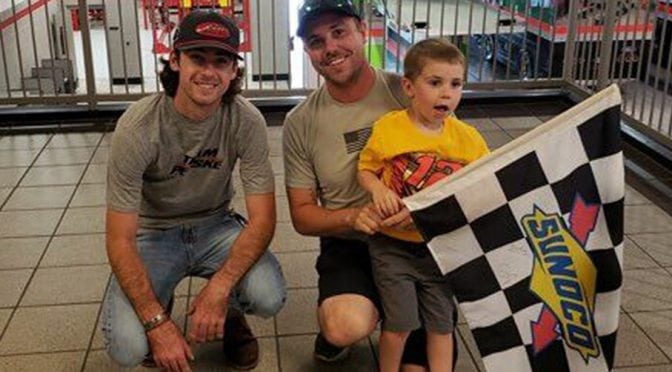
An “out of the blue” invitation from family in Charlotte a couple of months ago gave Ricky Brockmiller the chance to take his 4-year-old son, Payton, to his first NASCAR race last weekend. The family made the trek from their home in Colfax, Wisconsin, and witnessed a classic finish. But there was more that made Sunday’s debut for the Charlotte Roval an unforgettable memory.

Payton Brockmiller was front and center in the stands above the start-finish line for Sunday’s Bank of America Roval 400, having made the walk down to the bottom row to get a closer look at his favorite part — the burnout. That’s when race winner Ryan Blaney locked eyes with the young fan, handed over the checkered flag and offered a fist-bump and thumbs-up.

“We just happened to be in the right place at the right time,” Ricky Brockmiller said Wednesday. “I knew Ryan likes to give out the checkered flag, so when I saw him grab it, I saw him scanning the crowd and I managed to get Payton up as high as I could. I just made my way to the front and guess we got really lucky.”

Lucky, maybe. But perhaps all the coincidences foreshadowed that Payton’s first race was bound to be special. Blaney’s first checkered flag giveaway — after an Xfinity Series win at Dover last year — was also on Sept. 30. His father also works as a body mechanic at a truck equipment company, right across the street from a distribution center for Menards, Blaney’s primary sponsor on his Team Penske No. 12 Ford. And Ricky Brockmiller’s job means plenty of work for Penske’s rental truck division.

RELATED: 360-degree view of Blaney’s last lap
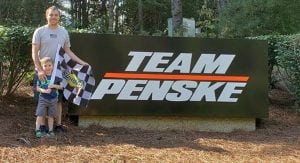
Ricky and Payton Brockmiller at Team Penske headquarters
Courtesy: Courtney Brockmiller

Serendipity aside, the shellshocked look on Payton’s face told the post-race story Sunday. Reached Wednesday by phone, his father said that the meaning of the moment has just started to sink in.

“He kind of gets it, but I don’t know if he fully gets how cool and how big of a deal it is,” Ricky Brockmiller said. “He’s a shy kid, but he’s getting it and liking it. Coming out of the race track, I think he was starting to notice that yeah, it felt pretty cool because everyone’s giving him fist-bumps and shaking his hand. A lot of all these stray people just wanted to take pictures with him. So he’s kind of getting it.”

The post-race accolades weren’t the end of the already heartwarming story, which spilled over into a memorable Monday. The family paid a visit to Team Penske’s shop in Mooresville to pick up souvenirs, with Payton still proudly carrying the flag from the day before. A member of Blaney’s crew noticed him from the shop floor, asking if it was the flag. When the Brockmillers said yes, arrangements were made for a second meeting that afternoon with Blaney, who happily posed for pictures and added his autograph to the checkers.

The Monday photos featured Payton smiling with a No. 12 shirt for his new favorite driver, even though his race-day apparel showed the youngster’s support for Kyle Busch. Blaney, in his weekly podcast for NASCAR.com, joked that he was doing his level best at “converting fans, one person at a time.”

Pressed to name a favorite driver going forward, Payton stammered before blurting out, “Ryan Blaney!” His father admitted that his son’s allegiances were still split.

“At night, he and my wife, they do a prayer,” Ricky Brockmiller said. “My wife will say, ‘All right, who are you thankful for?’ and she’ll put ideas in his head like Mom, Dad, your sister, whoever. He still will say he’s thankful for Kyle Busch although now he has added in Ryan Blaney. I think he’s torn. He likes them both. I think it’s the candy on Kyle’s car.”
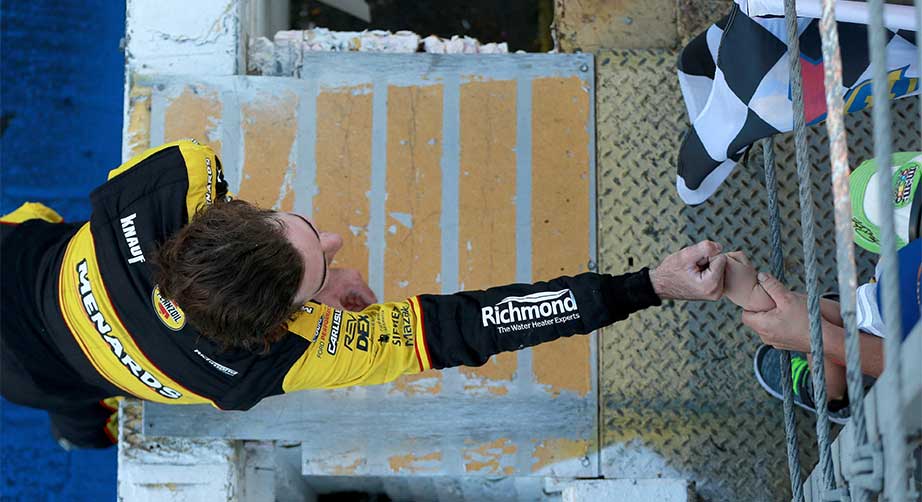
Ryan Blaney fist bumps a young fan
Sean Gardner | Getty Images

Once home, Payton Brockmiller unraveled the flag to show to the rest of his family. But now it sits rolled up and hidden away, awaiting his father to preserve both the flag and the race tickets in a keepsake frame.

But there are plans for Payton and his future with racing as well. Ricky Brockmiller said he helps out at Thunder Hill Speedway, a nearby karting track, and that he hopes to get his son up and running in competition in the next two years. Payton’s already making laps in a youth all-terrain vehicle on an oval burned into the field in the Brockmillers’ back yard.

“That’s all that he wants to do is race,” Ricky says, recounting the oft-told anecdote of Denny Hamlin’s rise to NASCAR’s big leagues. Hamlin, as an 11-year-old and a relative unknown finding his way on Virginia’s short tracks, told Coach Joe Gibbs at an autograph session that he’d drive for him one day. It’s a tale that’s resonated with the Brockmillers this week.

“I told my wife this is the beginning of his story,” Ricky says. “Hopefully one day he can come back and run for Ryan Blaney.”
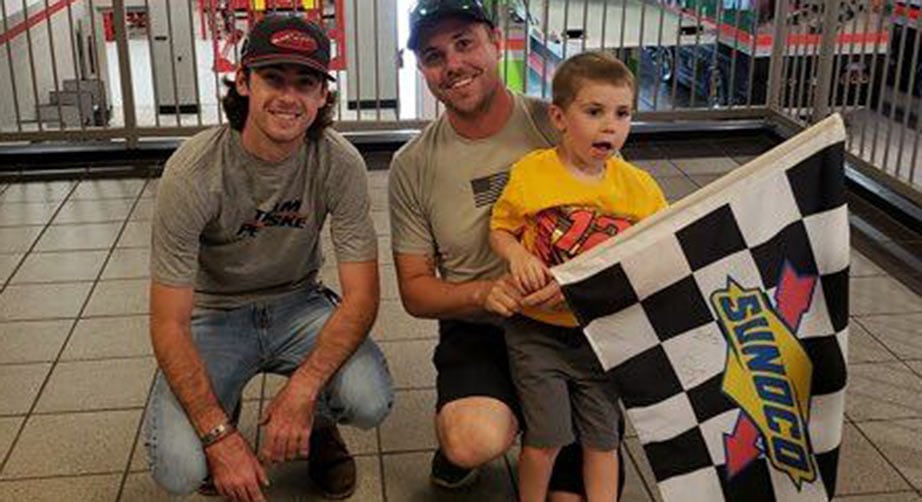
Ryan Blaney greets the Brockmiller family at the Team Penske shop.
Courtesy Courtney Brockmiller

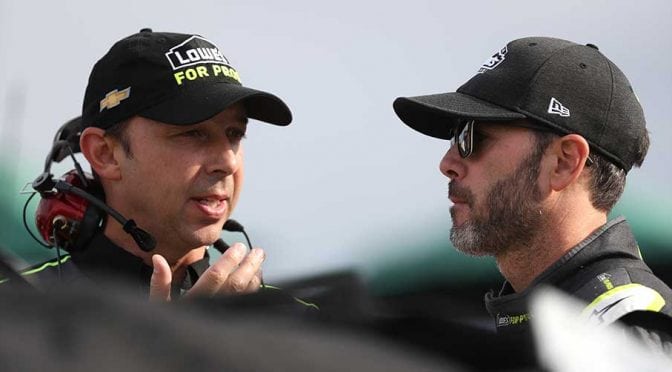
Hendrick Motorsports crew chief Chad Knaus admitted it was a tough Monday morning earlier this week, the day after his team and driver Jimmie Johnson were eliminated from the Monster Energy NASCAR Cup Series Playoffs.

“I beat myself up pretty bad,” Knaus told host Dave Moody on Wednesday evening during an appearance on SiriusXM NASCAR Radio.

Knaus watched from atop the pitbox as Johnson hounded race leader Martin Truex Jr. over the final lap at the Charlotte road course. A win in sight — and a transfer spot into the Round of 12 seeming safe — Johnson attempted a late pass for the win with an aggressive move that spun his car around, and collected Truex Jr.’s No. 78 in the process.

JOHNSON: I’d do it again

The spin left Johnson with an eighth-place finish instead, and he was eliminated from the postseason by virtue of a tiebreaker.

“I feel like that maybe just one word out of me or two words out of me would have changed the outcome,” Knaus said. “Maybe he wouldn’t have gone in those extra 2 feet deeper. … It’s difficult to make those decisions in an environment like that.

“I feel that if Jimmie Johnson wins that race at Charlotte Motor Speedway on the Roval to transfer into the next round of the playoffs, we have an opportunity to go win the championship. And I don’t mean just an opportunity, I think a real opportunity. I think that motivates (Johnson) and reinvigorates him and the whole team. And with the way that we’ve been performing over the last month and a half or so, I think we would have had the speed to actually do it.”

RELATED: Jeff Gordon chimes in

Instead, the No. 48 operation will load in at Dover International Speedway out of the postseason, but in search of the Johnson’s 12th career win at the track.

As for the seven-time championship crew chief, he still has his driver’s back.

“He was going for the win, and that’s what thoroughbreds do,” Knaus said. “They go for the win.”

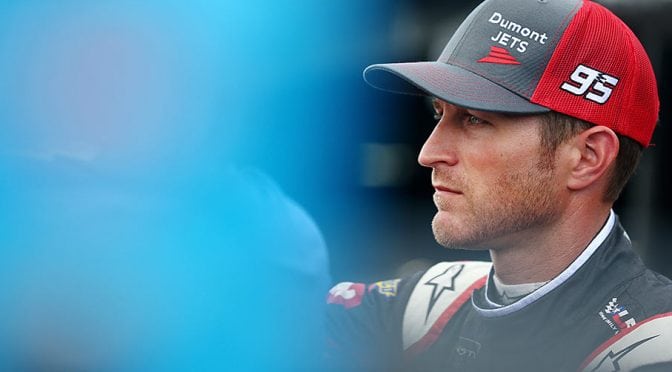
CONCORD, N.C. (October 3, 2018) – Kasey Kahne will continue to sit out from Monster Energy NASCAR Cup Series competition this coming weekend when the series travels to Dover International Speedway. Kahne participated in a private medical test session on Tuesday afternoon with his physicians as they continue to evaluate his health following a case of extreme heat exhaustion at Darlington Raceway.

Regan Smith will once again serve as the team’s substitute driver for the Dover race weekend behind the wheel of the No. 95 Camaro ZL1.

Leavine Family Racing continues to work with Kahne and his medical team and will provide an update following the Dover race weekend.

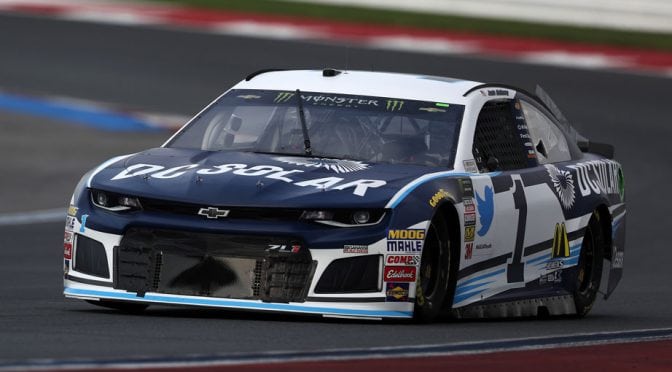
The No. 1 Chip Ganassi Racing team has been penalized for a safety violation following Sunday’s Monster Energy NASCAR Cup Series race at the Charlotte Motor Speedway road course.

Per Sections 10.9.10.4, the No. 1 Chevrolet was found to have lug nut(s) not safe and secure in post-race inspection. Crew chief Matt McCall has been fined $10,000.

Jamie McMurray piloted the No. 1 Chevrolet to a runner-up finish in the first event at the Charlotte road course.

MORE: Full results from the Roval

No Xfinity Series teams were penalized following Saturday’s race at the Roval.

DAYTONA BEACH, Fla. (Oct. 3, 2018) – NASCAR fans can immerse themselves in the 2018 Monster Energy NASCAR Cup Series Playoffs™ in a new augmented reality (AR) experience available via the NASCAR Mobile app.

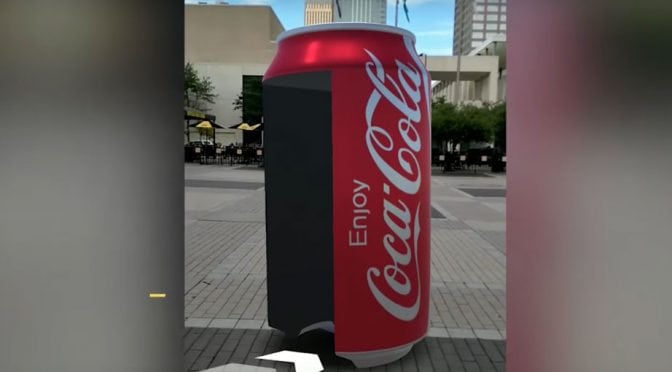
The NASCAR Playoffs AR Experience Refreshed by Coca-Cola invites fans to walk through virtual portals to experience the playoffs’ most memorable moments in 360-degree AR.

For all 10 weeks of the NASCAR Playoffs, fans with an AR-enabled iOS or Android device can access new AR experiences via the NASCAR Mobile app.

“NASCAR is always looking for unique ways to engage fans and bring them closer to the sport, especially during the most exciting time in our season,” said Tim Clark, NASCAR Digital Media vice president. “Together with Coca-Cola, we’re inviting fans to step right into the NASCAR Playoffs and experience the action, pageantry and emotion like never before.”

Fans place a 3D Coca-Cola can within their environment to create a superimposed portal into NASCAR Playoffs action. After walking through the portal, fans can live within thrilling playoff moments such as team celebrations in Victory Lane, post-race driver burnouts and more.

New 360-degree content will be added weekly following each NASCAR Playoffs race, culminating with the 2018 Monster Energy NASCAR Cup Series Championship™ at Homestead-Miami Speedway in November.

Fans can download the latest version of the NASCAR Mobile app today on the App Store and Google Play.

The 2018 Monster Energy NASCAR Cup Series Playoffs continue this week with the Gander Outdoors 400 from Dover International Speedway on Sunday, Oct. 7 at 2 p.m. ET. The race will be broadcast live on NBCSN, MRN and SiriusXM NASCAR Radio (channel 90), with additional coverage on NASCAR.com.

Speed, coverage and control are critical elements of maintaining a fair competitive environment through race officiating. Crew chiefs and NASCAR officials discuss innovations in officiating that help enforce the rules in the video series “Xfinity Presents: Technology that Defines NASCAR.”

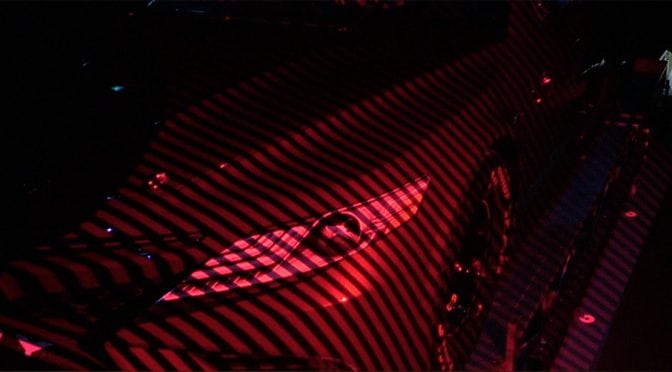
Today, car inspection before and after qualifying and racing is conducted via lasers and cameras in the Optical Scanning Station; timing loops enforce pit road speed limits; and about 46 cameras mounted above pit road ensure pit crews stay within the rules as well as their pit boxes.

Improving parity in the sport is one benefit of this latest evolution from tape measures to templates and now lasers for inspection, said John Probst, VP of Innovation and Racing Development for NASCAR. But speed of inspection is another huge advance.

The pit road officiating trailer now houses officials using automated systems to make calls faster and with more control than ever before. Then the infractions and penalties can quickly be communicated to crew chiefs, spotters and drivers.

“We’re constantly looking at ways to improve our process,” said Elton Sawyer, VP of officiating and inspection for NASCAR. “Through technology we have made some huge gains and we’ll continue to do that and we’re hoping to bring that experience to the fans as well.”

Change the way you WiFi with Xfinity xFi. Xfinity xFi gives you the speed, coverage and control you need for the ultimate in-home WiFi experience.  Learn more at xfinity.com/xfi.

Xfinity. The Future of Awesome.

Perhaps no driver — or former driver, in this case — knows Jimmie Johnson better than Jeff Gordon.

Gordon scouted Johnson early in his career, had a major hand in Rick Hendrick signing the now-seven-time series champion and helped Johnson grow and develop into the 83-time winner he is now. The two remain tight even with Gordon’s retirement from full-time racing following the 2015 season.

Gordon watched Sunday’s Monster Energy NASCAR Cup Series race at the Charlotte road course closely. He saw Johnson, running second, attempt to pass leader Martin Truex Jr. in the final chicane, but spin, take himself out of contention for the win and ultimately be eliminated from the postseason.

MORE: Johnson spins way out of NASCAR Playoffs

“This one didn’t go the way that the 48 wanted it to go,” Gordon said Tuesday on SiriusXM NASCAR Radio. “The reason why Jimmie Johnson has 83 wins and seven championships is — and it doesn’t matter if it’s for 10th, for fifth or for first — that guy goes for it. You gotta understand that was a split-second decision. He got a great run on the chicane, and he’s like ‘I want to win this race.’ At that moment, you’re not thinking about anything but checkered flags.

“What I can tell you is that if I had a stack of resumes here and somewhere on that resume it says this guy is going to go for it on the last lap in the last corner every single time, and there’s some risk involved in that, I’m going to take him over all the others every single time.”

Johnson’s spin also caught race leader Martin Truex Jr., who had to settle for 14th. The No. 78 team already had advanced to the Round of 12 regardless of Sunday’s result, but lost an opportunity to collect more playoff points with a Charlotte victory.

“I can tell you the last thing (Jimmie) wanted to do is take out Martin Truex Jr.,” Gordon added. “He’s the type of guy that wants to race hard and race clean.”

DEBATE: Was Jimmie’s move the right one?

Chase Elliott and Dale Earnhardt Jr. were among the first to chime in on the 2019 rules packages NASCAR executives announced Tuesday afternoon. Their verdicts? Support, and the thought that the very best drivers still will rise to the top.

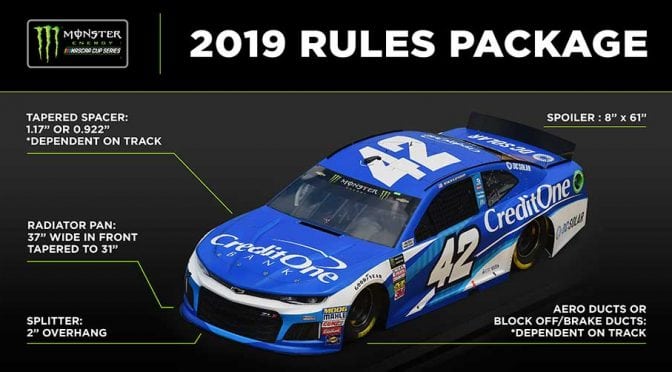
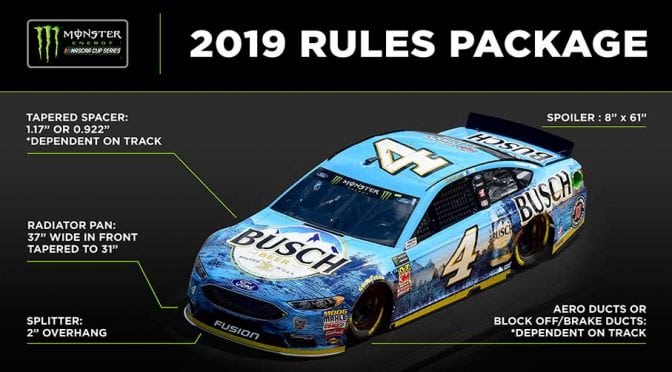
The two baseline rules packages for 2019 included the a combination of a smaller tapered spacer to reduce engine horsepower to a target goal of 550 (from 750) and aero ducts to foster tighter racing on a majority of speedways measuring longer than 1 mile. The different packages will be tailored to the specific tracks on the Monster Energy Series circuit.

“It is gonna intensify things for a big way for these drivers,” four-time champion Jeff Gordon added Tuesday afternoon on SiriusXM NASCAR Radio, adding he was a proponent of the rules package.

That is the goal, after all, according to NASCAR executives — return the focus to the drivers.

Elliott, Junior, crew chief Rodney Childers and others were the first to chime in on social media and voice their opinion on the new direction.

https://twitter.com/Mc_Driver/status/1047193082394042374

CONCORD, N.C. — NASCAR’s top division will race without engine restrictor plates at Daytona and Talladega next season for the first time in 32 years, instead relying on a smaller tapered spacer and increased aerodynamic downforce to reduce speeds at the circuit’s largest speedways.

The total effect of the smaller spacer, larger spoilers and splitters, plus aero ducts is expected to reduce horsepower and increase drag to replicate the current brand of racing in the patented tightly woven packs at those two superspeedways.

RELATED: Explaining 2019 rules

Current restrictor-plate engines make an estimated 410 horsepower. Tuesday’s rules increase the target horsepower to 550, but the aerodynamic devices are expected to offset that potential gain in the speed column. The change will not be in place for the 2019 Daytona 500, instead taking effect April 28 at Talladega.

“We wanted to keep the Daytona 500 as-is,” said Steve O’Donnell, NASCAR Executive Vice President and Chief Racing Development Officer. “There was a lot of engine inventory already out there. Teams had already begun preparing for the 500, so we wanted to hold the line there for 2019. And then as we started the season again from a superspeedway standpoint at Talladega, going to that 550 (horsepower) tapered spacer, we think will produce exactly what we’ve seen in the past, the side-by-side racing that fans love. So certainly we’ll learn some things along the way, but believe you’ll see very similar styles of racing at those tracks.”

Graphic for 2019 rules packages

NASCAR has used restrictor plates to decrease speeds at 2.5-mile Daytona International Speedway and 2.66-mile Talladega Superspeedway in every race since Bobby Allison’s airborne crash into the Talladega catch-fencing in May 1987. Bill Elliott’s qualifying speed for that event was a record 212.809 mph. By contrast, the pole-winning lap for the most recent Talladega race was 194.448 mph, posted by Kevin Harvick in April.

RELATED: Package could entice new OEMs

Restrictor plates and tapered spacers have common purposes. Both restrict the passage of air through the engine to reduce horsepower, but the tapered spacer’s funnel-shaped design allows for a slightly more efficient flow and throttle response.

O’Donnell said that discussions with engine builders were critical in the development of the forthcoming rules package, especially with the considerations made for Daytona and Talladega, but added that competition officials are positioned to make slight alterations if necessary. NASCAR did so at Talladega last May, opting for a smaller restrictor plate to curtail horsepower and speed after Jamie McMurray’s car left the ground in a crash during practice.

“I think in terms of the racing and speeds, they’ll be very similar,” O’Donnell said of the contrast between the 2019 rules package and the current restrictor-plate setup. “We’ve got the ability obviously to dial that up or down as necessary, but we’ll certainly keep an eye on that as we roll out in practice as we always do, but to have the ability to make some tweaks if we needed to once that race weekend starts.”

CONCORD, N.C. — NASCAR took the step of launching its 2019 rules package Tuesday for the Monster Energy Series. But it’s the next stages that may bring even more significant change.

Steve O’Donnell, NASCAR Executive Vice President and Chief Racing Development Officer, says the sanctioning body continues to have talks with new manufacturers to compete alongside Chevrolet, Ford and Toyota, with a 550-horsepower target providing a more attractive entry point for automakers over the current 750-horsepower baseline. O’Donnell also indicated that progress continues to be made toward a seventh-generation stock car, the next evolutionary step for the vehicles in NASCAR’s premier series.

RELATED: Explaining 2019 rules

The 2019 rules package — featuring aerodynamic and engine changes intended to heighten the competition level next season — is designed to be a bridge to both of those developments, O’Donnell says.

“I think if you look at our current partners, it’s important to speak with them first and I think they’re very happy with where we are in the sport, but we always want to grow,” O’Donnell said. “And when we talk about growth, that means being more relevant, potentially introducing more technology into the sport, especially around the engine. As we’ve had discussions with new OEMs (original equipment manufacturers), the direction we’re going in for next year’s rules package really opens up a variety of options for us to bring in new OEMs, to have our current OEMs potentially accept a new direction.

“So a lot of thought went into this that this isn’t just a 2019 rules package, it’s something that we believe really sets us up for the future — not only for our current partners, but growing the sport, which hopefully leads to more healthy ownership as well where we can bring some new OEMs in.”

Graphic for 2019 rules packages

NASCAR introduced the current sixth-generation car — labeled “Gen-6” — in the 2013 season, taking competition and safety cues from the previous model while strengthening the brand identity for the three participating automakers. O’Donnell indicated that a Gen-7 car could further define those manufacturer distinctions, all while exploring long-term technological progress in a closer-to-stock vehicle.

“I think when you look at the next-gen vehicle, if you look at what people are driving on the street today in terms of horsepower numbers and different relevancy options, in terms of electrification or partial electrification, all those things become an option for you,” O’Donnell said. “Do I ever think we’ll be a hybrid racing series? No, but this allows for some tweaks to the engine package down the road if we wanted to when we race around this horsepower, so it gives us a real look not only to what we believe will be better racing than we’ve produced in the past but it also opens it up to new OEMs, opens it up to new technologies and really puts us on a great growth path for the future.”